Artwork
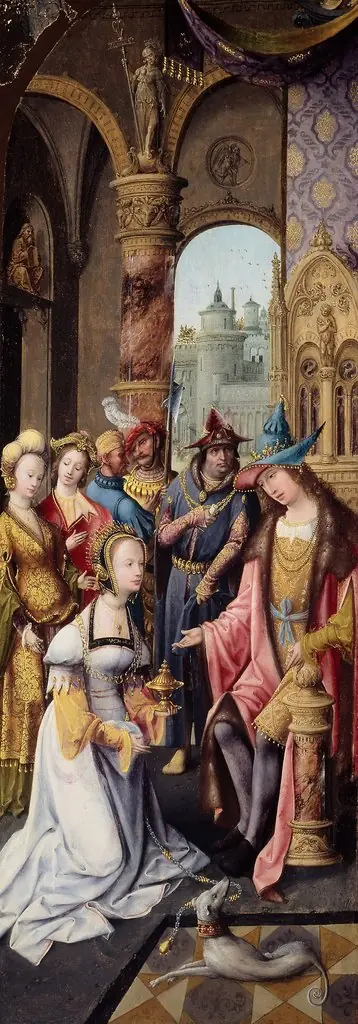
King David Receiving the Cistern Water of Bethlehem
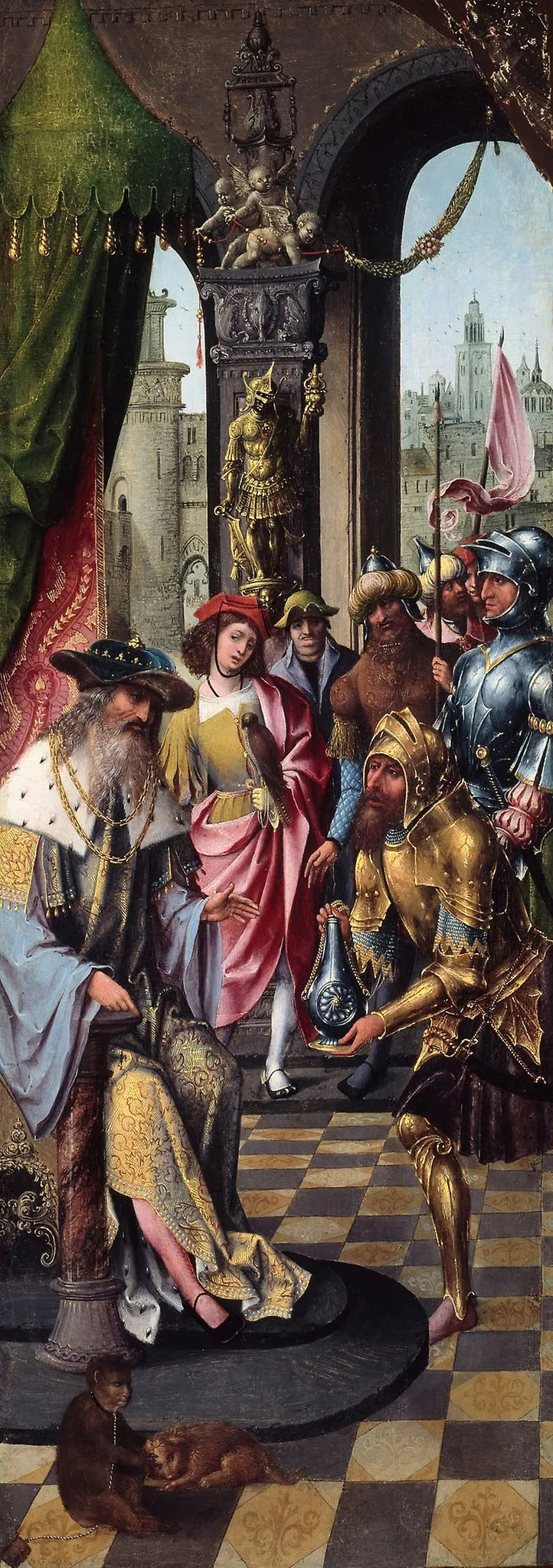
King David Receiving the Cistern Water of Bethlehem is an oil painting by the Northern Renaissance artist Master of the Antwerp Adoration. It dates from 1515 and is held in the collection of the Art Institute of Chicago.
About this work
Overview
The painting is held in the collection of the Art Institute of Chicago, where it exemplifies early 16th-century Northern European religious painting.
Painted in 1515 by an anonymous Flemish artist known as the Master of the Antwerp Adoration, this oil-on-panel work illustrates a biblical episode from 2 Samuel. The scene unfolds in a lavishly detailed interior, characteristic of Antwerp Mannerism, with figures arranged in a dynamic, crowded composition. The painting is held in the collection of the Art Institute of Chicago, where it exemplifies early 16th-century Northern European religious painting.
Subject & Meaning
The scene depicts King David, surrounded by attendants, being offered water drawn from a well in Bethlehem. According to the biblical account, three of his warriors risked their lives to fetch the water, which David then poured out as an offering to God, deeming it too precious to drink. The painting captures the moment of receipt, emphasizing reverence and sacrifice rather than personal thirst.
Technique & Style
The artist employs richly textured oil paint to render intricate fabrics, metallic armor, and ornate architectural details. Figures are elongated and energetically posed, typical of Antwerp Mannerism, with exaggerated gestures and exotic costumes. Sharp contrasts of light and shadow—chiaroscuro—highlight key faces and objects, drawing attention to the central act of offering and the king’s solemn demeanor.
History & Provenance
Attributed to a workshop active in Antwerp between 1500 and 1520, the painting reflects the city’s thriving artistic environment during the early Reformation. Its precise early history is undocumented, but its style aligns with other works from the same circle. It entered the Art Institute of Chicago’s collection in the 20th century, where it has been studied as an example of regional Mannerist practice.
Context
Created during a period of religious upheaval, the painting reflects the continued importance of biblical narratives in Northern European art. The opulent setting and elaborate dress suggest a courtly idealization of sacred history, blending contemporary Flemish fashion with ancient biblical themes. The distant cityscape beyond the windows may symbolize the broader world from which the water was retrieved.
Legacy
Though the artist remains unidentified, this work contributes to the understanding of Antwerp Mannerism’s visual language—its fusion of theatricality, detail, and spiritual gravity. It stands as a testament to the period’s interest in complex storytelling through costume, gesture, and setting, influencing later Northern European religious painting even as stylistic trends evolved.
Artist & collection
Artist
Master of the Antwerp Adoration
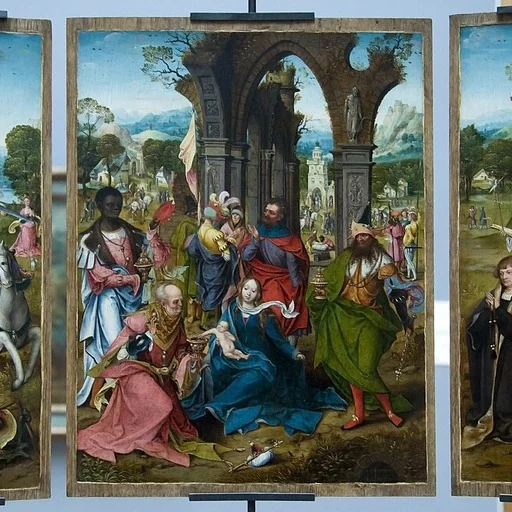
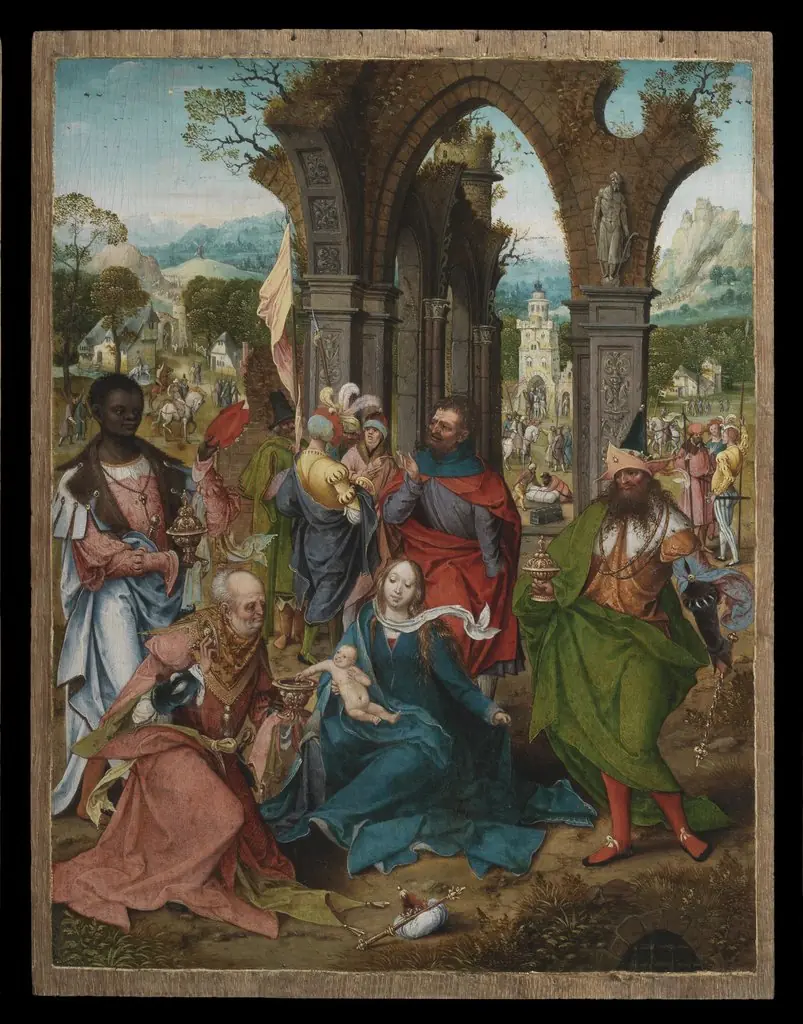
The Master of the Antwerp Adoration (active 1500 – 1520) was a Flemish painter in the style of Antwerp Mannerism, whose compositions are typically filled with agitated figures in exotic, extravagant clothes.

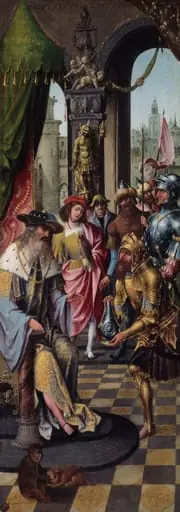 King David Receiving the Cistern Water of Bethlehem
 Der hl. Laurentius vor Kaiser Decius
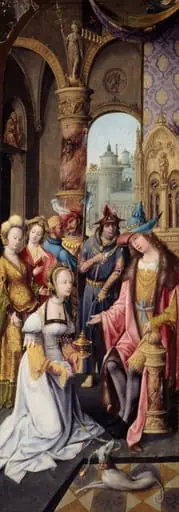 King Solomon Receiving the Queen of Sheba
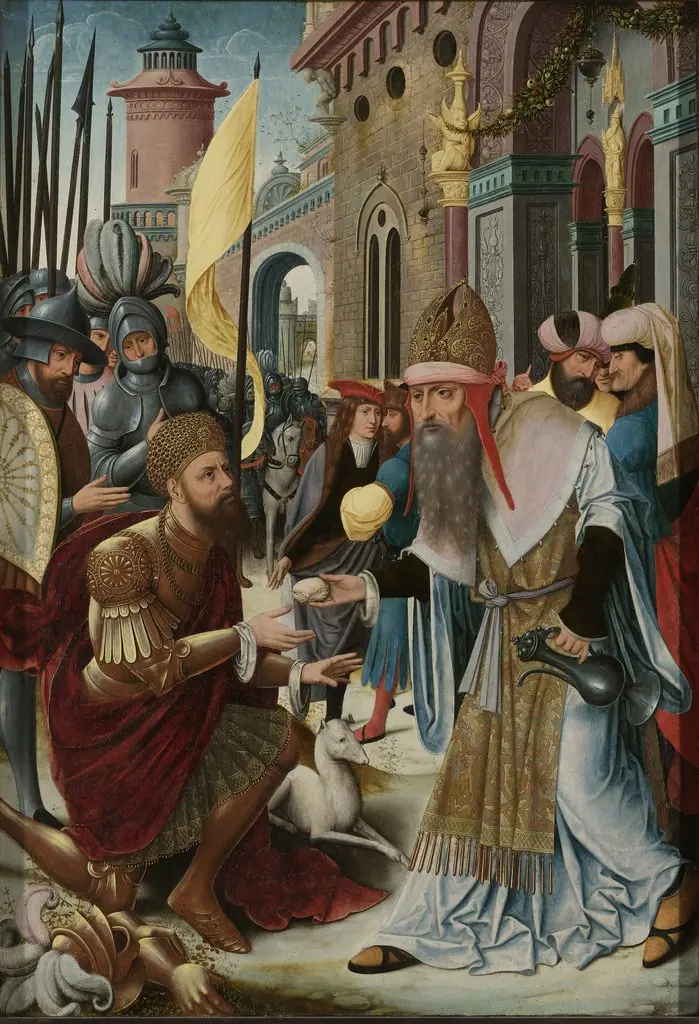 Left wing of an altarpiece with the meeting of Abraham and Melchizedek (inner wing) and Synagoga (outer wing)
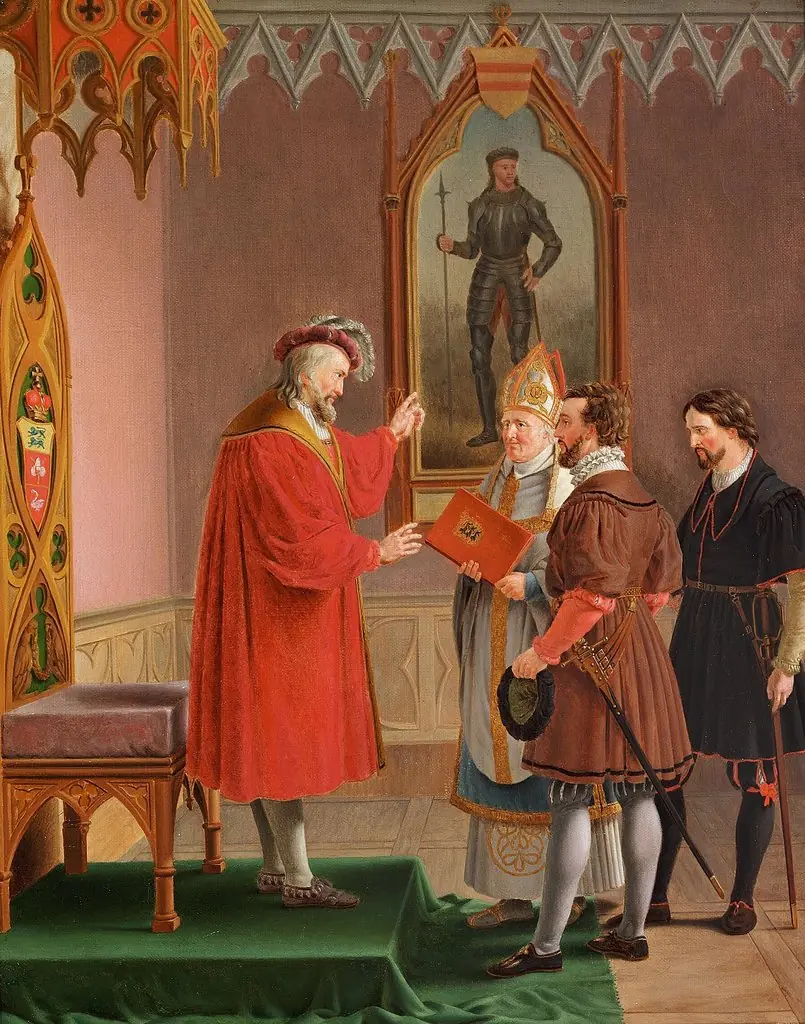 Duke Adolf refuses the offer of the Crown of Denmark
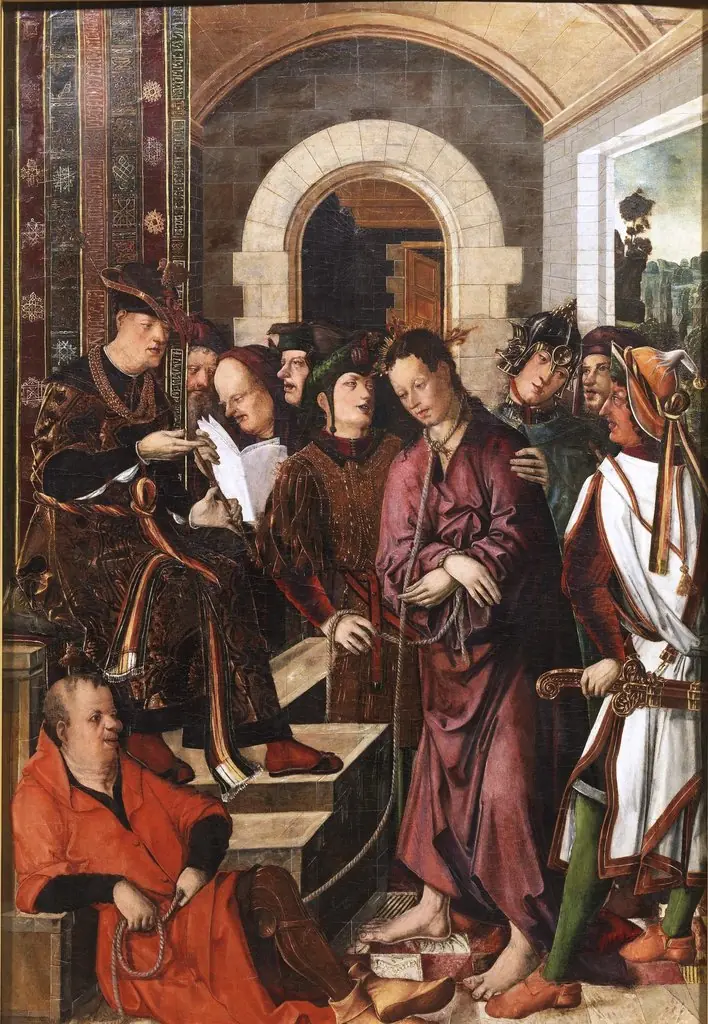 Christ before Pilate
 The King’s Spies Bring Him News of Dymphna’s Hideout
 Marriage of St. Ursula and Prince Conan
 Joseph Claims Benjamin as his Slave
 Solon und Krösus
 King David Handing the Letter to Uriah