Artwork
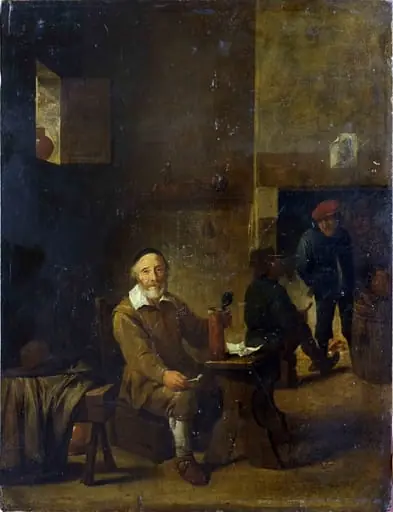
Peasant Holding an Empty Mug
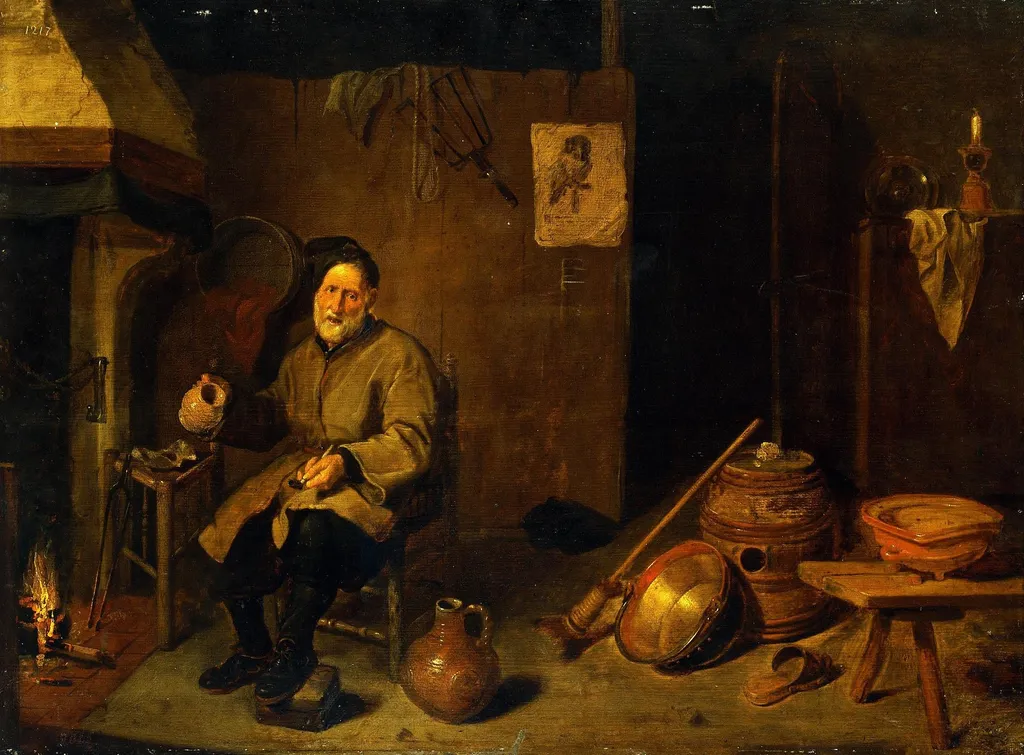
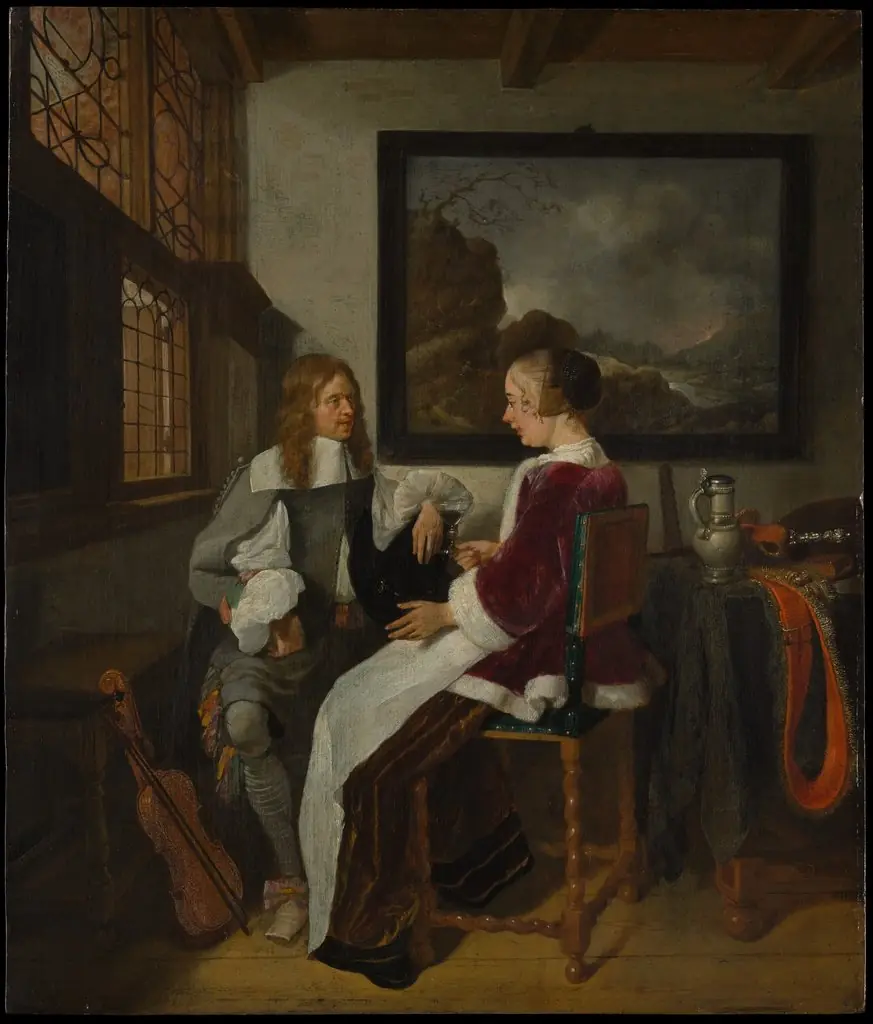
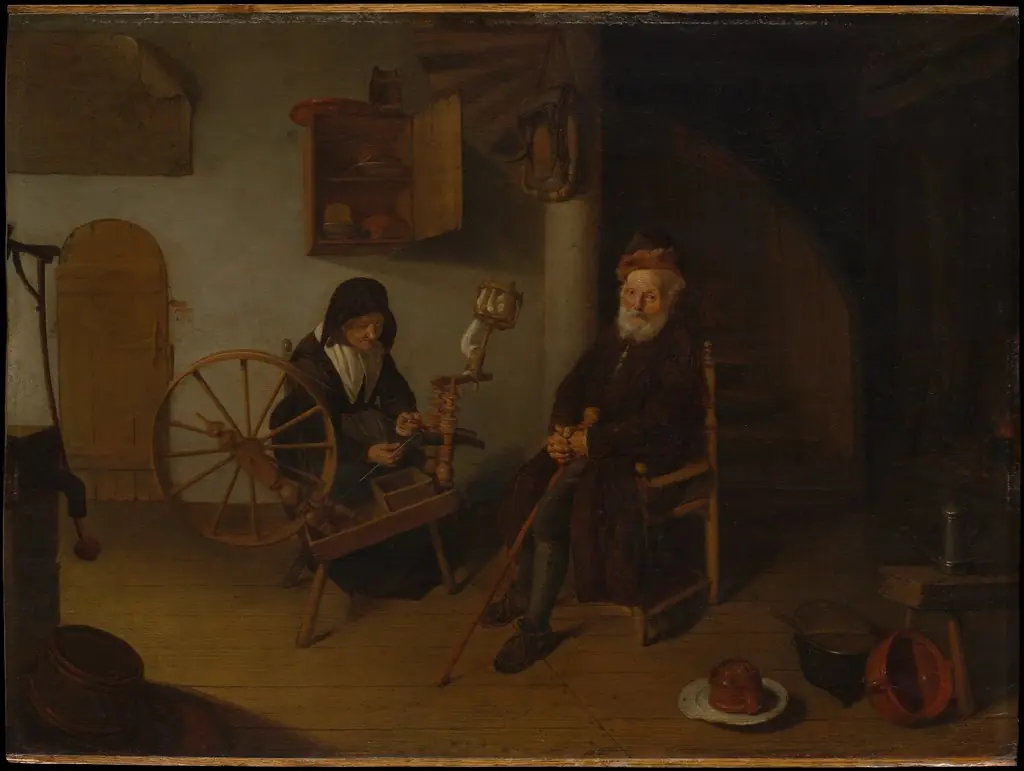
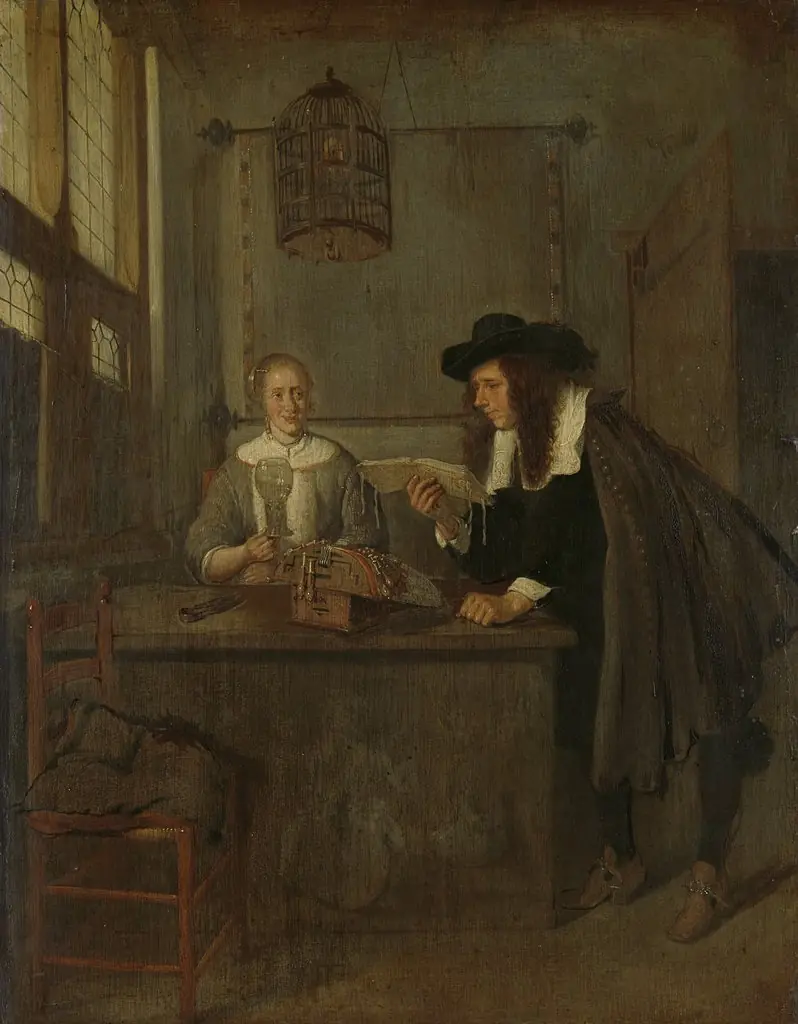
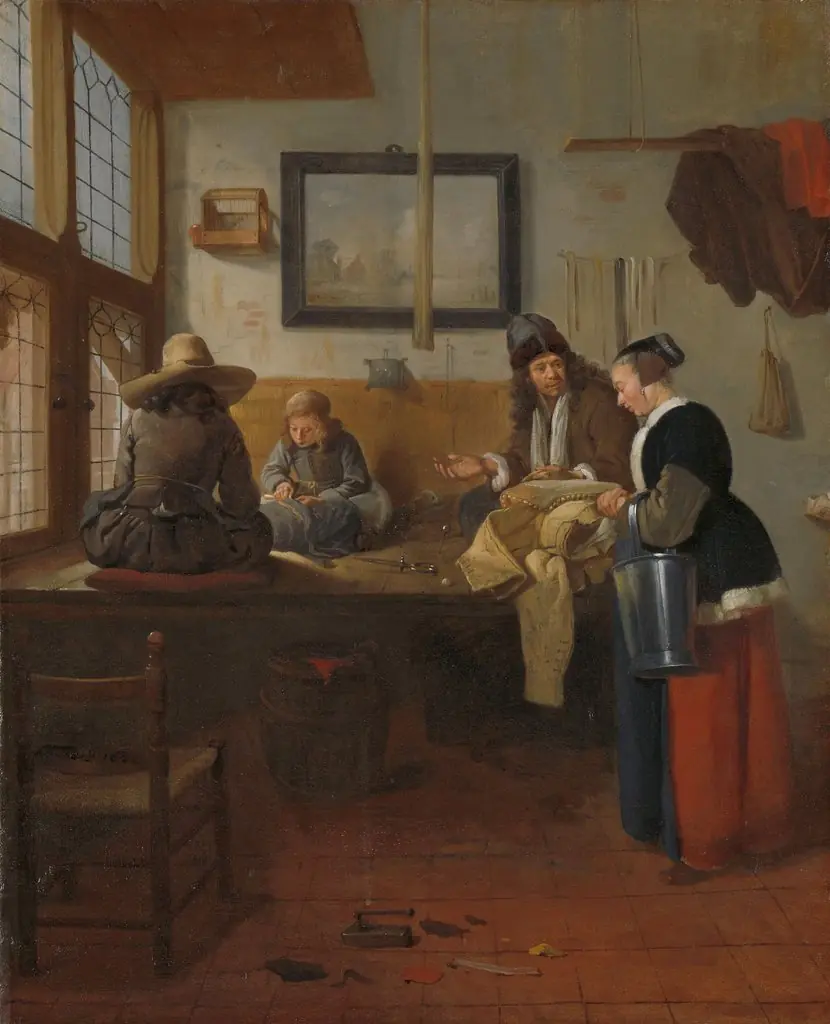
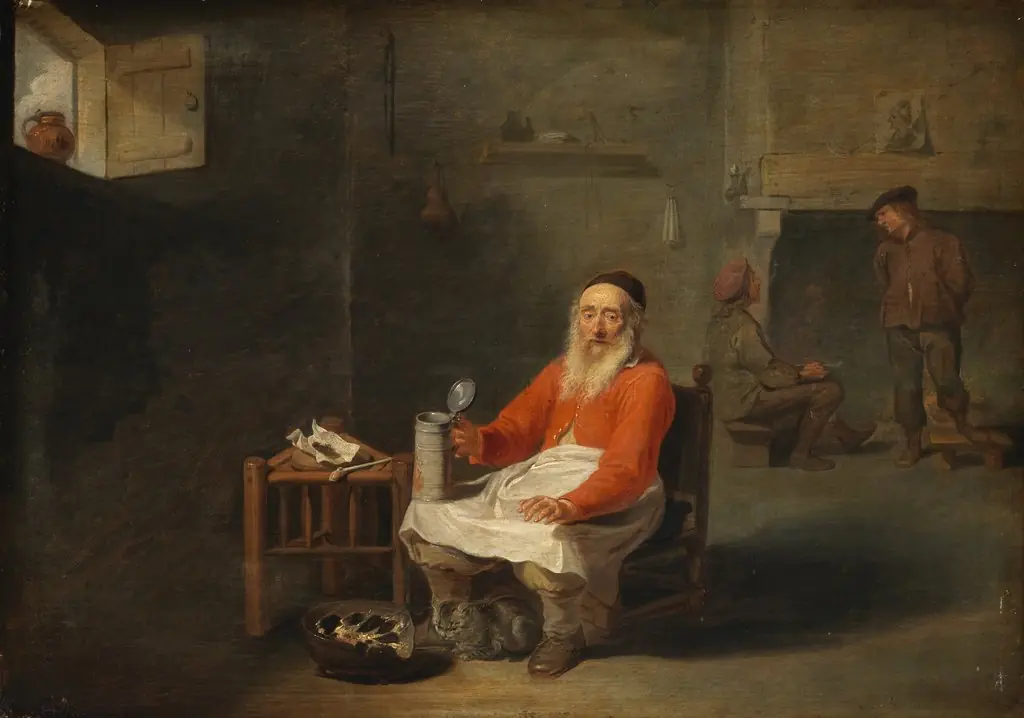
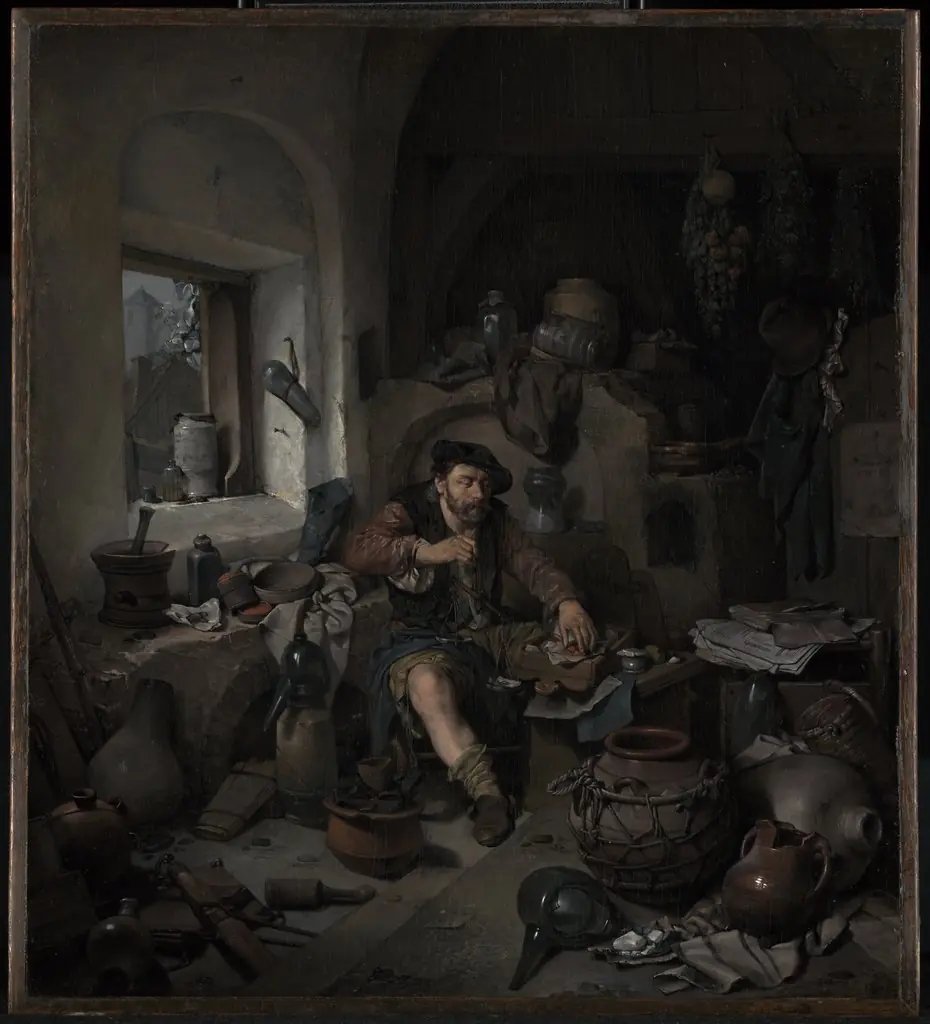
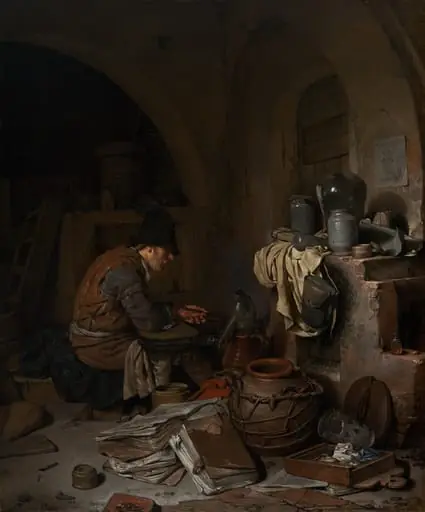
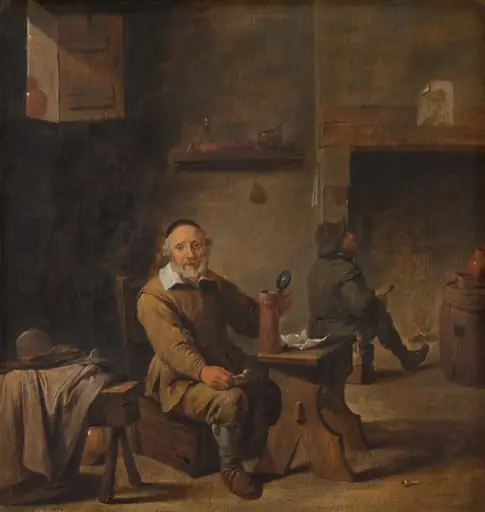
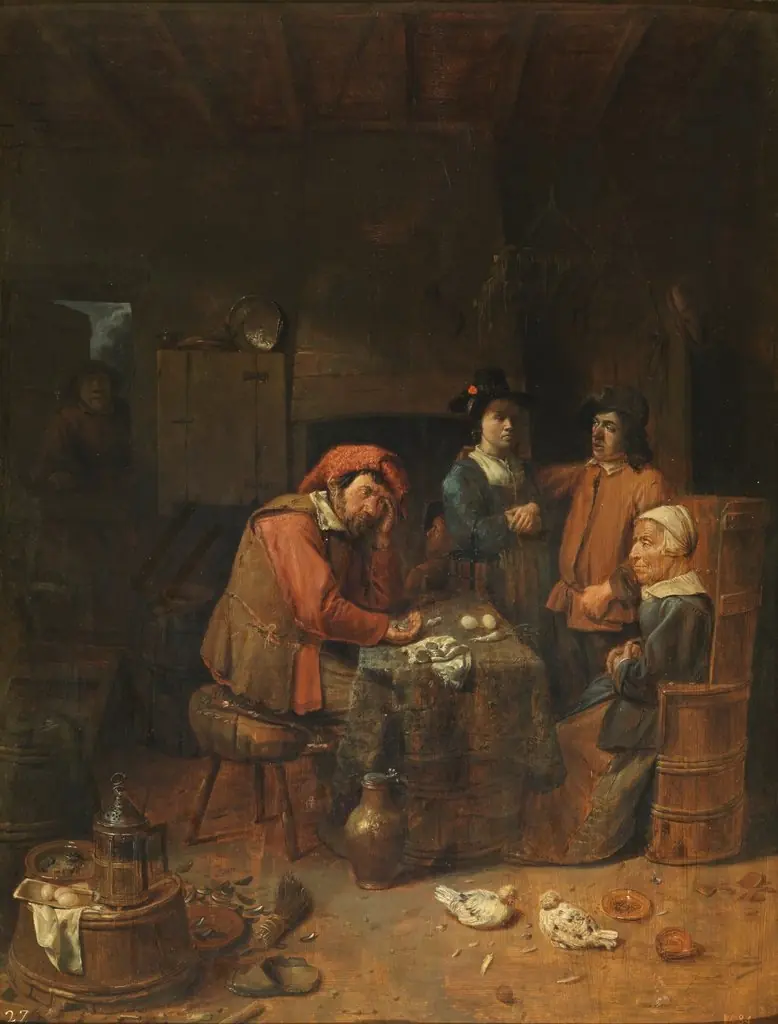
Peasant Holding an Empty Mug is an oil painting by the Dutch Golden Age artist Quirijn van Brekelenkam. It dates from 1655 and is held in the collection of the Hermitage Museum.
About this work
Overview
Peasant Holding an Empty Mug is a 1655 oil painting by Quirijn van Brekelenkam, exemplifying the Dutch Golden Age genre tradition. It depicts a solitary peasant in a humble interior, characterized by subdued tones and meticulous detail.
Subject & Meaning
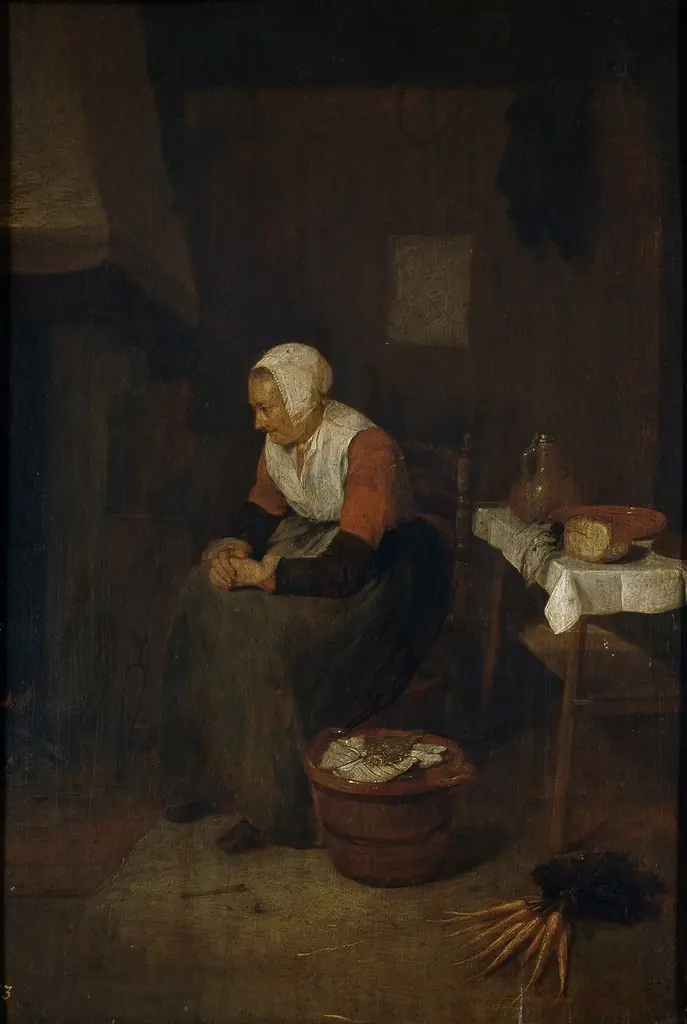
The painting focuses on a seated peasant, lost in thought, holding an empty mug. His neutral expression and the sparse, dimly lit surroundings convey a sense of quiet contemplation and simplicity, emphasizing the everyday life of the common man.
Technique & Style
Van Brekelenkam, influenced by his training under Gerard Dou and association with the Leiden fijnschilders, employs precise, small-scale brushwork. The use of chiaroscuro, with a fireplace as the primary light source, adds depth to the modest scene, drawing parallels with the stylistic approaches of Rembrandt.
History & Provenance
Created in 1655, the painting is now part of the collection at the State Hermitage Museum, though its history prior to acquisition is not detailed here.
Context
This work reflects the Leiden fijnschilders' penchant for capturing everyday domesticity with precision. It aligns with the broader Dutch Golden Age interest in genre painting, offering an intimate glimpse into the life of a commoner.
Legacy
While not directly attributed to influencing specific artists, Peasant Holding an Empty Mug contributes to the enduring appeal of Dutch Golden Age genre paintings, appreciated for their intimate, meticulously rendered scenes of 17th-century daily life.
Own this work as a print
Artist & collection
Artist
Quirijn or Quiringh Gerritsz van Brekelenkam (1622/29, Zwammerdam – 1669/79, Leiden) was a Dutch Baroque genre painter.