Artwork
Queensboro Bridge, New York
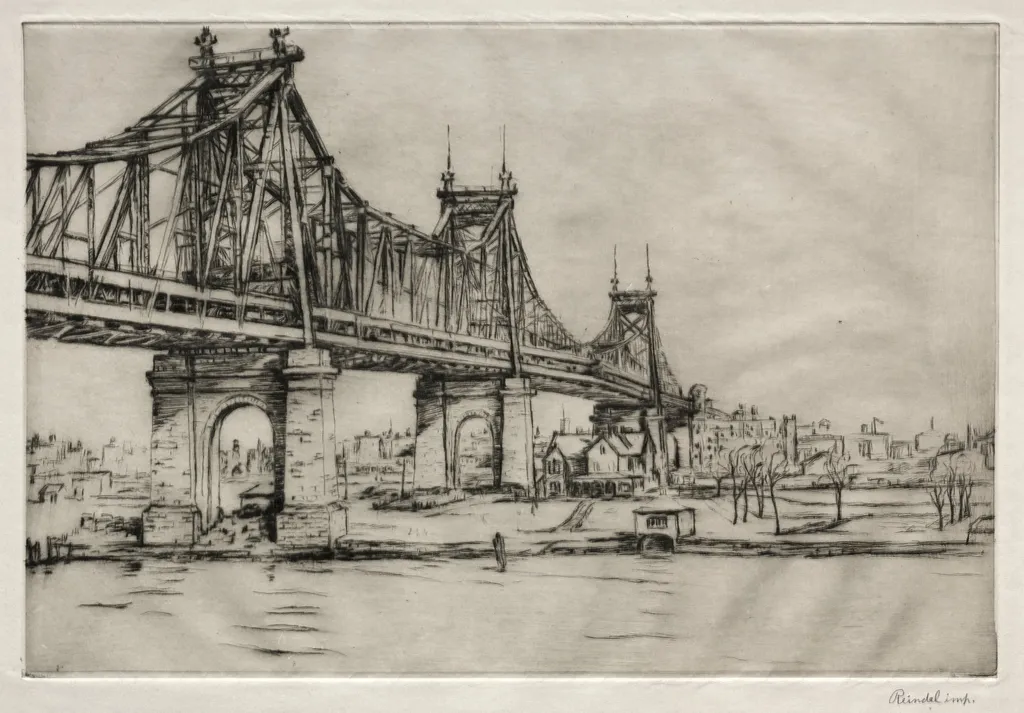
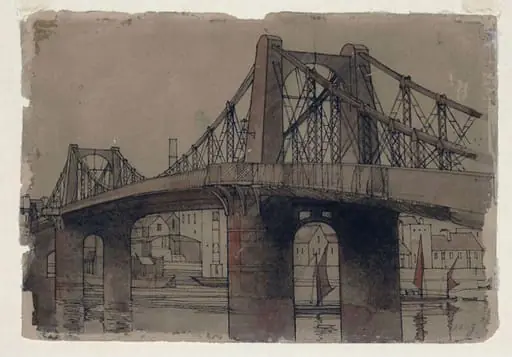
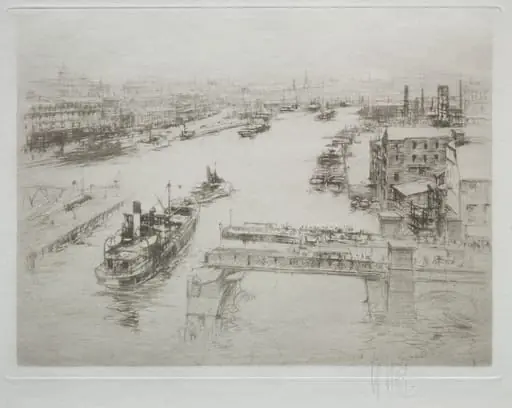
Queensboro Bridge, New York is a print by William George Reindel. It dates from 1921 and is held in the collection of the Cleveland Museum of Art.
About this work
This sketch shows a big bridge with lots of metal beams and thick stone towers.
This sketch shows a big bridge with lots of metal beams and thick stone towers. The bridge stretches over water, with buildings and trees in the background. The lines are loose and quick, like a rough draft.
The artist focused on the bridge’s strong shapes and busy details. The sketch feels like a quick study, not a polished drawing.
Want to see more by this artist? Check out William George Reindel (American, 1871–1948).
Overview
Created in 1921 by American artist William George Reindel, this ink sketch captures the Queensboro Bridge in New York City. Executed in a rapid, gestural style, the work functions as a visual record rather than a finished composition. Its loose lines and unrefined quality suggest it was made on-site, reflecting the artist’s immediate response to the structure’s scale and complexity.
Subject & Meaning
The Queensboro Bridge, a key transportation link between Manhattan and Queens, is depicted as a dominant architectural presence. Reindel emphasizes its industrial form—metal trusses, massive stone piers, and layered walkways—without human figures or decorative embellishment. The focus suggests an interest in modern infrastructure as a symbol of urban transformation, rendered with quiet observation rather than grandeur.
Technique & Style
Reindel employed swift, confident ink lines to convey the bridge’s structural complexity. The drawing lacks shading or fine detail, relying instead on overlapping contours and varying stroke weight to suggest depth and mass. The sketchlike quality implies spontaneity, possibly made during a brief visit, capturing the bridge’s essence through economy of mark rather than precision.
History & Provenance
The work entered the collection of The Cleveland Museum of Art, where it remains today. While little is documented about its immediate history after creation, its preservation reflects institutional interest in early 20th-century American draftsmanship. Reindel’s lesser-known status contrasts with the significance of the subject, suggesting the piece holds value as a personal record of a pivotal urban landmark.
Context
In the early 1920s, New York’s skyline was rapidly evolving with new bridges and skyscrapers. Reindel’s sketch aligns with a broader trend among artists and architects who documented modern infrastructure as both functional and aesthetic phenomena. Unlike celebratory illustrations of the era, his approach is understated, emphasizing form over spectacle, reflecting a more introspective engagement with urban change.
Legacy
Though Reindel did not achieve widespread fame, this sketch contributes to a quiet archive of American urban observation. Its preservation in a major museum underscores its role as an example of early modernist draftsmanship—unpolished, direct, and attentive to the geometry of industrial America. It stands as a modest but authentic record of a bridge that reshaped the city’s geography.
Own this work as a print
Artist & collection