Artwork
Arteries of Great Britain: The Tyne
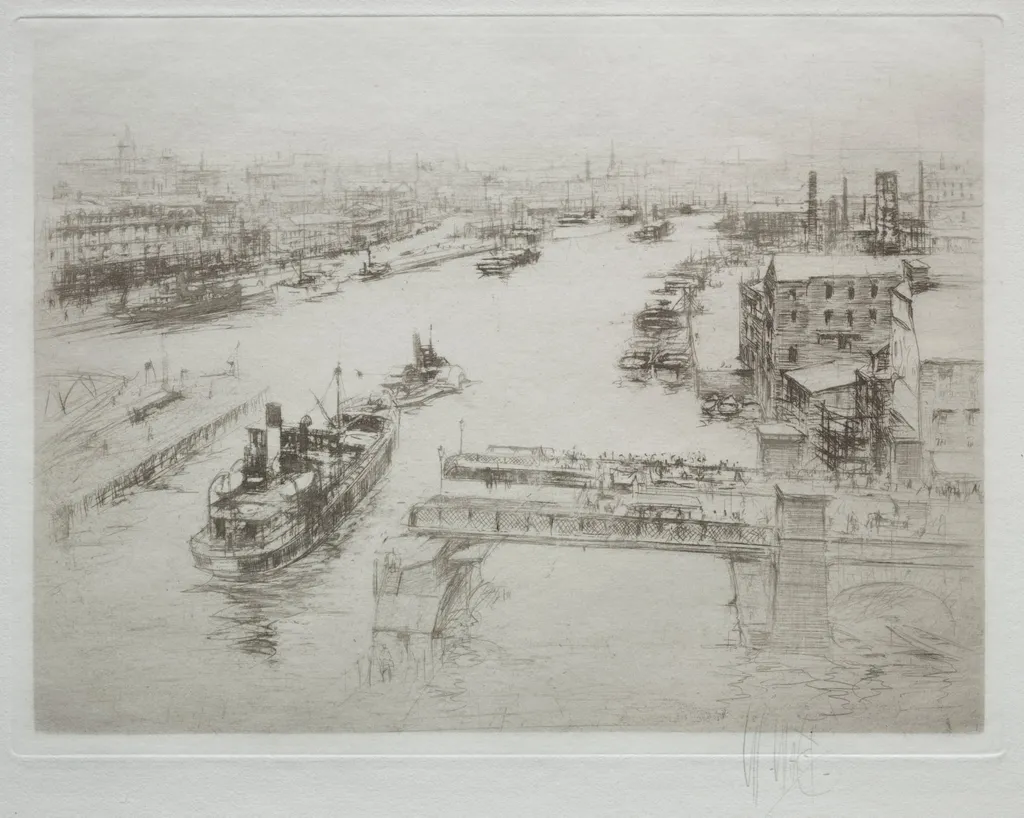
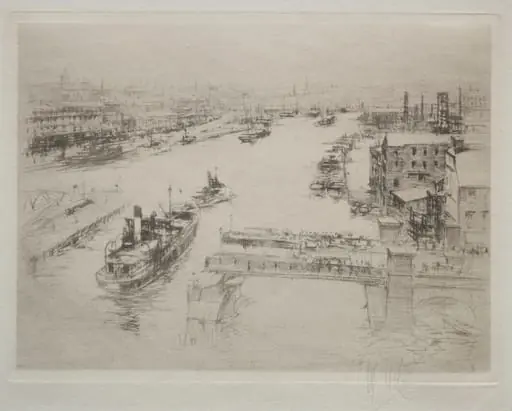
Arteries of Great Britain: The Tyne is a print by William Walcot. It dates from 1922 and is held in the collection of the Cleveland Museum of Art.
About this work
Overview
Created in 1922 by William Walcot, this print is part of a series documenting industrial waterways across Britain. Rendered in ink and wash, it captures the Tyne River’s bustling port activity with rapid, expressive lines. The work emphasizes motion and energy over precise detail, reflecting the artist’s interest in modern infrastructure as a living system rather than a static subject.
Subject & Meaning
The scene centers on the Tyne River during peak industrial activity, with vessels of varying sizes, dockside cranes, and factory buildings lining the banks.
The scene centers on the Tyne River during peak industrial activity, with vessels of varying sizes, dockside cranes, and factory buildings lining the banks. The dominant paddleboat in the foreground suggests commercial transport, while the dense cluster of smaller craft implies a network of local trade. The composition conveys the river’s role as a vital artery of economic life in early 20th-century Britain.
Technique & Style
Walcot employed loose, fluid ink strokes and diluted washes to suggest movement and texture without defining every element. Buildings and machinery are hinted at rather than rendered precisely, allowing the viewer’s eye to infer structure from suggestion. The sketchlike quality evokes immediacy, as if the scene was observed and recorded in real time, prioritizing atmosphere over finish.
History & Provenance
The print entered the collection of The Cleveland Museum of Art in the 20th century as part of a broader acquisition of British industrial drawings. Walcot produced this work during a period of heightened interest in documenting Britain’s industrial landscape, and it was likely made for publication or private circulation among patrons interested in engineering and urban development.
Context
In the early 1920s, Britain’s river ports remained critical to national commerce despite declining shipbuilding dominance. Walcot’s series responded to a cultural moment that valued the visual record of industrial infrastructure. His approach aligned with contemporary documentary practices in architecture and engineering, emphasizing function and scale over romanticized imagery.
Legacy
Walcot’s Tyne print contributes to a modest but significant body of work that records Britain’s industrial waterways with observational honesty. Though not widely exhibited, such drawings inform later studies of 20th-century urban landscapes and offer a quiet counterpoint to more monumental depictions of industry, valuing the rhythm of daily labor over grandeur.
Own this work as a print
Artist & collection

Artist
William Walcot RE was a Russian-Scottish architect, graphic artist and etcher, notable as a architect of refined Art Nouveau in Moscow, Russia.

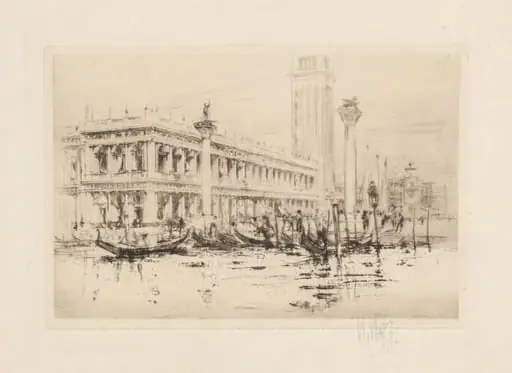 The Venice Set: The Library of St. Mark’s
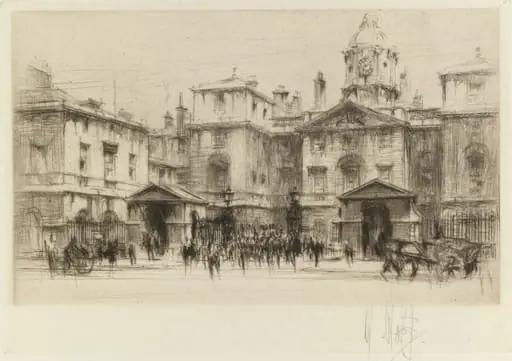 London Set: Horseguards
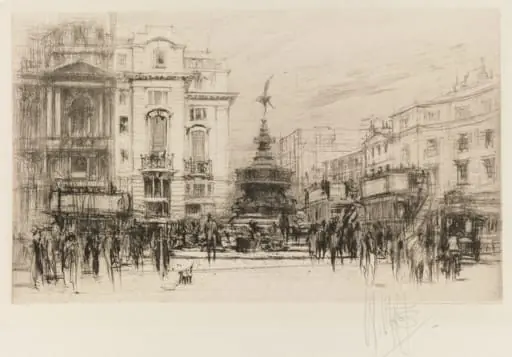 London Set: Piccadilly Circus (with Criterion Theatre)
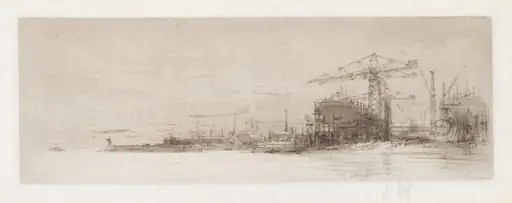 The Clyde from the series The Arteries of Great Britain
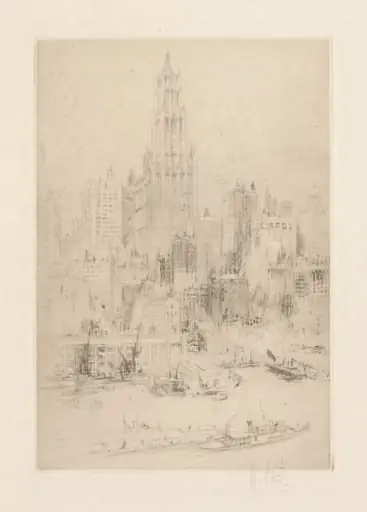 Downtown Manhattan from the East River, with the Woolworth Building
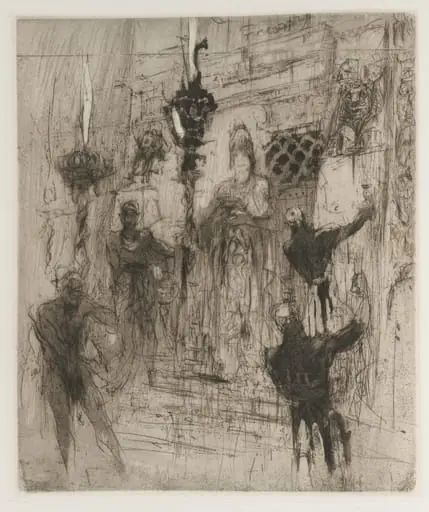 Herodias
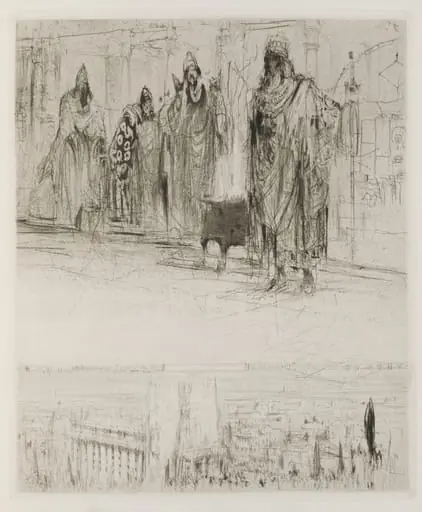 Herodias: Page 13, The tetrarch was awaited by several Galileans, the master of scribes, the chief of the land steward, the manager of the salt mines, and a Jew from Babylon commanding his troops on horse
 Forty-second Street NY