Artwork
Joseph G. Butler, Jr.
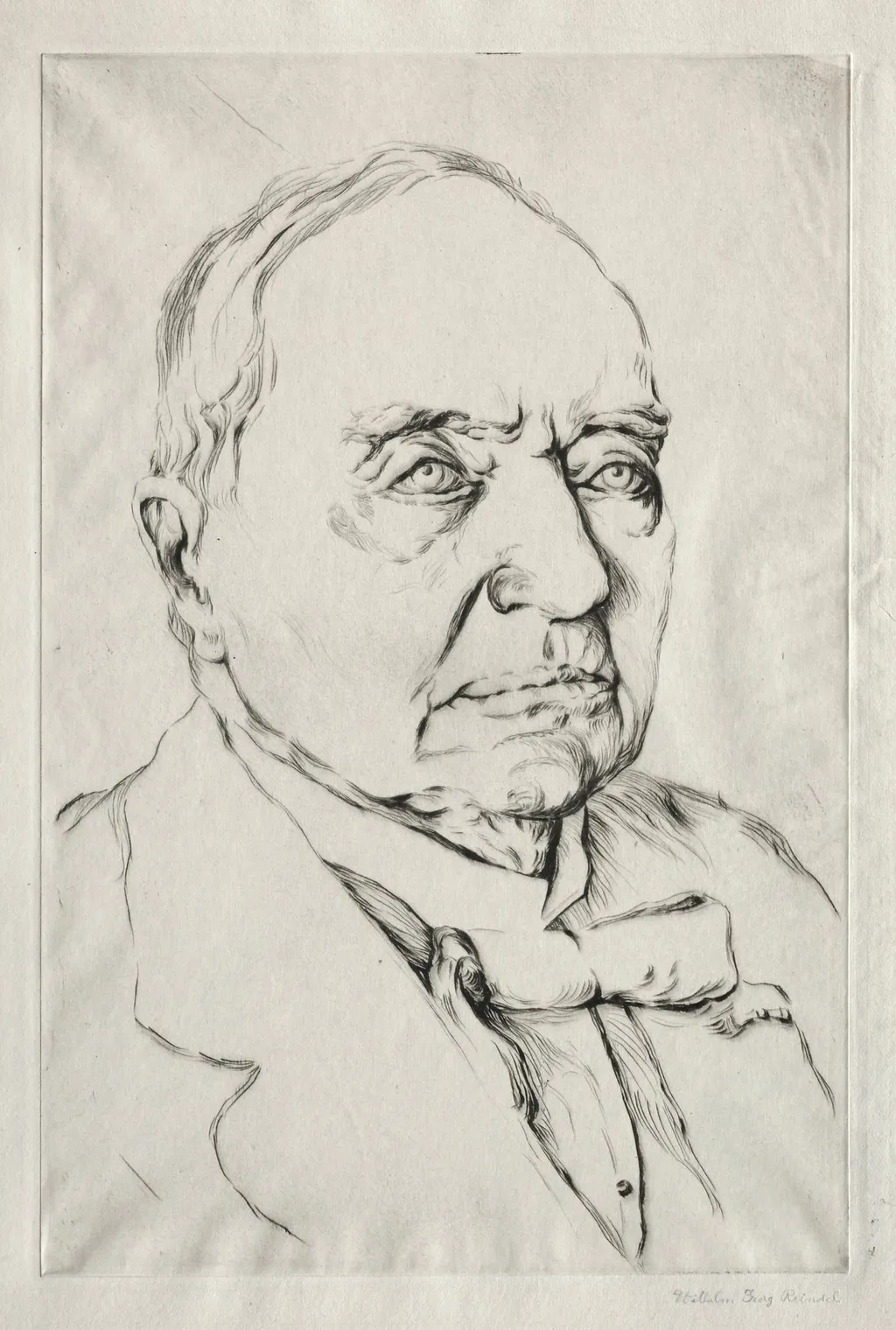
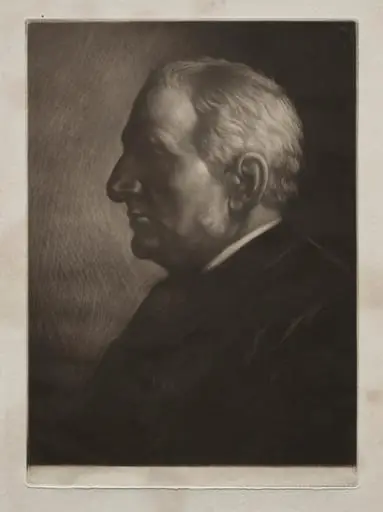
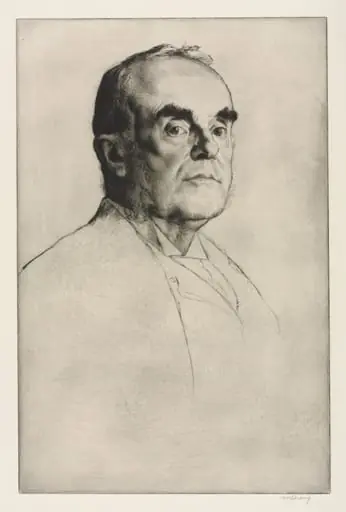
Joseph G. Butler, Jr. is a print by William George Reindel. It dates from 1918 and is held in the collection of the Cleveland Museum of Art.
About this work
If you're interested in learning more about the artist behind this portrait, you might want to look up William George Reindel (American, 1871–1948).
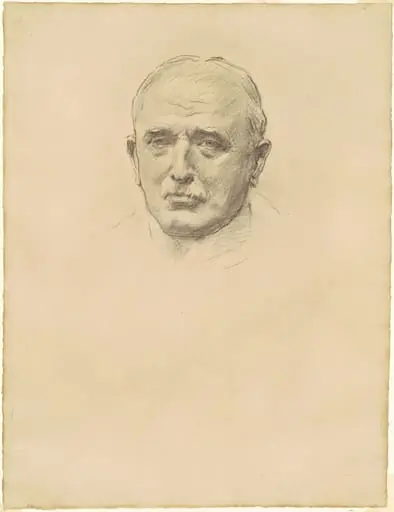
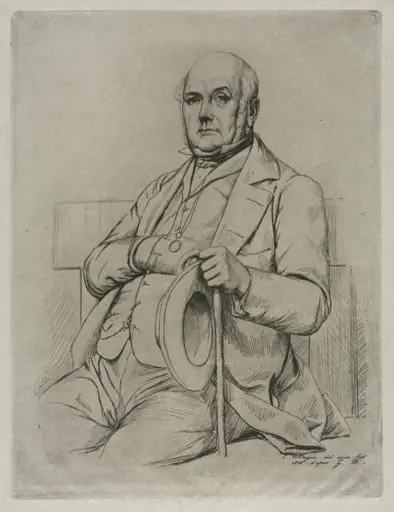
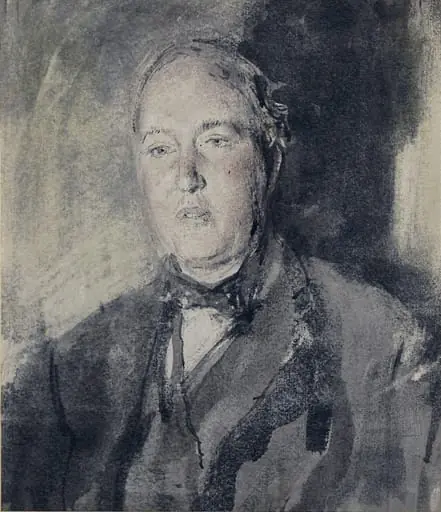
This is a portrait of a man, likely in his middle age, with a serious expression. He is wearing a suit and a tie, and his hair is thinning on top. The background is a solid color, which helps to focus attention on the subject.
The artist has used a range of techniques to create a sense of depth and texture in the painting. The subject's face is rendered in detail, with subtle variations in tone and shading that give a sense of volume and structure. The suit and tie are also depicted with care, with folds and creases that suggest the fabric's texture.
If you're interested in learning more about the artist behind this portrait, you might want to look up William George Reindel (American, 1871–1948).
Overview
Created around 1918 by American artist William George Reindel, this portrait depicts Joseph G. Butler, Jr., a prominent Cleveland industrialist and philanthropist. The work is held in the collection of The Cleveland Museum of Art. Rendered in a restrained, realistic style, the image captures Butler in formal attire against a plain background, emphasizing his presence without distraction.
Subject & Meaning
Joseph G. Butler, Jr. was a key figure in Cleveland’s industrial and cultural development, known for his leadership in steel manufacturing and support of the arts. The portrait presents him with a composed, contemplative demeanor, reflecting his public role as a civic leader. His attire and neutral expression convey dignity and restraint, aligning with early 20th-century ideals of professional gravitas.
Technique & Style
Reindel employed careful tonal modeling to define the contours of Butler’s face and hands, using subtle gradations of light and shadow to suggest volume. The fabric of the suit is rendered with attention to fold and texture, while the thinning hair and skin details are rendered with quiet precision. The solid, unadorned background eliminates context, directing focus entirely to the sitter’s likeness and presence.
History & Provenance
The portrait was likely commissioned by Butler or his associates during a period of heightened civic engagement in Cleveland. It entered the Cleveland Museum of Art’s collection in the mid-20th century, possibly through a donation linked to the Butler family’s longstanding ties to the institution. Its preservation reflects its significance as a record of local leadership.
Context
Created in the aftermath of World War I, the portrait aligns with a broader trend in American portraiture that favored sober, dignified representations of business and civic leaders. Reindel’s approach—focused on realism and psychological presence—mirrored the values of an era seeking stability and authority in the face of social change.
Legacy
The portrait endures as a documented likeness of a significant regional benefactor, offering insight into the visual culture of American industrial elites. While Reindel is not widely known outside Ohio, this work remains a quiet testament to his skill in capturing character with restraint and technical clarity.
Own this work as a print
Artist & collection