Artwork
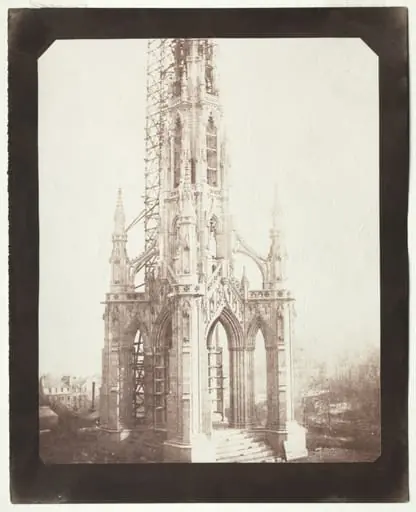
Sir Walter Scott's Monument, Edinburgh
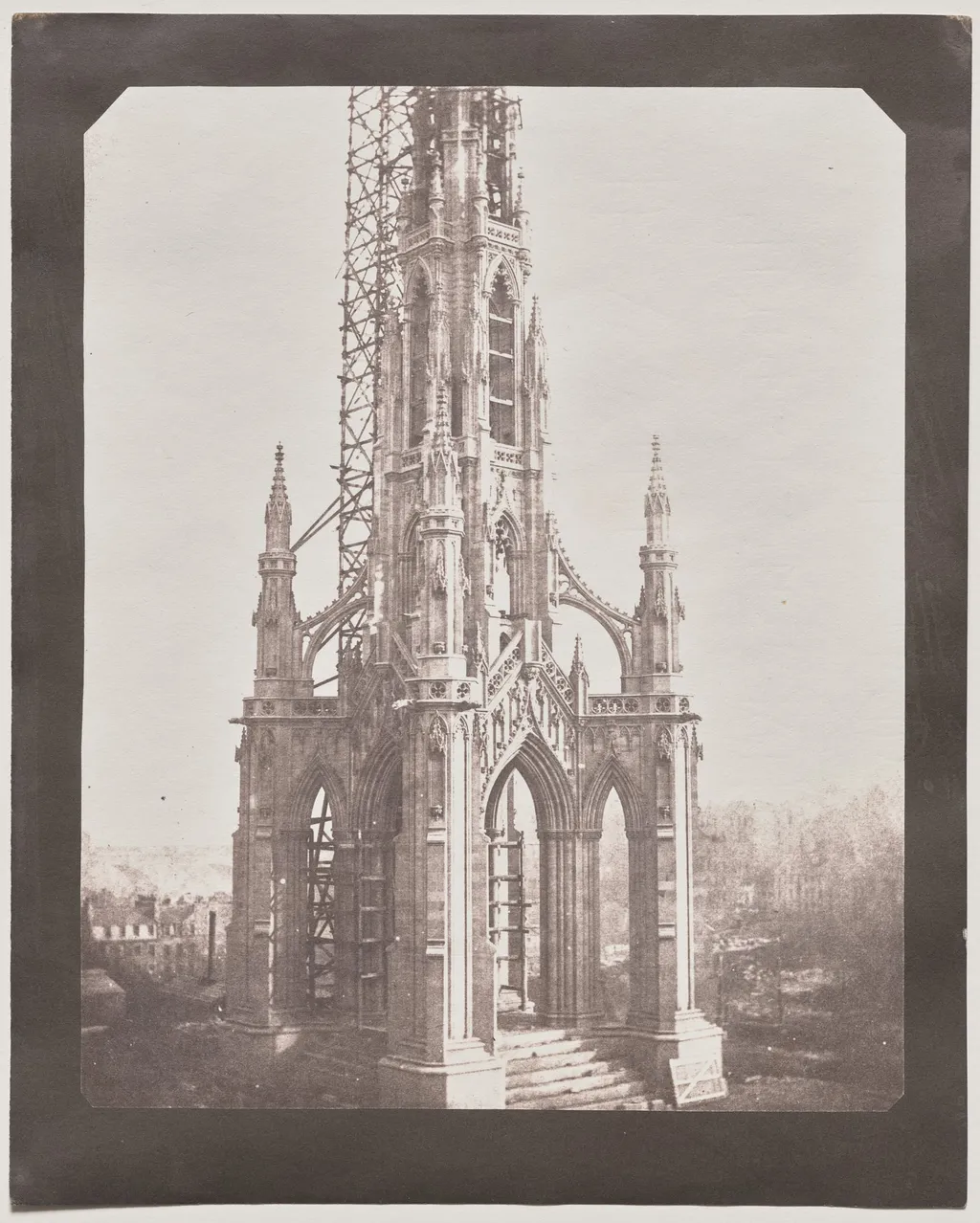
Sir Walter Scott's Monument, Edinburgh is a photography by the Romanticist artist William Henry Fox Talbot. It dates from 1844 and is held in the collection of the Cleveland Museum of Art.
About this work
Overview
This photograph, taken by William Henry Fox Talbot in 1844, captures the early stages of construction for Sir Walter Scott’s Monument in Edinburgh.
This photograph, taken by William Henry Fox Talbot in 1844, captures the early stages of construction for Sir Walter Scott’s Monument in Edinburgh. The image records the Gothic Revival tower as it rises amid scaffolding, with trees and a low stone wall framing the foreground. The hazy background suggests the urban setting of the city. Talbot’s use of the calotype process yields a soft, tonal texture characteristic of early photographic experimentation.
Subject & Meaning
The monument honors Sir Walter Scott, the celebrated Scottish novelist and poet whose works revived interest in medieval themes and national identity. By photographing the structure mid-construction, Talbot documents a cultural moment—public reverence for literary heritage made manifest in stone. The incomplete state of the tower reflects both the physical process of commemoration and the evolving relationship between memory and material form.
Technique & Style
Talbot employed the calotype process, an early photographic method using paper negatives that allowed for multiple prints. This technique produced images with subtle gradations of light and a delicate, slightly blurred quality. Unlike the sharp precision of later daguerreotypes, the calotype’s softness lends the scene a contemplative mood, aligning with the Romantic sensibility of the era while advancing photography as a medium for recording architecture and public life.
History & Provenance
The photograph was made in 1844, during the construction of Scott’s Monument, which was completed in 1846. Talbot, a pioneer of photographic technology, documented the site as part of his broader interest in capturing architectural subjects. The image entered the collection of The Cleveland Museum of Art through later acquisitions, where it now serves as a historical record of both the monument’s development and the evolution of photographic practice in mid-19th-century Britain.
Context
In the 1840s, Edinburgh was undergoing a cultural renaissance centered on national identity, with Scott’s literary legacy at its core. The monument’s Gothic design echoed medieval traditions, reflecting a wider European trend of historicist architecture. Talbot’s photograph emerged alongside growing public interest in documenting urban change and preserving cultural landmarks—making it both a technical and sociological artifact of its time.
Legacy
Talbot’s image stands as one of the earliest photographic records of a major public monument in Britain. It illustrates photography’s emerging role in archiving civic projects and shaping collective memory. The photograph’s preservation in a major museum underscores its significance not only as a document of architecture but as a milestone in the history of photographic art and its capacity to capture transient moments in public life.
Artist & collection

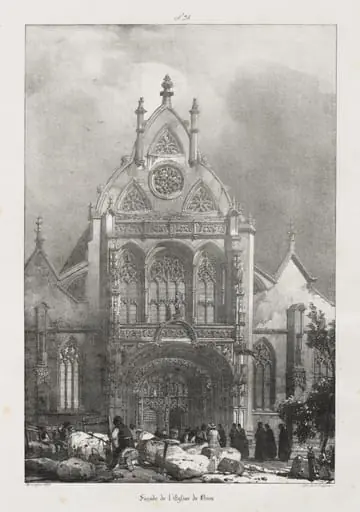 Voyages pittoresques et romantiques dans l'ancienne France, Franche-Comté: Façade de l'église de Brou
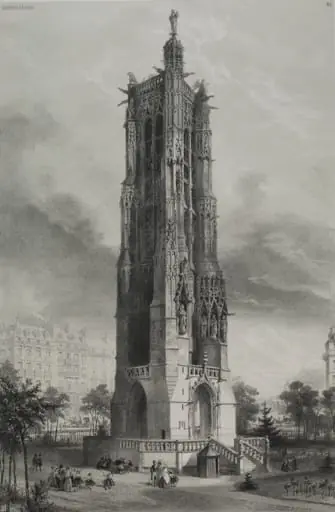 La Tour St. Jacques
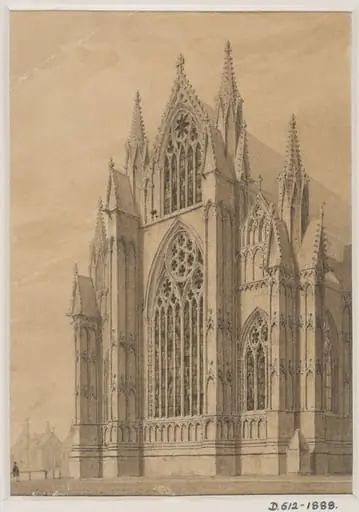 Topographical drawing
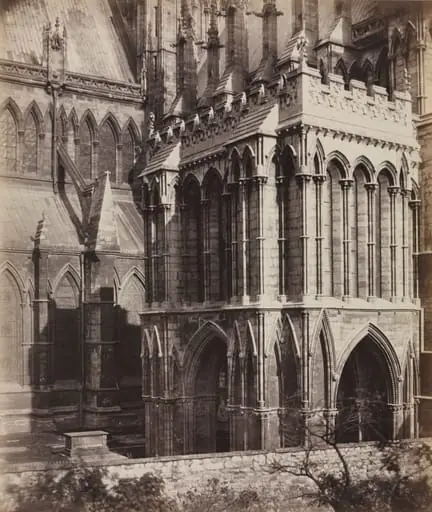 Lincoln Cathedral: The Galilee Porch
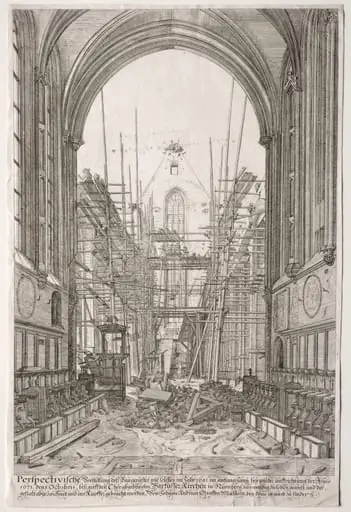 L'Art Ancien Zurich: View in the Church of the Franciscans, Barfüsser-Kirke
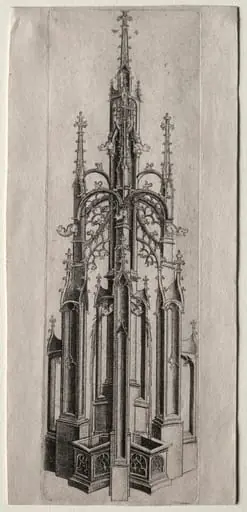 Design for a Gothic Fountain
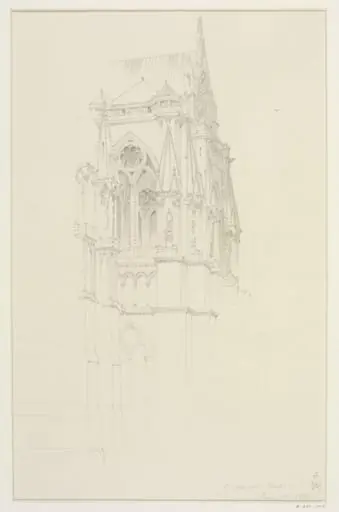 Architectural drawing
 View of Westminster Abbey
 Picturesque and Romantic Trips in Old France, Franche-Compté: Front of the Church at Brou
 Jewish Synagogue, N.Y.