Artwork
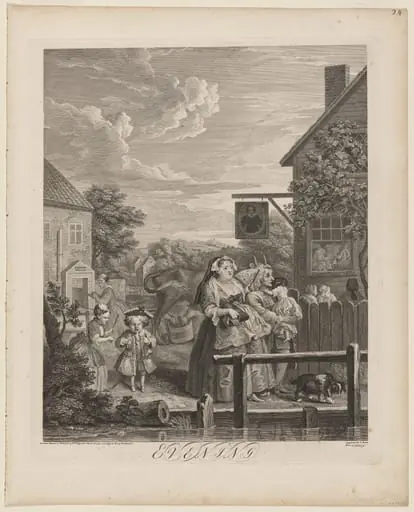
The Four Times of Day: Evening
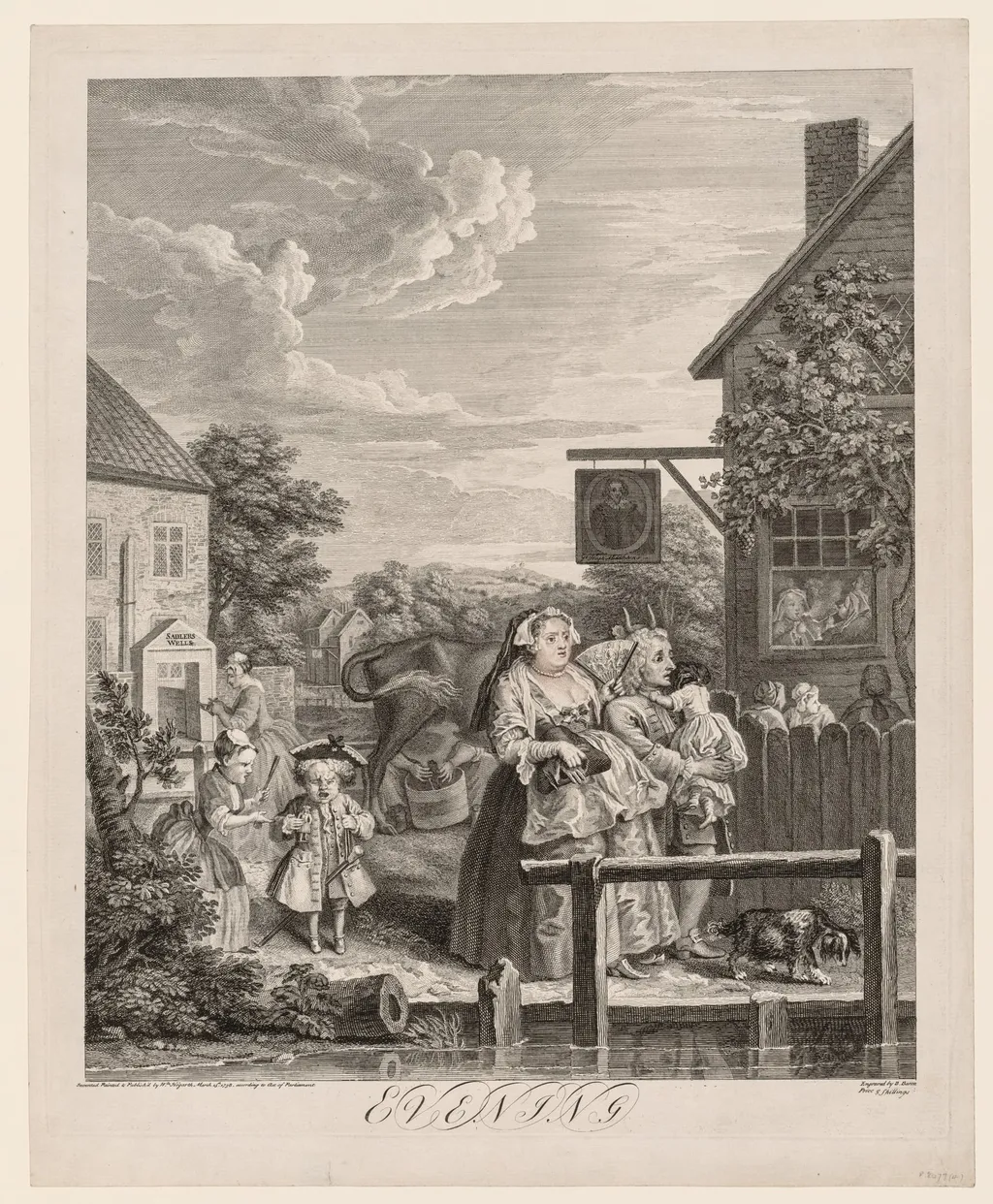
The Four Times of Day: Evening is a print by the Baroque artist William Hogarth. It dates from 1738 and is held in the collection of the Cleveland Museum of Art.
About this work
Overview
Hogarth, trained as an engraver, turned to printmaking to reach a broad public, combining keen observation with subtle moral judgment.
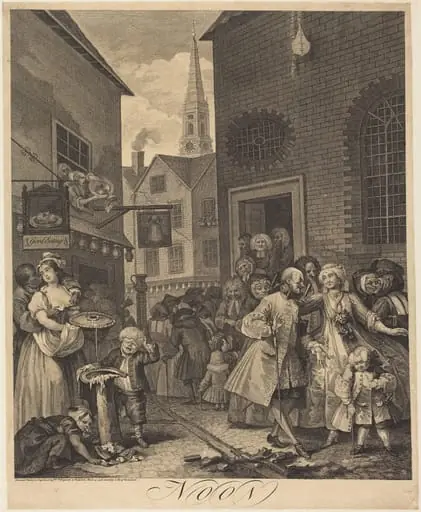
William Hogarth’s *The Four Times of Day: Evening* (1738) is the final print in a series depicting urban life across a single day. Created as an engraved print, it belongs to a body of work that uses everyday scenes to critique social behavior. Hogarth, trained as an engraver, turned to printmaking to reach a broad public, combining keen observation with subtle moral judgment. Unlike grand historical paintings, his subjects were ordinary Londoners engaged in routine moments.
Subject & Meaning
The scene captures a quiet evening in a London street, where residents gather informally: a woman holds a child, a man stands nearby, and children play while a dog rests on a bench. The composition suggests communal familiarity, yet Hogarth’s attention to postures and expressions hints at underlying tensions—drowsiness, neglect, or quiet resignation. Rather than idealizing the moment, he presents it as a snapshot of urban life, where social bonds are real but fragile.
Technique & Style
Hogarth employed fine-line engraving to render texture and movement with precision. His use of chiaroscuro—delicate contrasts of light and shadow—guides the viewer’s eye toward the central figures without theatricality. The figures are rendered with naturalistic detail, avoiding idealization; clothing, gestures, and facial expressions convey individuality. The background is densely populated but carefully ordered, creating depth without clutter, characteristic of his narrative clarity.
History & Provenance
Produced in 1738, the series was published as engravings for public sale, reflecting Hogarth’s ambition to make art accessible beyond elite patrons. The prints were widely circulated and copied, establishing his reputation as a social commentator. *Evening* was not commissioned by royalty or the church but emerged from his own initiative, aligning with the rise of a literate, middle-class audience interested in visual storytelling and moral reflection.
Context
In early 18th-century London, rapid urbanization and shifting class dynamics created fertile ground for satire. Hogarth’s work responded to growing public interest in moral reform and social observation. While contemporaries painted mythological or aristocratic subjects, he turned to streets, taverns, and tenements. His prints engaged with debates about public behavior, hygiene, and civic order, positioning art as a tool for social critique rather than decoration.
Legacy
Hogarth’s *Four Times of Day* series influenced later generations of narrative artists and social realists, both in Britain and abroad. His approach—combining detailed observation with ethical undertones—paved the way for 19th-century genre painting and illustrated journalism. Though not part of the Baroque tradition, his work shares with it a concern for human drama, albeit grounded in contemporary reality rather than religious or mythological grandeur.
Artist & collection
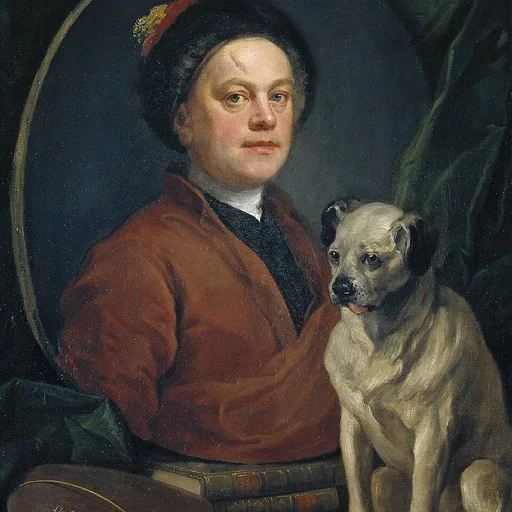
Artist
William Hogarth (; 10 November 1697 – 26 October 1764) was an English painter, engraver, satirist, cartoonist and writer.