Artwork
Satire on False Perspective
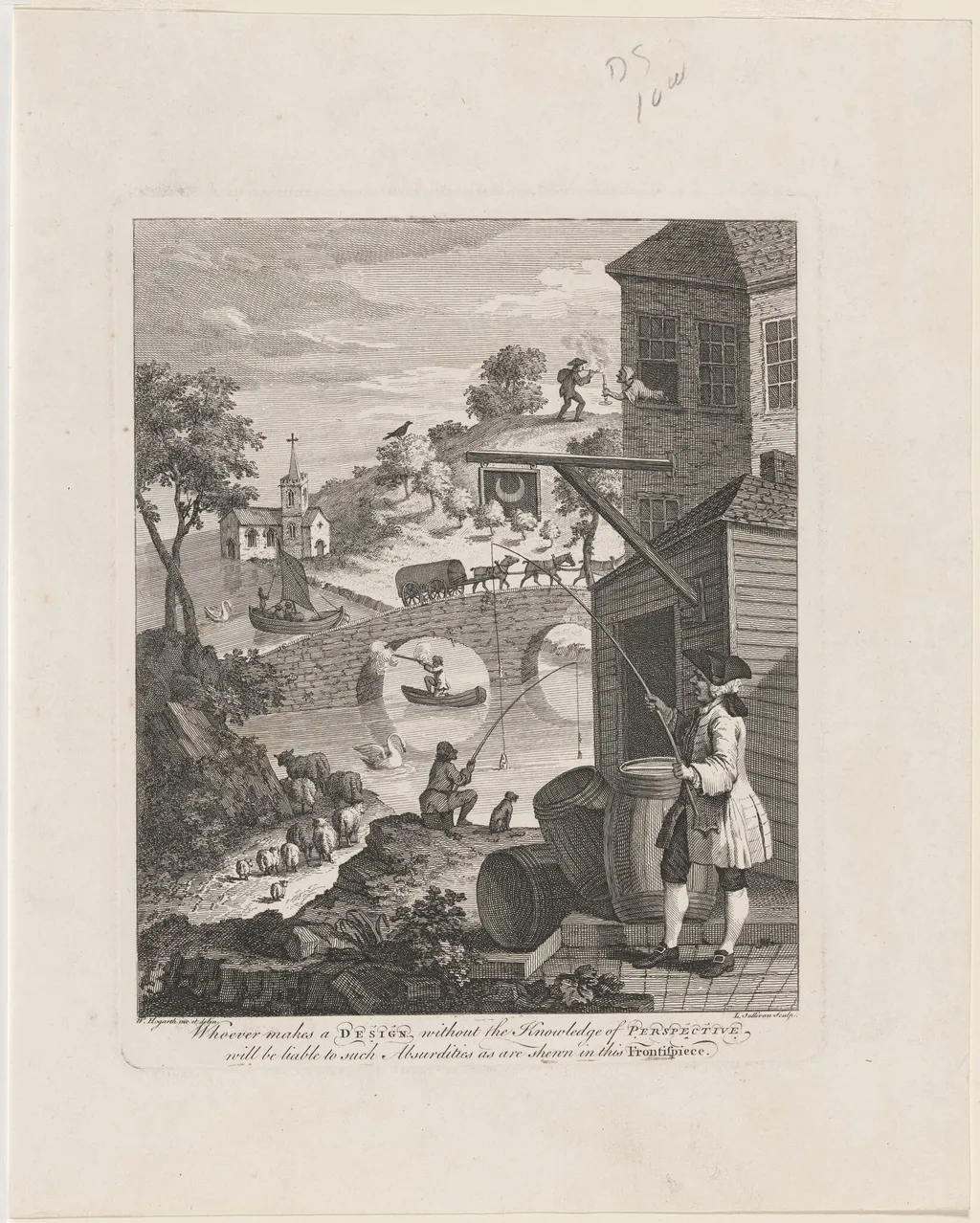
Satire on False Perspective is an ink print by the Romanticist artist Luke Sullivan. It dates from 1754 and is held in the collection of the National Gallery of Art.
About this work
Overview
Luke Sullivan’s 1754 print, titled Satire on False Perspective, is executed as an engraving and etching on laid paper.
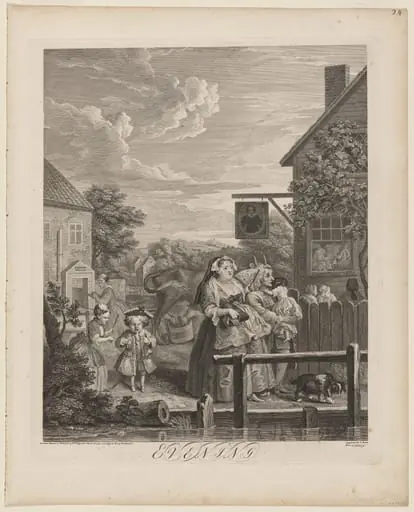
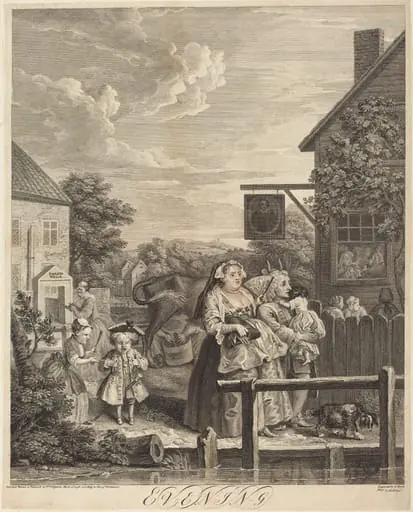
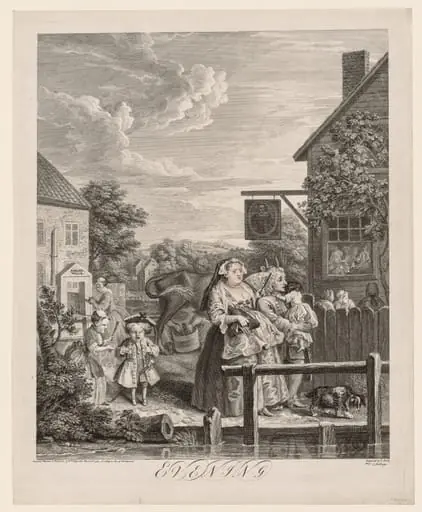
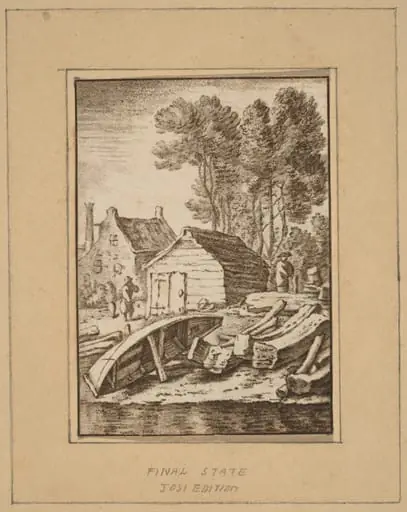
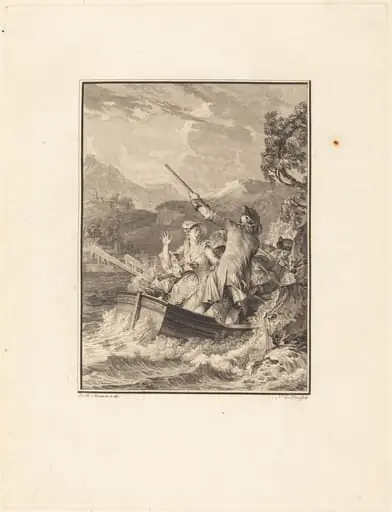
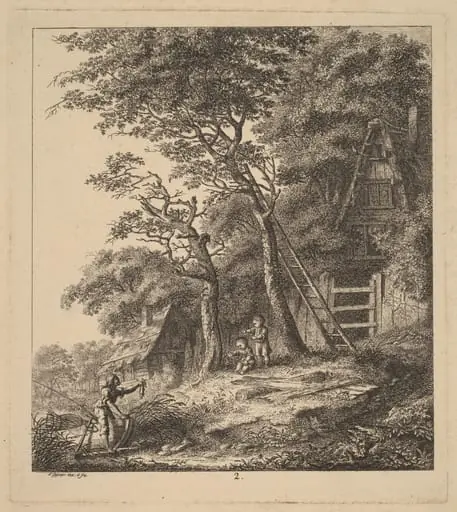
Luke Sullivan’s 1754 print, titled Satire on False Perspective, is executed as an engraving and etching on laid paper. The work presents a bustling village tableau populated by figures engaged in everyday tasks—fishing, herding, rowing—while the surrounding architecture and landscape are deliberately distorted. Buildings tilt, trees appear inverted, and a church spire leans absurdly, creating a visual puzzle that foregrounds the artist’s critique of faulty spatial representation.
Subject & Meaning
The composition juxtaposes ordinary rural activity with overtly erroneous perspective, using exaggerated mistakes to underscore the consequences of neglecting the principles of depth. A man in a hat pulls a rope attached to an oversized barrel, while two figures seem to hover on a roof, and cows tread a warped path. The caption explicitly mocks the lack of perspective knowledge, turning the scene into a didactic illustration of artistic missteps.
Technique & Style
Sullivan combines engraving’s fine, incised lines with the broader, more spontaneous marks of etching, allowing both precise detail and expressive exaggeration. The laid paper surface contributes a textured backdrop that accentuates the stark contrasts between correctly rendered figures and the deliberately skewed architecture. This hybrid approach enables the artist to control line weight, emphasizing the absurd angles and inverted forms that constitute the work’s satirical thrust.
History & Provenance
Created in the mid‑eighteenth century, Satire on False Perspective reflects contemporary concerns about the teaching of drawing fundamentals in European art academies. While specific ownership records are sparse, the print has been catalogued in several collections of British prints from the period, indicating its circulation among artists and educators as a visual cautionary example of perspective errors.
Artist & collection