Artwork
Woman Walking near a Ruin
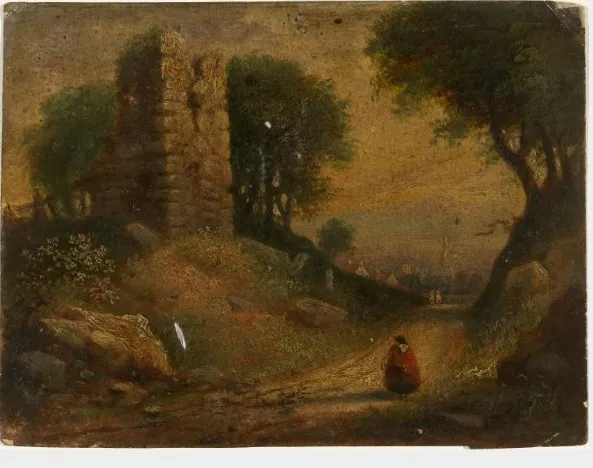
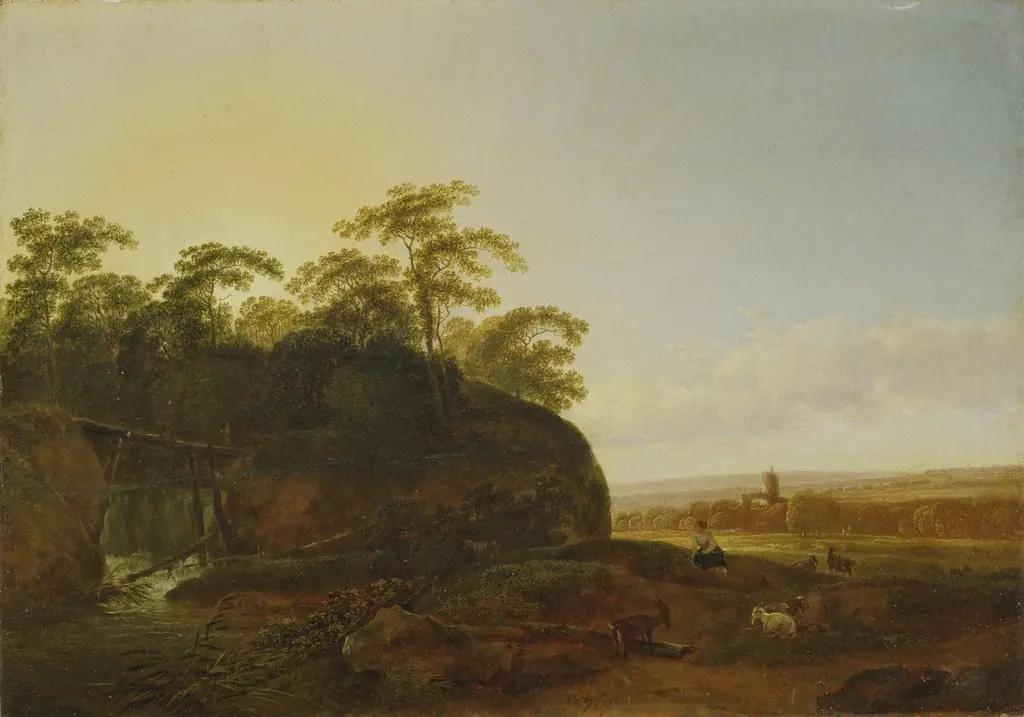
Woman Walking near a Ruin is an unspecified painting by the Realist artist William Howis senior. It dates from 1852 and is held in the collection of the National Gallery of Ireland.
About this work
Overview
Painted in 1852 by William Howis senior, this work captures a solitary figure moving along a quiet path beside a weathered stone ruin.
Painted in 1852 by William Howis senior, this work captures a solitary figure moving along a quiet path beside a weathered stone ruin. The scene is set in a rural landscape with distant hills, calm water, and scattered boats. The composition balances natural elements with human presence, emphasizing stillness and subtle movement. It resides in the National Gallery of Ireland, where it reflects the artist’s interest in quiet, observational landscapes.
Subject & Meaning
The lone woman, dressed in a red coat and hat, walks away from the viewer, her direction suggesting contemplation or passage through time. The ruin, overgrown with vegetation, implies decay and the passage of history. Together, figure and structure evoke a mood of quiet reflection, not narrative drama. The absence of other figures or clear symbolism invites a personal, meditative response rather than a defined story.
Technique & Style
Howis employs soft, muted tones with a warm, ochre sky to unify the scene. The woman’s red coat provides a restrained focal point against earthy greens and browns. Brushwork is deliberate but unobtrusive, favoring atmospheric harmony over detail. The ruin is rendered with loose, textured strokes, blending into the surrounding foliage. Light appears diffused, enhancing the painting’s calm, hazy quality.
History & Provenance
The painting was completed in 1852 and entered the collection of the National Gallery of Ireland, where it remains. Little is documented about its early ownership or exhibition history. Howis, active in Dublin, was known for landscape and genre scenes, and this work aligns with his broader practice of depicting everyday rural moments with quiet dignity.
Context
In mid-19th century Ireland, landscape painting often reflected a growing interest in national scenery and pastoral life. Howis’s work fits within this trend, avoiding grand historical themes in favor of intimate, unidealized views. The ruin may reference Ireland’s ancient sites, but its treatment is understated, emphasizing mood over monumentality, consistent with broader European tendencies toward lyrical realism.
Legacy
Though not widely exhibited beyond Ireland, the painting contributes to the understanding of Howis’s role in Irish art of the period. It exemplifies a quiet, observational approach to landscape that contrasts with more dramatic Romantic traditions. Its continued presence in the National Gallery of Ireland underscores its value as a representative work of domestic, contemplative painting in 19th-century Irish art.
Artist & collection

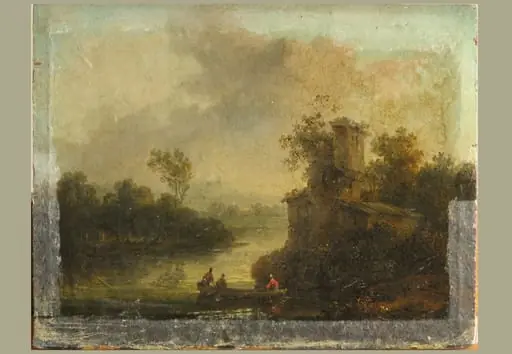 Peisaj cu râu și în dreapta castel cu ruine. Pandant: Peisaj cu râu și în stânga castel cu ruine
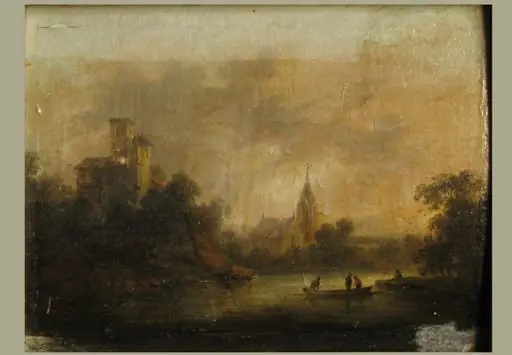 Peisaj cu râu și în stânga castel cu ruine. Pandant: Peisaj cu râu și în dreapta castel cu ruine
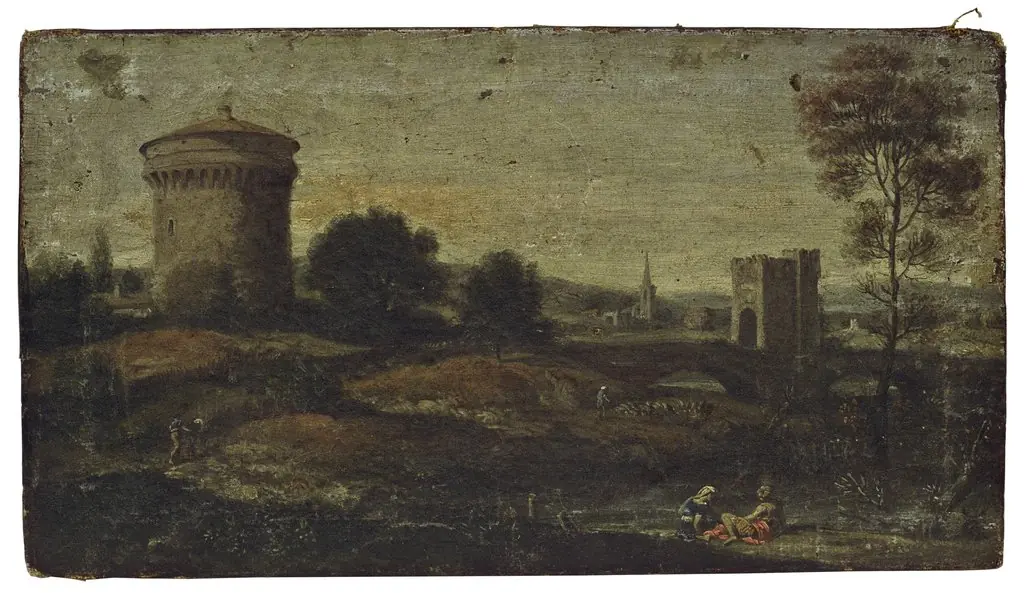 Landscape
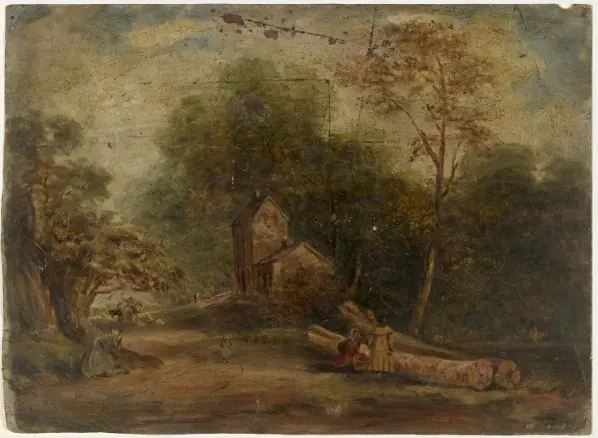 Woman and Coachman Talking beside a Road
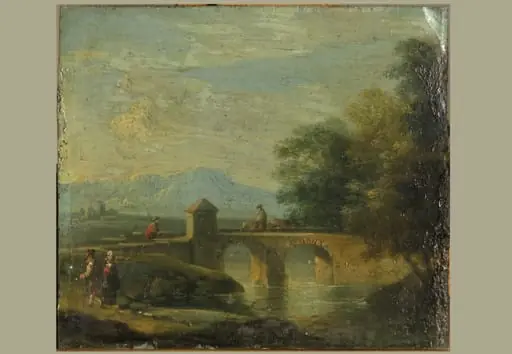 Mic peisaj cu pod. Pandant: Mic peisaj cu cetate
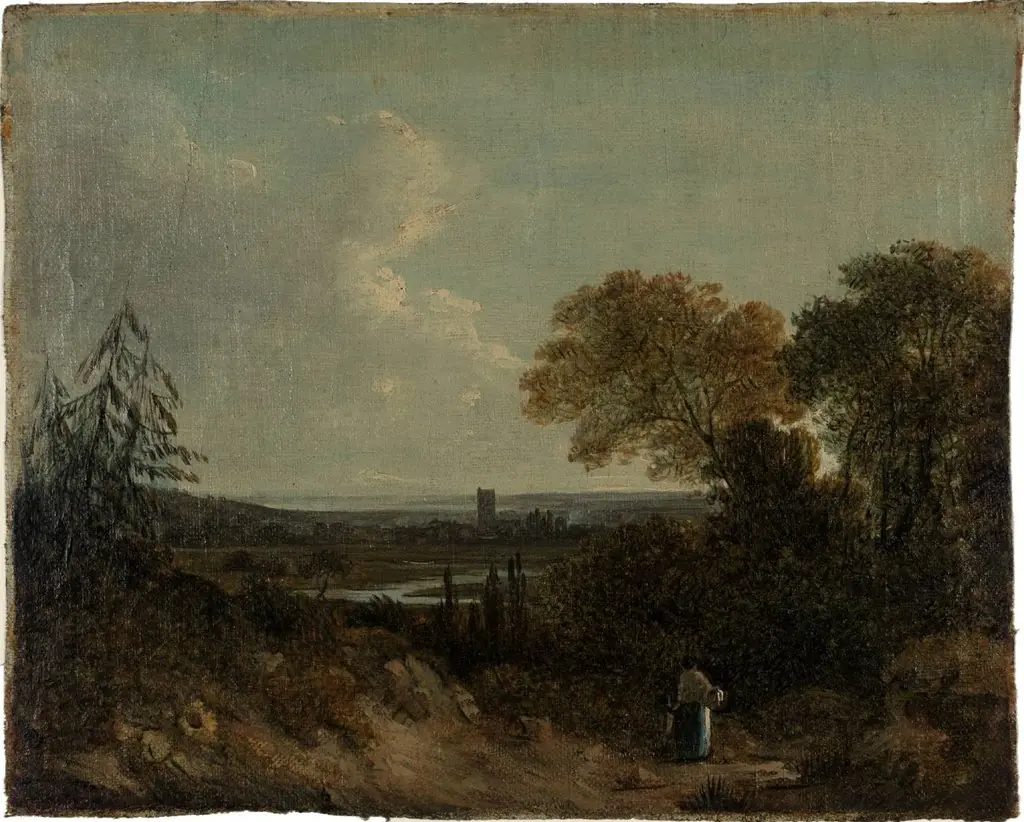 Dedham Vale
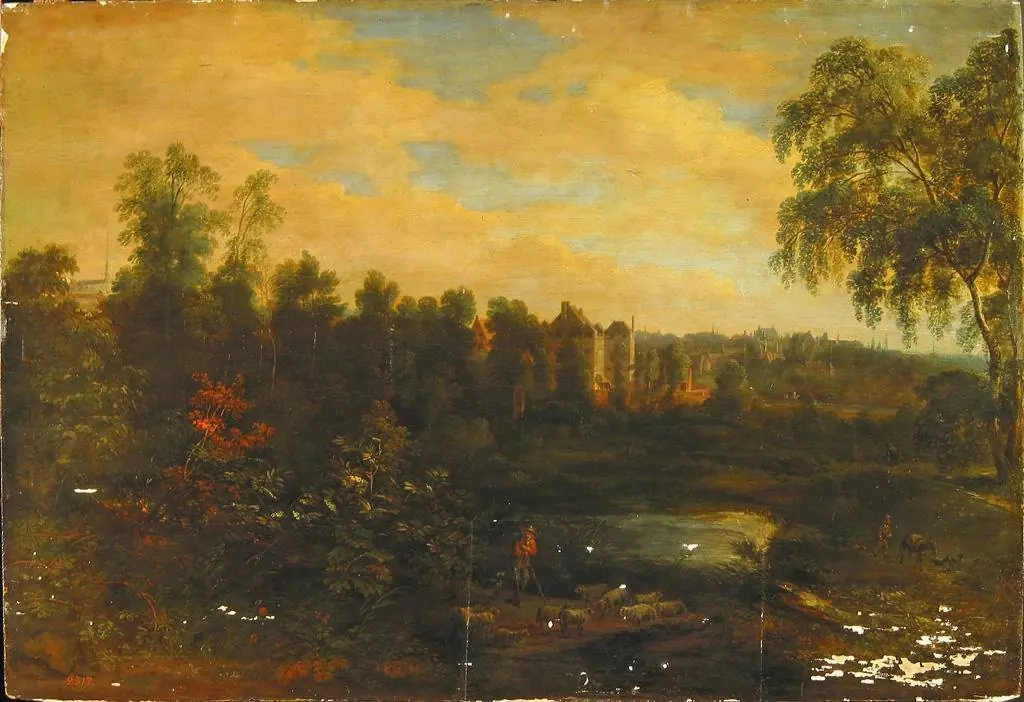 Landscape near Brussels
 Sunset beyond a Bridge
 Peisaj cu copaci și pod ; Peisaj cu copaci și ruine antice
 Dünenlandschaft mit Weg
 Landscape
 Landscape with Goats