Artwork
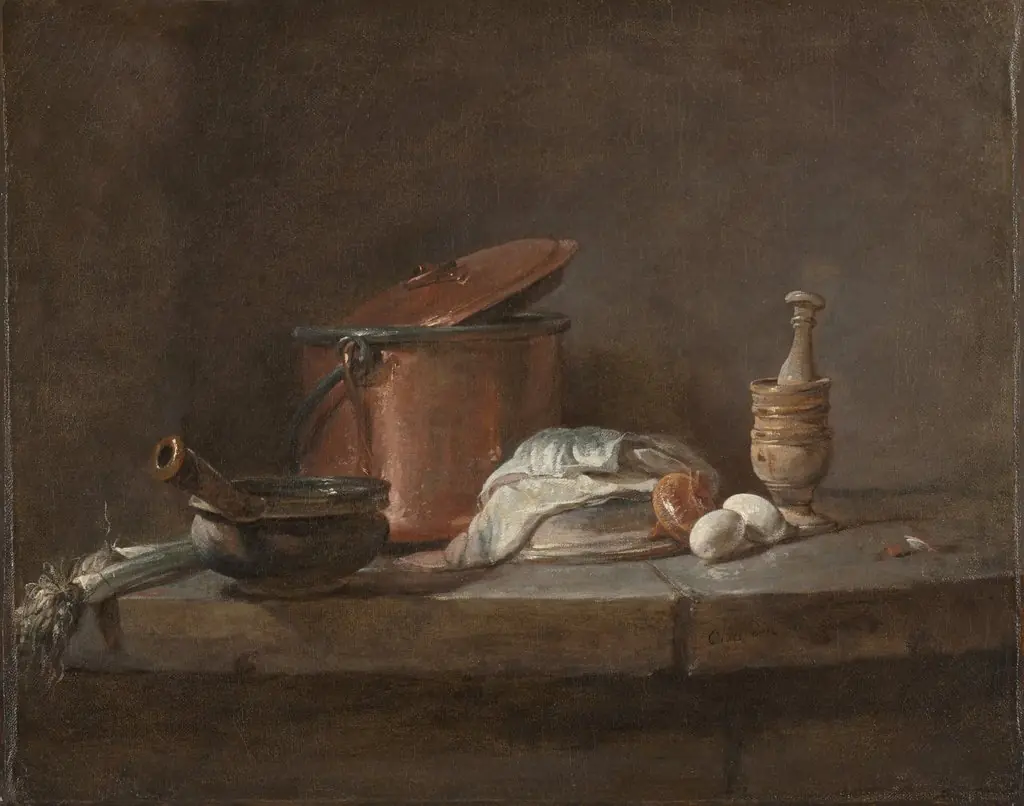
Still Life of Kitchen Utensils and Vegetables
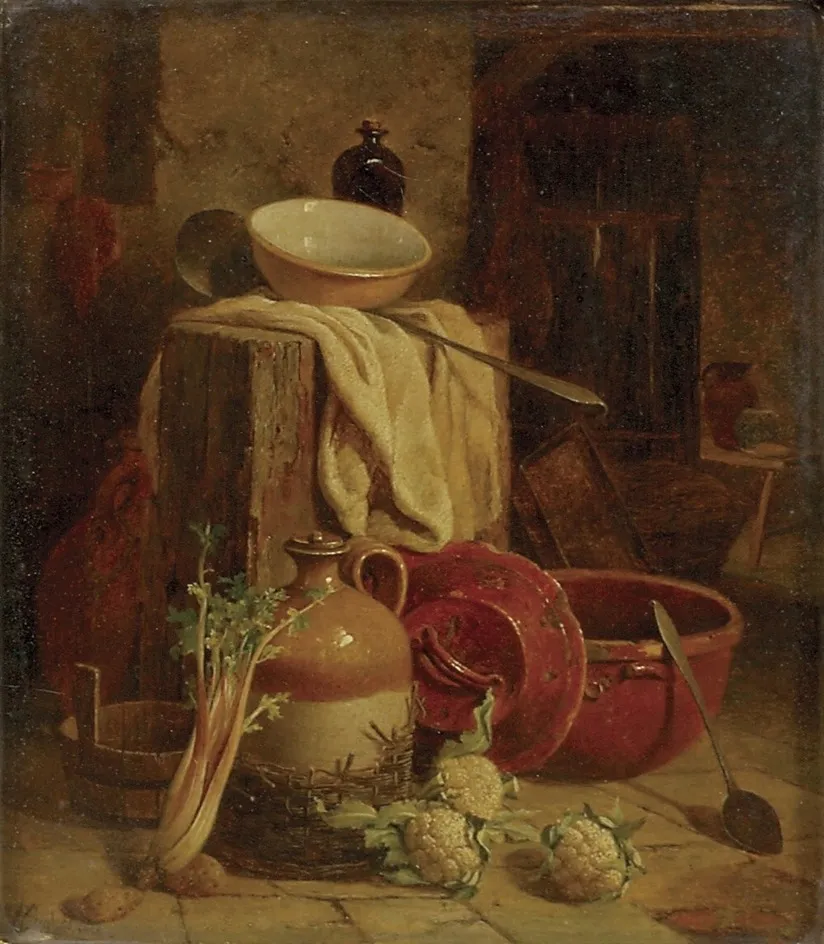
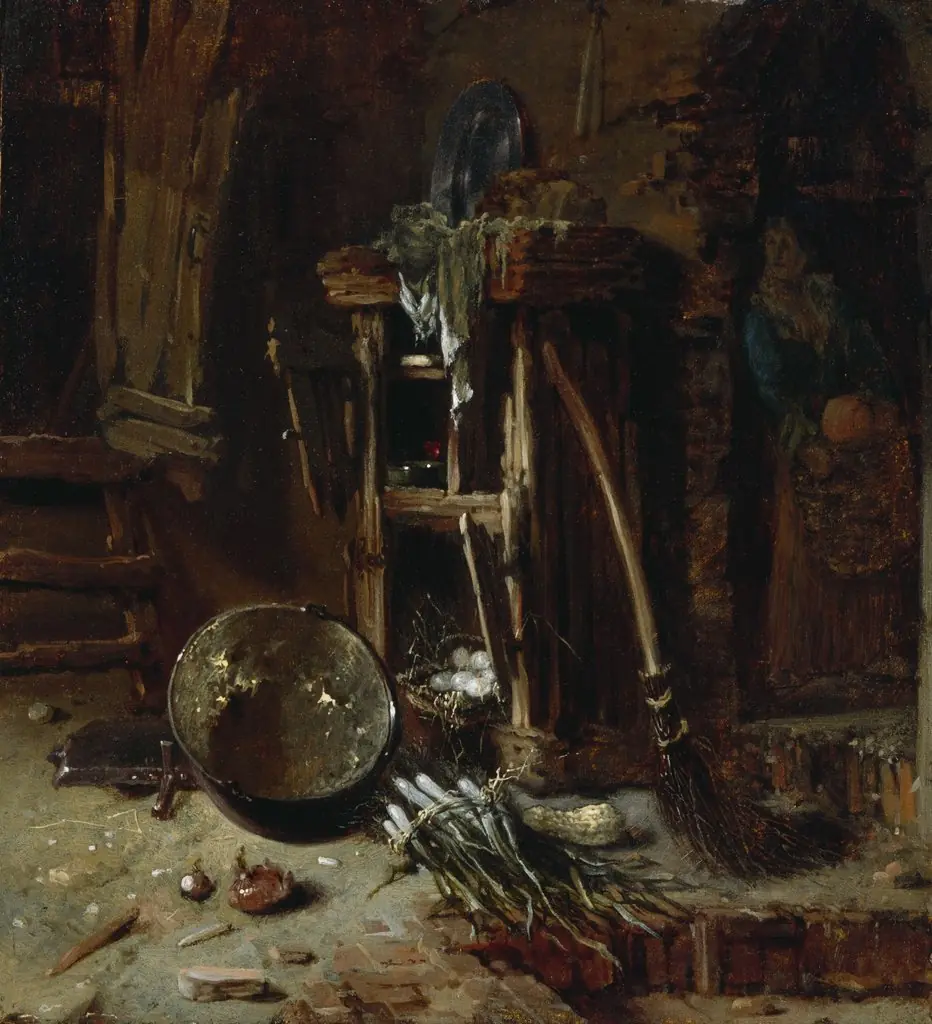
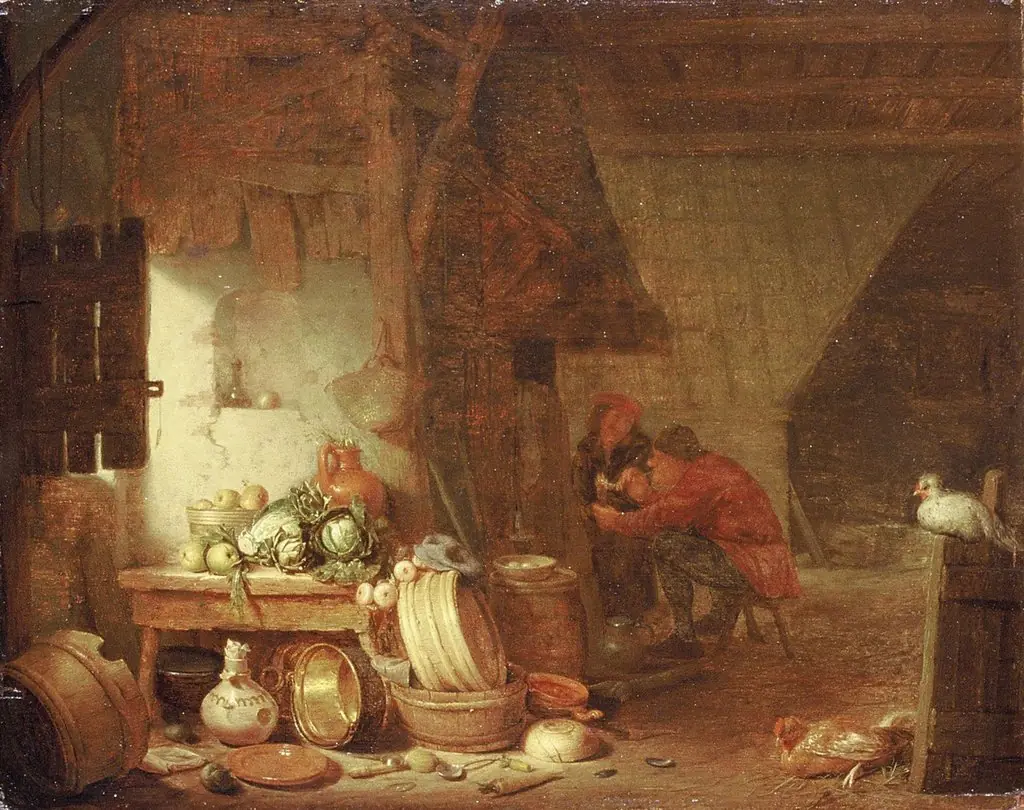
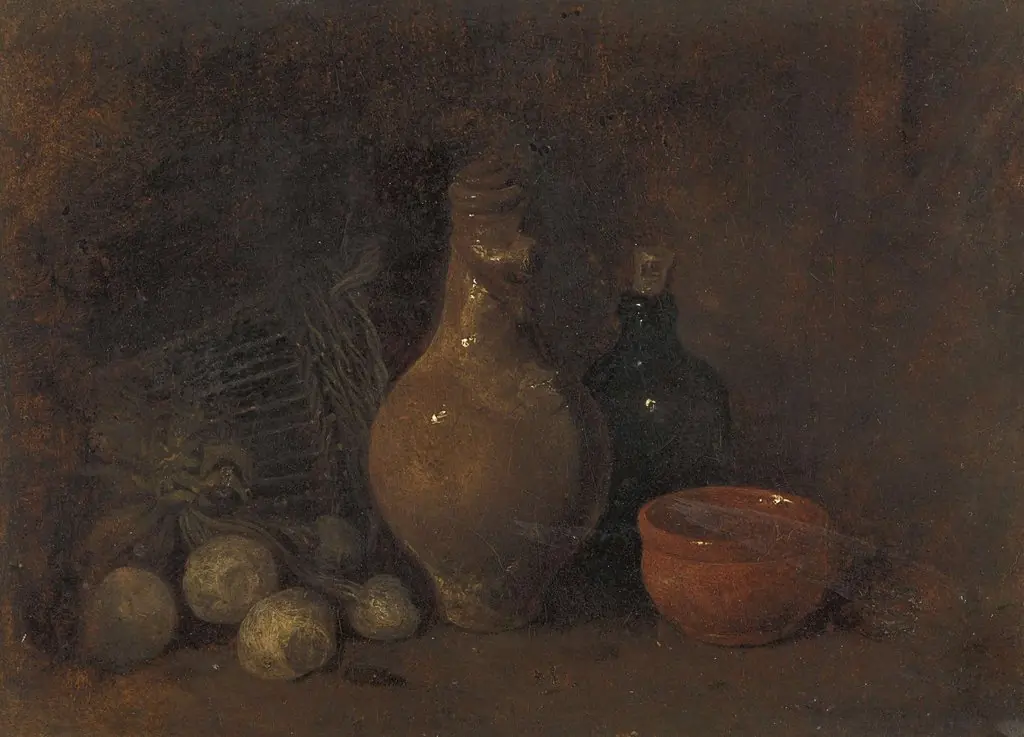
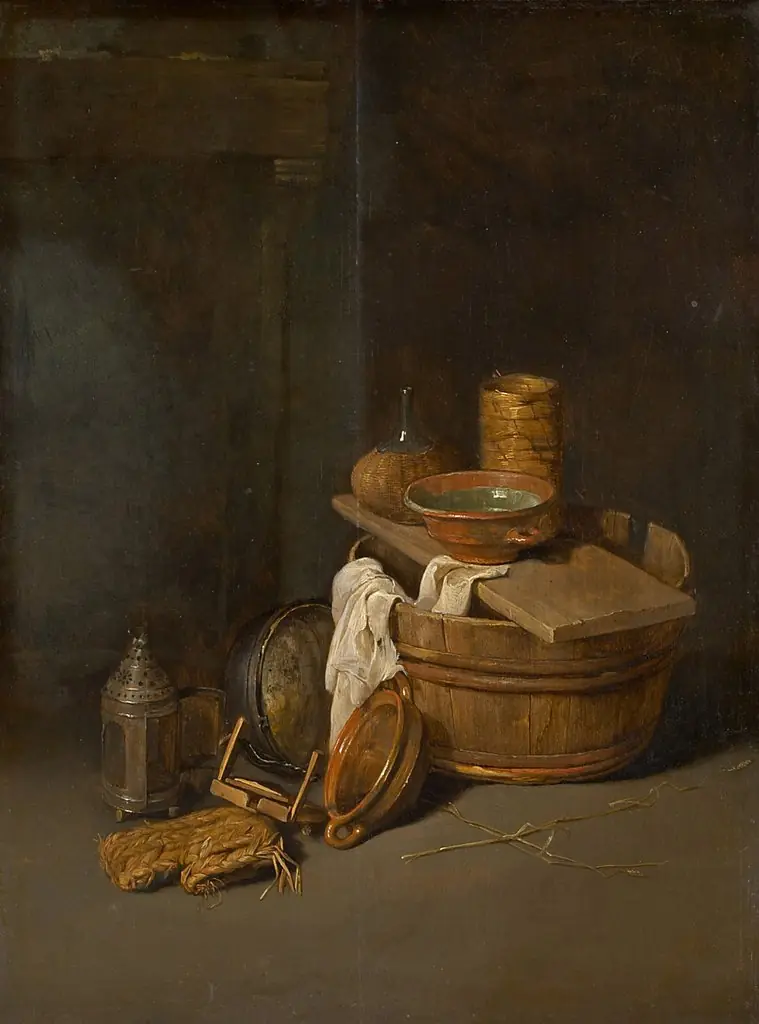
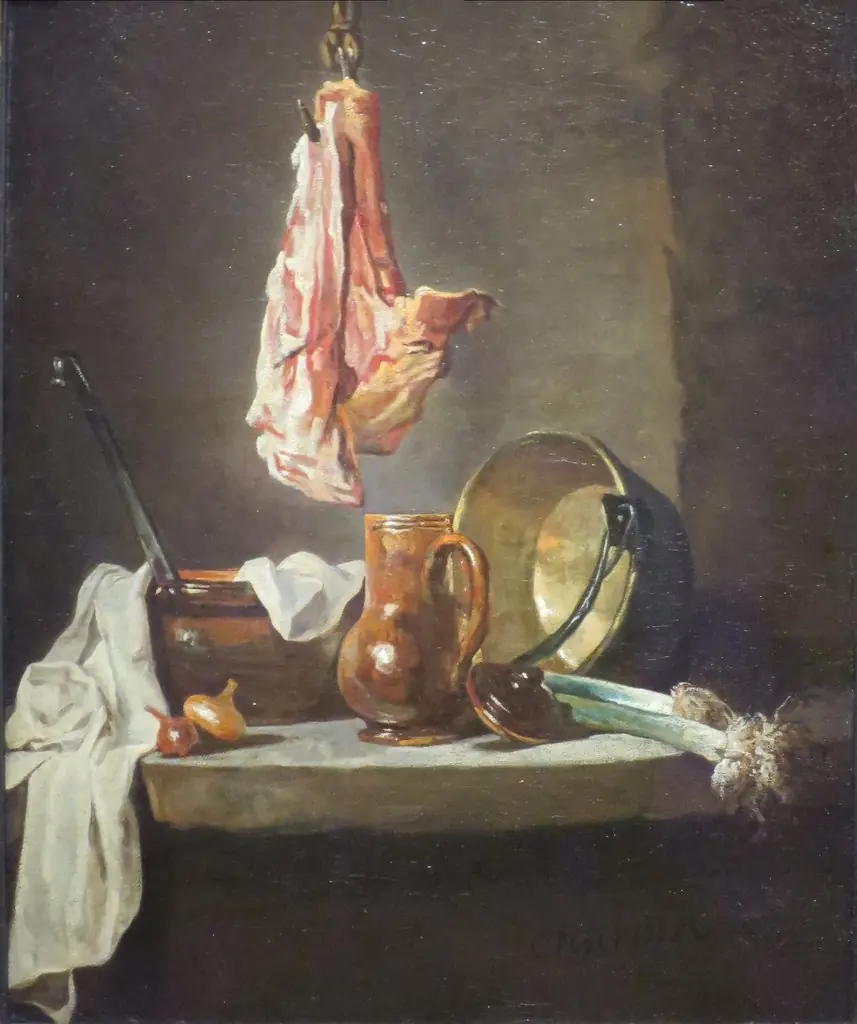
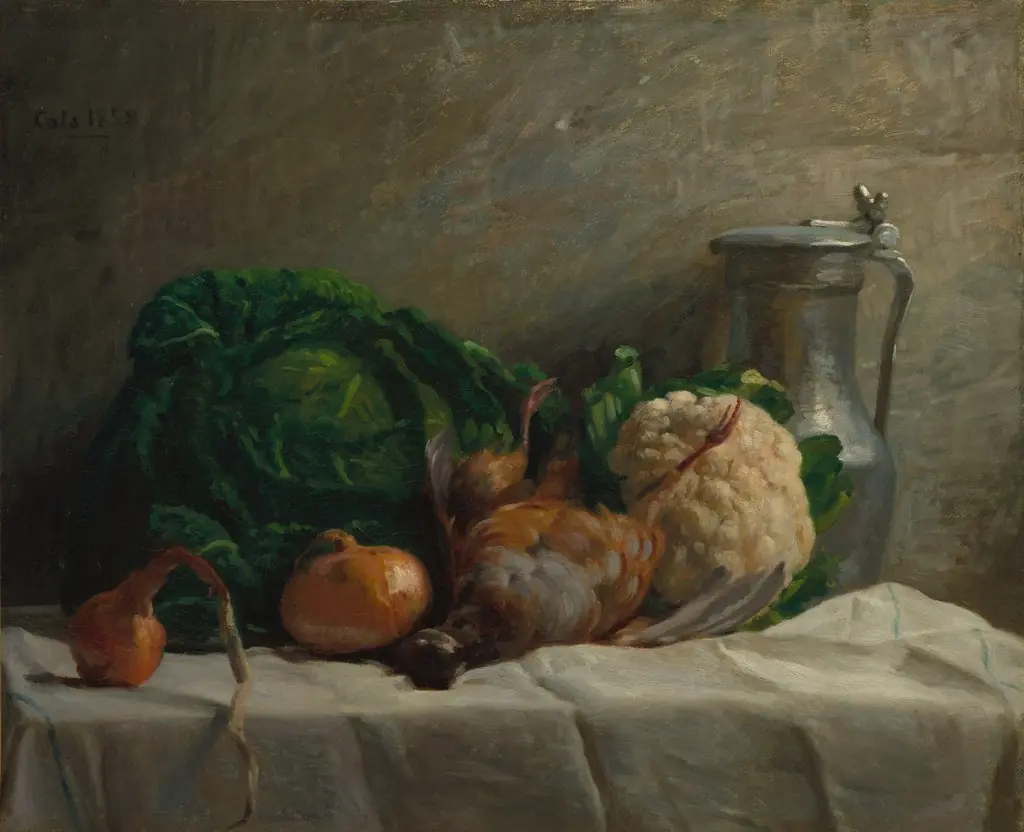
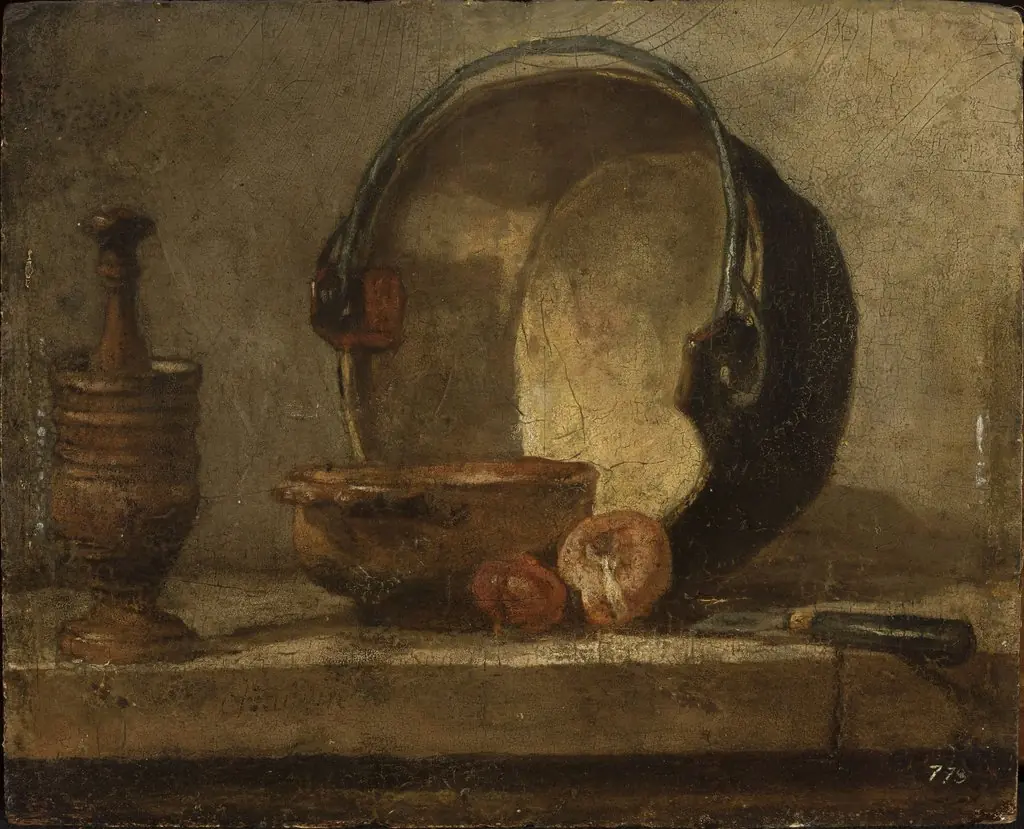
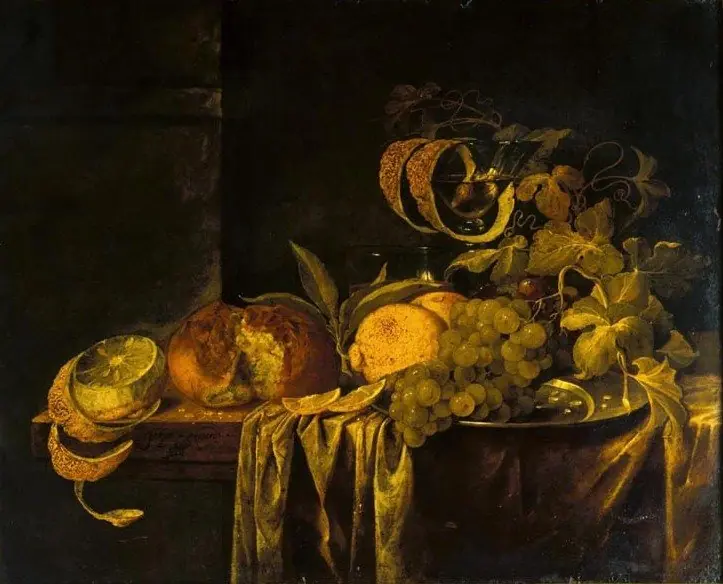
Still Life of Kitchen Utensils and Vegetables is an oil painting by the Realist artist William Hughes. It dates from 1868 and is held in the collection of the Ashmolean Museum.
About this work
Overview
Painted in 1868 by William Hughes, this oil-on-canvas still life presents an unadorned arrangement of domestic objects in a humble kitchen setting.
Painted in 1868 by William Hughes, this oil-on-canvas still life presents an unadorned arrangement of domestic objects in a humble kitchen setting. The composition centers on a wooden table bearing two bowls, a jug, and a basket of vegetables, with additional items placed on the floor nearby. The work reflects a quiet, observational approach to everyday items, avoiding theatricality in favor of quiet presence.
Subject & Meaning
The painting gathers common kitchen tools and seasonal produce—cauliflower, celery, a clay jug, a wooden spoon—without symbolic embellishment. Its meaning lies in the dignity of the ordinary: these objects, worn and utilitarian, suggest the rhythms of domestic labor. There is no narrative, only the quiet evidence of use, inviting contemplation of routine life rather than grandeur.
Technique & Style
Hughes employs muted earth tones and soft lighting to unify the scene, emphasizing texture over color contrast. Brushwork is deliberate but unobtrusive, capturing the roughness of wooden surfaces, the waxy sheen of vegetables, and the matte finish of pottery. The arrangement is deliberately unbalanced, with objects spilling slightly beyond the table’s edge, enhancing the sense of casual realism.
History & Provenance
Created in 1868, the painting entered the Ashmolean Museum’s collection through documented acquisition. No record of prior ownership or exhibition history prior to its museum accession is widely available. Its preservation suggests it was valued within its immediate context, though it never achieved broad public recognition during the artist’s lifetime.
Context
In mid-Victorian Britain, still life painting was often associated with decorative domesticity or moral allegory. Hughes’s work diverges from both, aligning instead with a quieter tradition of regional realism. His focus on humble kitchenware reflects a growing interest in the material lives of ordinary people, paralleling developments in social documentation and rural ethnography of the period.
Legacy
Though not widely reproduced or studied, the painting remains a quiet example of 19th-century British realism. It contributes to a lesser-known strand of still life that prioritizes authenticity over ornament. Its presence in the Ashmolean underscores institutional interest in vernacular art, preserving works that reflect everyday life beyond elite or commercial aesthetics.
Artist & collection
Artist
William Hughes painted still lifes and town scenes in 19th-century Britain, often capturing everyday objects and places in oils.