Artwork
The Studio Table
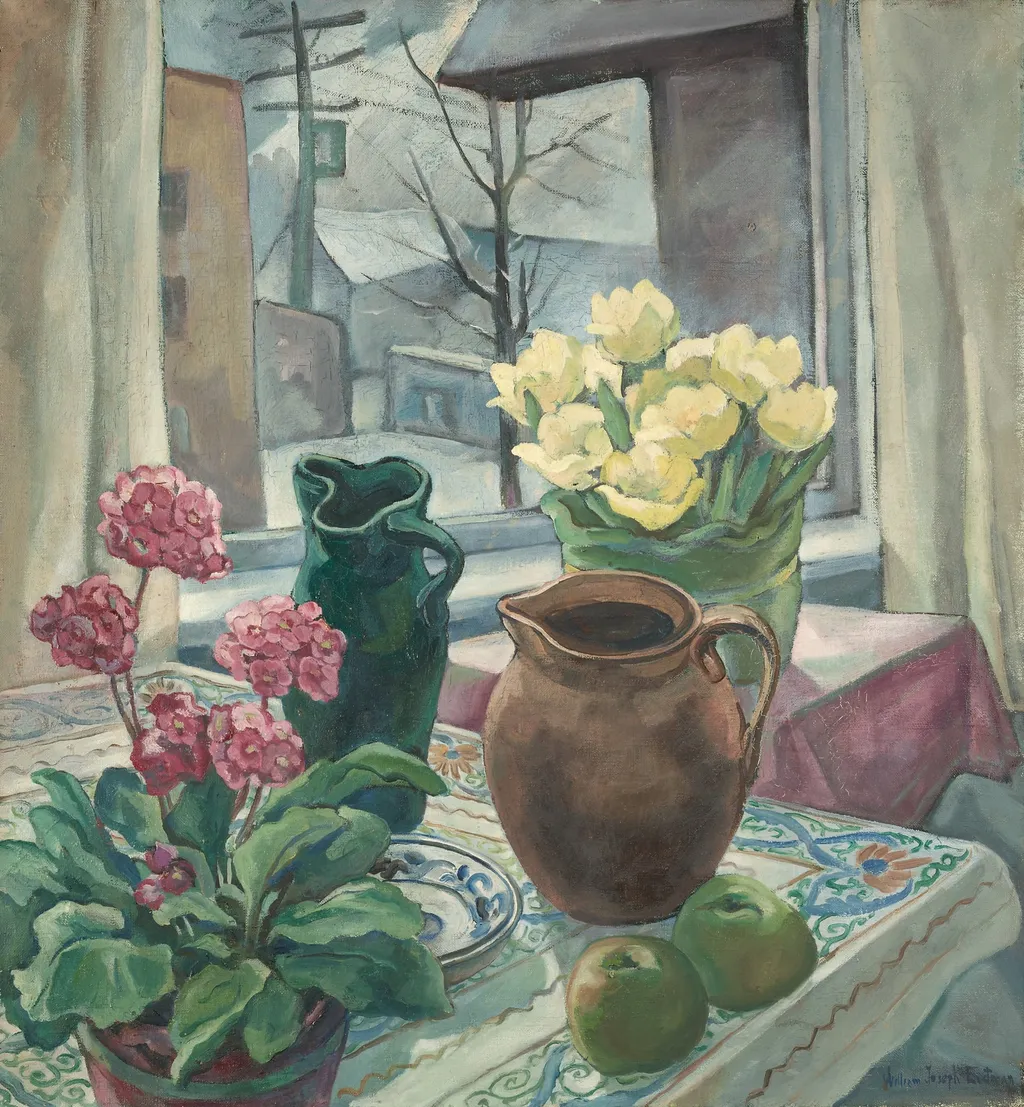
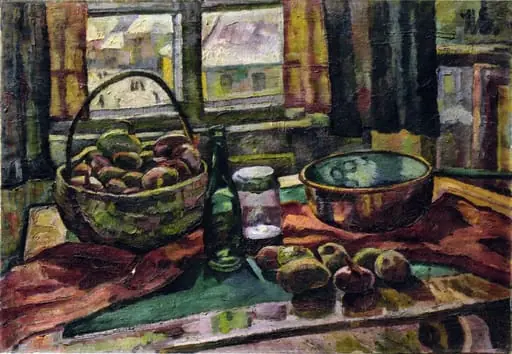
The Studio Table is an unspecified painting by the American Impressionist artist William Joseph Eastman. It dates from 1926 and is held in the collection of the Cleveland Museum of Art.
About this work
Overview
The painting captures a moment of stillness, emphasizing the interplay between interior warmth and the muted exterior landscape beyond the glass.
Painted in 1926 by William Joseph Eastman, The Studio Table is a quiet still life depicting a modest interior scene. The composition centers on a wooden table near a window, arranged with everyday objects: two vases, a pitcher, fruit, and a ceramic plate. The painting captures a moment of stillness, emphasizing the interplay between interior warmth and the muted exterior landscape beyond the glass.
Subject & Meaning
The objects on the table—flowers, fruit, and household vessels—suggest a personal, lived-in space, likely the artist’s own studio. Their arrangement is unadorned, avoiding theatricality. The contrast between the softly lit interior and the shadowed, barren branches outside implies a contemplative mood, perhaps reflecting on solitude, transience, or the quiet rhythm of daily creative life.
Technique & Style
Eastman employs loose, assured brushwork, particularly in the rendering of petals and fruit, where pigment is applied with visible, fluid strokes. The light falling on the table is rendered in warm tones, while the window’s view remains cool and subdued, creating a subtle tonal divide. The paint surface retains a sense of immediacy, balancing observation with expressive handling without veering into abstraction.
History & Provenance
The painting entered the collection of The Cleveland Museum of Art in 1927, shortly after its completion. It was acquired directly from the artist, indicating a direct connection between Eastman and the institution. No significant changes in ownership or restoration are documented, preserving its original condition and intent.
Context
Created during the interwar period, The Studio Table reflects a broader American interest in intimate, domestic subjects amid rising modernist experimentation. While European avant-gardes pursued radical abstraction, Eastman’s work aligns with a quieter American tradition—rooted in observation, modesty, and the poetic potential of ordinary things.
Legacy
Though not widely exhibited beyond regional circles, the painting remains a representative example of early 20th-century American still life. Its preservation in a major public collection underscores its value as a quiet, thoughtful record of an artist’s personal environment, offering insight into a less-documented strand of American painting.
Own this work as a print
Artist & collection

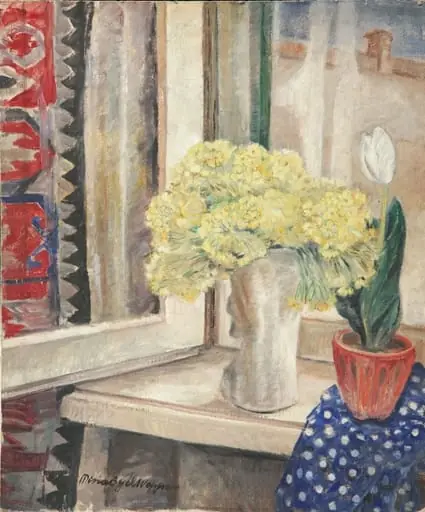 Flori (Ciuboțica cucului)
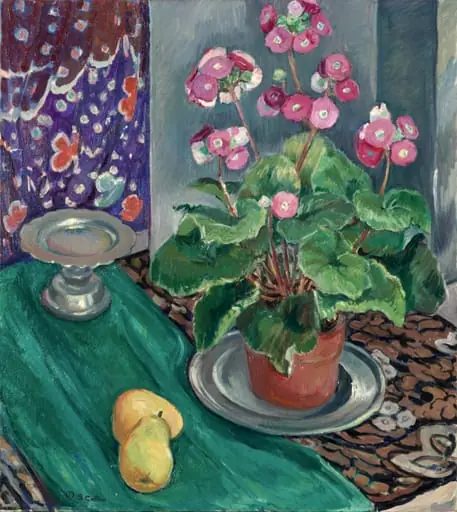 Primrose
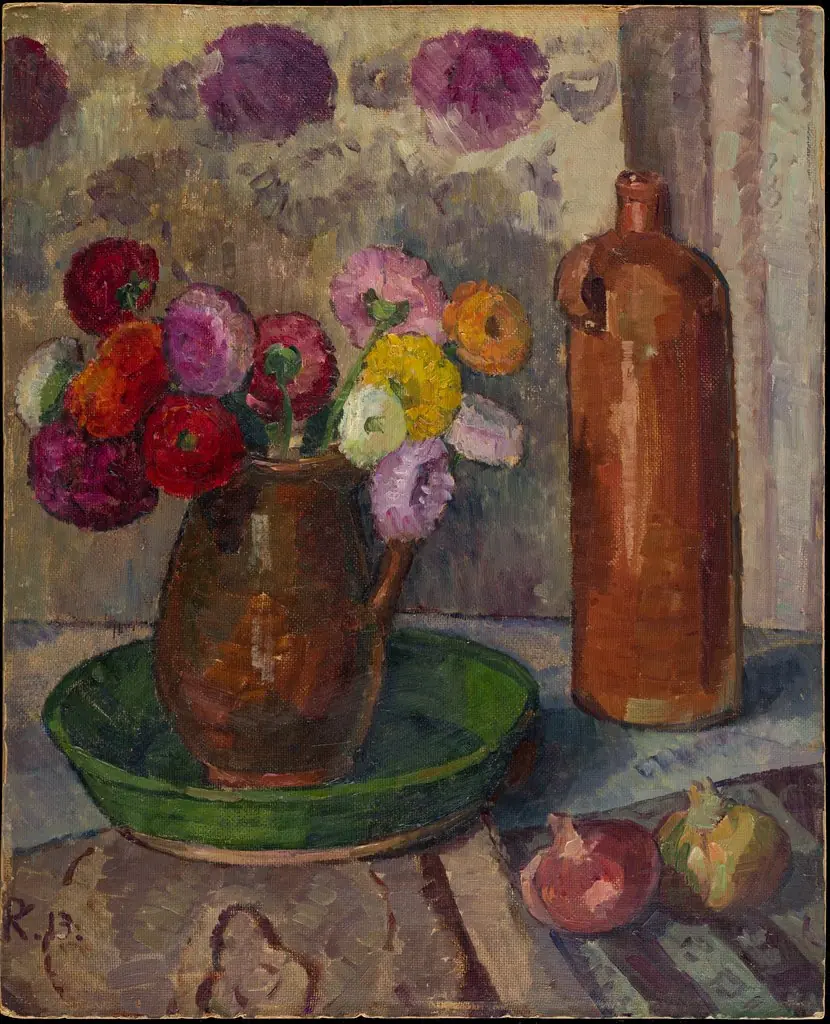 Still Life with Flowers, Onions and Stoneware Jug
 Vas cu margarete (Flori albe)
 Natură statică cu flori
 Bujori
 Composition with Hyacinth, Fruits and Blue Bowl
 Still Life with White Roses in a Vase
 Flowers
 Still Life with Jug and African Bowl
 Untitled
 Natură statică la fereastră