Artwork
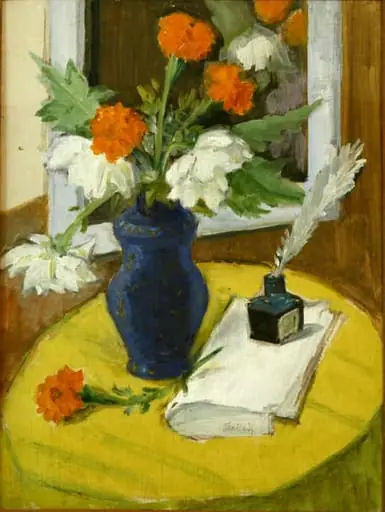
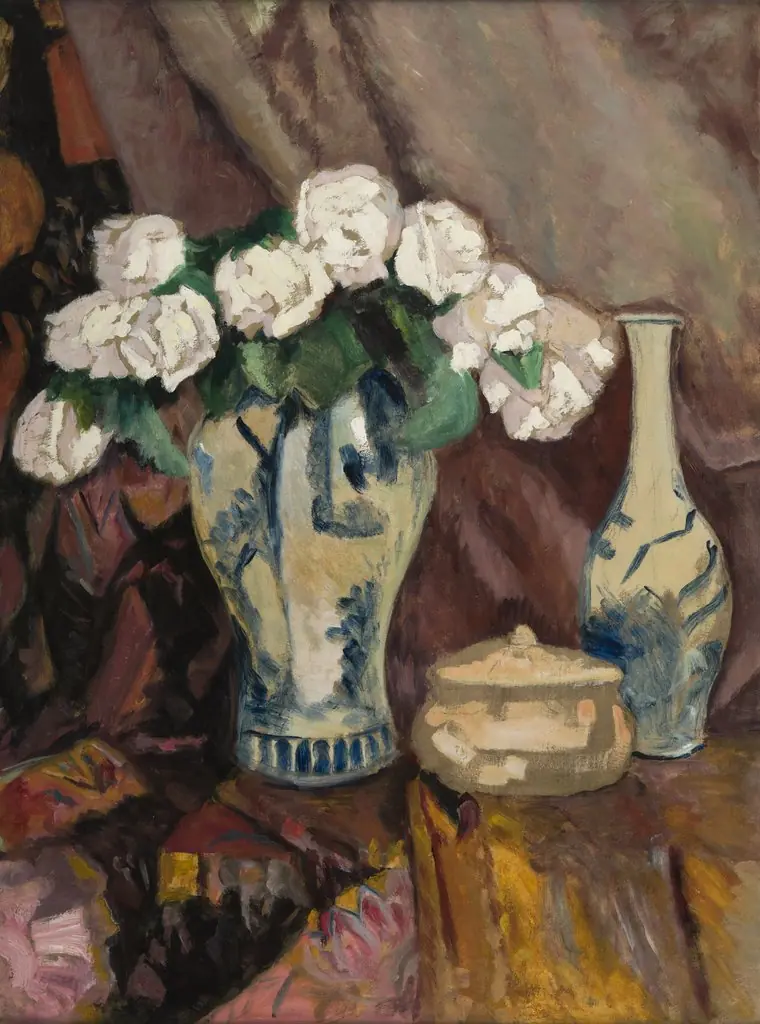
Vas cu margarete (Flori albe)
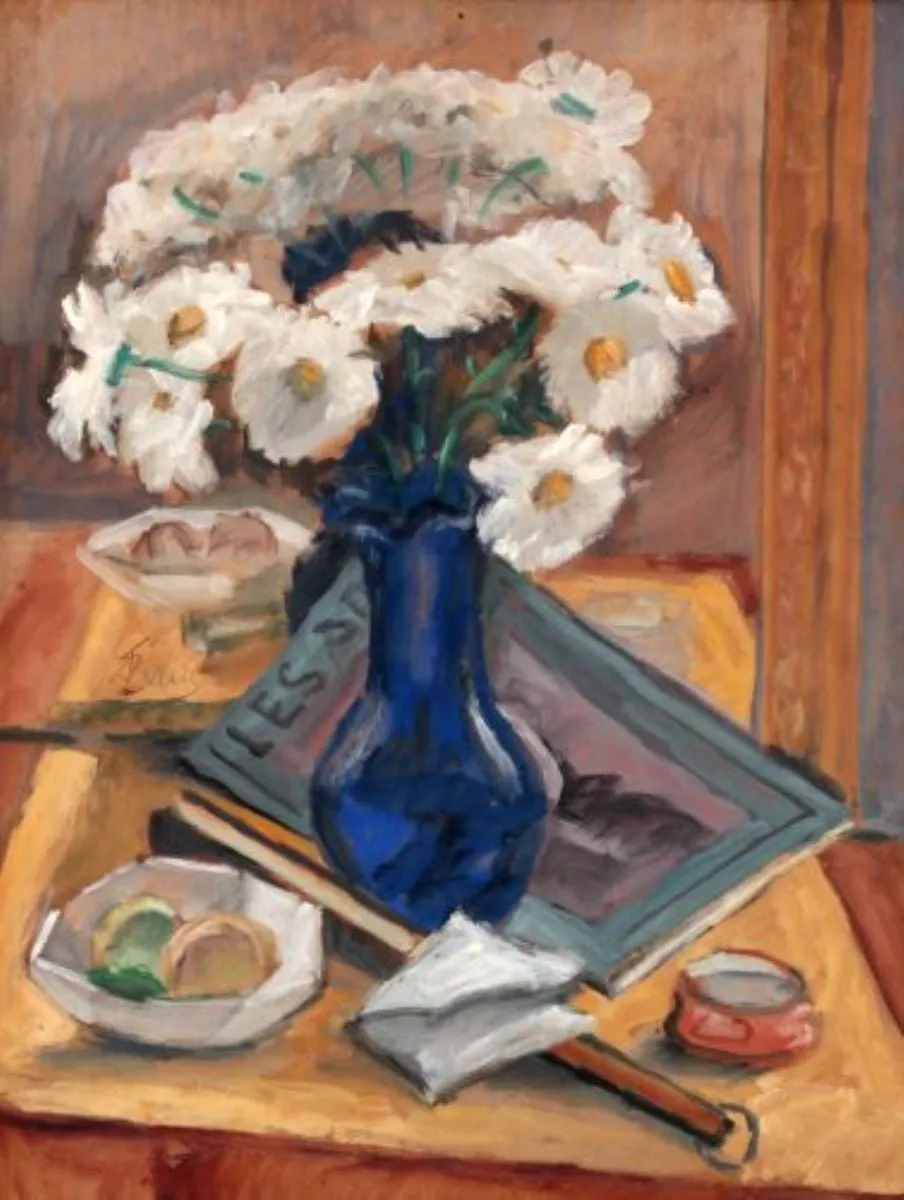
Vas cu margarete (Flori albe) is an unspecified painting by Theodor Pallady. It is held in the collection of the Art Museum of Constanta.
About this work
Overview
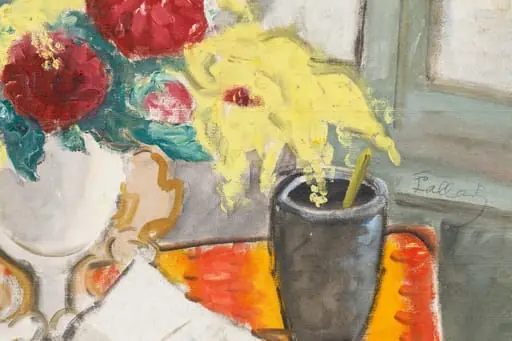
The work presents a modest tabletop arrangement rendered in oil, featuring a dark‑blue ceramic vase brimming with a loose cluster of white blossoms, their green stems subtly visible. Adjacent objects include a small bowl holding citrus slices, another containing bread‑like pieces, a red jar, a folded cloth, and a framed picture propped against the vase.
Subject & Meaning
The composition focuses on everyday domestic items, inviting contemplation of ordinary beauty. The contrast between the stark white flowers and the muted background suggests a quiet celebration of simple, transient moments, while the inclusion of food and a picture hints at themes of hospitality and personal memory.
Technique & Style
Visible, thick brushwork creates a tactile surface, especially on the vase and floral forms, employing an impasto approach that emphasizes materiality. A restrained palette of warm whites, soft yellows, and a dominant blue lends the scene a subdued yet harmonious atmosphere, allowing texture to convey depth without relying on vivid coloration.
Context
The painting aligns with a tradition of still‑life that emphasizes the material qualities of objects through pronounced brushstrokes. By foregrounding commonplace items, it reflects a broader interest in elevating the mundane within the visual arts, a concern shared by many early‑20th‑century realist and post‑impressionist painters.
Artist & collection
Artist
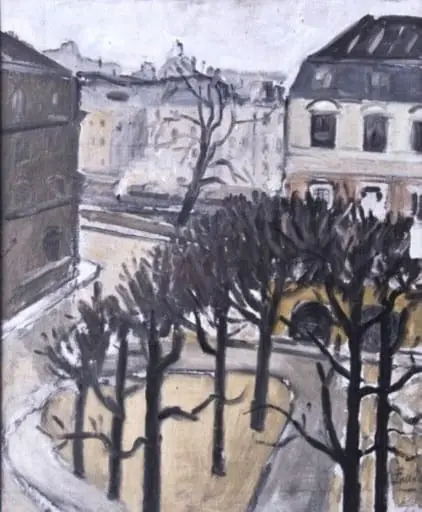
Theodor Pallady made still lifes and interiors in early 20th-century Bucharest. His Place Dauphine shows a quiet Parisian square, while Natură moartă (Ulcică cu flori și chibrituri) piles everyday objects on a table.…