Artwork
Nude
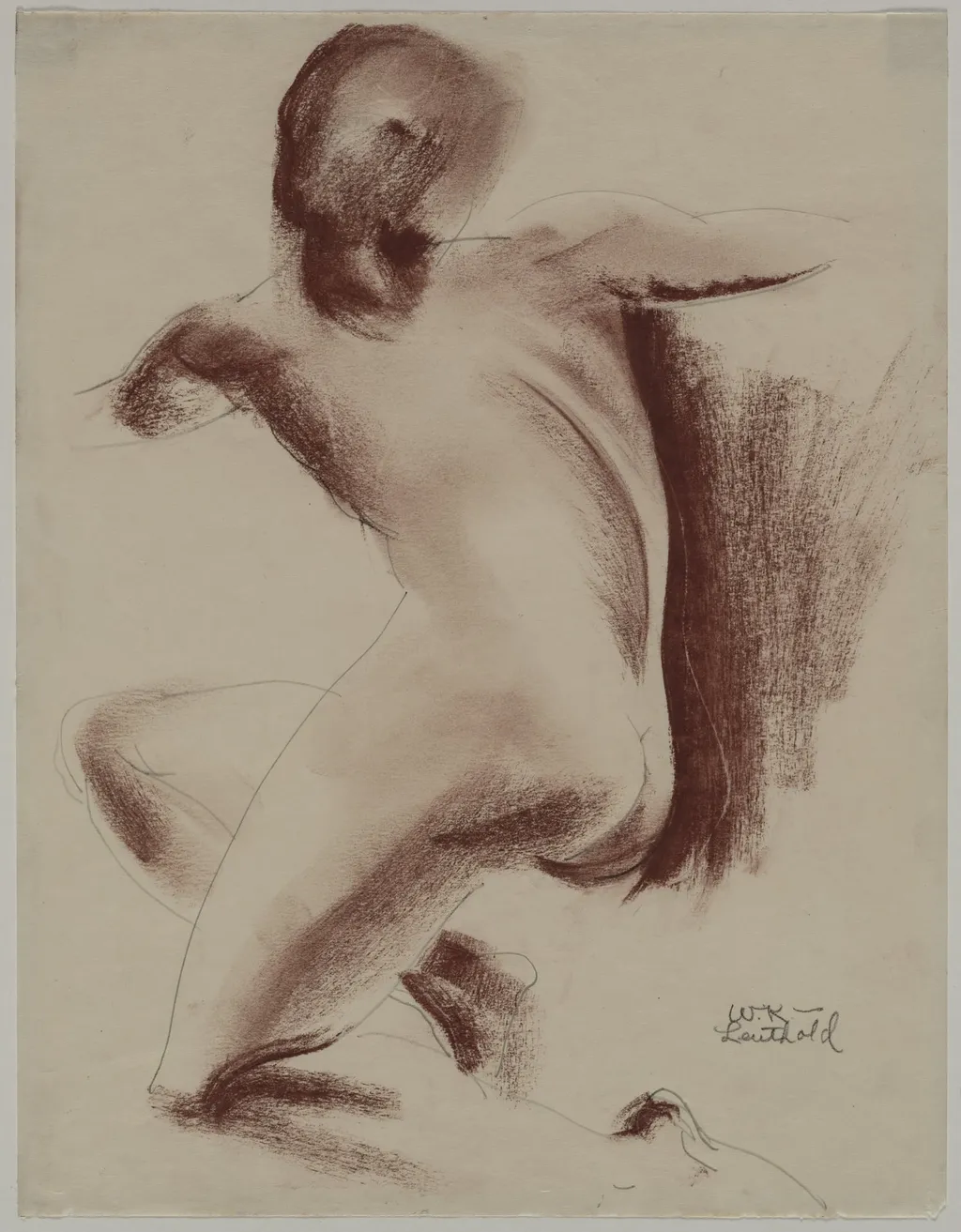
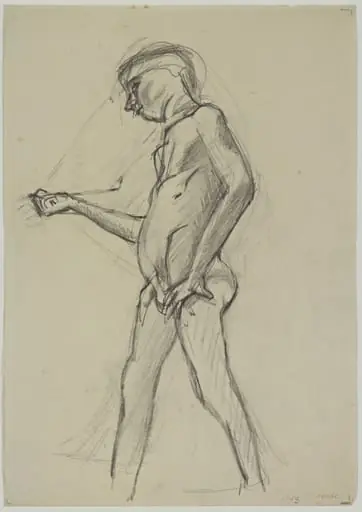
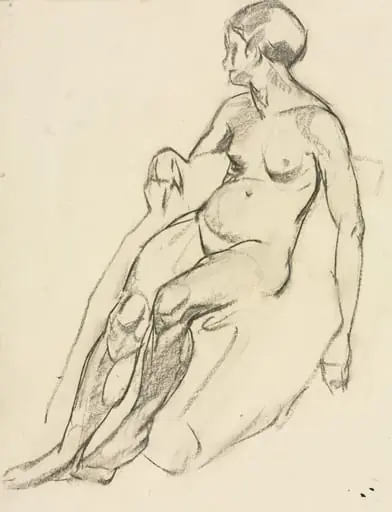
Nude is a drawing by William K. Leuthold. It dates from 1929 and is held in the collection of the Cleveland Museum of Art. Created around 1929, this drawing by William K.
About this work
Overview
Created around 1929, this drawing by William K. Leuthold is a spontaneous study of a human figure viewed from behind and the side. Executed in a rapid, gestural manner, it captures the form with minimal detail and no contextual elements. The work is held in the collection of The Cleveland Museum of Art, where it is valued for its immediacy and unembellished observation of the body.
Subject & Meaning
The subject is an anonymous nude figure, posed in a slight forward bend that suggests movement or a momentary pause. There is no narrative or symbolic context—only the physical presence of the body. The lack of facial features or environmental cues directs focus entirely to posture and volume, emphasizing the artist’s interest in anatomical form over storytelling.
Technique & Style
Leuthold employed loose, dark linework and smudged tonal areas to suggest volume and shadow. The drawing’s urgency is evident in its uneven strokes and lack of refinement, indicating a quick, observational approach. The light paper enhances the contrast of the dense marks, reinforcing the sense of spontaneity and direct engagement with the model.
History & Provenance
The drawing entered The Cleveland Museum of Art’s collection as part of its broader acquisition of 20th-century American drawings. Its provenance before museum acquisition is not documented, but its signature and style align with Leuthold’s known practice as a draftsman focused on figure studies during the 1920s and 1930s.
Context
Created during a period when American artists were increasingly turning to direct observation and informal figure studies, this work reflects a shift away from idealized forms toward more immediate, personal renderings. Leuthold’s approach aligns with contemporaries who valued the sketch as a vital tool for understanding anatomy and motion.
Legacy
Though not widely exhibited, the drawing remains a representative example of Leuthold’s working method—unpolished, attentive, and rooted in the act of seeing. It contributes to the understanding of how American artists of the early 20th century used drawing as a private, exploratory practice rather than a finished product.
Artist & collection