Artwork
deomonstration wash drawing
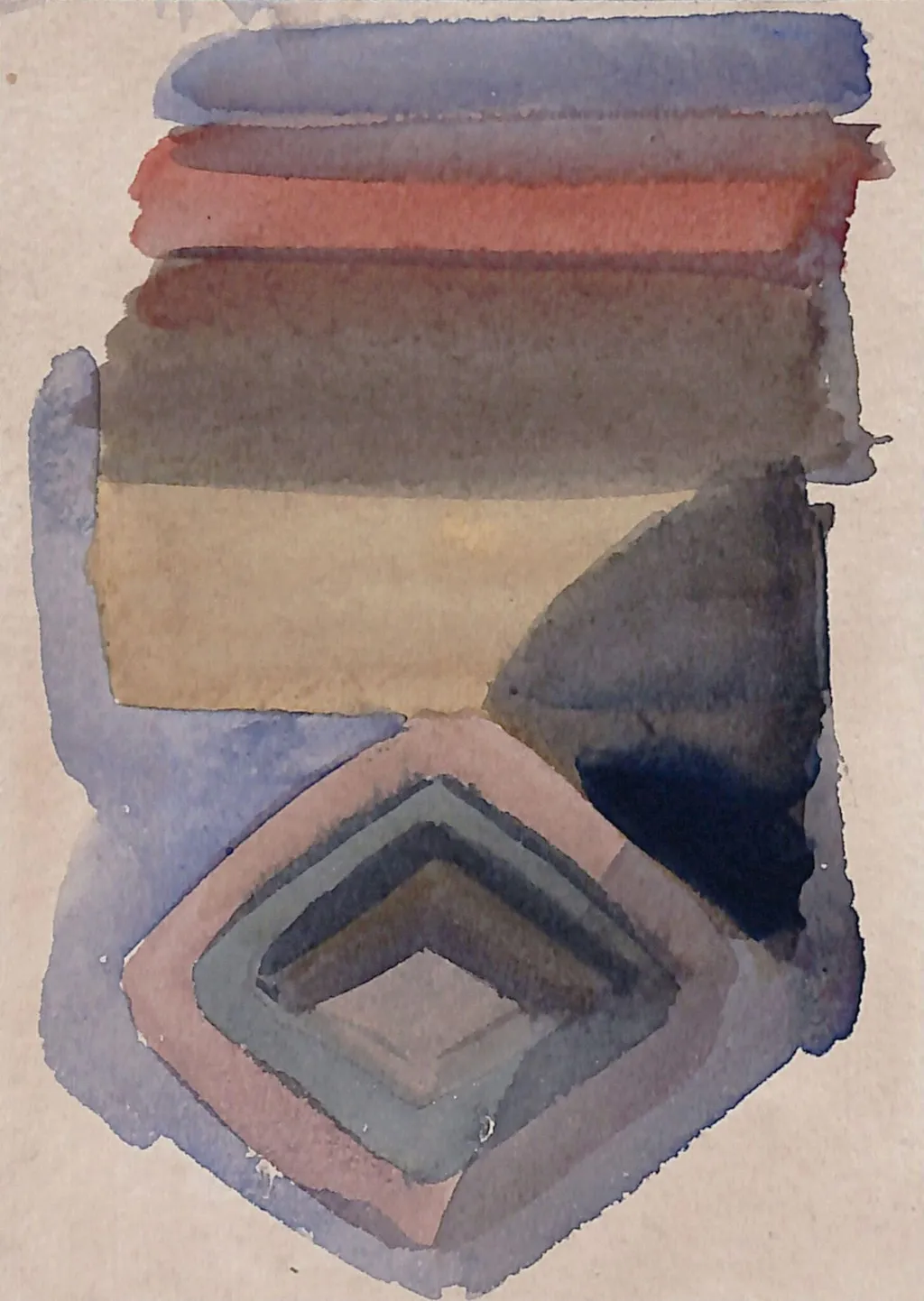
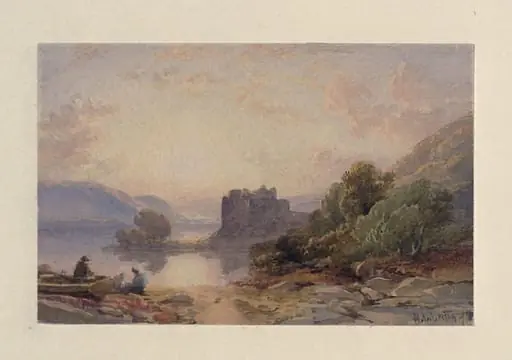
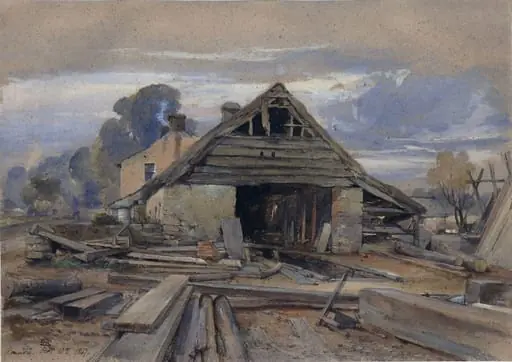
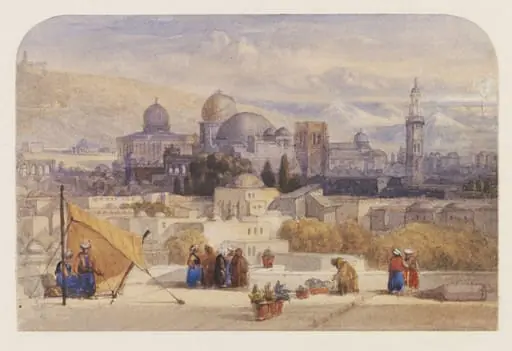
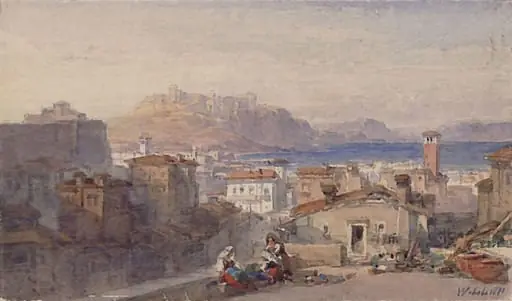
deomonstration wash drawing is a watercolor work on paper by the British Romanticist artist William Leighton Leitch. It dates from 8 and is held in the collection of the Victoria and Albert Museum.
About this work
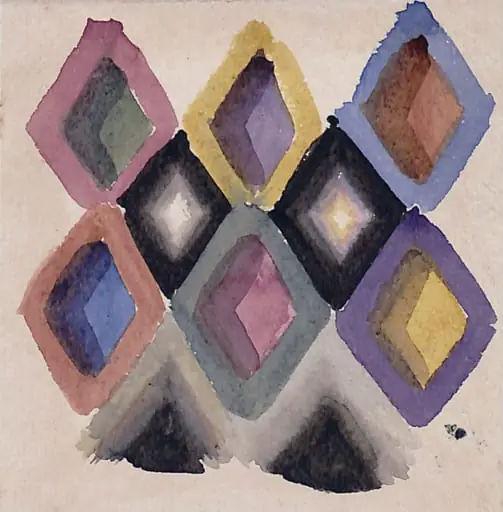
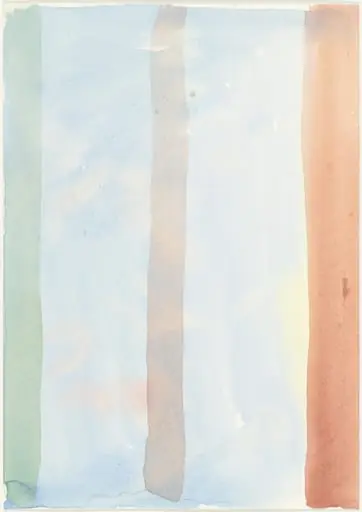
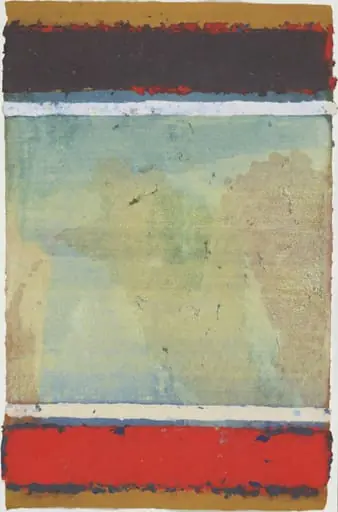
There’s a light beige rectangle at the bottom, then a dark purple trapezoid on the right, and a set of nested triangles in the center.
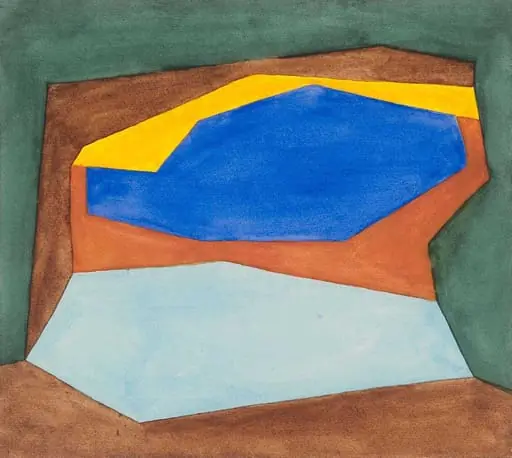
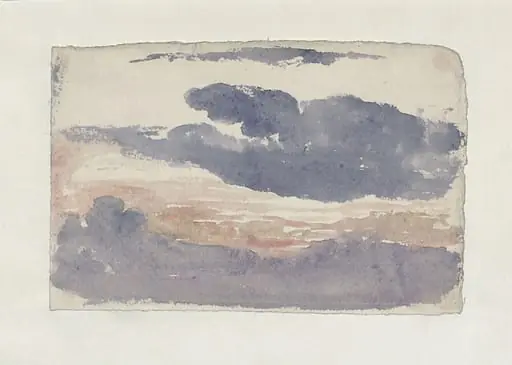
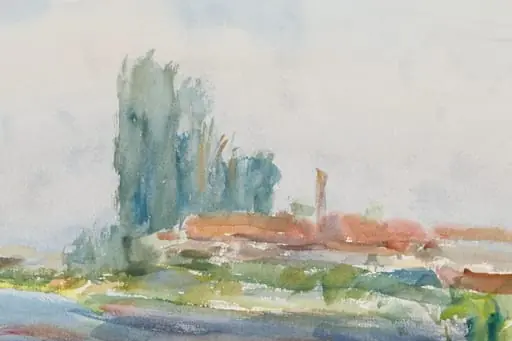
This painting shows simple shapes stacked in layers. There’s a light beige rectangle at the bottom, then a dark purple trapezoid on the right, and a set of nested triangles in the center. The top half has three wavy horizontal bands—blue, red, and a faded brown. The edges are rough and the colors blend slightly.
The artist used watercolor, letting the paint spread naturally. The date on the painting is September 6, 1844, written in the style of the time.
Next, check out the Victoria and Albert Museum to see more of this artist’s work.
Overview
This watercolour wash drawing by William Leighton Leitch was created on June 9, 1844, as a pedagogical exercise. It demonstrates the controlled yet fluid application of transparent pigments, emphasizing tonal gradation over detailed form. The work lacks a representational subject, instead focusing on the interaction of colour and moisture on paper. Its inscription on the reverse confirms authorship and date, typical of instructional materials from the period.
Subject & Meaning
The drawing does not depict a scene or object but functions as an abstract study in composition and colour relationships. Stacked geometric and organic forms—rectangles, trapezoids, and wavy bands—explore how layers of diluted pigment interact. The absence of narrative suggests its purpose was technical: to illustrate how watercolour behaves when applied in successive washes, prioritizing process over representation.
Technique & Style
Leitch employed wet-on-wet watercolour techniques, allowing pigments to bleed and soften at their edges. The palette is restrained: beige, purple, blue, red, and faded brown are applied thinly, creating subtle transitions. The rough, uneven borders reflect the natural spread of water on paper, not deliberate brushwork. This approach highlights the medium’s unpredictability and the artist’s command over its tendencies.
History & Provenance
The drawing bears a clear inscription dated June 9, 1844, consistent with Leitch’s known practice of annotating instructional works. While its immediate provenance after creation is undocumented, its preservation suggests it was retained within academic or artistic circles. The Victoria and Albert Museum holds other works by Leitch, indicating institutional recognition of his role in watercolour pedagogy during the mid-19th century.
Context
In the 1840s, watercolour was increasingly taught as a refined skill among amateur and professional artists in Britain. Leitch, a respected instructor, produced numerous demonstration drawings to illustrate technique. This work reflects the era’s emphasis on systematic learning through controlled experiments with materials, aligning with broader trends in art education that valued process as much as finished products.
Legacy
Though not intended as a public artwork, this drawing survives as evidence of 19th-century art instruction methods. It illustrates how foundational watercolour techniques were transmitted visually rather than textually. Its preservation in museum collections underscores its value as a historical artifact of artistic pedagogy, offering insight into the practical training of artists during a period of medium-specific refinement.
Artist & collection
Artist
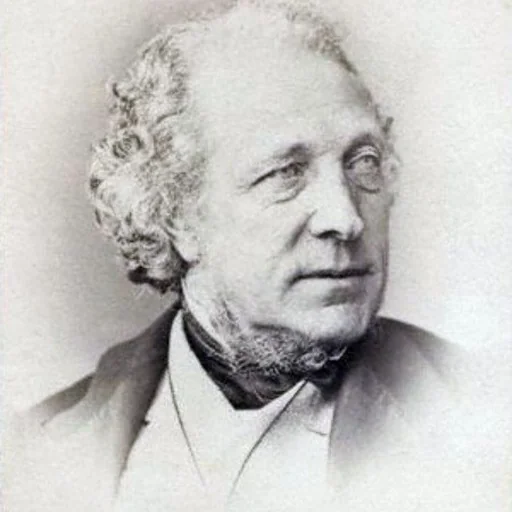
William Leighton Leitch (2 November 1804 – 25 April 1883) was a master Scottish landscape watercolourist and illustrator.