Artwork
An Alphabet: J for Jockey
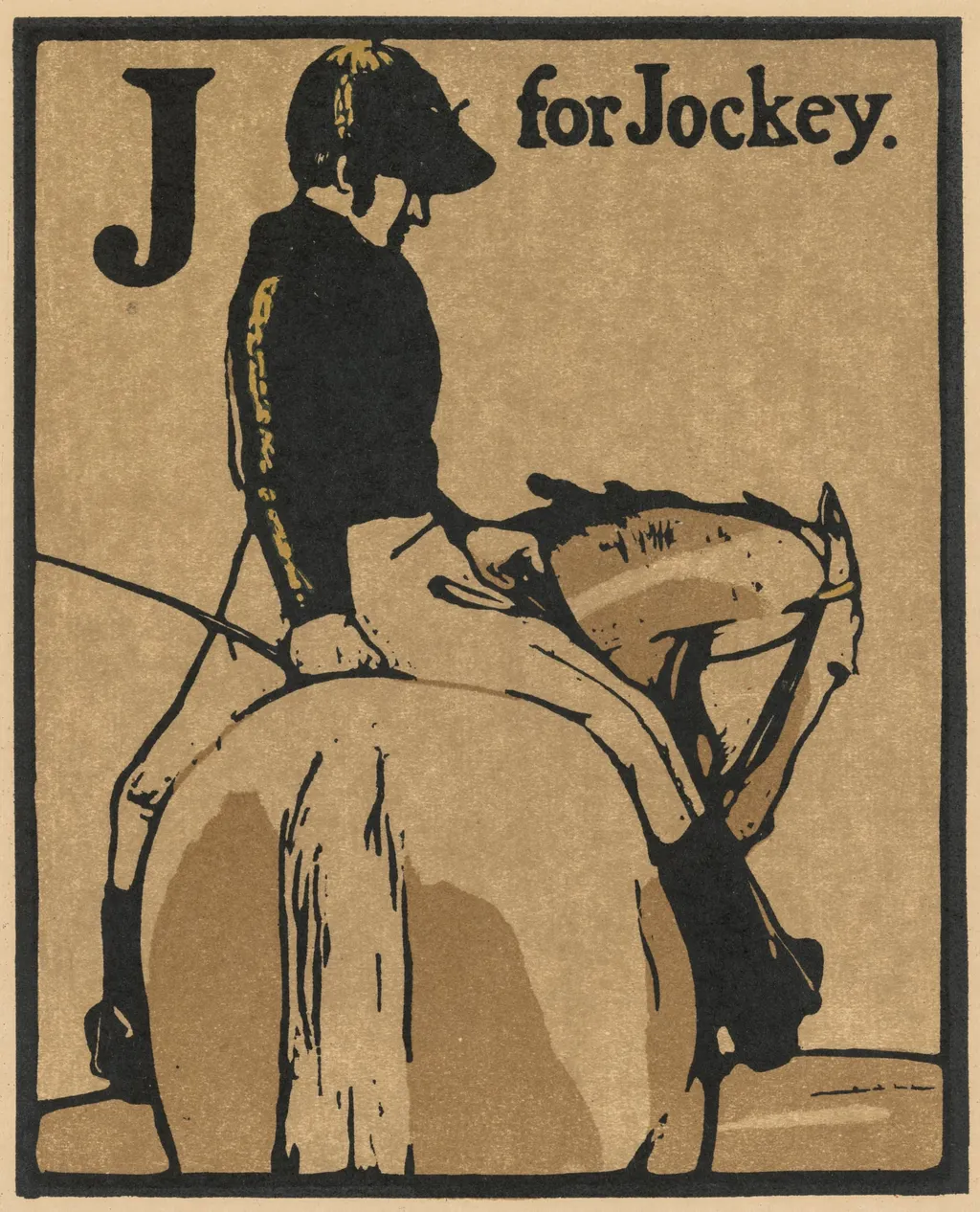
An Alphabet: J for Jockey is a print by the Romanticist artist William Nicholson. It dates from 1838 and is held in the collection of the Cleveland Museum of Art.
About this work
Overview
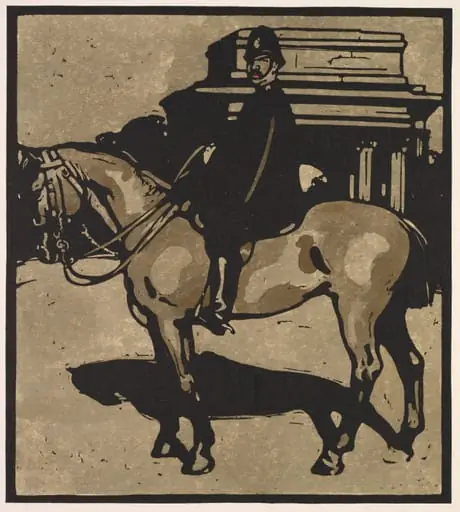
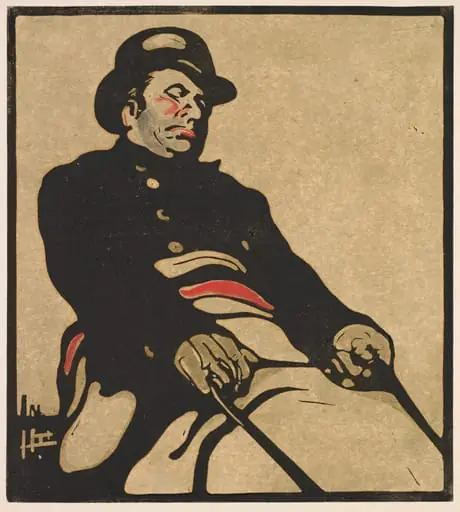
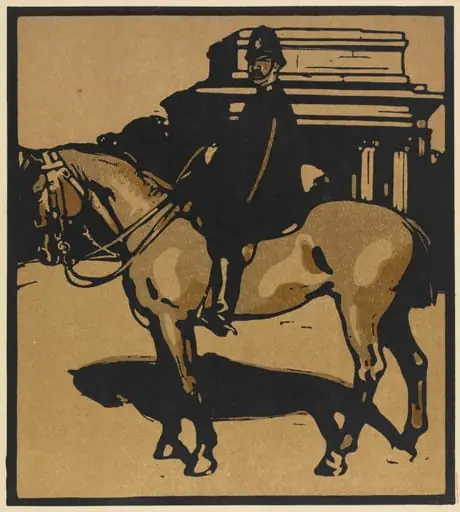
William Nicholson’s 1838 wood‑engraved print *An Alphabet: J for Jockey* illustrates a rider on a horse, the figure of the jockey rendered in dark clothing against a lighter‑toned animal. The composition includes a large capital “J” in the upper left, identifying the image as part of an alphabet series.
Subject & Meaning
The image presents a solitary jockey, poised on his mount, inviting a quiet appraisal of the equestrian partnership. By pairing the scene with the letter “J,” Nicholson transforms a simple sporting moment into an educational visual cue for learners of the alphabet.
Technique & Style
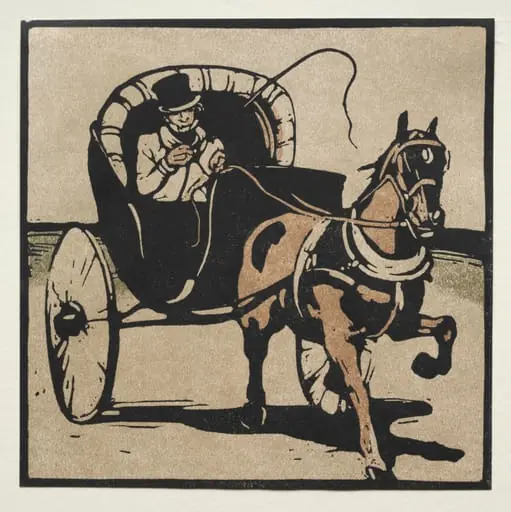
Executed in wood‑engraving, the print relies on bold, clean lines and simplified forms. The contrast between the dark rider and the lighter horse, set against a warm beige background, emphasizes shape over detail, reflecting Nicholson’s preference for clarity and restraint in his illustrative work.
History & Provenance
Created for an alphabet book, the piece belongs to a series of similar prints that Nicholson produced to accompany educational texts. Though primarily known for still‑life, landscape, and portrait paintings, Nicholson applied his expertise in woodcut, wood‑engraving, and lithography to this publishing project.
Context
The work emerges from early‑19th‑century British print culture, where illustrated books for children and learners often employed skilled artists to provide engaging visual aids. Nicholson’s involvement illustrates the period’s crossover between fine art and commercial illustration.
Artist & collection
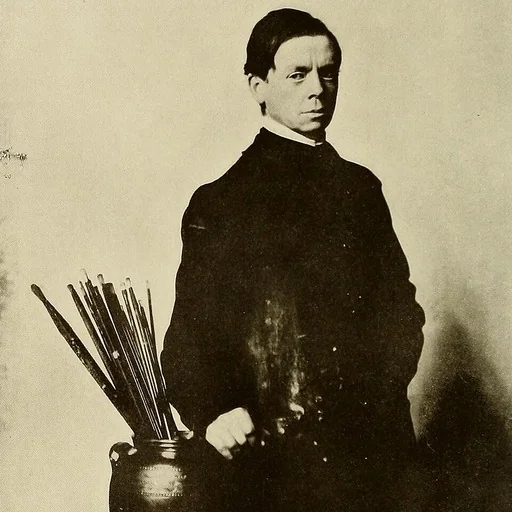
Artist
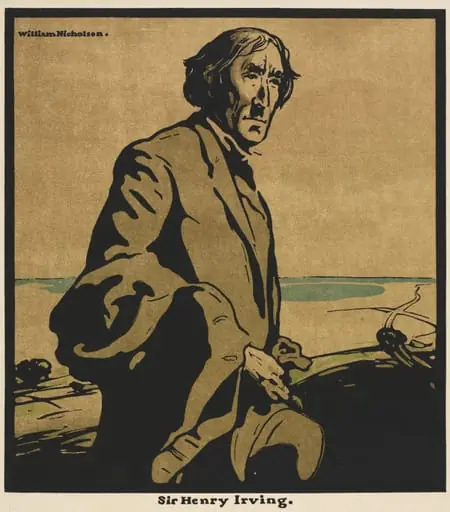
Sir William Newzam Prior Nicholson (5 February 1872 – 16 May 1949) was a British painter of still-life, landscape and portraits.