Artwork
Twelve Portraits: Sarah Bernhardt
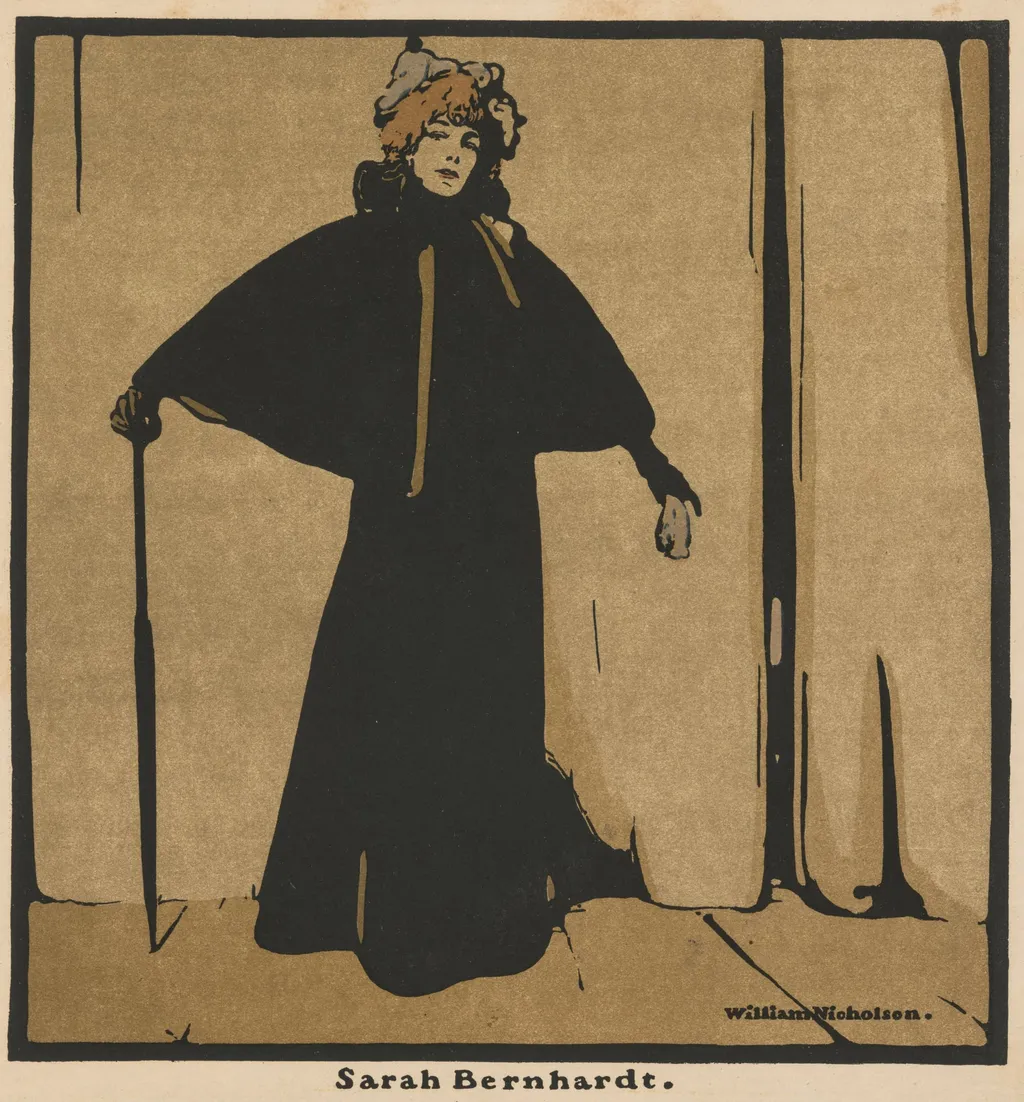
Twelve Portraits: Sarah Bernhardt is a print by the Impressionist artist William Nicholson. It dates from 1899 and is held in the collection of the Cleveland Museum of Art.
About this work
Overview
Created in 1899, *Twelve Portraits: Sarah Bernhardt* is a suite of twelve printed portraits by British artist William Nicholson.
Created in 1899, *Twelve Portraits: Sarah Bernhardt* is a suite of twelve printed portraits by British artist William Nicholson. Executed in woodcut and wood-engraving, the series captures the French stage legend in varied poses and expressions. Nicholson, known for his work across painting and design, used these prints to explore the expressive potential of simplified form and strong graphic contrast, moving beyond traditional portraiture into a more stylized visual language.
Subject & Meaning
The portraits depict Sarah Bernhardt, one of the most renowned actresses of her time, known for her dramatic presence and theatrical charisma. Nicholson portrays her in profile and three-quarter view, often in formal attire, conveying her public persona rather than intimate character. The repeated focus on her silhouette and composed demeanor suggests an interest in fame, performance, and the constructed identity of celebrity in the late 19th century.
Technique & Style
Nicholson employed bold black shapes and minimal tonal variation, using woodcut to emphasize flat planes and clean outlines. The absence of detailed shading and the use of stark contrasts between figure and background create a graphic, almost poster-like effect. Background elements like faint lines suggesting drapery or architecture are reduced to essential forms, reinforcing the emphasis on the subject’s presence rather than environmental detail.
History & Provenance
The series was produced in 1899 during a period when Nicholson was actively engaged in printmaking and illustration. Though originally issued as a limited edition, individual prints from the series entered private and institutional collections over time. The work reflects Nicholson’s interest in Japanese woodblock prints and the broader Arts and Crafts movement’s revival of handcrafted print techniques in the late Victorian era.
Context
At the turn of the 20th century, portraiture was shifting from academic realism toward more stylized interpretations. Nicholson’s series aligns with contemporaneous efforts by artists like Toulouse-Lautrec and Beardsley to capture celebrity through simplified form. The choice of Bernhardt—a global icon of theater—underscores the era’s fascination with performance and the growing intersection of art and mass culture.
Legacy
The *Twelve Portraits* remain a significant example of Nicholson’s printmaking achievements and a rare sustained engagement with a single subject in the medium. While not widely exhibited today, the series is recognized in scholarly circles for its role in bridging British illustration and modernist graphic design, influencing later artists who sought to merge artistic expression with the reproducible image.
Artist & collection
Artist
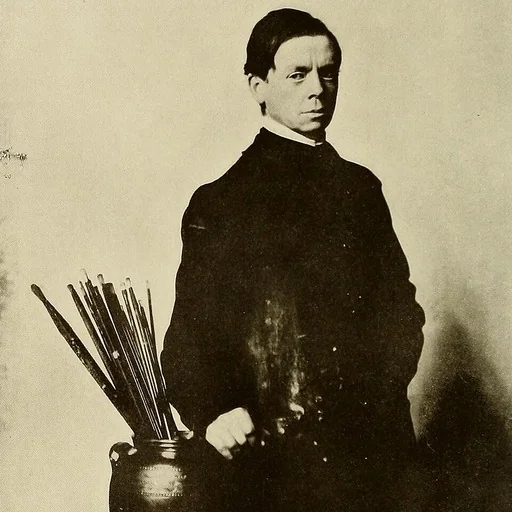
Sir William Newzam Prior Nicholson (5 February 1872 – 16 May 1949) was a British painter of still-life, landscape and portraits.

 London Types: Coster
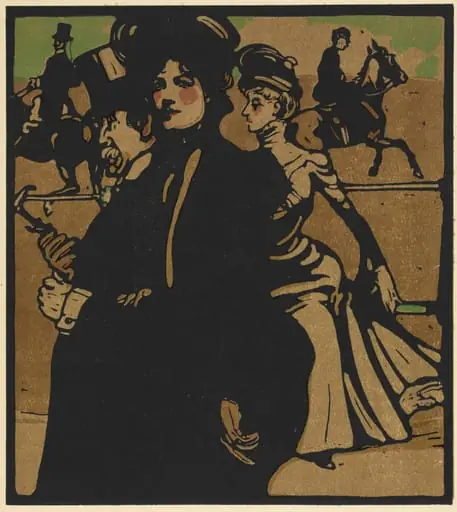 London Types: Lady
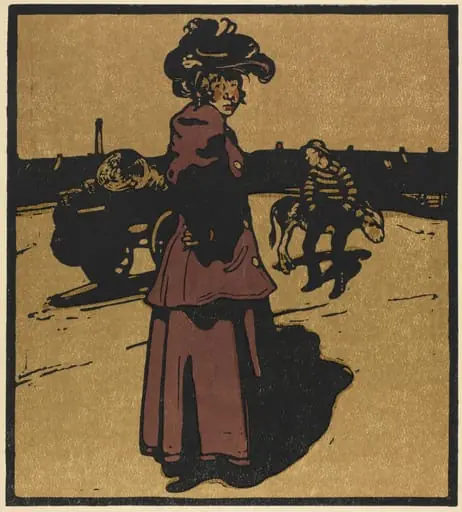 London Types: Costermonger
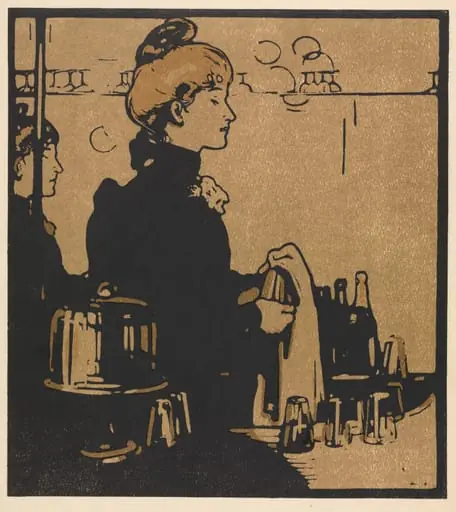 London Types: Barmaid
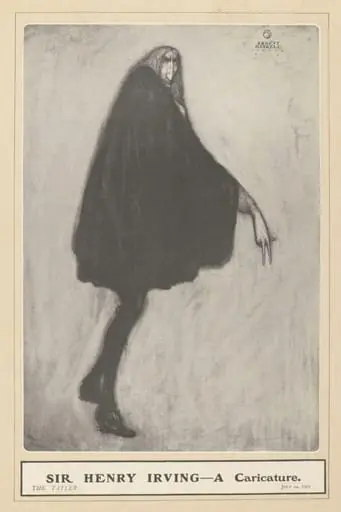 H Beard Print Collection
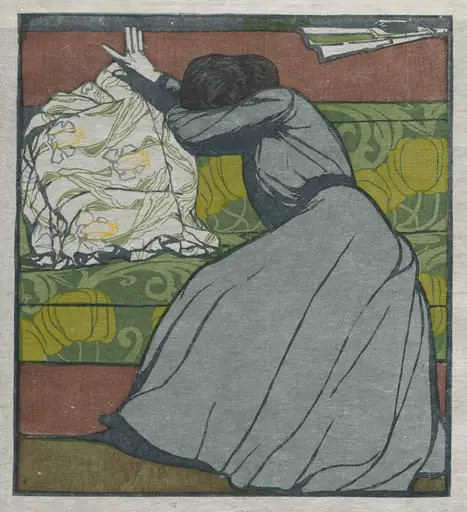 The Cushion (Martha Kurzweil Seated on a Divan)
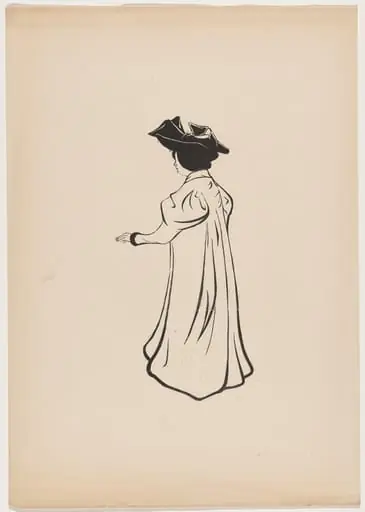 Etude pour un portrait
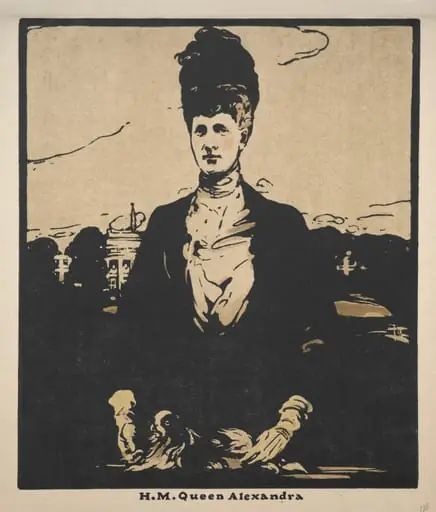 Twelve Portraits (Second Series): H. M. Queen Alexandra
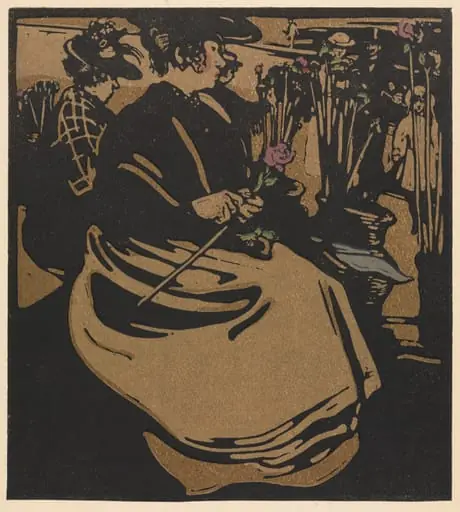 London Types: Flower Girl
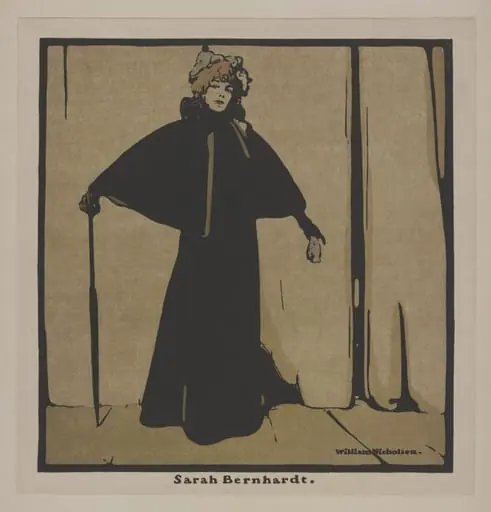 Print of Sarah Bernhardt by William Nicholson (1872-1949)