Artwork
Racing Scenes: A Horse Arriving at the Race (Scènes Hippiques: Cheval arrivant de la chasse)
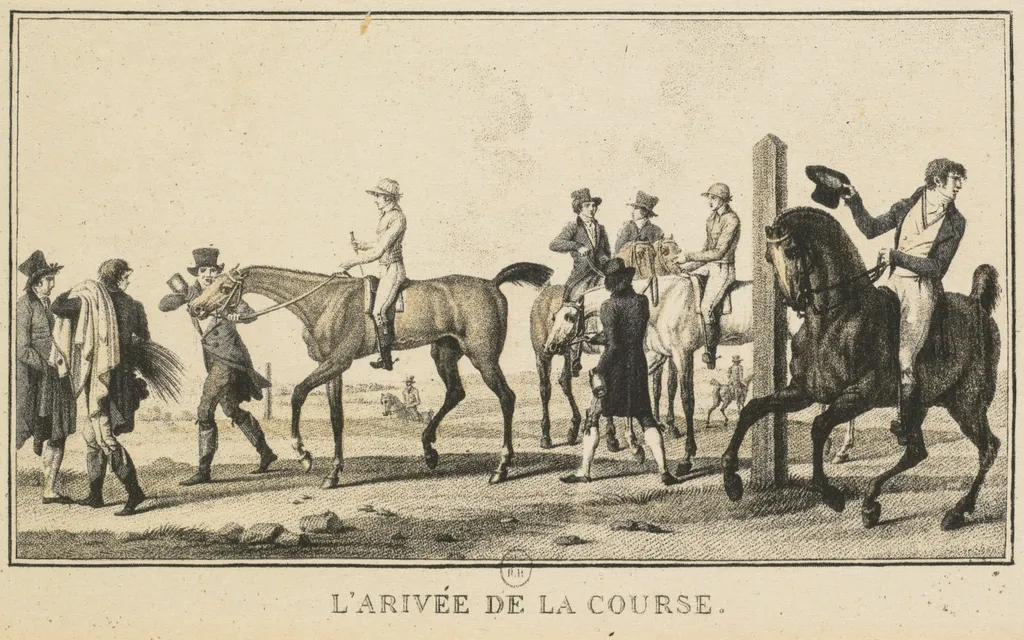
Racing Scenes: A Horse Arriving at the Race (Scènes Hippiques: Cheval arrivant de la chasse) is a print by the Romanticist artist Carle Vernet. It dates from 1808 and is held in the collection of the Cleveland Museum of Art.
About this work
Overview
It is part of a series titled Scènes Hippiques and is currently held in the collection of The Cleveland Museum of Art.
Created in 1808 by Carle Vernet, this black-and-white print depicts a moment of arrival at a horse race. The scene is rendered with quick, energetic lines that convey motion and activity. It is part of a series titled Scènes Hippiques and is currently held in the collection of The Cleveland Museum of Art. The work captures a transient moment in equestrian culture, emphasizing dynamism over formal composition.
Subject & Meaning
The print shows horses and riders approaching a central post, accompanied by attendants, spectators, and handlers. Figures are engaged in varied tasks—leading animals, holding whips, or observing—suggesting the organized chaos of a racing event. The title, L’Arrivée de la Course, underscores the climax of the race’s conclusion. The scene reflects the social and sporting rituals of early 19th-century French equestrian culture.
Technique & Style
Vernet employed ink drawing with minimal shading to suggest movement and texture. Horses’ limbs are rendered with blurred strokes, evoking speed, while the crowd is suggested through sparse, gestural marks. The dusty ground and layered figures create depth without detailed perspective. The style is immediate and observational, prioritizing kinetic energy over idealized form, aligning with the artist’s focus on real-life equestrian action.
History & Provenance
The print was produced in 1808 as part of Vernet’s series documenting horse racing scenes. It entered the Cleveland Museum of Art’s collection through documented acquisition, though earlier ownership details are not publicly detailed. As a work from the Napoleonic era, it reflects the period’s interest in secular, everyday spectacles, distinct from religious or mythological subjects common in academic art.
Context
Vernet worked during a time when equestrian sports were gaining popularity among the French elite. His prints captured the growing public fascination with racing and horsemanship, often published as illustrations for periodicals or collected as standalone works. This piece aligns with broader trends in French art that valued direct observation and the depiction of contemporary life over historical or allegorical themes.
Legacy
Vernet’s series influenced later artists interested in motion and urban spectacle. His ability to convey movement through simplified lines prefigured aspects of 19th-century graphic art and even early cinematic framing. While not widely celebrated in his lifetime as a revolutionary figure, his works remain valuable records of equestrian culture and the evolution of printmaking as a medium for documenting modern life.
Artist & collection

Artist
Antoine Charles Horace Vernet, better known as Carle Vernet, was a French painter, the youngest child of painter Claude-Joseph Vernet and the father of painter Horace Vernet.

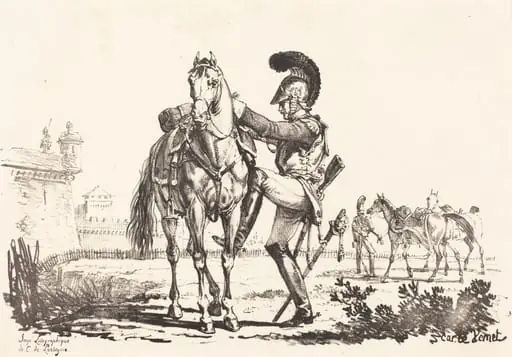
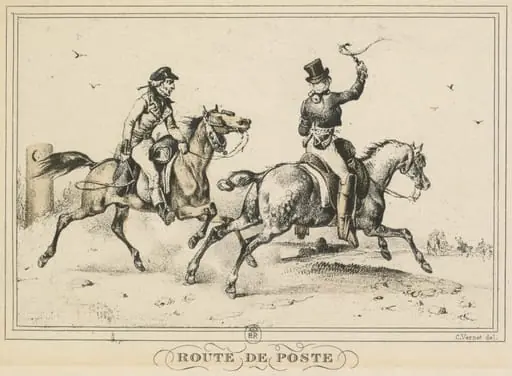 Scenes of Daily Life, Roads and Paths: Mail Route (Scènes de la vie quotidienne, Route et Chemins: Route de Poste)
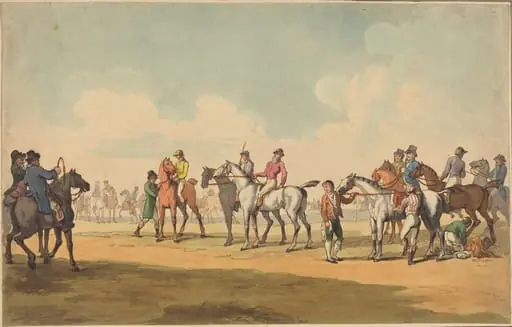 The Course
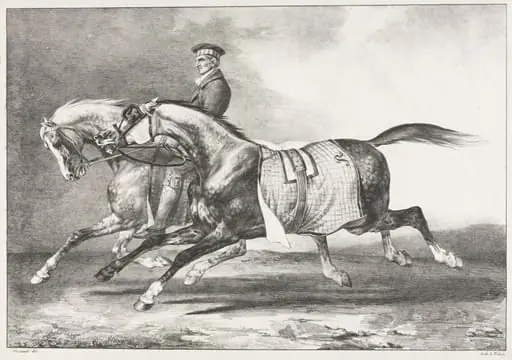 Two Dappled Horses Exercising
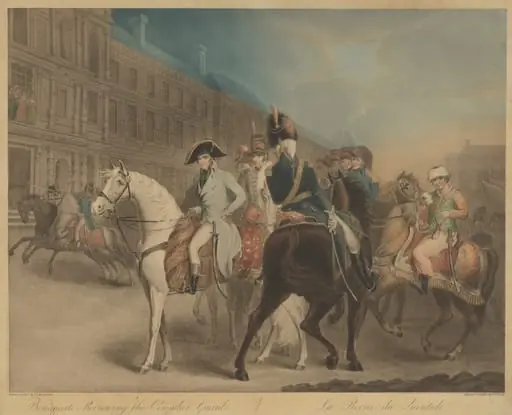 Bonaparte Reviewing the Consular Guard (La Revue du Quintidi)
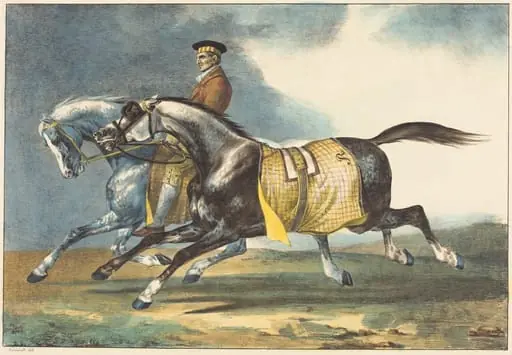 Two Dapple-Gray Horses Exercising (Deux chevaux gris pommele que l'on promene)
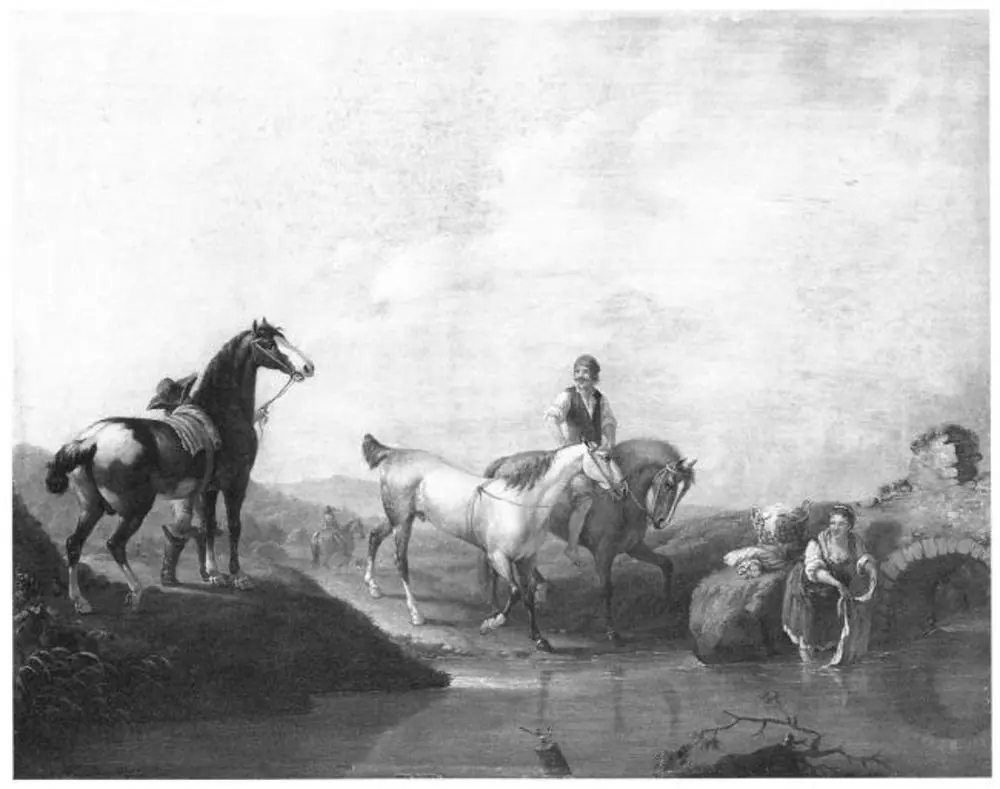 A Groom Leading two Horses to the Water
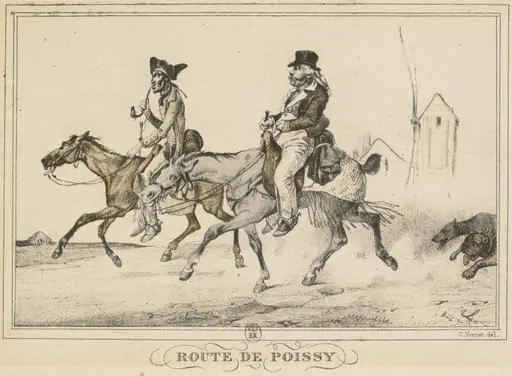 Scenes of Daily Life, Roads and Paths: Road to Poissy (Scènes de la vie quotidienne, Routes et Chemins: Route de Poissy)
 Preparing to Start