Artwork
London Types: Bluecoat Boy
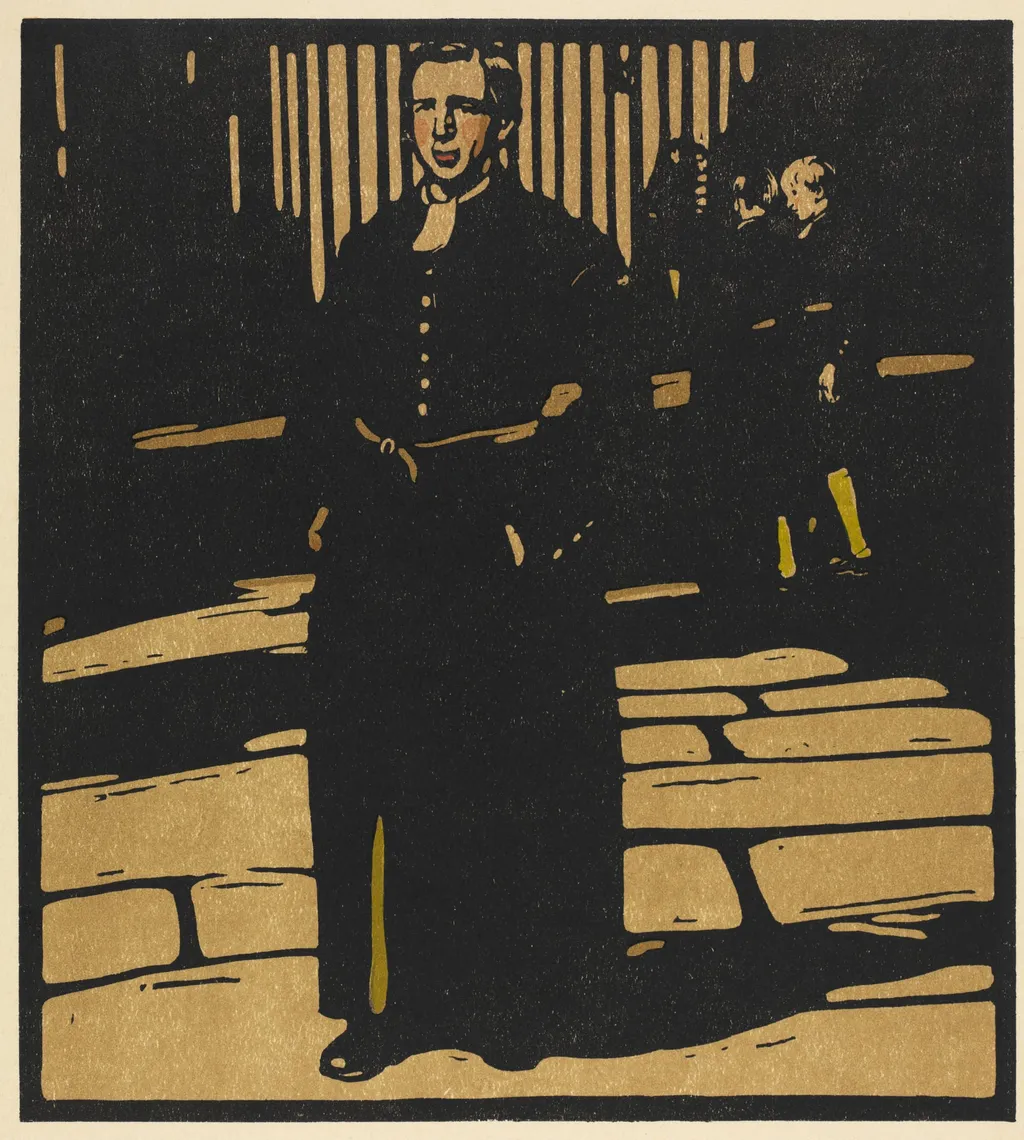
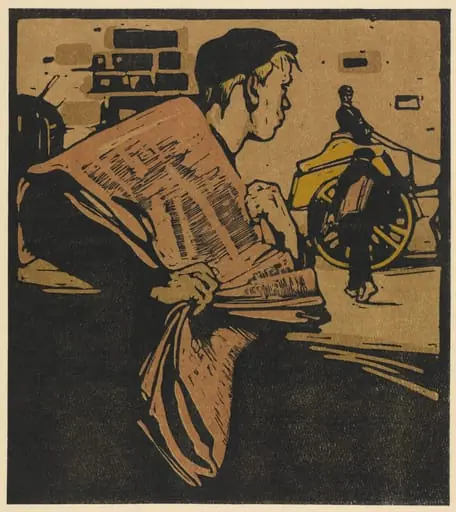
London Types: Bluecoat Boy is a print by the Impressionist artist William Nicholson. It dates from 1898 and is held in the collection of the Cleveland Museum of Art.
About this work
Overview
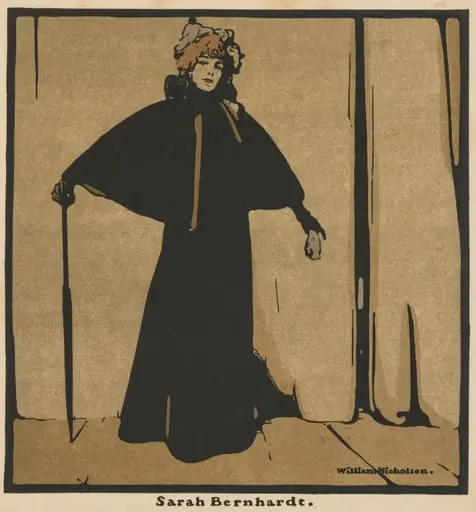
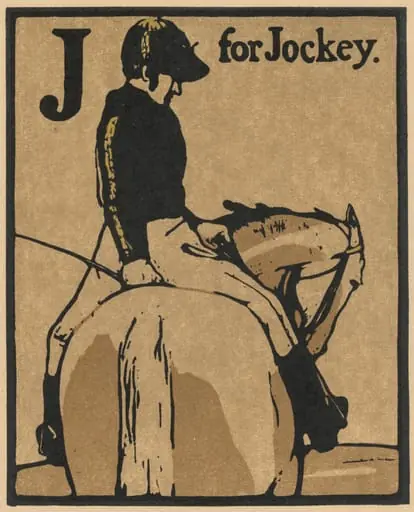
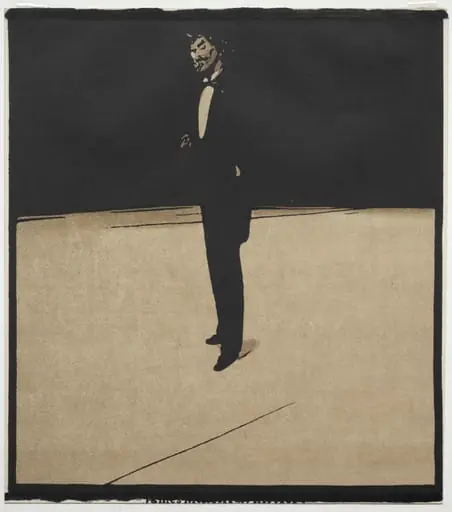
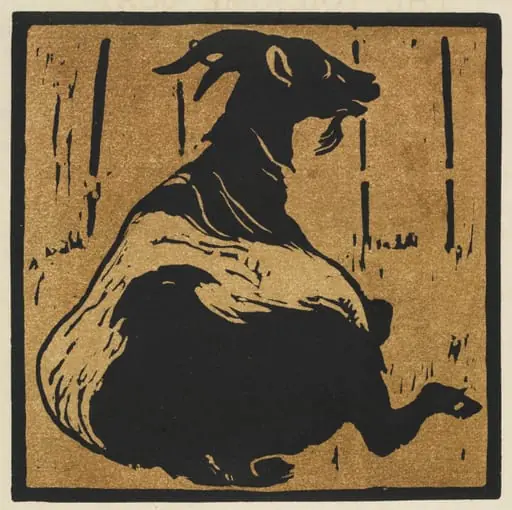
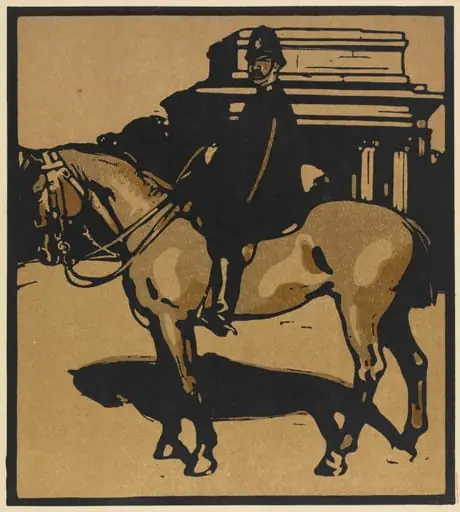
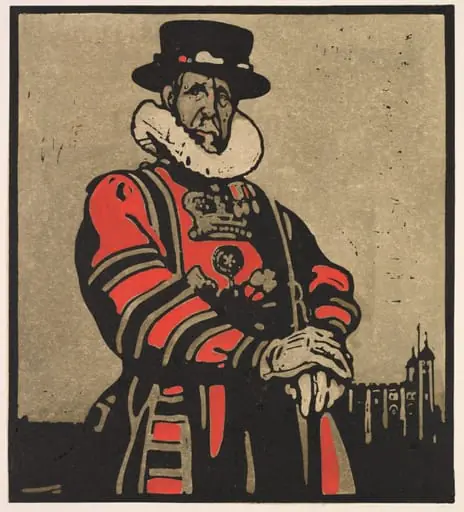
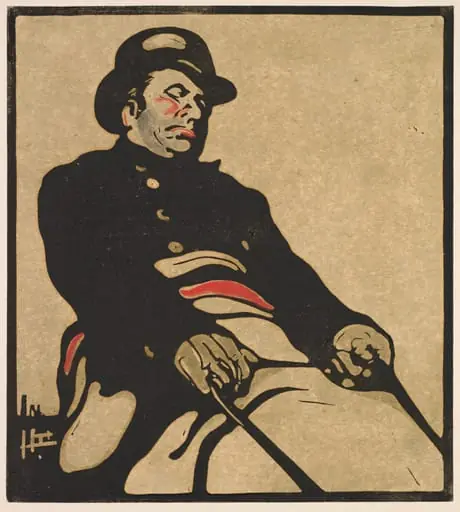
Created in 1898, *London Types: Bluecoat Boy* is one of a series of wood-engraved prints by William Nicholson that capture everyday figures in urban London.
Created in 1898, *London Types: Bluecoat Boy* is one of a series of wood-engraved prints by William Nicholson that capture everyday figures in urban London. As a versatile artist working across painting, illustration, and printmaking, Nicholson used the precision of wood engraving to render intimate, observational portraits. This piece reflects his interest in the quiet dignity of ordinary life, set against the textures of the city’s architecture and atmosphere.
Subject & Meaning
The subject is a boy dressed in the traditional blue coat of a charity school pupil, standing alone on a cobblestone street. His posture suggests stillness and solitude, while the illuminated window behind him and the cat on the sill introduce subtle elements of domestic life. The contrast between the boy’s shadowed form and the bright interior implies a divide between public exposure and private refuge, evoking themes of childhood, class, and urban isolation.
Technique & Style
Nicholson employed wood engraving to achieve fine linear detail and strong tonal contrasts. The boy’s face, lit from behind, emerges from deep shadow, a deliberate use of chiaroscuro that heightens emotional presence. The vertical lines of the window, the scattered leaves, and the cat’s form are rendered with crisp, controlled incisions. The technique favors economy of line and dramatic lighting over decorative flourish, aligning with the realism of late-Victorian social observation.
History & Provenance
The print was produced as part of Nicholson’s *London Types* series, published in 1898, and originally intended for reproduction in periodicals or as standalone plates. It was not widely exhibited during his lifetime but remained within private collections and institutional print archives. Its survival reflects its status as a representative example of British graphic art from the fin de siècle, valued for its technical discipline and social insight.
Context
In the late 1890s, British artists increasingly turned to urban life as subject matter, influenced by social realism and the rise of illustrated journalism. Nicholson’s work aligns with contemporaries like Walter Sickert and the New English Art Club, who sought to depict ordinary scenes without romanticism. The bluecoat boy, a recognizable figure from London’s charitable institutions, served as a quiet symbol of institutional care and social hierarchy in an industrializing city.
Legacy
Though not among Nicholson’s most famous works, *Bluecoat Boy* endures as a refined example of British wood engraving at its most restrained and evocative. It influenced later printmakers interested in narrative economy and atmospheric lighting. The image’s quiet intensity continues to be studied for its ability to convey psychological depth through minimal means, preserving a moment of urban solitude with enduring clarity.
Artist & collection
Artist
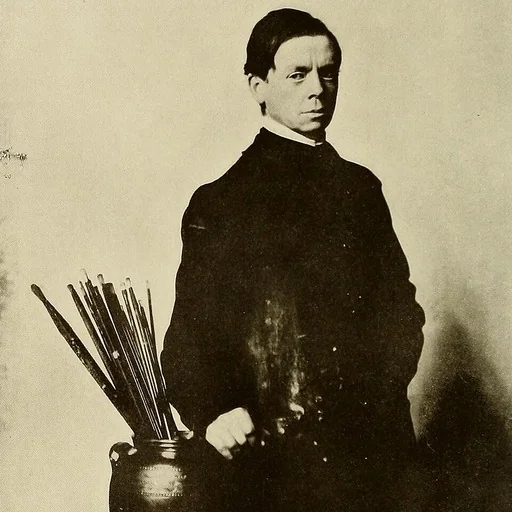
Sir William Newzam Prior Nicholson (5 February 1872 – 16 May 1949) was a British painter of still-life, landscape and portraits.