Artwork
Edward the Confessor's Chapel, Westminster Abbey
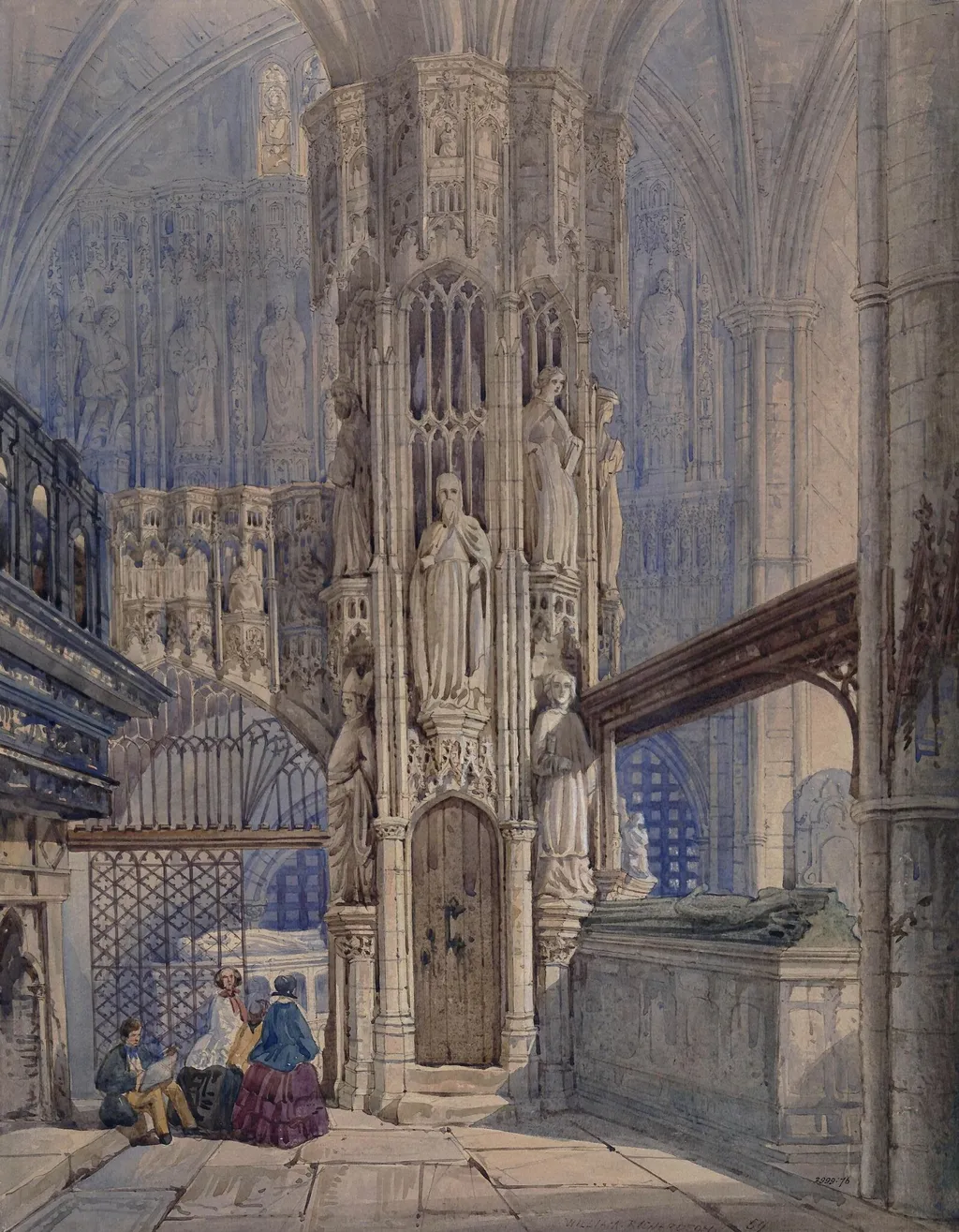
Edward the Confessor's Chapel, Westminster Abbey is a watercolor work on paper by the British Romanticist artist William Richardson. It dates from 1859 and is held in the collection of the Victoria and Albert Museum.
About this work
In the foreground, three people sit on a bench—two women in long dresses and a man in a hat, looking at something in their hands.
This painting shows a quiet corner inside an old church. Stone carvings line the walls, including statues of robed figures and detailed arches. In the foreground, three people sit on a bench—two women in long dresses and a man in a hat, looking at something in their hands. The floor is made of worn stone tiles, and the light comes through tall, narrow windows with blue-tinted glass.
The artist focused on small details, like the texture of the stone and the folds in the people’s clothes. This was painted in 1859, when artists were starting to capture real-life scenes with careful observation.
Next, check out the Victoria and Albert Museum to see more works like this.
Overview
William Richardson’s 1858 watercolour, signed and dated, depicts a secluded interior of the medieval chapel traditionally associated with Edward the Confessor at Westminster Abbey. The composition centers on a stone‑lined nave, illuminated by narrow windows set with blue glass, and populated by three seated figures—a pair of women in long gowns and a man in a hat—who appear absorbed in an object held in their hands.
Subject & Meaning
The work captures a moment of quiet contemplation within a historic sacred space, juxtaposing the enduring solidity of the stone architecture with the transient presence of contemporary visitors. The inclusion of the three figures suggests a narrative of observation, perhaps hinting at the 19th‑century fascination with antiquity and the personal experience of heritage sites.
Technique & Style
Richardson renders the texture of the worn stone tiles and the intricate carvings with meticulous brushwork, emphasizing the tactile quality of the surface. The delicate handling of light through the stained‑glass windows creates subtle tonal variations, while the folds of the figures’ clothing are rendered with fine, observational detail, reflecting the period’s shift toward realism in watercolor.
History & Provenance
Created in 1859, the watercolour was signed by Richardson, confirming its authorship. It entered the collection of the Victoria and Albert Museum, where it is catalogued as part of the museum’s holdings of 19th‑century British watercolours, illustrating the era’s interest in documenting historic architecture.
Artist & collection
Artist
William Richardson spent his life with a paintbox and a pocket rule, measuring shadows in Westminster Abbey because the stonework’s angles fascinated him.

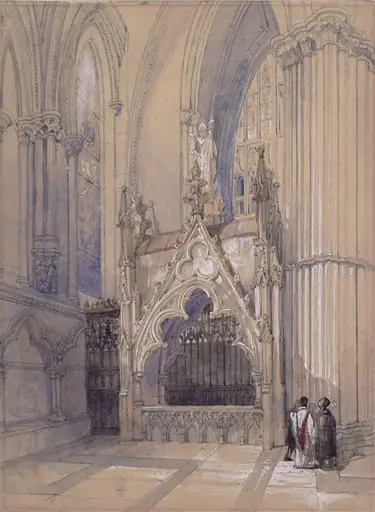 Monument of Archbishop Greenfield in the Eastern Aisle of the North Transept of York Minster
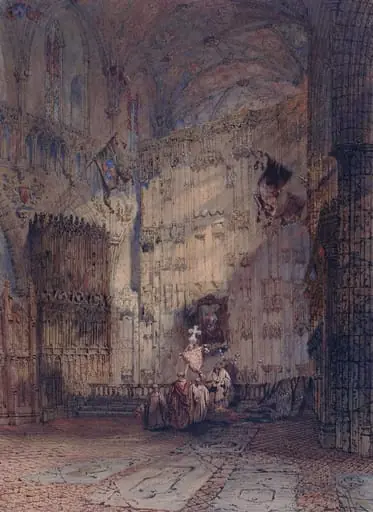 The High Altar Screen, St Albans Abbey
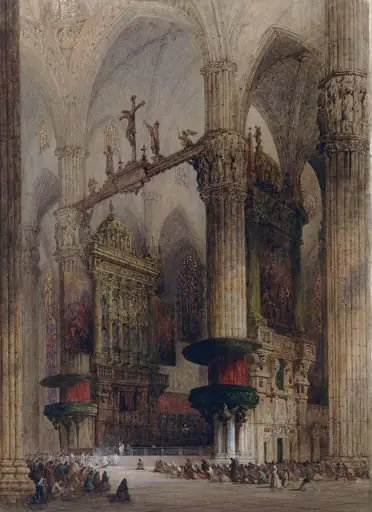 Interior of Milan Cathedral
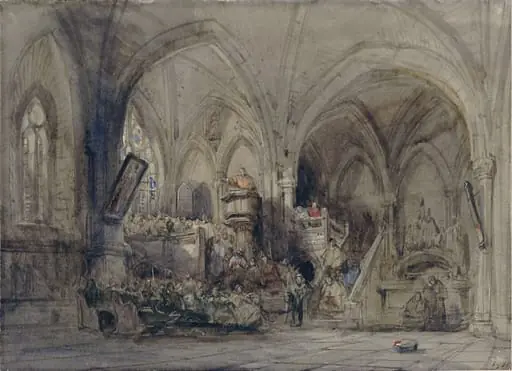 Interior of a church, Spain
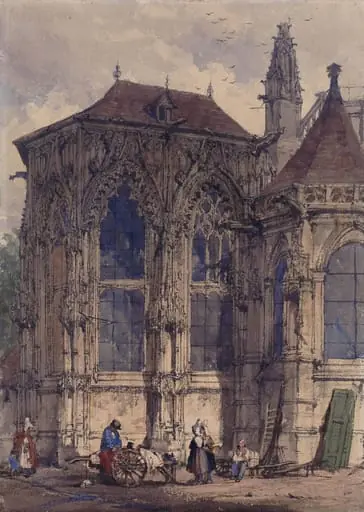 East End of the Church of St. Jacques, Dieppe
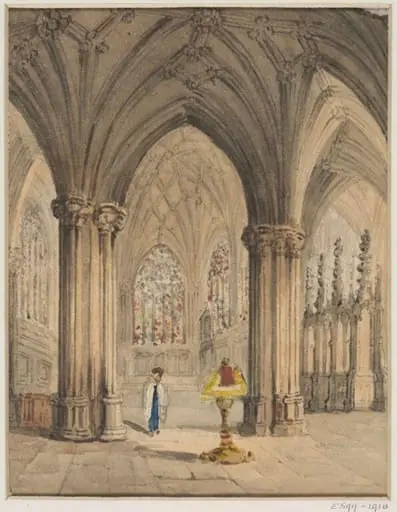 Untitled
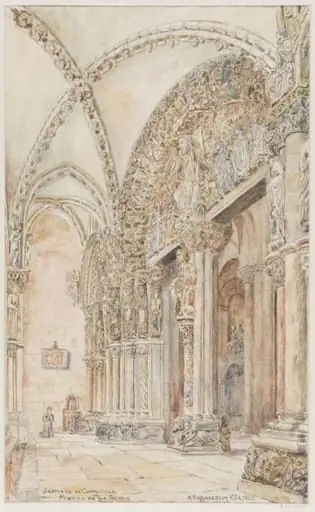 The Portico de la Gloria in the Cathedral at Santiago de Compostella, Spain
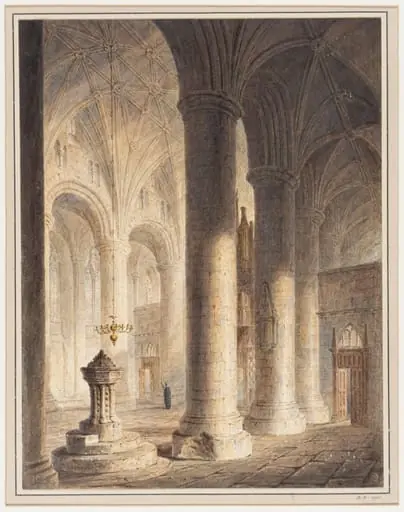 Tewkesbury Abbey
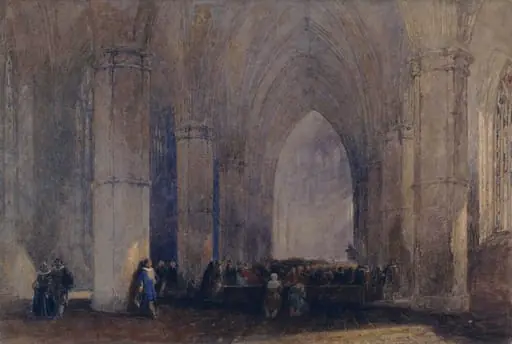 Interior of a cathedral
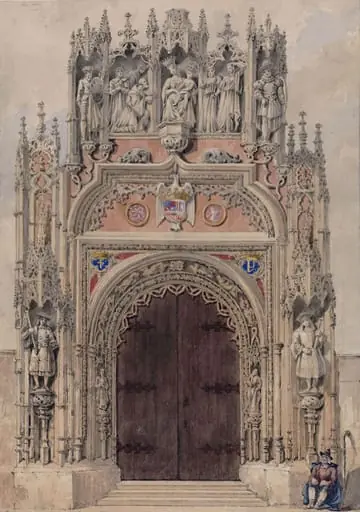 Entrance Gate of the Chapel of Ferdinand and Isabella in the Cathedral of Granada