Artwork
The High Altar Screen, St Albans Abbey
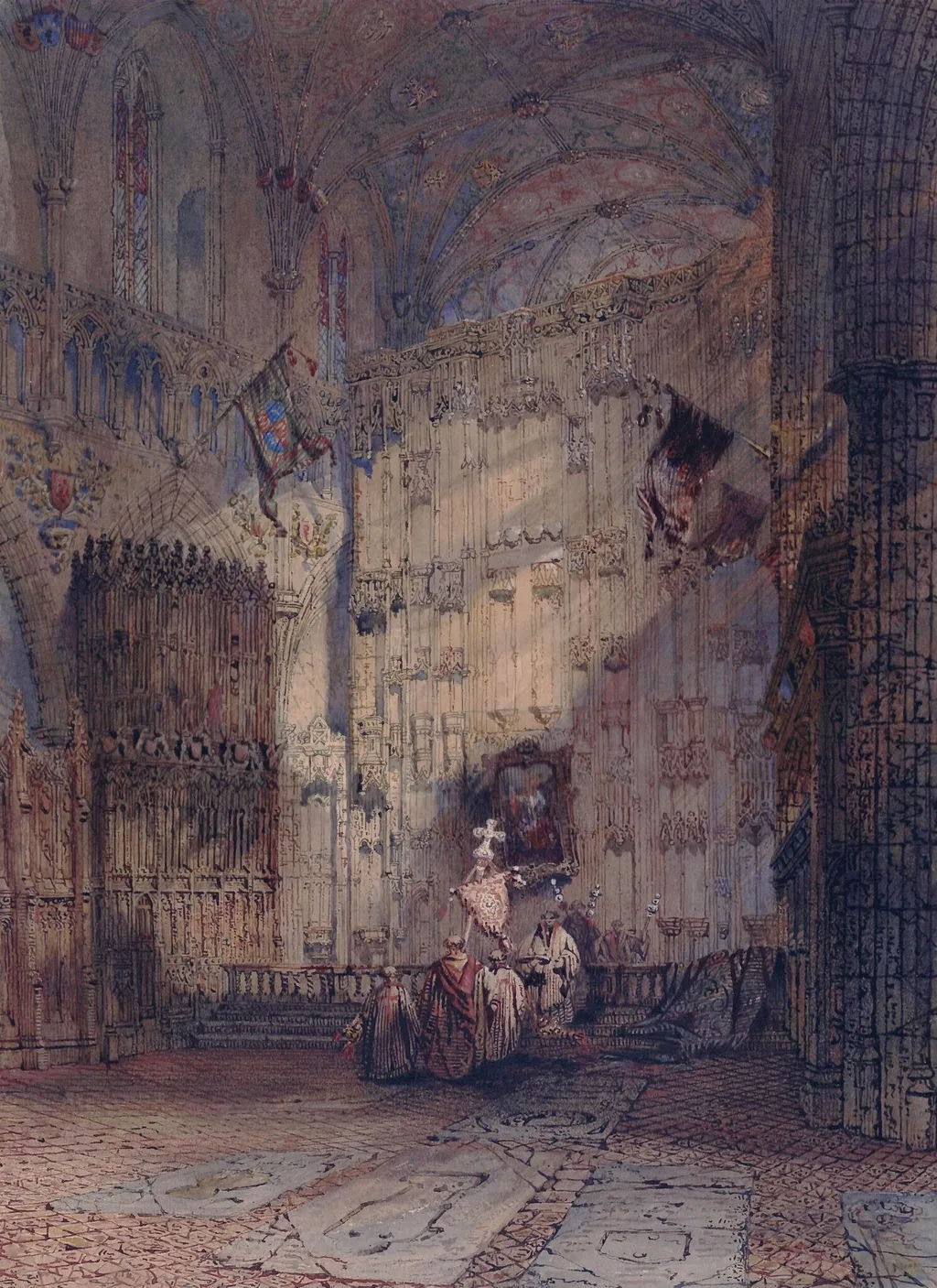
The High Altar Screen, St Albans Abbey is a watercolor work on paper by the British Romanticist artist Thomas Scandrett. It dates from 1845 and is held in the collection of the Victoria and Albert Museum.
About this work
Overview
Thomas Scandrett created this watercolour in 1845, capturing the interior of St Albans Abbey’s High Altar Screen shortly before major Victorian restorations.
Thomas Scandrett created this watercolour in 1845, capturing the interior of St Albans Abbey’s High Altar Screen shortly before major Victorian restorations. The work is a precise topographical record, rendered in transparent washes that emphasize architectural detail and atmospheric light. Unlike dramatic romantic interpretations, Scandrett’s approach is observational, focusing on spatial clarity and the quiet presence of worshipers within the vast nave.
Subject & Meaning
The painting centers on the ornate screen separating the choir from the nave, a structural and symbolic boundary in medieval liturgy. A small group of figures kneels at the altar, their dark garments contrasting with the sunlit stone. Their presence suggests private devotion amid the monumental architecture, underscoring the church’s dual role as sacred space and enduring monument.
Technique & Style
Scandrett employed delicate watercolour layers to model the intricate stone carvings and gilded surfaces. Light is carefully modulated to define depth, with warm highlights on carved capitals and cool shadows in recesses. The transparency of the medium allows underlying pencil lines to guide form, while subtle tonal shifts between sunlight and shaded zones create a sense of volume without heavy brushwork.
History & Provenance
The watercolour was made during a period of renewed interest in medieval ecclesiastical architecture, before the extensive 19th-century restorations altered the abbey’s interior. It likely served as a documentary record for antiquarians or clergy. The piece remains in private hands, with no public exhibition history recorded, preserving its status as a personal study rather than a public commission.
Context
In the 1840s, artists like Scandrett documented historic churches as part of a broader antiquarian movement, responding to fears of architectural neglect or misguided renovation. His work aligns with contemporaries such as John Britton and Augustus Pugin, who sought to preserve visual records of Gothic structures before industrialization and reform transformed them.
Legacy
Scandrett’s watercolour offers a rare pre-restoration view of St Albans’ interior, valuable for scholars studying the abbey’s original layout and ornamentation. While not widely exhibited, it contributes to the archive of 19th-century topographical art, illustrating how artists documented heritage with technical precision rather than idealized emotion.
Artist & collection
Artist
This British artist painted detailed watercolors of grand old buildings in the 1800s.

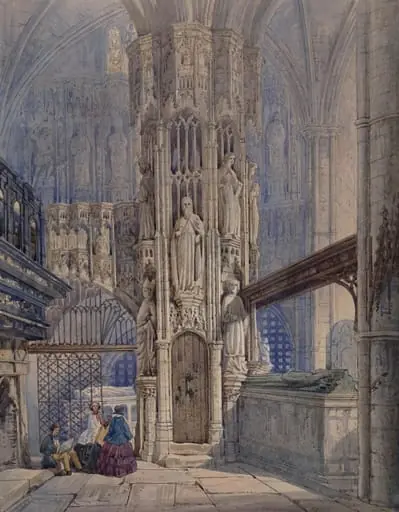 Edward the Confessor's Chapel, Westminster Abbey
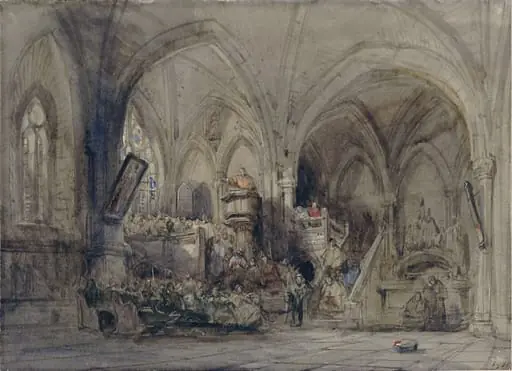 Interior of a church, Spain
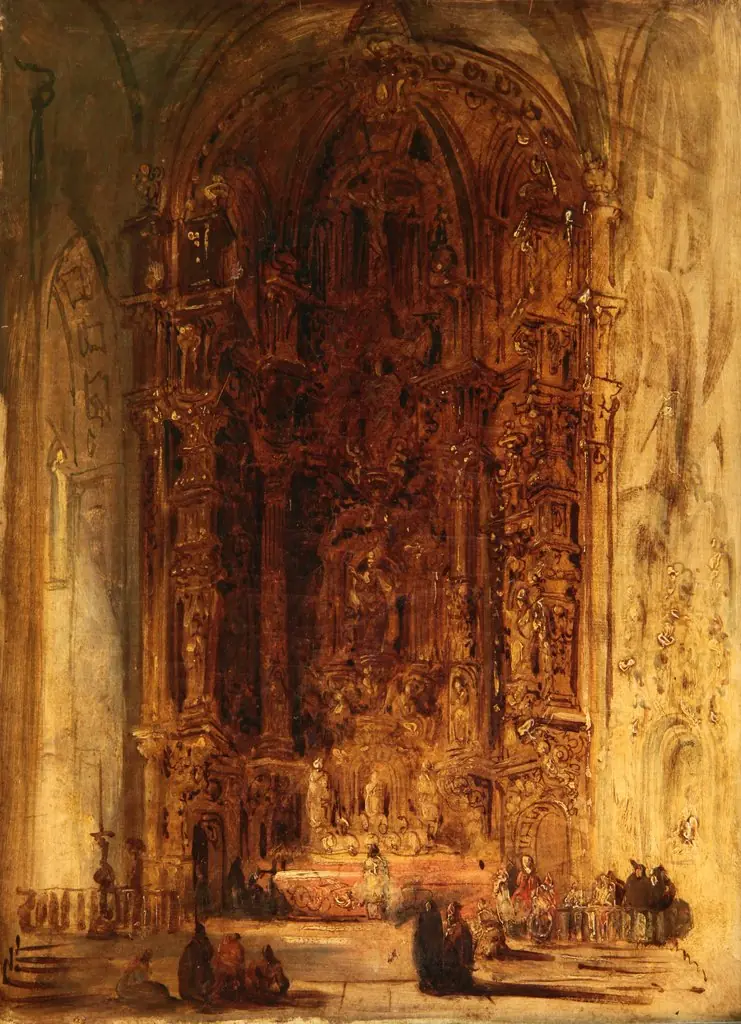 Interior de Iglesia
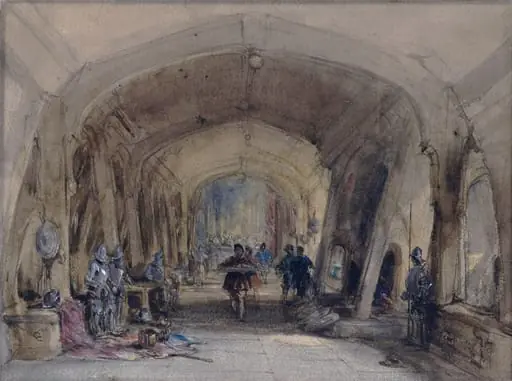 Interior of a baronial hall
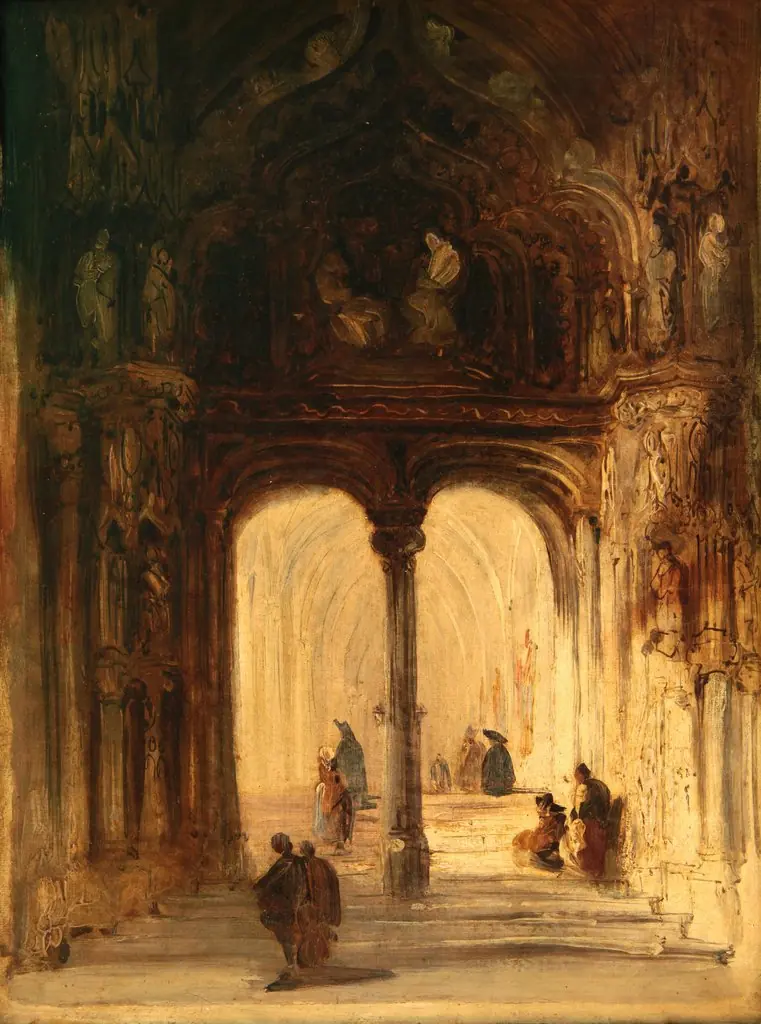 Interior de Iglesia
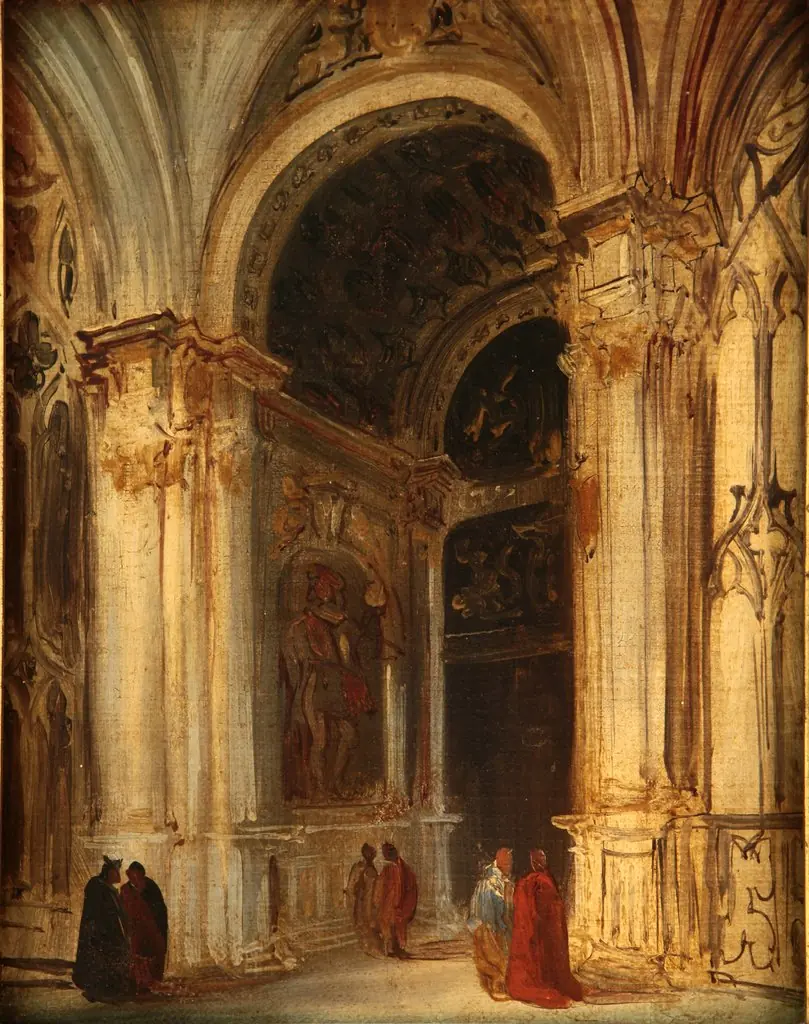 Interior de iglesia
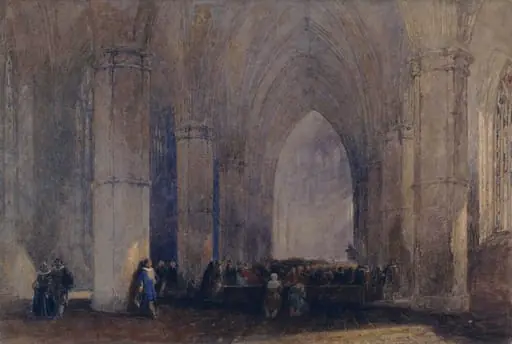 Interior of a cathedral
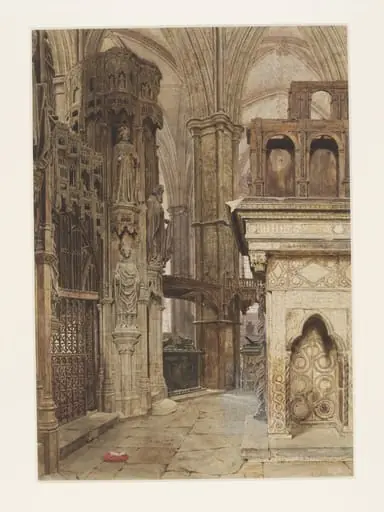 The East End of Edward the Confessor's Chapel and Tomb, As They Now Stand
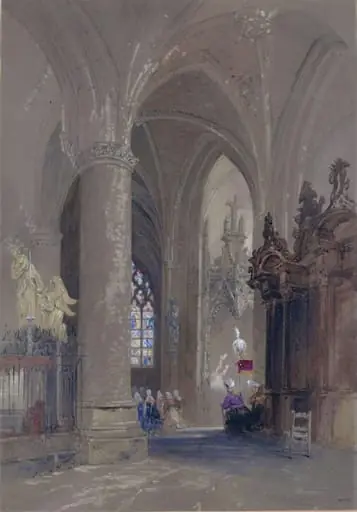 Caudebec on the Seine - Church Interior
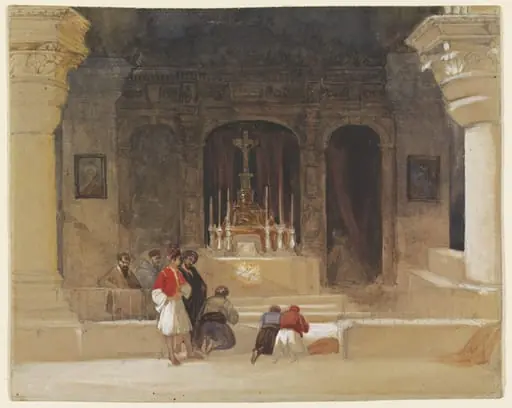 Chapel of St. Helena, Crypt of the Holy Sepulchre, Jerusalem