Artwork
Entrance Gate of the Chapel of Ferdinand and Isabella in the Cathedral of Granada
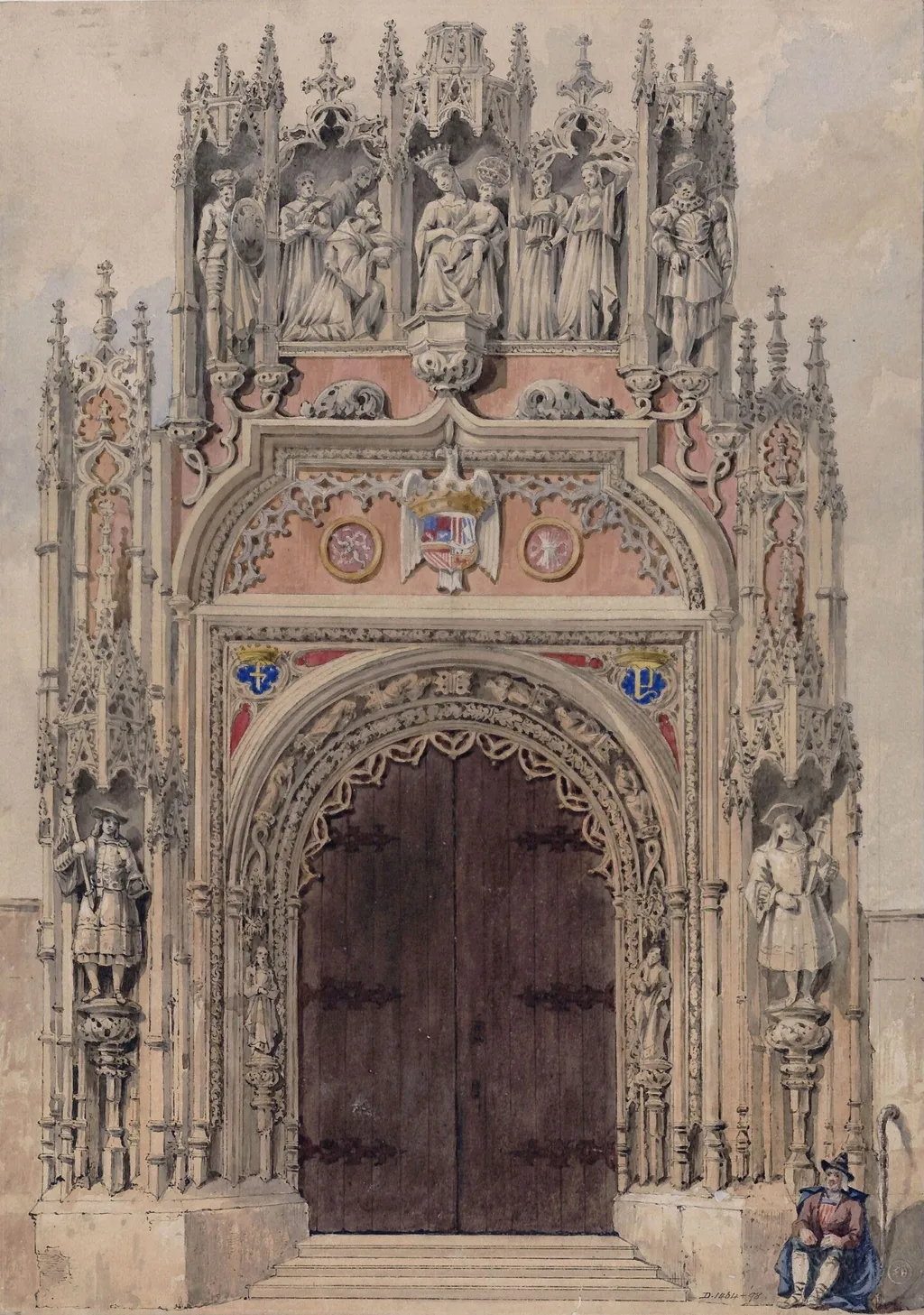
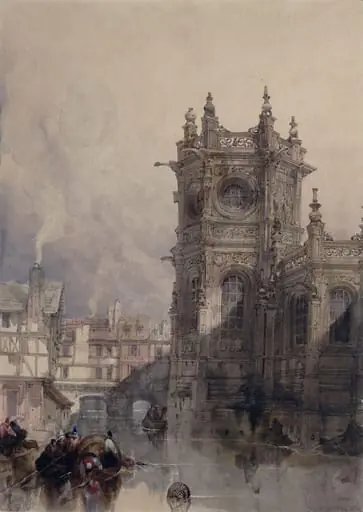
Entrance Gate of the Chapel of Ferdinand and Isabella in the Cathedral of Granada is a watercolor work on paper by Thomas Allom. It dates from 1850 and is held in the collection of the Victoria and Albert Museum.
About this work
Overview
Thomas Allom created this 1850 watercolour depicting the entrance gate to the Chapel of Ferdinand and Isabella within Granada Cathedral.
Thomas Allom created this 1850 watercolour depicting the entrance gate to the Chapel of Ferdinand and Isabella within Granada Cathedral. The work captures the architectural grandeur of the portal with precision, emphasizing its ornate stonework and symbolic elements. Executed in transparent washes, the piece reflects the 19th-century tradition of topographical watercolour as a means of documenting historic structures for scholarly and public audiences.
Subject & Meaning
The gate serves as the ceremonial threshold to the royal burial chapel of Spain’s Catholic Monarchs. Carved figures of saints and religious icons flank the arch, reinforcing the sacred function of the space. The central coat of arms, bearing the intertwined symbols of Castile and Aragon, asserts the dynastic authority of Ferdinand and Isabella. The imagery blends devotional intent with political statement, typical of late Gothic Spanish royal commemoration.
Technique & Style
Allom employed fine brushwork and layered watercolour washes to render the intricate stone carvings and deep shadows of the portal. The dark brown tones of the architecture contrast with subtle gradations of light, suggesting texture and depth without heavy pigment. His method prioritizes clarity and detail over expressive brushwork, aligning with the topographical conventions of his time and the demands of architectural documentation.
History & Provenance
The watercolour was produced during Allom’s travels through Spain, commissioned as part of a broader project to record significant monuments. It likely originated as a study for publication in illustrated travel volumes of the period. The work entered institutional collections in the late 19th century and is now held by the Victoria and Albert Museum, where it contributes to the archive of British artistic engagement with Iberian heritage.
Context
In mid-19th-century Britain, there was growing interest in medieval architecture and Catholic Spain’s historical legacy, fueled by Romanticism and archaeological scholarship. Allom’s watercolours responded to this trend, offering accessible visual records of sites often inaccessible to the general public. His depictions helped shape European perceptions of Spanish ecclesiastical art during a period of renewed fascination with Gothic revivalism.
Legacy
Allom’s watercolour remains a valuable record of the chapel’s entrance as it appeared in the 1850s, preserving details that may have since altered. It exemplifies the role of British artists in documenting European heritage during the age of expanding travel and institutional collecting. The piece continues to serve researchers and historians as a reference for architectural conservation and the visual culture of 19th-century antiquarianism.
Artist & collection

Artist
Thomas Allom (13 March 1804 – 21 October 1872) was an English architect, artist, and topographical illustrator.

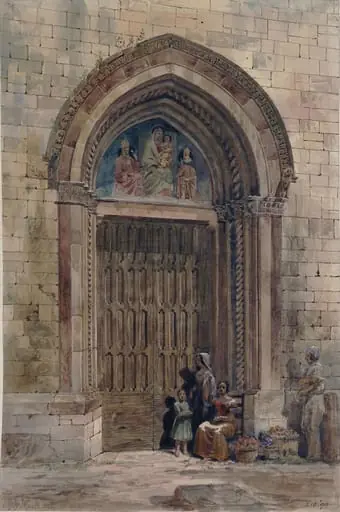 Church doorway, Spoleto, Italy
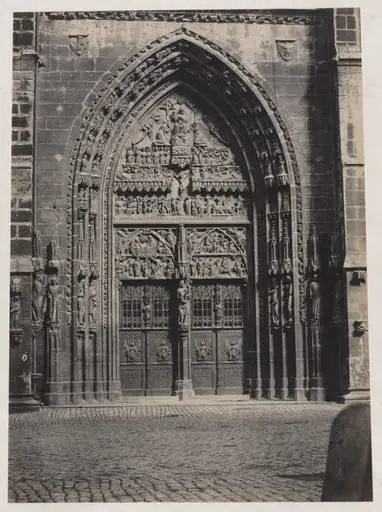 Entrance, St. Lorenz Cathedral, Nuremberg
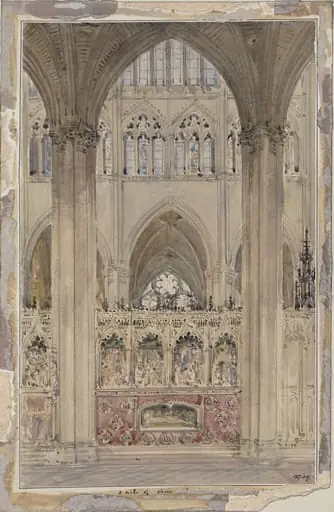 Choir aisle in Amiens Cathedral
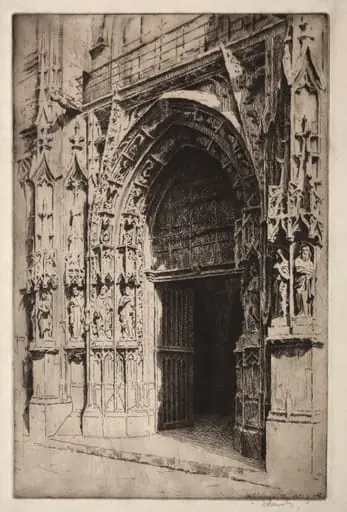 Portrail Central, Eglise St. Merri, Paris
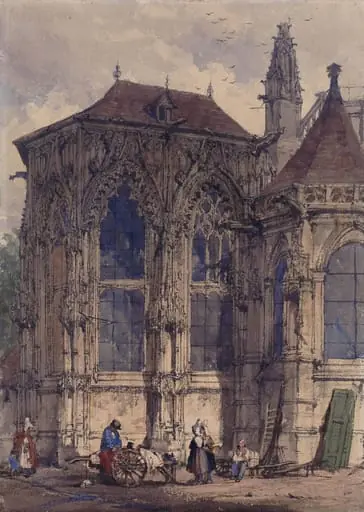 East End of the Church of St. Jacques, Dieppe
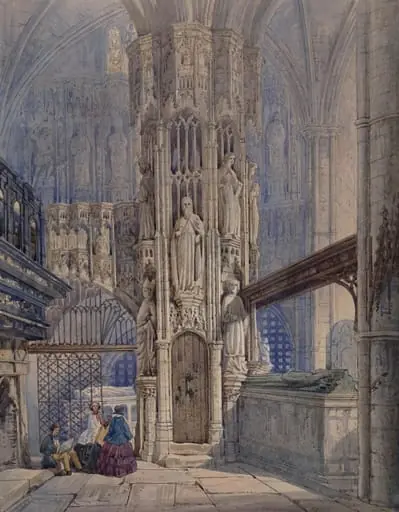 Edward the Confessor's Chapel, Westminster Abbey
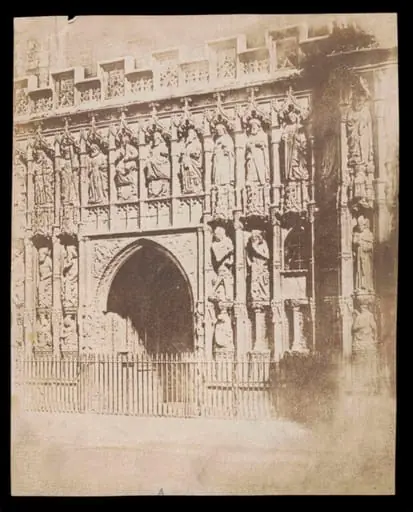 Church/cathedral door with apostles/saints carved around it
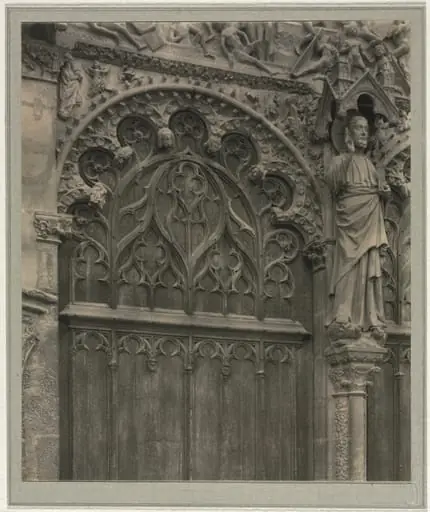 Bourges Cathedral: Crypt Under Nave
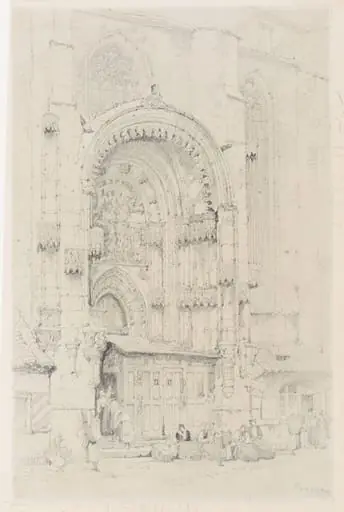 Prague Cathedral
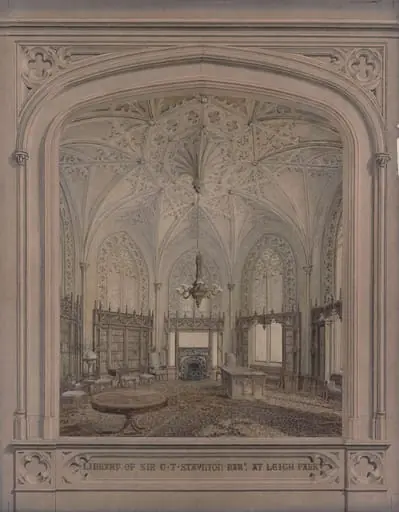 Library of Sir George Thomas Staunton, Bart, at Leigh Park
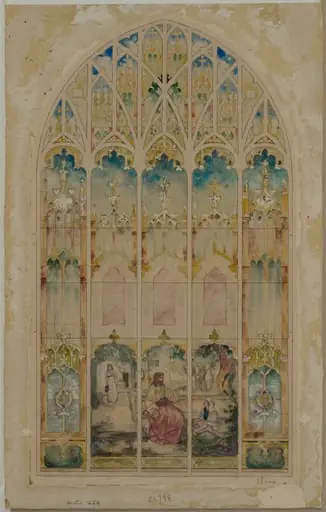 Chapel Window
 Church of St. Pierre, Caen