Artwork
Indian Falls, Indian Brook, Cold Springs, New York
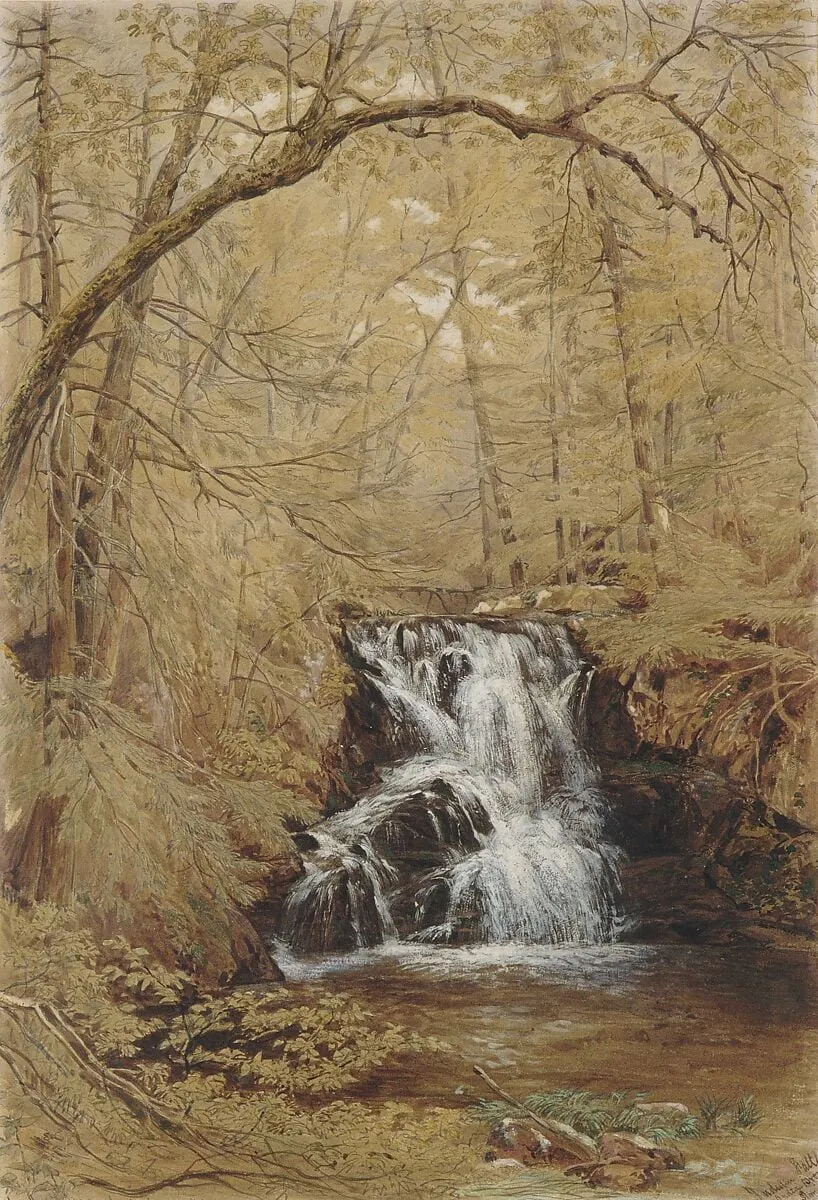
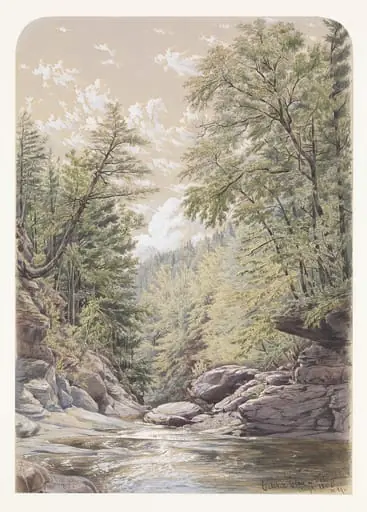
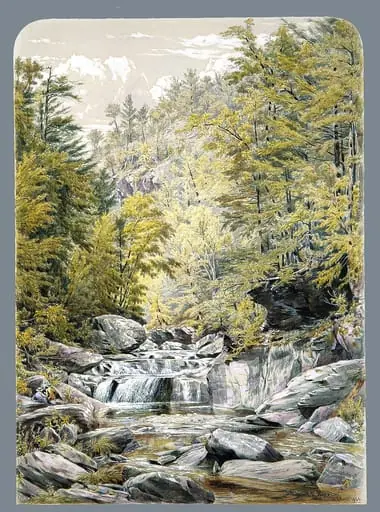
Indian Falls, Indian Brook, Cold Springs, New York is a watercolor work on paper by the American Impressionist artist William Rickarby Miller. It dates from 1850 and is held in the collection of the Metropolitan Museum of Art.
About this work
Watercolor was still new in America, so this feels fresh and light compared to the heavy landscapes of the time.
You’re looking at a small watercolor of a rocky waterfall in the woods. Sunlight filters through the trees, making the water sparkle. The artist used tiny, careful strokes to show every leaf and ripple.
Miller painted this in 1850, when most artists were working in oil. Watercolor was still new in America, so this feels fresh and light compared to the heavy landscapes of the time. He even added gum arabic—a sticky plant sap—to make the colors glow.
If you like how watercolor can look soft yet detailed, check out the technique called glazing.
Overview
William Rickarby Miller’s 1850 work titled Indian Falls, Indian Brook, Cold Springs, New York presents a compact watercolor scene of a wooded cascade. Executed on tan wove paper, the composition combines watercolor, pen and ink, graphite, gouache, and a glaze of gum arabic. The piece captures a narrow waterfall framed by surrounding trees, rendered with delicate, precise brushwork that emphasizes both light and texture.
Subject & Meaning
The image records the natural feature known as Indian Brook Falls, a modest waterfall set within a forested landscape of Cold Springs, New York. By focusing on the interplay of water, rock, and foliage, Miller highlights the quiet, transient beauty of a specific locale, inviting viewers to contemplate the subtle dynamics of light on moving water and the surrounding vegetation.
Technique & Style
Miller employed a mixed-media approach, layering watercolor washes with pen and ink outlines, graphite shading, and touches of gouache. The addition of gum arabic as a glazing medium intensifies the luminosity of the pigments, allowing the water to appear sparkling under filtered sunlight. Fine, controlled strokes render individual leaves and ripples, reflecting a meticulous handling uncommon in American landscape painting of the period.
Context
Created at a time when oil painting dominated American art, this watercolor illustrates the early adoption of the medium in the United States. Miller’s choice of watercolor, enhanced with gum arabic, aligns with a nascent interest in lighter, more immediate landscape representations, contrasting with the heavier, studio‑based oil works prevalent among his contemporaries.
Artist & collection