Artwork
Scene from the Tempest
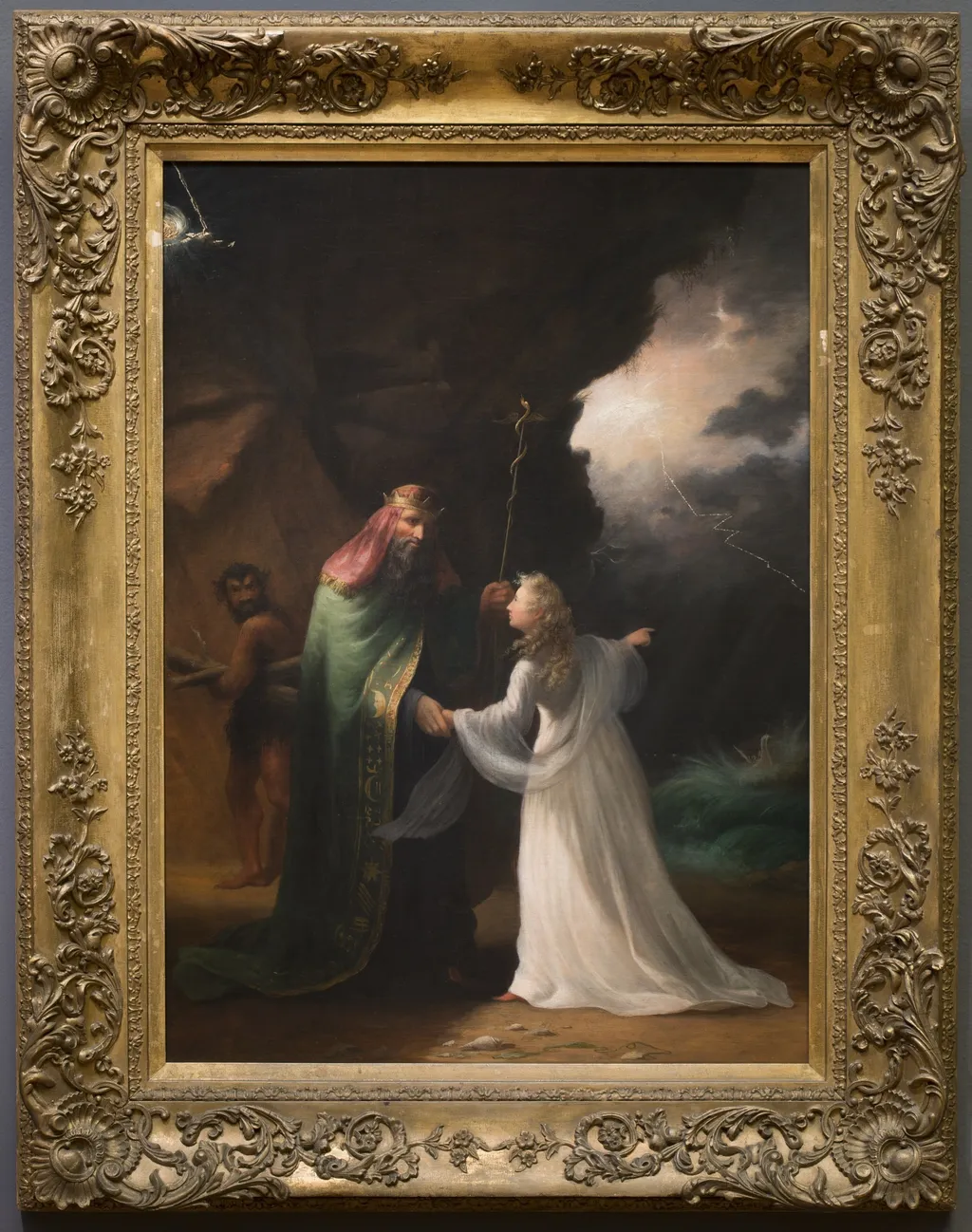
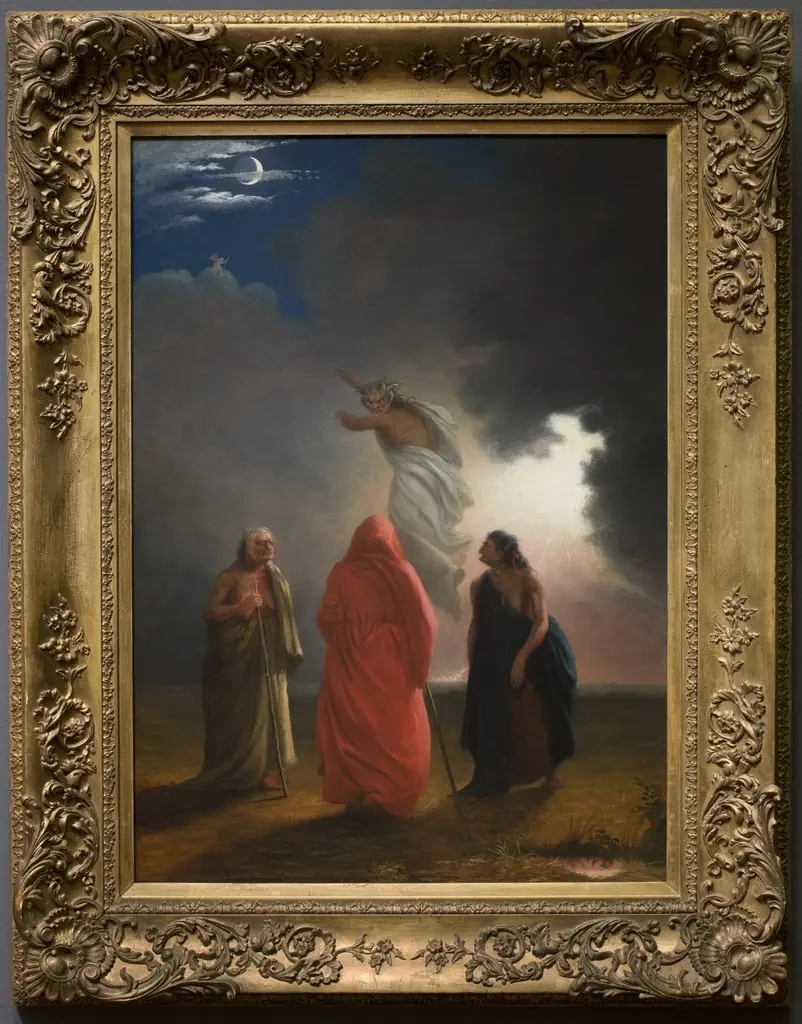
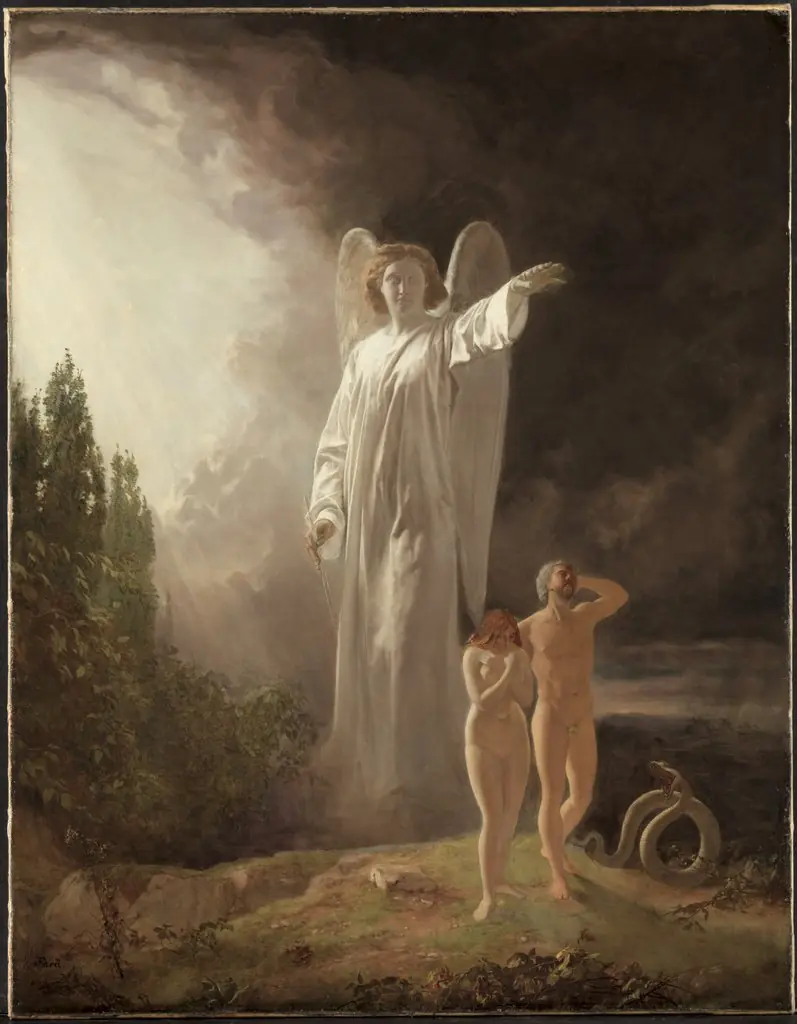
Scene from the Tempest is an oil painting by William Rimer. It dates from 1850 and is held in the collection of the Detroit Institute of Arts.
About this work
Overview
Painted around 1850, Scene from the Tempest is an oil work by William Rimer, currently in the collection of the Detroit Institute of Arts.
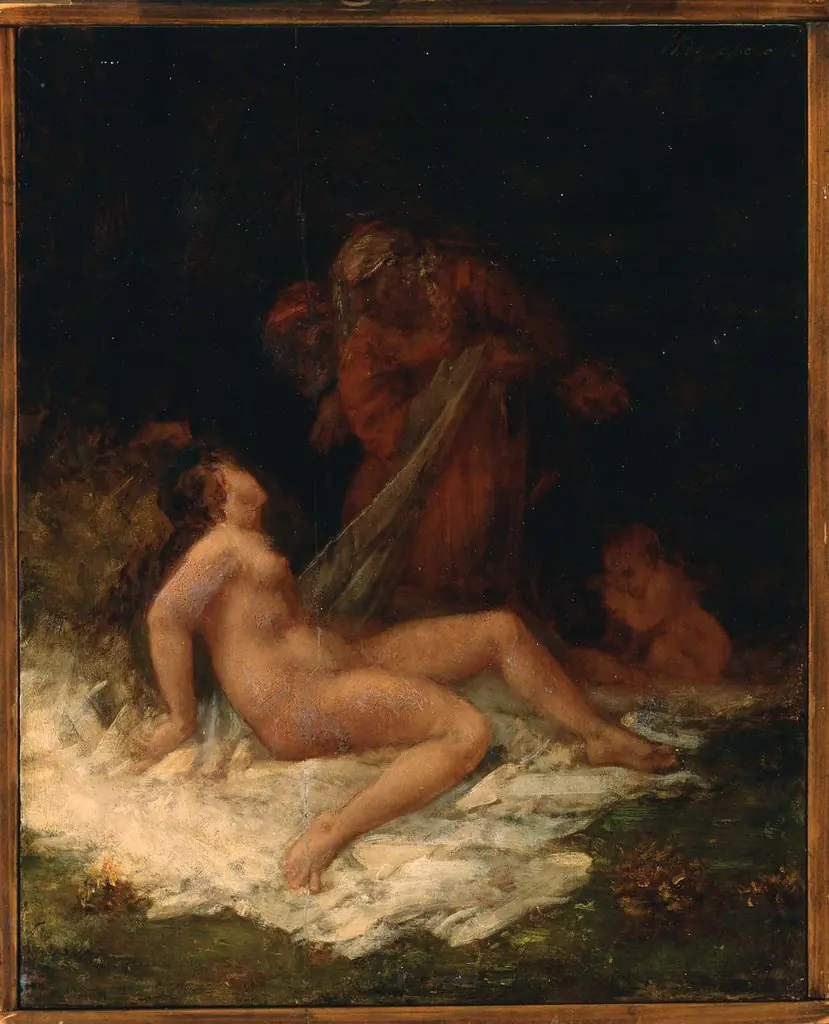
Painted around 1850, Scene from the Tempest is an oil work by William Rimer, currently in the collection of the Detroit Institute of Arts. The composition captures a moment of quiet tension between two figures, set against a shadowed landscape. Rimer’s use of light and shadow draws attention to the central relationship, isolating the figures from their surroundings while suggesting a narrative rooted in literary or mythic tradition.
Subject & Meaning
The figures appear to represent Prospero and Miranda from Shakespeare’s The Tempest, though the painting does not illustrate a specific scene from the text. Prospero, in green and red, holds a staff, while Miranda, in white, gazes upward. The shadowed figure in the cave may allude to Caliban, hinting at themes of power, guardianship, and isolation. The ambiguity invites interpretation beyond literal storytelling, emphasizing emotional resonance over narrative clarity.
Technique & Style
Rimer employs chiaroscuro to heighten the emotional gravity of the scene. Strong contrasts between the illuminated figures and the deep, receding shadows create a sense of spatial depth and theatrical intensity. The brushwork is controlled, with soft transitions in the skin tones and fabric folds, while the background remains loosely rendered, reinforcing the focus on the central pair and their psychological dynamic.
History & Provenance
The painting entered the Detroit Institute of Arts’ collection in the 20th century, though its earlier ownership history remains undocumented. It was likely produced during Rimer’s active period in the mid-1800s, a time when literary-themed paintings were popular among American collectors. Its survival and preservation suggest it was valued within private or institutional circles, even if the artist did not achieve widespread fame.
Context
In the mid-19th century, American artists frequently turned to Shakespeare for subject matter, seeking cultural legitimacy through classical references. Rimer’s painting aligns with this trend, though it diverges from literal illustration by focusing on mood rather than plot. The emphasis on intimate expression over dramatic action reflects a broader shift toward psychological depth in Romantic-era visual storytelling.
Legacy
Though William Rimer is not widely recognized today, Scene from the Tempest endures as a quiet example of mid-19th-century American narrative painting. Its restrained drama and thoughtful use of light offer insight into how lesser-known artists engaged with literary themes. The work contributes to a broader understanding of the period’s visual culture beyond its most celebrated figures.
Artist & collection