Artwork
Victory
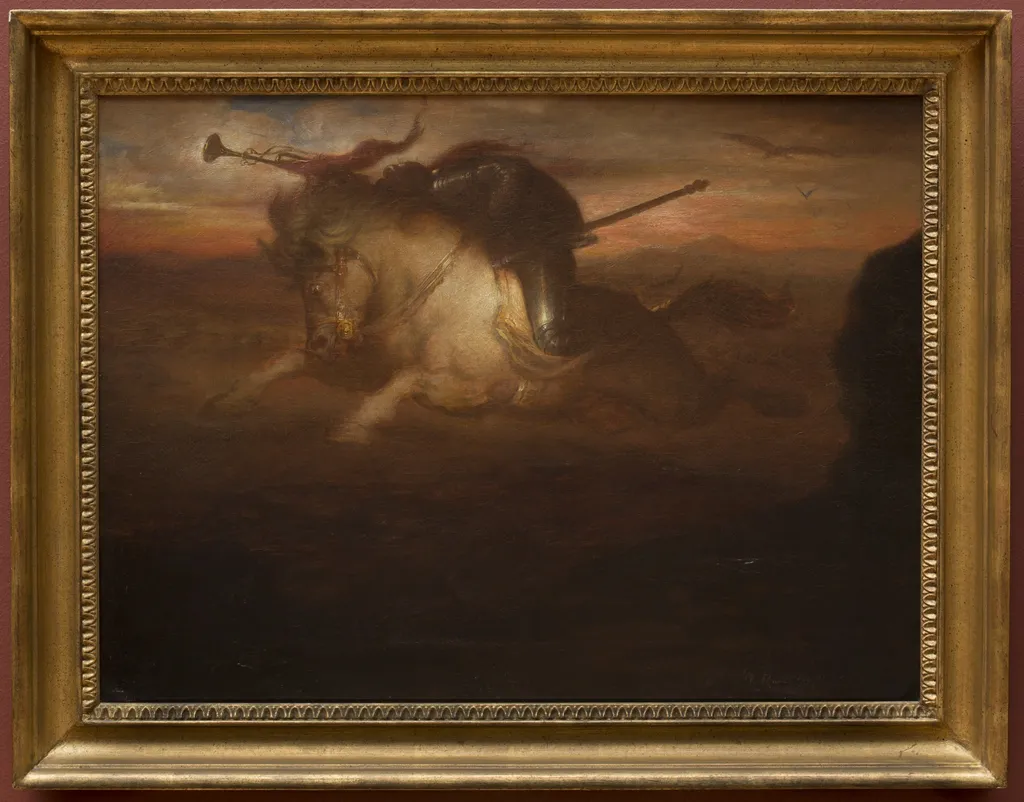
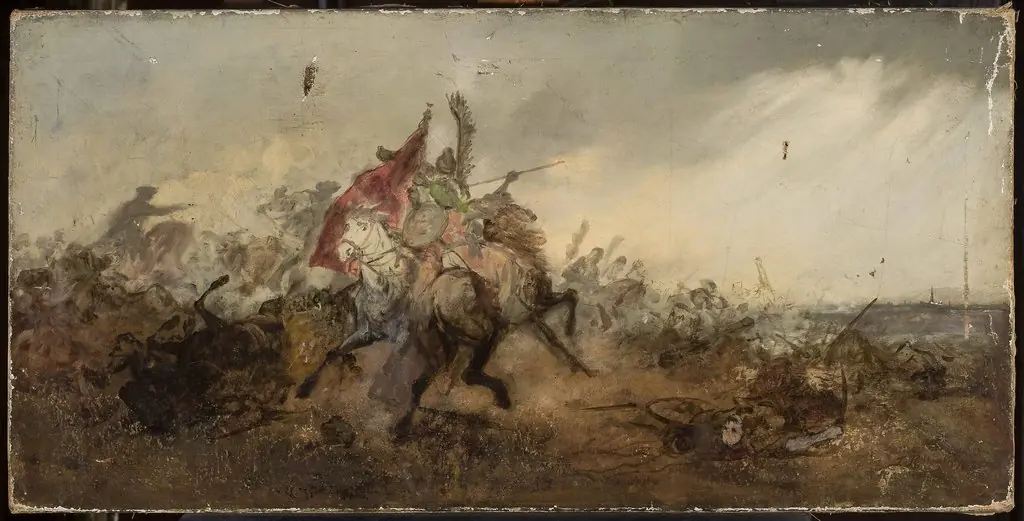
Victory is an oil painting by the Impressionist artist William Rimer. It dates from 1875 and is held in the collection of the Detroit Institute of Arts.
About this work
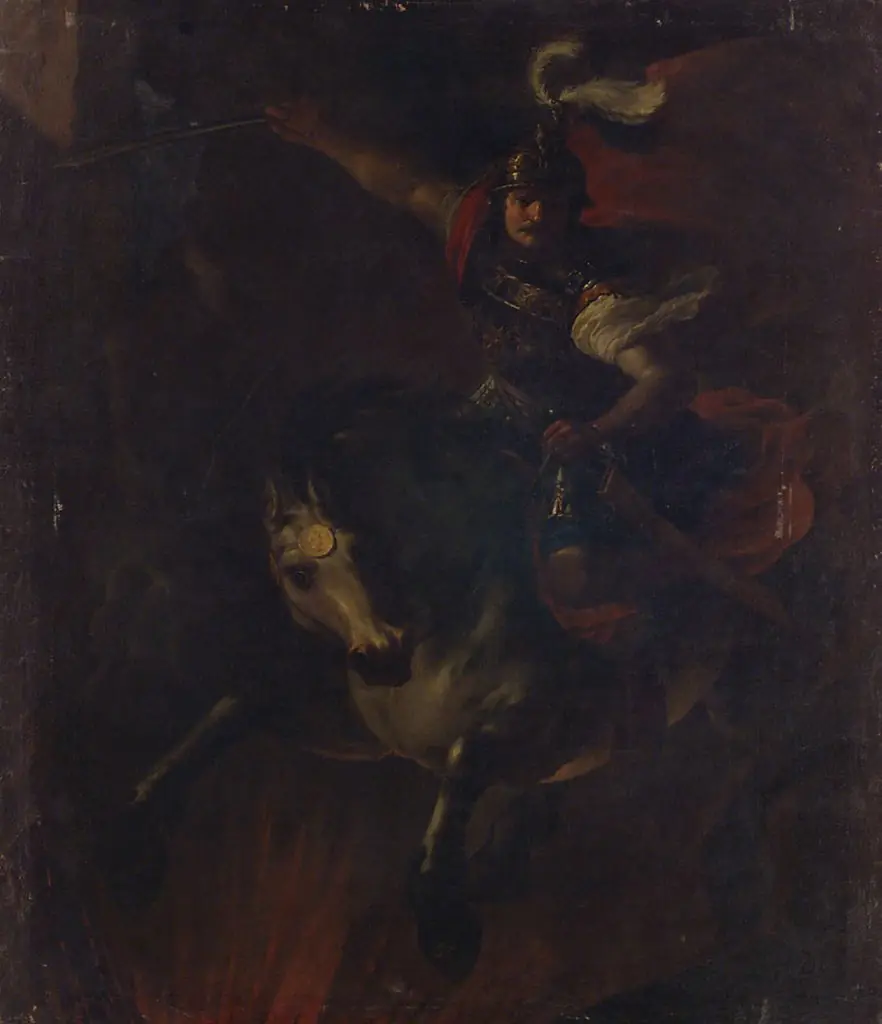
The painting's use of chiaroscuro creates a dramatic contrast between light and dark, drawing the viewer's attention to the knight and his horse.
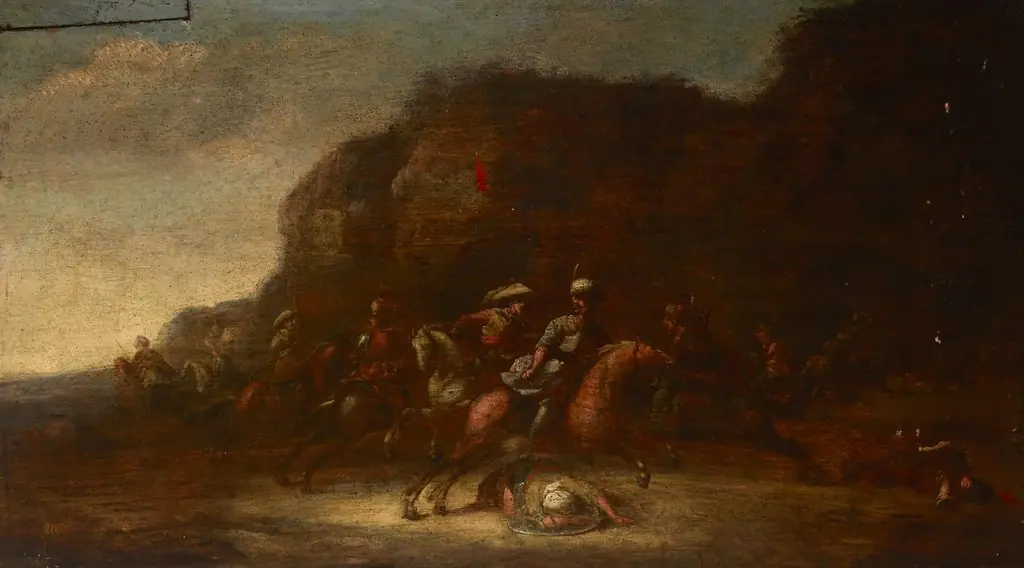
The painting "Victory" by William Rimer, created in 1875, showcases a knight on horseback. The knight, clad in armor and a flowing red cape, rides a white horse with a flowing mane. The horse is depicted in mid-gallop, its front legs raised as it charges forward. The knight holds a sword in his right hand, while his left hand grasps the reins of the horse. The background of the painting features a dark, cloudy sky with a hint of orange and yellow, suggesting a sunset or sunrise.
The painting's use of chiaroscuro creates a dramatic contrast between light and dark, drawing the viewer's attention to the knight and his horse. The knight's armor and the horse's flowing mane are highlighted by the light, while the dark background adds depth and drama to the scene.
To learn more about the artistic techniques used in this painting, explore the technique of chiaroscuro.
Overview
Victory is an 1875 oil painting by William Rimer, currently in the collection of the Detroit Institute of Arts. The work depicts a mounted knight in full armor, charging forward on a white stallion. Rendered with deliberate contrast and motion, the scene captures a moment of dynamic movement against a twilight sky, emphasizing tension and resolve without overt narrative context.
Subject & Meaning
The figure is a solitary knight, armored and cloaked in red, riding a rearing horse with sword raised. No banner, enemy, or battlefield is shown, leaving the nature of his victory ambiguous. The absence of clear context shifts focus from historical event to symbolic presence—suggesting triumph as an internal state rather than a documented conquest.
Technique & Style
Rimer employs chiaroscuro to heighten drama, illuminating the knight and horse against a dim, stormy sky. Brushwork is precise on armor and mane, capturing texture and motion, while the background blends loosely to suggest fading light. The palette favors deep shadows with warm glows at the horizon, reinforcing the sense of a pivotal, fleeting moment.
History & Provenance
Painted in 1875, Victory entered the Detroit Institute of Arts’ collection shortly after its completion. No record of public exhibition or private ownership prior to the museum’s acquisition is documented. Its presence in the institution since the late 19th century reflects early interest in American academic painting, though Rimer’s broader career remains largely unrecorded.
Context
Created during a period when historical and romanticized military themes were common in American art, Victory aligns with 19th-century ideals of heroism and individual valor. Yet unlike grand battle scenes by contemporaries, it omits crowds and conflict, offering instead a solitary, almost meditative figure—reflecting a quieter, introspective strain in post-Civil War visual culture.
Legacy
Victory remains one of the few known works by William Rimer, and its continued display in Detroit underscores its role as a representative example of late 19th-century American academic painting. While not widely studied, it offers insight into how personal symbolism and atmospheric technique were used to convey grand themes without literal storytelling.
Artist & collection