Artwork
The French in Killala Bay
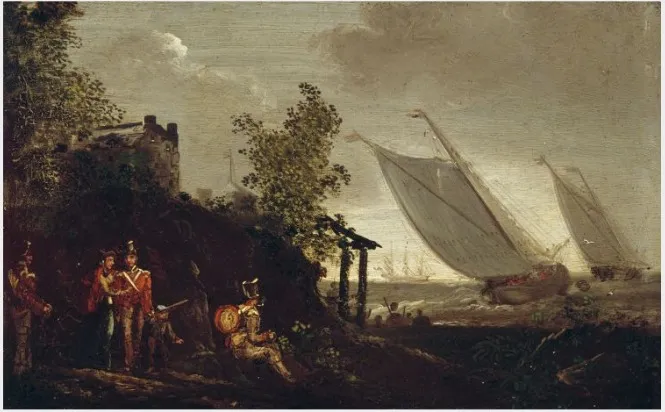
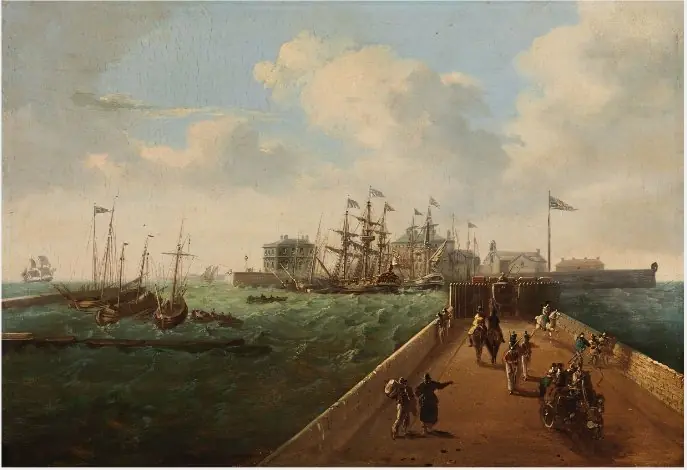
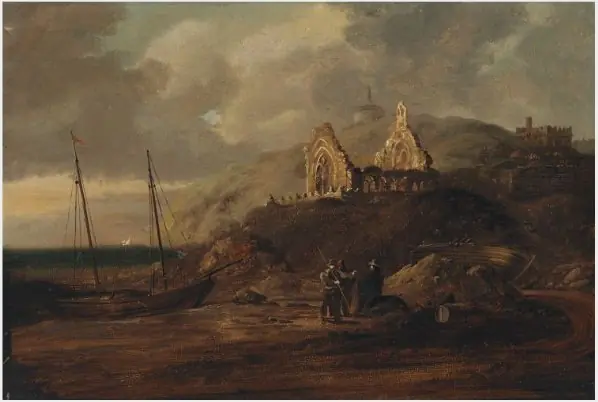
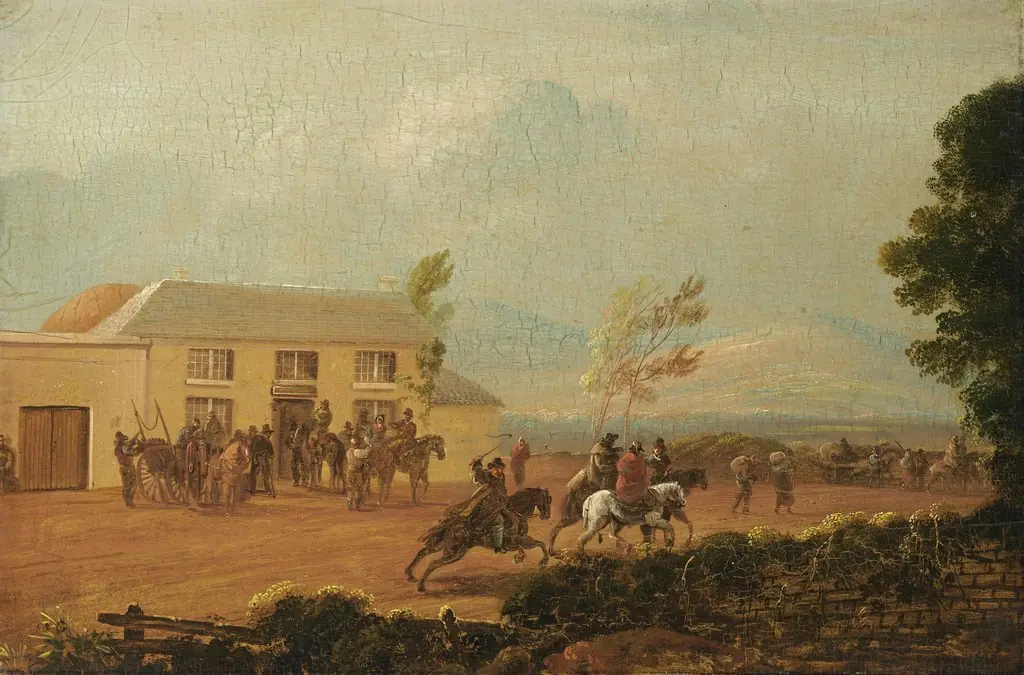
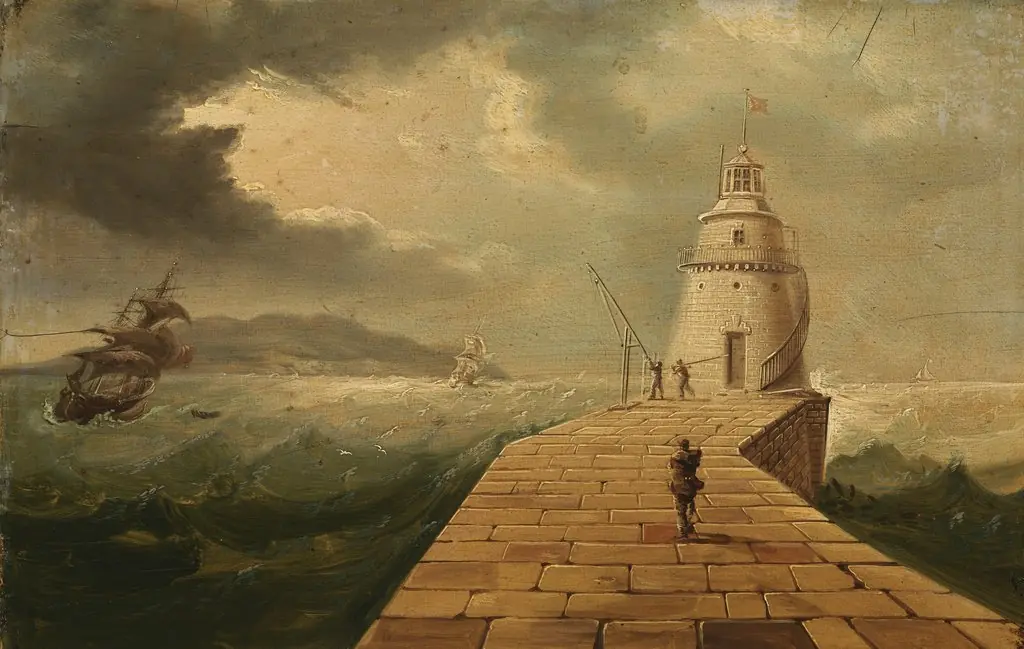
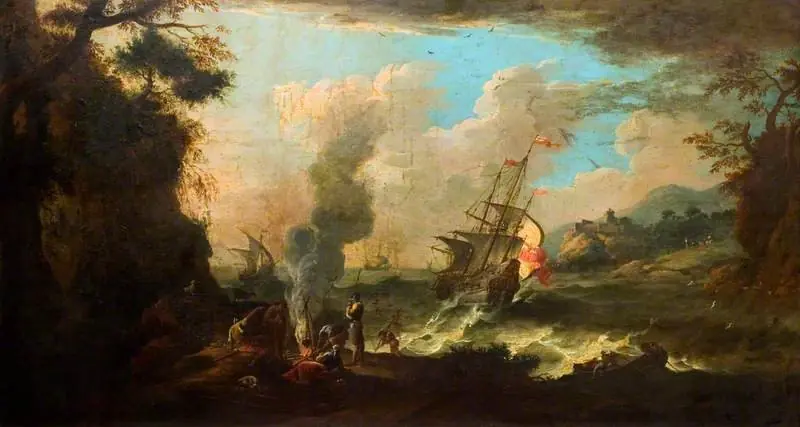
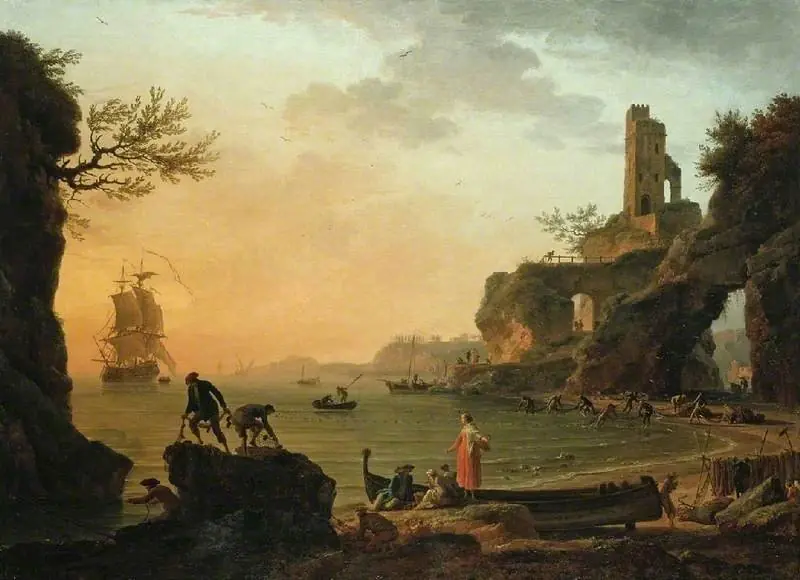
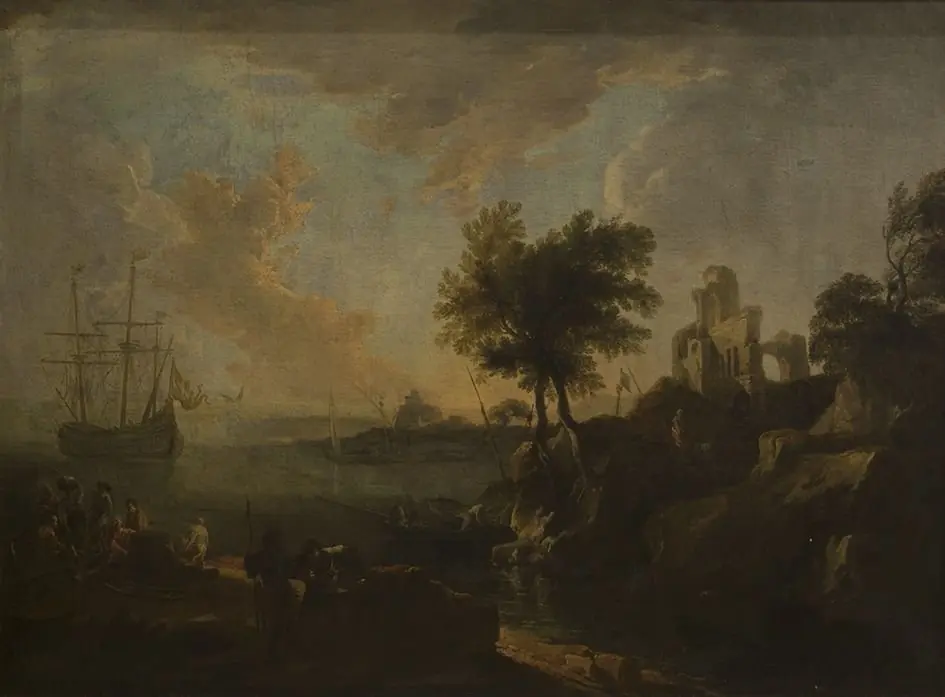
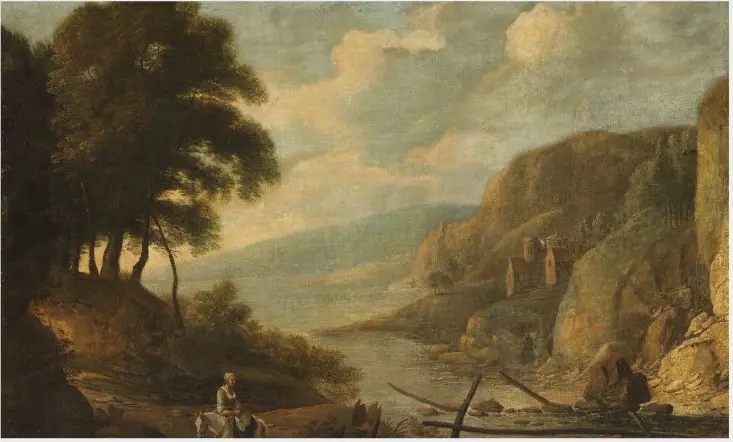
The French in Killala Bay is an unspecified painting by William Sadler. It dates from 1810 and is held in the collection of the National Gallery of Ireland.
About this work
Overview
Painted in 1810 by Irish artist William Sadler II, this work captures a quiet moment of French military presence along the coast of County Mayo.
Painted in 1810 by Irish artist William Sadler II, this work captures a quiet moment of French military presence along the coast of County Mayo. Though depicting a historical event, the scene avoids dramatic action, instead emphasizing stillness and atmospheric detail. The painting resides in the National Gallery of Ireland, where it contributes to a small body of early 19th-century Irish historical landscapes.
Subject & Meaning
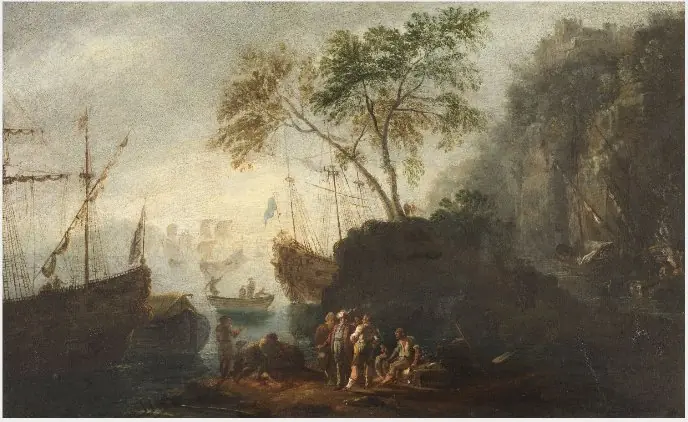
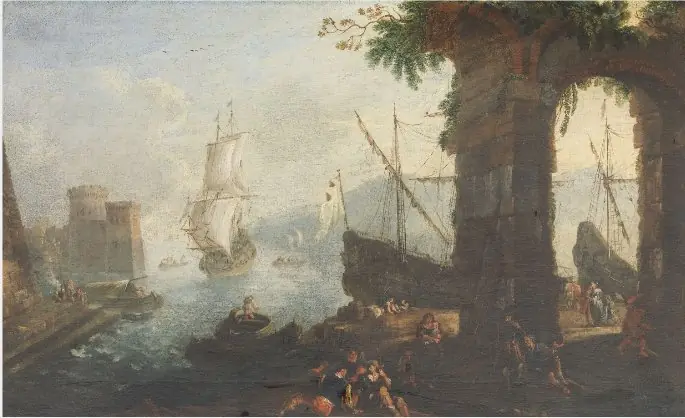
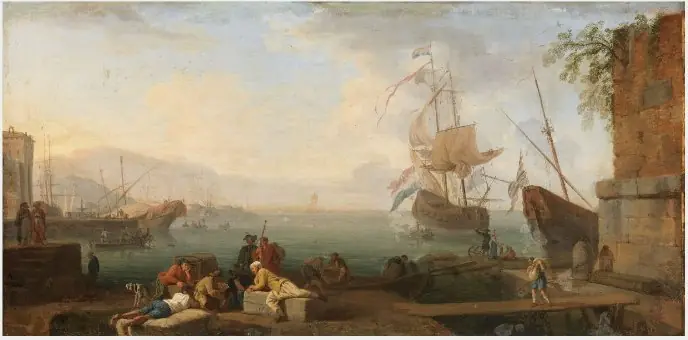
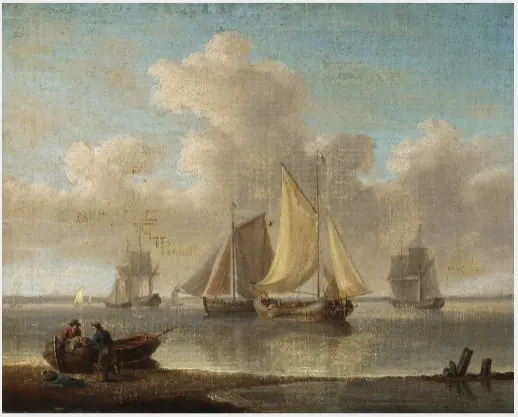
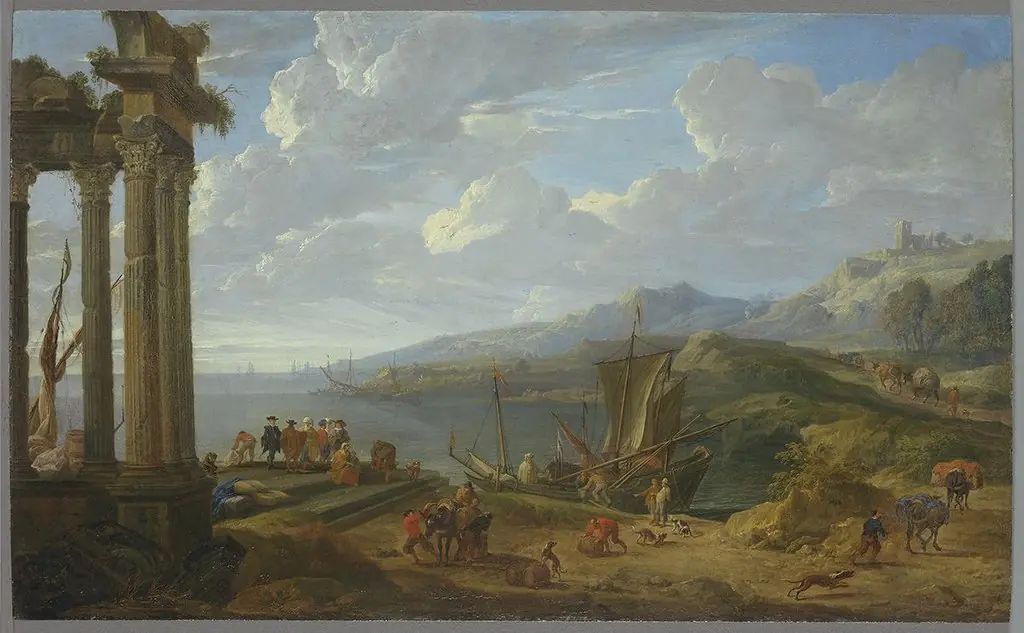
The painting portrays French troops stationed on a hillside overlooking Killala Bay, likely referencing the 1798 landing of French forces in support of Irish rebels. Rather than illustrating combat, Sadler focuses on a pause in activity: soldiers rest, a drummer plays, and the landscape dominates. This suggests a contemplative view of occupation — not as conquest, but as a transient, almost pastoral interruption in the Irish coastal environment.
Technique & Style
Sadler employs soft, muted tones to render the cloudy sky and rolling terrain, creating a sense of spatial depth through layered horizons. The red uniforms of the soldiers contrast subtly with the greens and browns of the land, guiding the viewer’s eye without disrupting the calm. Brushwork is restrained, favoring atmospheric harmony over sharp detail, particularly in the distant stone structure and scattered sailboats.
History & Provenance
Commissioned or created shortly after the failed French intervention in Ireland, the painting reflects a period of political tension now receding into memory. Sadler, known for military scenes, chose here to depict aftermath rather than battle. The work entered the National Gallery of Ireland’s collection in the 19th century, where it has remained as part of its early national art holdings.
Context
The French landing at Killala in 1798 was part of a broader revolutionary effort to aid Irish insurgents against British rule. By 1810, the event was no longer immediate news but a remembered episode. Sadler’s depiction aligns with a broader trend in Irish art of the time: processing political upheaval through landscape, emphasizing place over conflict, and inviting reflection rather than partisan sentiment.
Legacy
The painting stands as a quiet example of how Irish artists engaged with national history without overt nationalism. Its emphasis on tranquility and natural setting distinguishes it from more sensational military depictions of the era. While not widely reproduced, it remains a significant record of how early 19th-century Irish painters interpreted historical events through mood and environment.
Artist & collection
Artist
William Sadler II (c. 1782 – 1839), also known as William Sadler the Younger, was an Irish painter. He was a noted landscape painter who is known for his depiction of the Battle of Waterloo.