Artwork
T. Millie Dow (1848 - 1919)
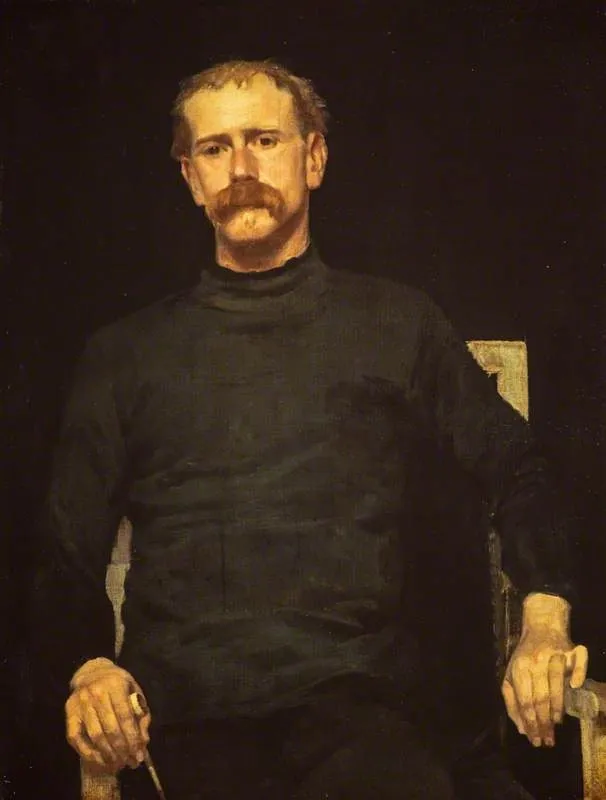
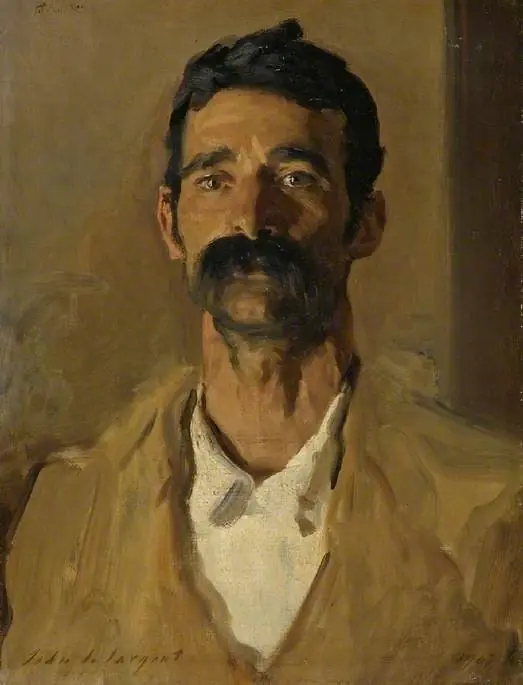
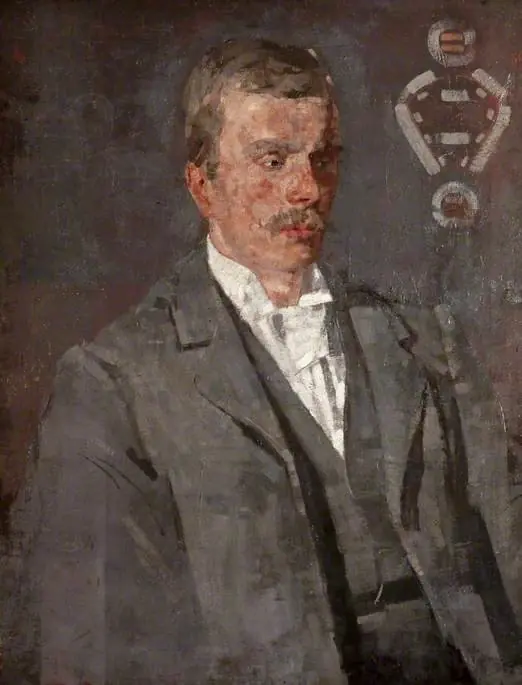
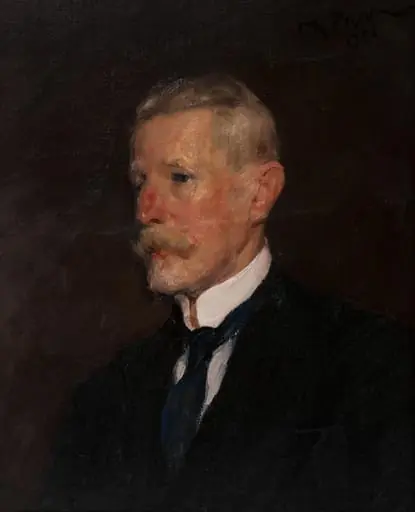
T. Millie Dow (1848 - 1919) is an oil painting by the Impressionist artist William Stott. It dates from 1892 and is held in the collection of the National Galleries Scotland.
About this work
Overview
Rendered in muted tones, the composition centers on a seated figure against a deep, uniform background, emphasizing stillness and introspection.
Painted in 1892 by William Stott, this oil portrait depicts T. Millie Dow, a man born in 1848 and deceased in 1919. The work is part of the collection at the Scottish National Gallery. Rendered in muted tones, the composition centers on a seated figure against a deep, uniform background, emphasizing stillness and introspection. The painting’s restrained palette and focused lighting reflect Stott’s interest in psychological presence over narrative detail.
Subject & Meaning
The subject, T. Millie Dow, is portrayed without identifiable symbols of status or occupation, inviting contemplation rather than identification. His posture—hands resting calmly on chair arms—conveys quiet composure. The absence of context or props shifts attention to his expression and demeanor, suggesting an intimate, private moment. The somber mood may reflect the era’s preference for dignified, understated portraiture.
Technique & Style
Stott employs a limited palette dominated by dark earth tones, with subtle variations in shadow and light to model the figure’s form. The background’s uniform darkness isolates the subject, enhancing the sense of solitude. Brushwork is controlled yet expressive, particularly in the rendering of facial features and fabric folds. The use of chiaroscuro deepens the psychological weight of the image without theatricality.
History & Provenance
The painting entered the Scottish National Gallery’s collection following its creation in 1892. Its provenance remains largely unaltered since acquisition, with no record of public exhibition beyond institutional holdings. As a portrait of a private individual, it was not commissioned for public display, suggesting personal or familial significance to its early ownership before institutional acquisition.
Context
Created during a period when British portraiture increasingly favored psychological depth over grandeur, this work aligns with the quiet realism of late 19th-century Scottish art. Stott, influenced by French naturalism and the Pre-Raphaelites, moved away from formal conventions toward intimate, subdued compositions. The painting reflects a broader trend of depicting ordinary individuals with emotional gravity.
Legacy
Though not widely reproduced, the portrait remains a representative example of Stott’s mature style and his contribution to Scottish portraiture. It is studied for its restrained emotional tone and technical precision. The work contributes to understanding how regional artists adapted broader European trends to convey quiet individuality, rather than public persona.
Artist & collection