Artwork
Miss Lacy
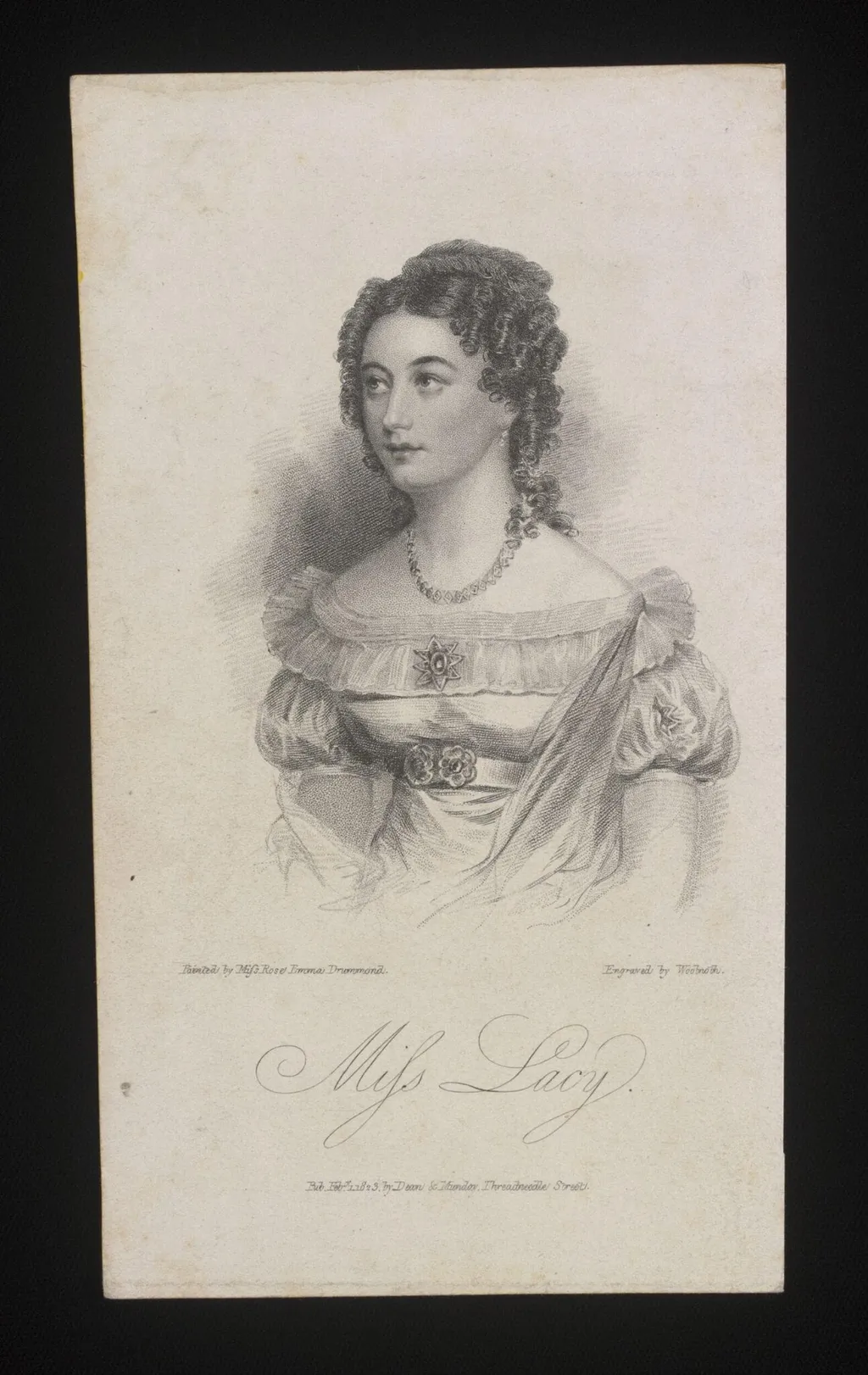
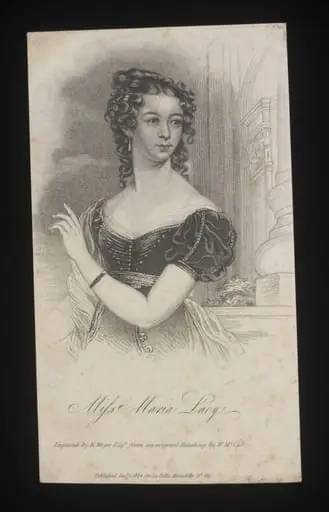
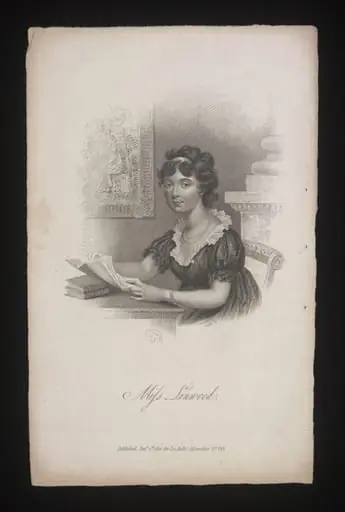
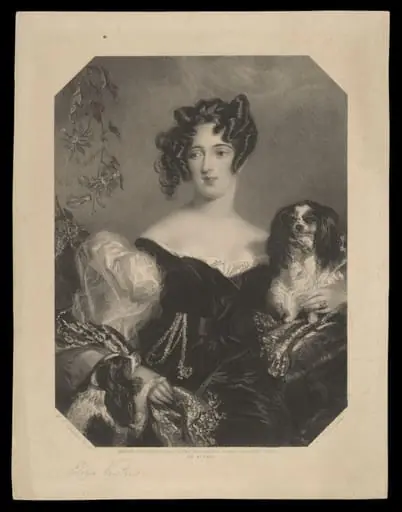
Miss Lacy is a print by the Romanticist artist William T. Woolnoth. It dates from 1 and is held in the collection of the Victoria and Albert Museum. A portrait print of Miss Maria Lacy, produced on February 1, 1823, by William T.
About this work
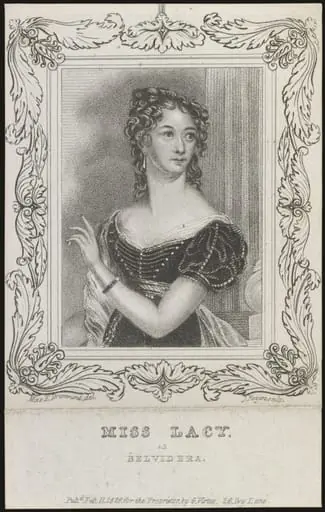
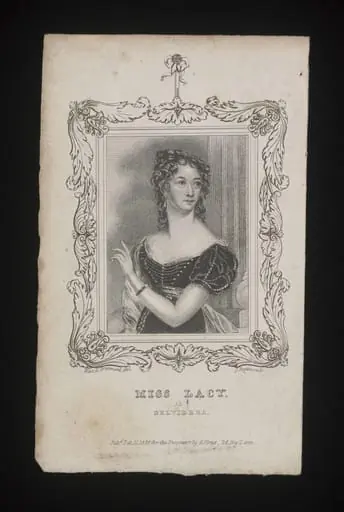
Miss Lacy is a portrait print. It was created by William T. Woolnoth.
The print depicts Miss Maria Lacy and was published by Dean & Munday, London. This publication happened on a specific date, 1st February 1823, and is part of the Harry Beard Collection.
To learn more about the style and context of Miss Lacy, look into the movement: Romanticism.
Overview
The work is a commercial engraving typical of early 19th-century British print culture, intended for public circulation rather than private commission.
A portrait print of Miss Maria Lacy, produced on February 1, 1823, by William T. Woolnoth and published by Dean & Munday of London, forms part of the Harry Beard Collection. The work is a commercial engraving typical of early 19th-century British print culture, intended for public circulation rather than private commission. Its modest scale and precise line work reflect the era’s demand for accessible likenesses of notable individuals.
Subject & Meaning
Miss Maria Lacy, likely a figure of social or theatrical prominence, is portrayed with formal composure and restrained elegance. The image serves less as a personal revelation than as a public representation, aligning with contemporary conventions of female portraiture that emphasized decorum and refinement. Her identity, while documented, remains tied to societal roles rather than individual narrative, typical of prints meant for broad consumption.
Technique & Style
Executed in line engraving, the print employs fine, controlled strokes to define facial features and fabric textures. The tonal range is limited, relying on contrast and detail rather than shading to convey depth. The style is orderly and precise, characteristic of commercial printmaking of the period, with minimal embellishment. The composition centers the sitter against a neutral background, focusing attention on her likeness.
History & Provenance
The print was issued by Dean & Munday, a London firm known for publishing portraits of actors, aristocrats, and public figures. It entered the Harry Beard Collection, assembled in the late 19th and early 20th centuries, which preserves a significant archive of theatrical and celebrity imagery from the Georgian and Victorian eras. Its survival reflects its role as a cultural artifact of popular visual memory.
Context
Produced during the height of Romanticism, the print diverges from the movement’s emotional intensity, instead adhering to the conventions of polite portraiture. While Romanticism influenced broader artistic ideals, commercial prints like this one prioritized clarity and recognition over expressive depth. Such images circulated widely, shaping public perception of celebrity and social status in an age of expanding print media.
Legacy
As a preserved example of early 19th-century print publishing, the portrait offers insight into how identity was visually constructed for public consumption. It contributes to the historical record of how women of the era were represented in mass media—often as symbols of propriety rather than individuality. Today, it remains a reference point for scholars studying the intersection of art, commerce, and social image.
Artist & collection
Artist
William Woolnoth (1780–1837) was an engraver. He was one of the engravers whose work was included in Cadell and Davies Britannia depicta. He did engravings of work by artists such as Thomas Mann Baynes, Robert Blemmell…