Artwork
Untitled
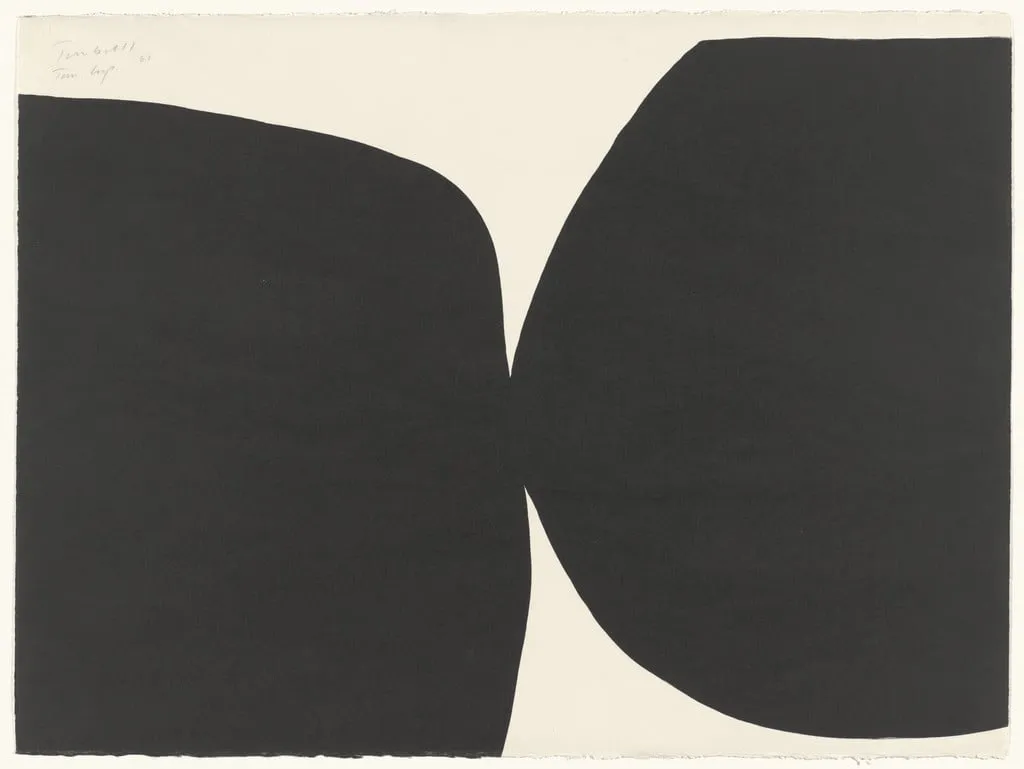
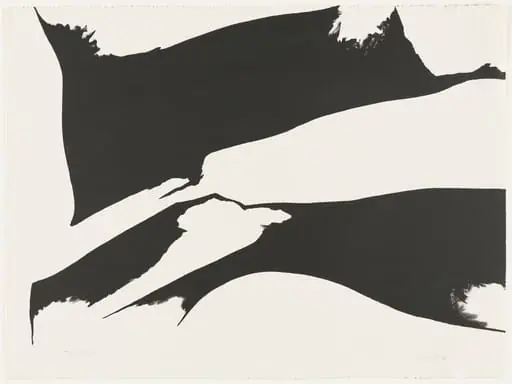
Untitled is an ink print by William Turnbull. It dates from 1961 and is held in the collection of the Museum of Modern Art.
About this work
Overview
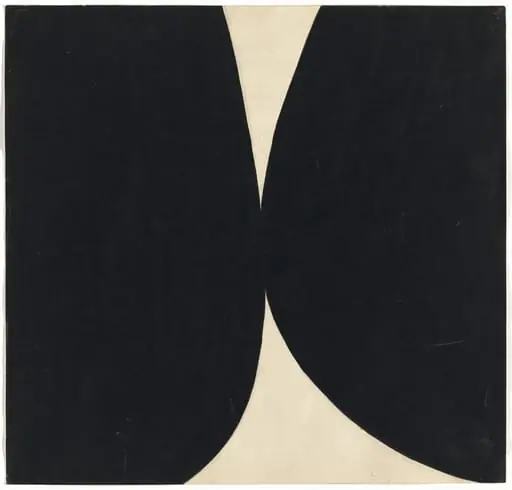
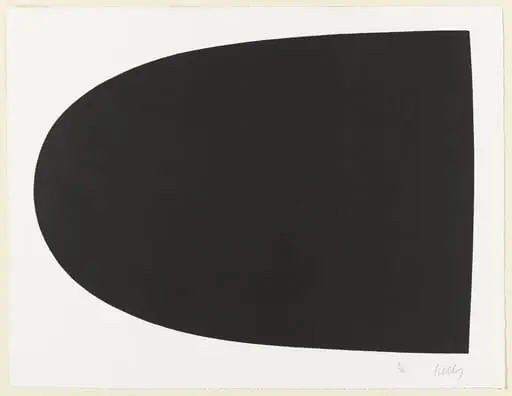
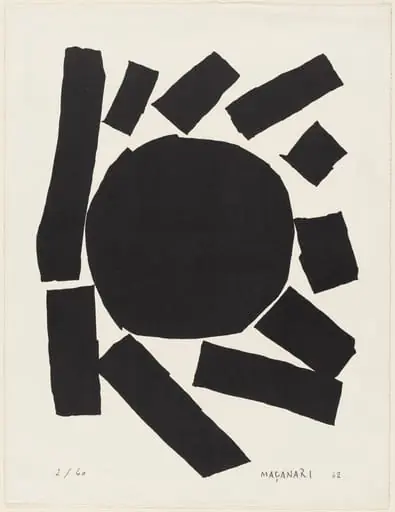
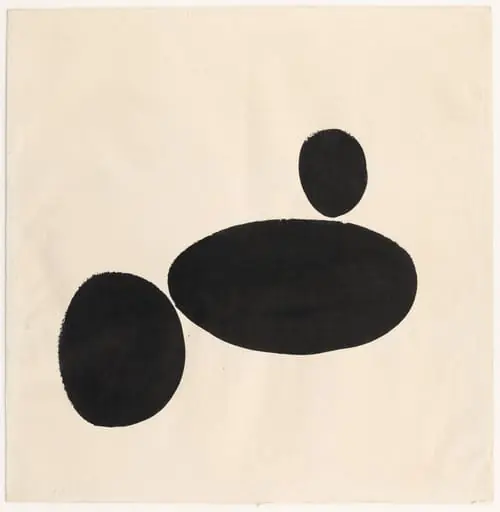
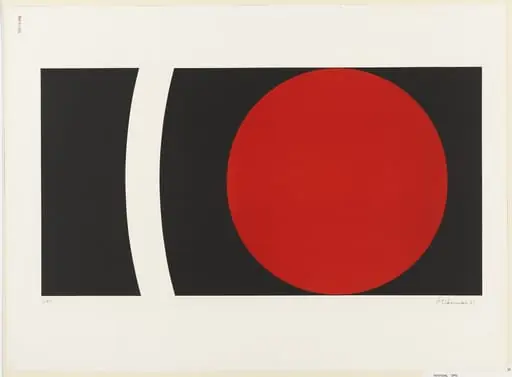
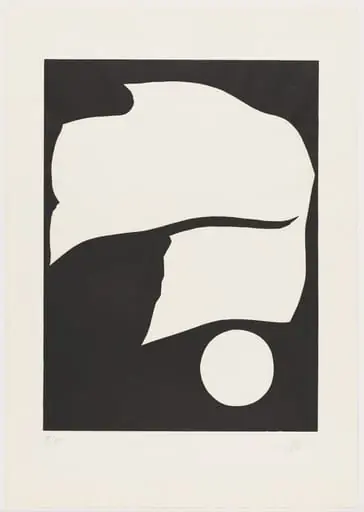
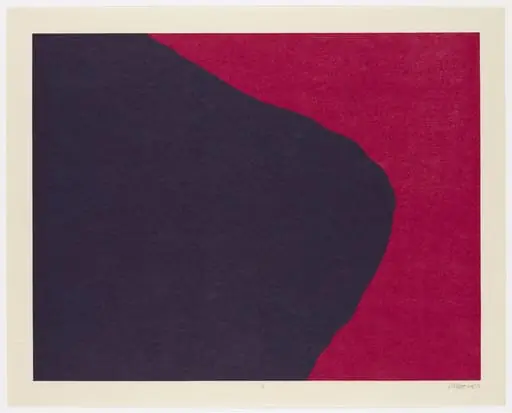
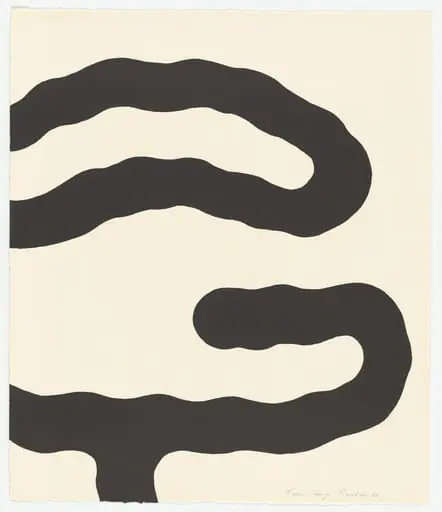
Created in 1961, this lithograph by William Turnbull is part of The Museum of Modern Art’s collection. It features two abstract black forms on a stark white ground, arranged asymmetrically. The shapes suggest organic or architectural fragments, interacting without fully connecting. The composition relies on contrast and negative space, minimizing detail to emphasize form and balance.
Subject & Meaning
The work avoids literal representation, instead proposing a visual dialogue between two distinct shapes. One is a softened rectangle, the other a fluid, irregular contour. Their proximity implies relationship or tension, yet their mismatched edges resist resolution. The ambiguity invites contemplation of absence, alignment, and the limits of geometric order in abstract expression.
Technique & Style
Executed in lithography, the print uses flat, unmodulated black ink on untextured paper to achieve sharp, clean edges. The artist exploited the medium’s capacity for precise, monochromatic rendering, avoiding shading or line variation. The hand-drawn quality of the shapes suggests direct, gestural mark-making, contrasting with the mechanical precision of the print process.
History & Provenance
The work entered The Museum of Modern Art’s collection shortly after its creation, reflecting the institution’s interest in postwar abstraction.
The work entered The Museum of Modern Art’s collection shortly after its creation, reflecting the institution’s interest in postwar abstraction. Its acquisition aligns with the museum’s broader engagement with British artists exploring minimalism and formal reduction in the early 1960s. No earlier ownership records are publicly documented, suggesting it was acquired directly from the artist or a gallery.
Context
Produced during a period when British artists were redefining abstraction beyond expressionism, Turnbull’s work engages with international trends in geometric minimalism. While contemporaries like Anthony Caro pursued sculpture, Turnbull turned to printmaking to explore form through reduction. The piece reflects a broader shift toward simplicity and spatial ambiguity in 1960s visual culture.
Legacy
This lithograph remains a quiet example of Turnbull’s contribution to postwar British printmaking. Its restrained aesthetic influenced later artists interested in the interplay of shape and void. Though not widely reproduced, it endures as a reference point for the use of lithography to convey conceptual clarity through visual economy.
Artist & collection