Artwork
Phaeton
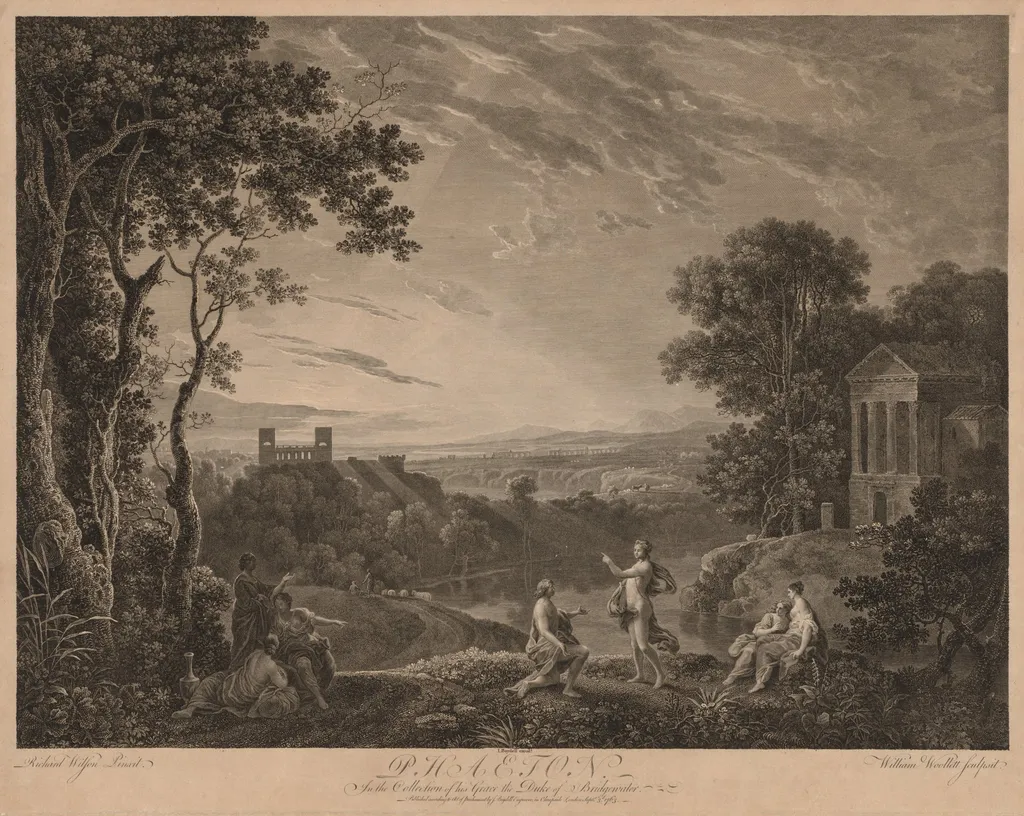
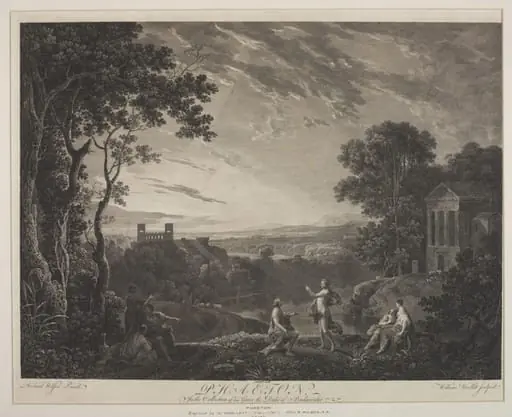
Phaeton is a print by the Romanticist artist William Woollett. It dates from 1763 and is held in the collection of the Cleveland Museum of Art.
About this work
Overview
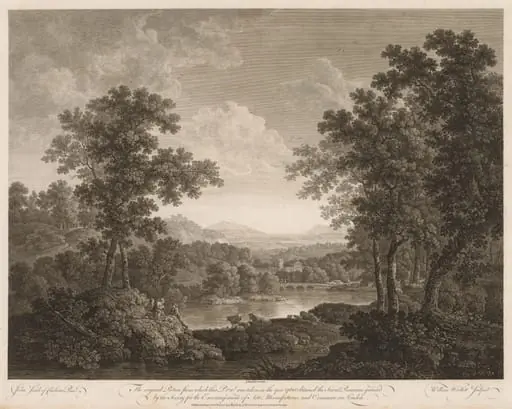
Phaeton is an engraving by William Woollett, completed in 1763. It depicts a mythological scene drawn from classical literature and is part of the collection at The Cleveland Museum of Art. The work is a reproductive print, translating a larger painting into detailed line work, reflecting the 18th-century practice of disseminating historical and mythological imagery through printmaking.
Subject & Meaning
The figures in classical attire convey the narrative’s gravity, with gestures and positioning suggesting panic and divine retribution.
The scene illustrates the myth of Phaeton, son of the sun god Helios, who lost control of his father’s chariot, causing chaos across the heavens before being struck down by Zeus. The figures in classical attire convey the narrative’s gravity, with gestures and positioning suggesting panic and divine retribution. The composition underscores the consequences of hubris, a recurring theme in Greco-Roman myth as interpreted by Enlightenment artists.
Technique & Style
Woollett employed fine, controlled engraving lines to render texture, depth, and atmospheric perspective. Light and shadow are meticulously modeled through hatching and cross-hatching, creating a dramatic chiaroscuro effect that directs attention to the central figures. The landscape background, with distant trees and architecture, enhances spatial recession, characteristic of academic engraving practices of the period.
History & Provenance
The engraving was made after a painting by Richard Wilson, a leading British landscape painter of the time. Woollett’s version was widely circulated, contributing to the popularity of mythological subjects in print form. It entered The Cleveland Museum of Art’s collection through established acquisition channels in the 20th century, preserving its role as an example of British reproductive printmaking.
Context
In mid-18th-century Britain, engravings like Phaeton served as accessible conduits for classical narratives among the educated middle class. The work aligns with the era’s fascination with antiquity and moral allegory, reflecting the influence of the Grand Tour and academic art theory. While often associated with Neoclassicism, its emotional intensity anticipates later Romantic sensibilities without fully embracing them.
Legacy
Woollett’s engraving is recognized for its technical precision and influence on the printmaking trade. It exemplifies the collaborative nature of 18th-century art, where painters and engravers worked in tandem to reach broader audiences. Though not widely exhibited today, it remains a key reference in studies of British print culture and the transmission of mythological imagery through mechanical reproduction.
Artist & collection