Artwork
Phaeton
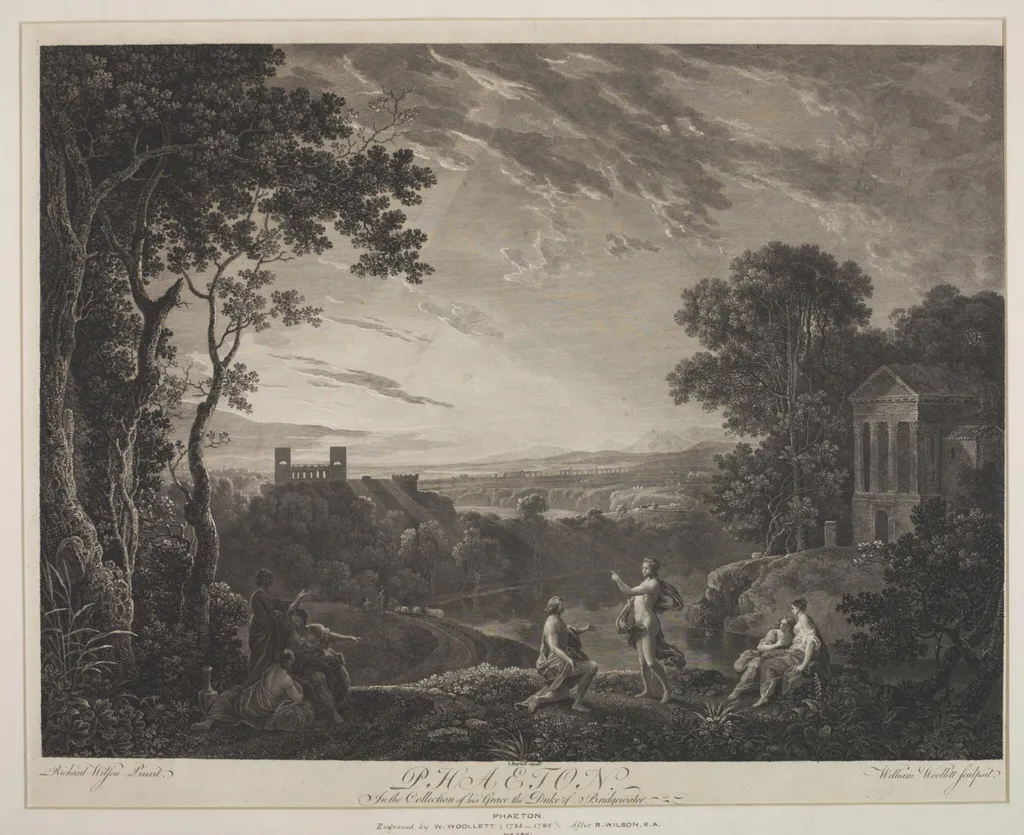
Phaeton is a print by the Romanticist artist William Woollett. It dates from 1756 and is held in the collection of the Victoria and Albert Museum.
About this work
Overview
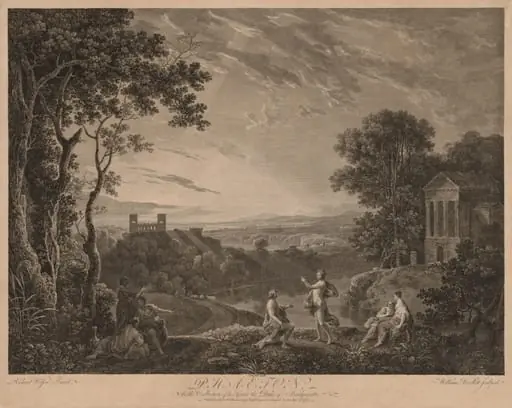
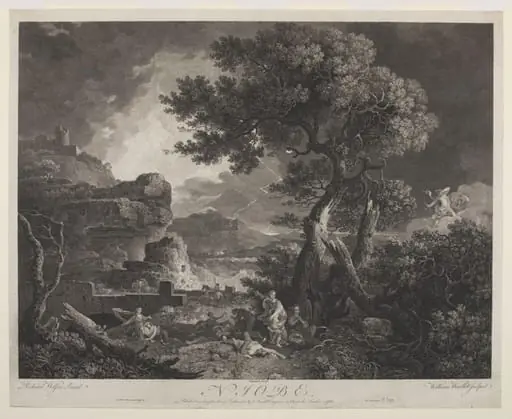
Phaeton is a 1756 engraving by William Woollett, based on a composition by Richard Wilson. The print depicts a dramatic, mythological landscape on paper.
Subject & Meaning
The scene illustrates the myth of Phaeton, known for his reckless chariot ride. Figures in flowing robes are set amidst a turbulent landscape, conveying the story's dramatic essence.
Technique & Style
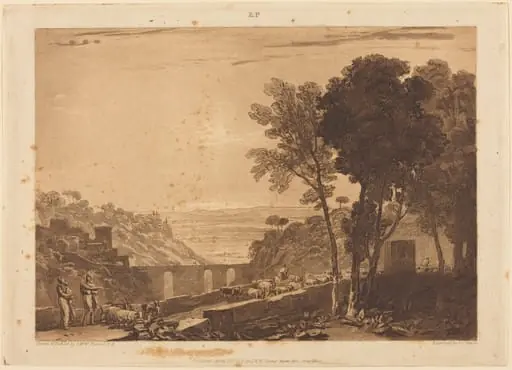
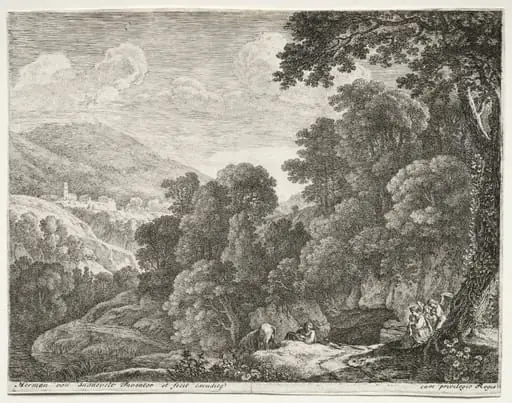
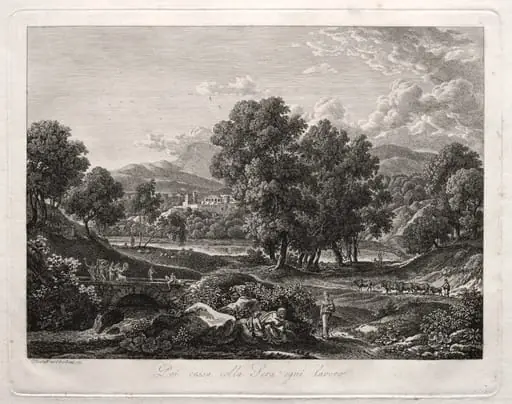
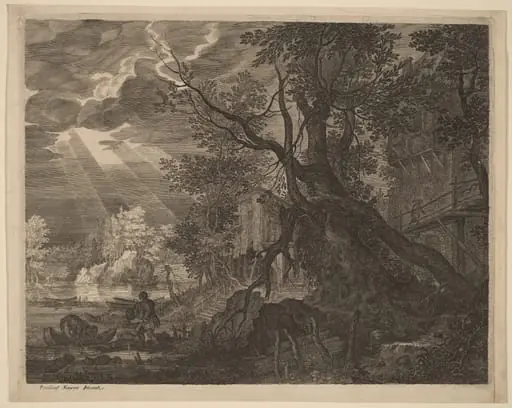
The engraving features strong contrasts of light and shadow, creating a moody atmosphere. The landscape includes a stormy sky, rolling hills, rocky outcrops, a ruined tower, a temple, and a winding river.
History & Provenance
Produced in 1756, a reduced version is catalogued as DYCE.2862. The original composition was by Richard Wilson, with Woollett executing the engraving.
Context
Exhibited at the Victoria and Albert Museum, where the public can view the print in person.
Legacy
As a reproduction of Wilson's work, *Phaeton* reflects 18th-century interest in classical mythology and landscape art, preserving the story for a broader audience through engraving.
Artist & collection