Artwork
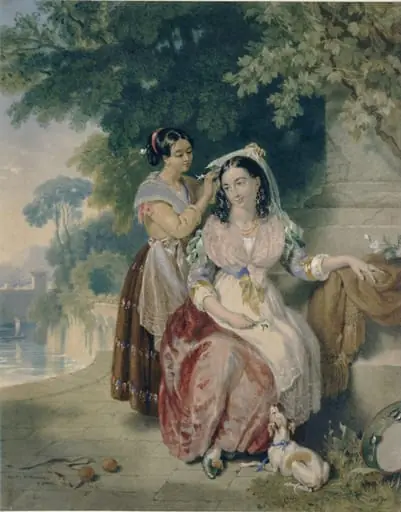
Roman Beggars in the costume of Subiaco
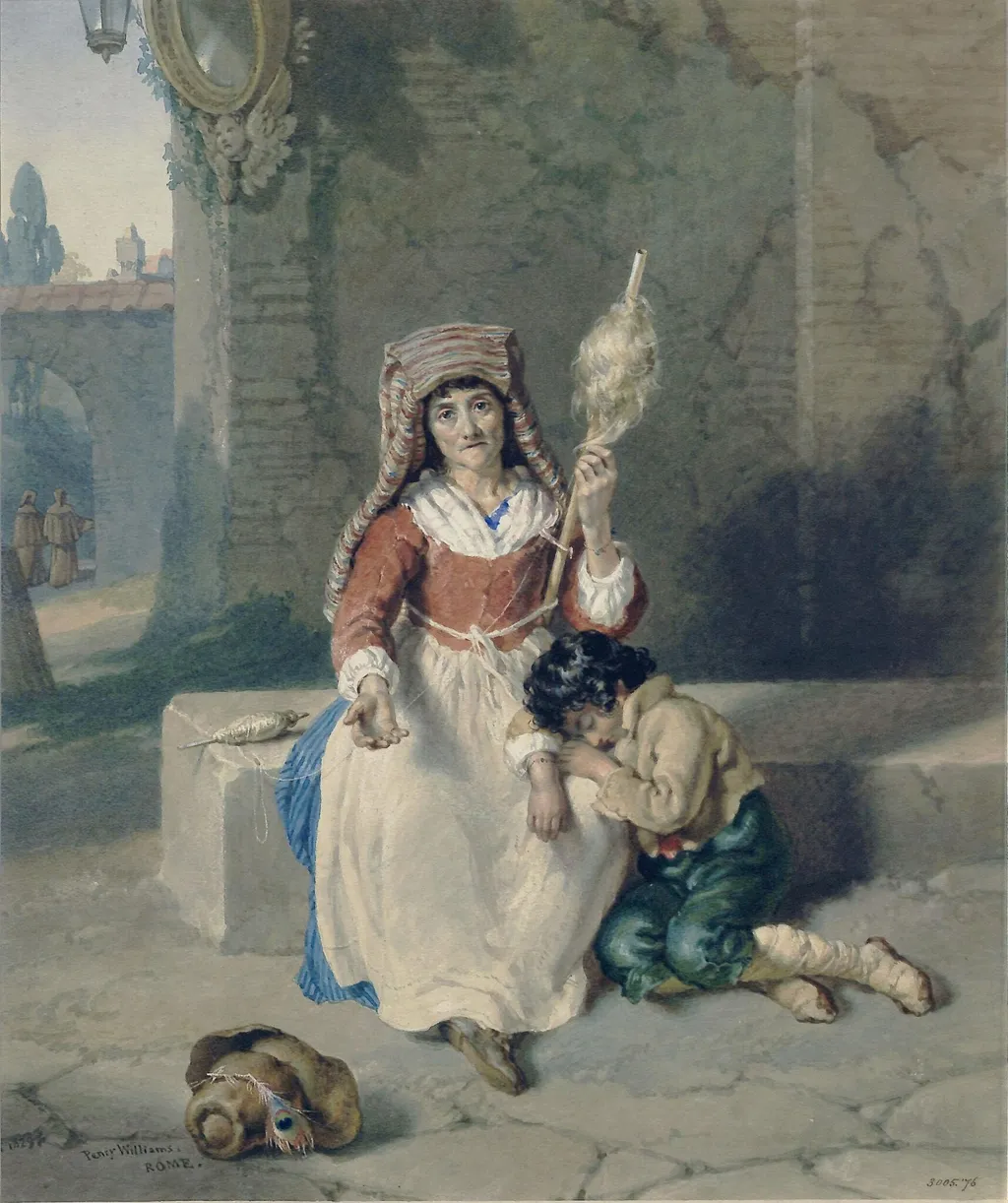
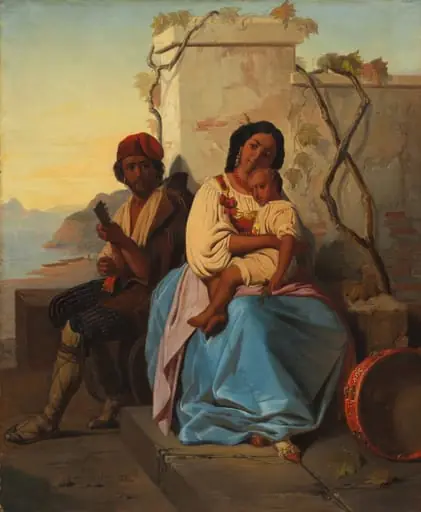
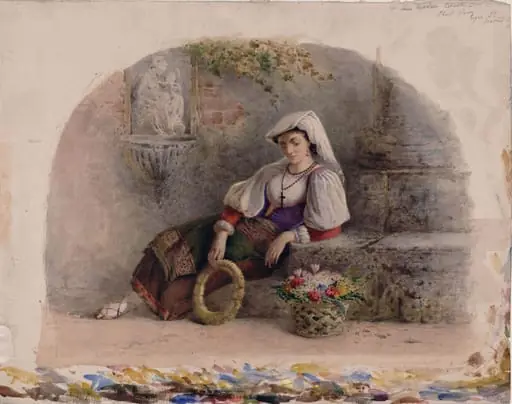
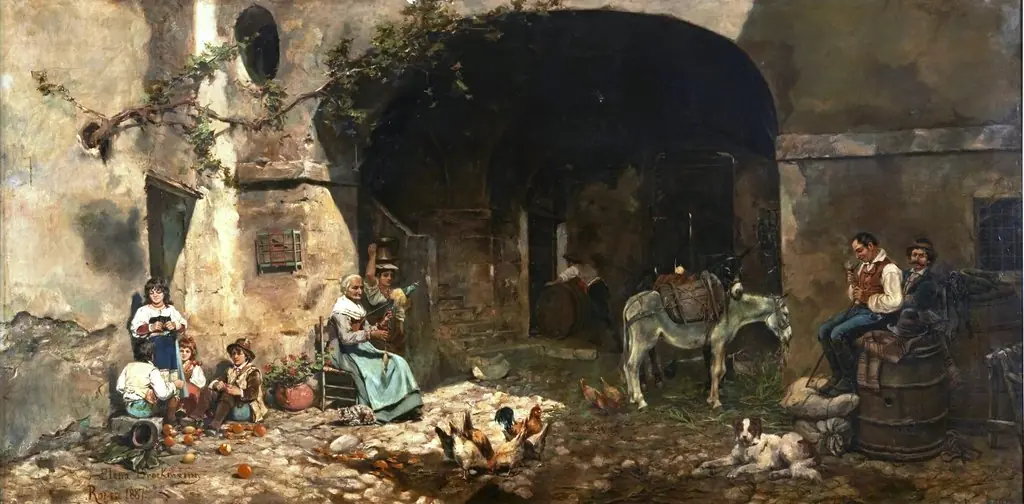
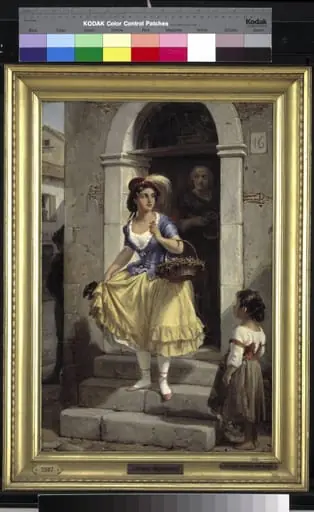
Roman Beggars in the costume of Subiaco is a watercolor work on paper by the Biedermeier artist Penry Williams. It dates from 1829 and is held in the collection of the Victoria and Albert Museum.
About this work
Overview
Rendered in delicate washes, the scene avoids idealization, focusing instead on unvarnished human presence amid urban decay.
Painted in 1829 by Penry Williams, this watercolour captures a quiet moment among beggars in Rome. The work is signed and dated by the artist, reflecting his direct observation of street life. Rendered in delicate washes, the scene avoids idealization, focusing instead on unvarnished human presence amid urban decay. Its modest scale and intimate composition suggest a study rather than a formal commission.
Subject & Meaning
The figures—a woman holding a birdcage and a boy reclining with a stuffed toy—convey vulnerability without sentimentality. Their clothing, though simple, carries regional detail, hinting at local identity amid poverty. The woman’s solemn gaze and the child’s limp posture suggest exhaustion, not performance. The scene resists moralizing, instead presenting dignity in stillness, as if the moment has been paused by the artist’s eye.
Technique & Style
Williams employed loose, transparent watercolour washes to suggest texture and light without heavy definition. The crumbling walls and distant architecture are rendered with minimal detail, allowing the figures to dominate. Soft, muted tones—pale blues, faded reds, and earthy grays—enhance the atmosphere of quiet hardship. Brushwork remains visible, preserving the immediacy of sketch-like observation over polished finish.
History & Provenance
The watercolour was created during Williams’s travels in Italy, part of a broader 19th-century European interest in documenting regional customs. It entered the Victoria and Albert Museum’s collection through documented acquisition, likely from the artist’s estate or a contemporary collector. Its survival reflects its value as a record of everyday life, not as a decorative object.
Context
In the 1820s, British artists increasingly traveled to Italy to study antiquity and contemporary life. Williams’s focus on beggars aligns with a growing trend toward social realism, distinct from romanticized depictions of the Italian countryside. His work contributes to a visual archive of marginalized communities, observed with empathy but without theatricality.
Legacy
Though not widely exhibited, the painting remains a quiet example of early 19th-century British watercolour practice engaged with foreign subjects. It stands as a modest but authentic record of Roman street life, valued for its observational honesty rather than compositional grandeur. Its preservation in a major museum underscores its role as a historical document.
Artist & collection