Artwork
Untitled
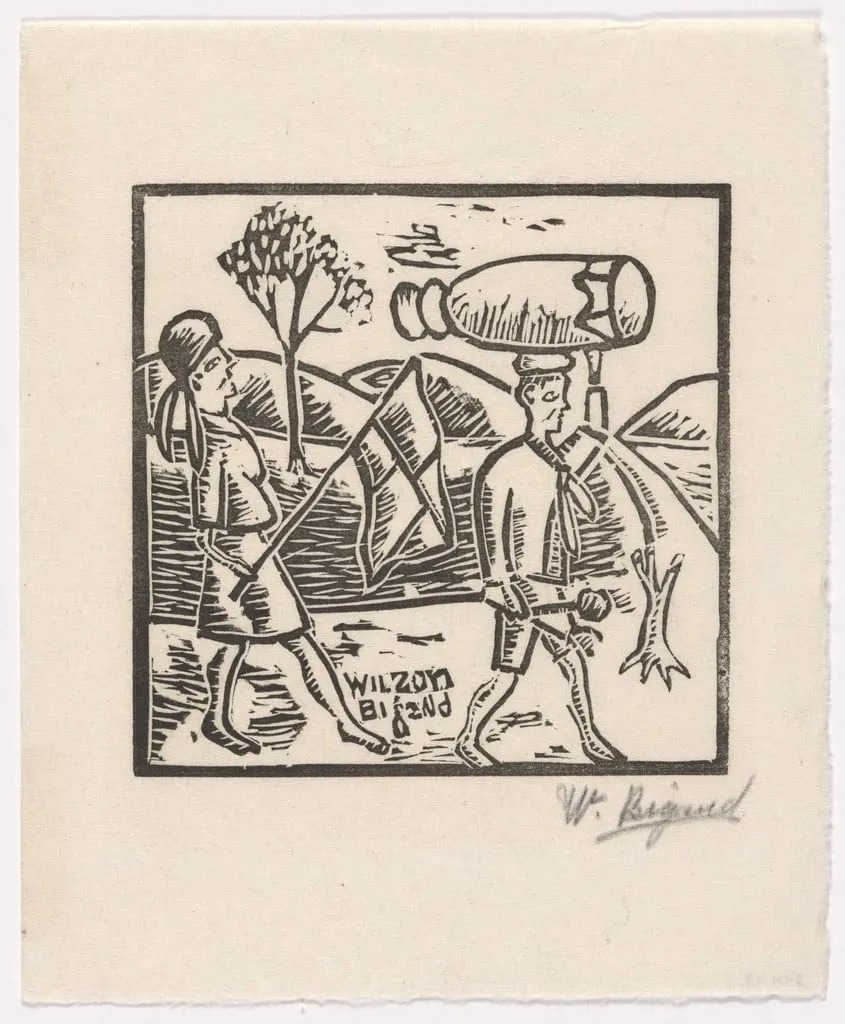
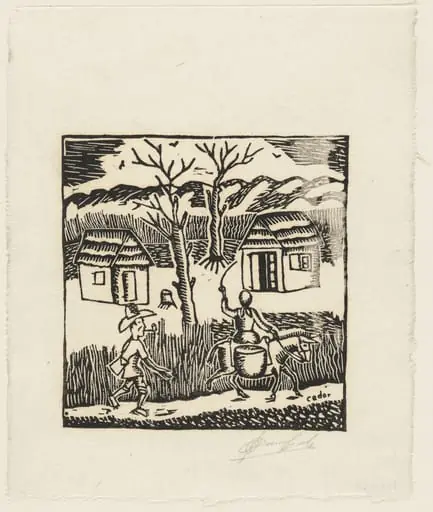
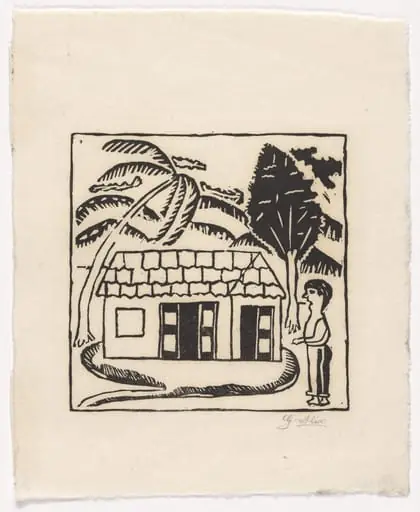
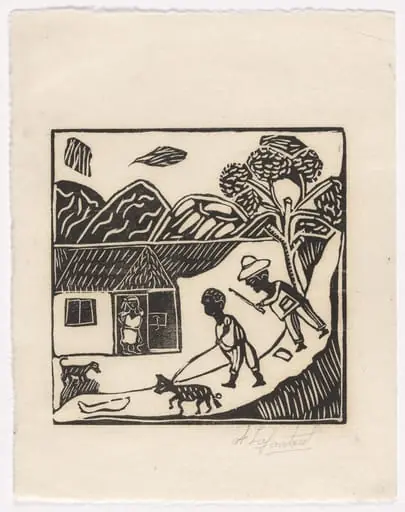
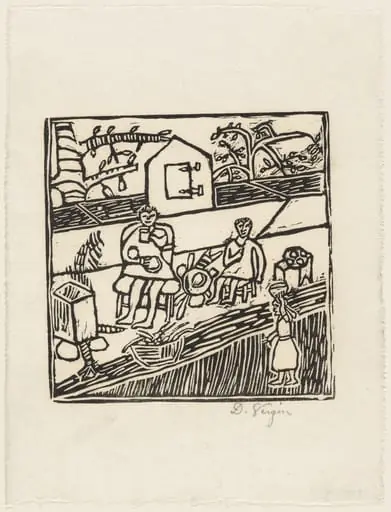
Untitled is an ink print by Wilson Bigaud. It dates from 1947 and is held in the collection of the Museum of Modern Art.
About this work
Overview
Created in 1947, this woodcut by Wilson Bigaud is one of the earliest known works by the Haitian artist, made when he was just sixteen. It belongs to a small group of prints produced by self-taught creators in Haiti during the 1940s, a period when indigenous artistic expression began to gain recognition beyond local communities. The piece is now held in the collection of The Museum of Modern Art.
Subject & Meaning
The figure’s motion and the structure behind her suggest continuity, not isolation, grounding the work in lived experience.
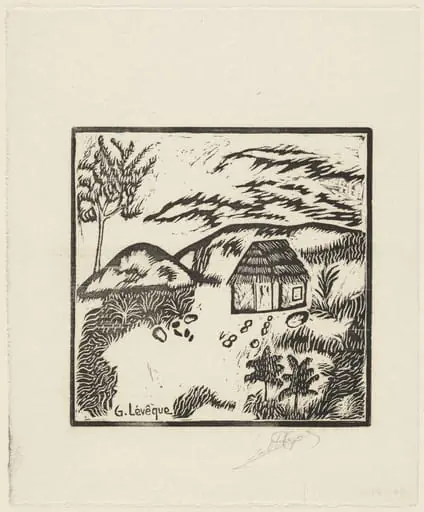
The image depicts a woman walking past a thatched hut, balancing a basket on her head. The scene captures a quiet moment of daily life, free from overt symbolism or narrative. Its simplicity reflects an observational approach, rooted in the rhythms of rural Haitian existence. The figure’s motion and the structure behind her suggest continuity, not isolation, grounding the work in lived experience.
Technique & Style
Executed in black-and-white woodcut, the print features bold, uneven lines that convey immediacy rather than polish. The cuts appear swift and intuitive, as if responding directly to memory rather than planned composition. This rawness is characteristic of early Haitian printmakers who worked without formal training, using the medium to translate visual impressions with directness and energy.
History & Provenance
Bigaud produced this work during a formative moment in Haitian art, when a nascent movement of self-taught artists began documenting everyday life through printmaking. The piece entered The Museum of Modern Art’s collection as part of broader efforts to document non-Western modernisms. Its survival and preservation reflect its significance as an early example of Haitian printmaking outside academic traditions.
Context
In the mid-1940s, Haiti saw a surge in artistic activity among non-professional creators, often inspired by local rituals, landscapes, and labor. Woodcut, accessible and inexpensive, became a favored medium. Bigaud’s work emerged alongside others in this wave, contributing to a visual record that challenged prevailing notions of artistic authority and formal training in the Caribbean.
Legacy
This early print helped establish Bigaud’s trajectory as a key figure in Haitian art. Its inclusion in major collections affirmed the value of vernacular expression within modern art discourse. While Bigaud later developed a more stylized approach, this woodcut remains a vital testament to the raw, unmediated vision of youth and the quiet dignity of ordinary life in mid-century Haiti.
Artist & collection