Artwork
Untitled
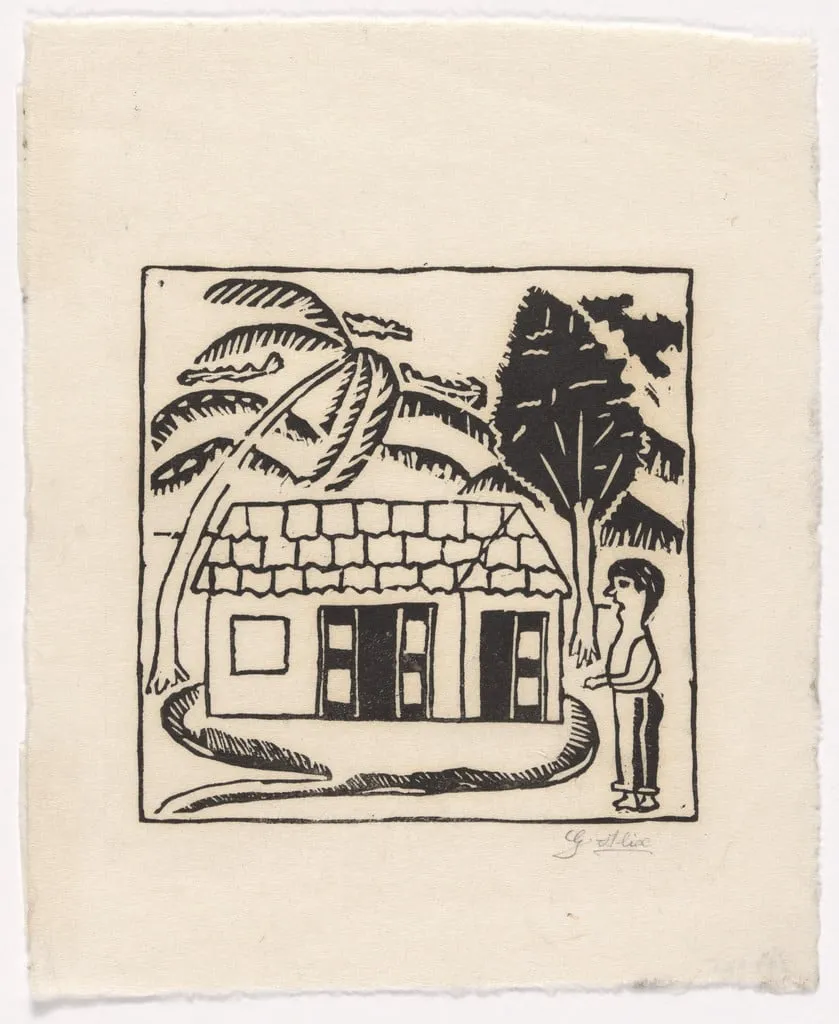
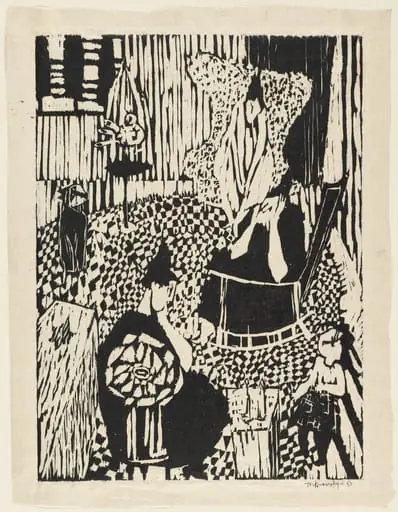
Untitled is an ink print by Gabriel Alix. It dates from 1947 and is held in the collection of the Museum of Modern Art.
About this work
Overview
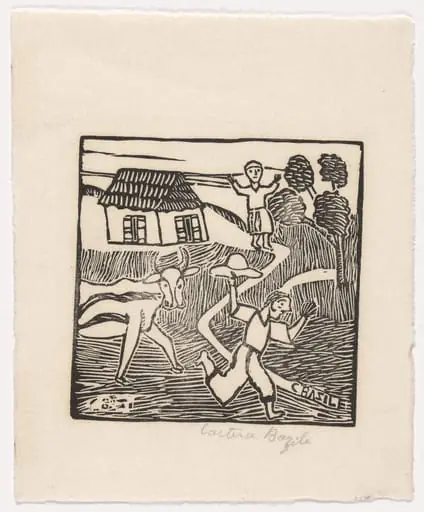
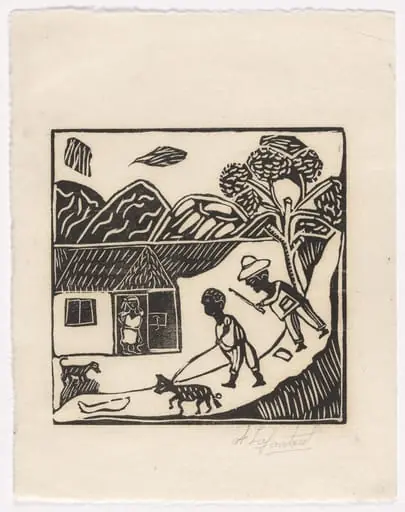
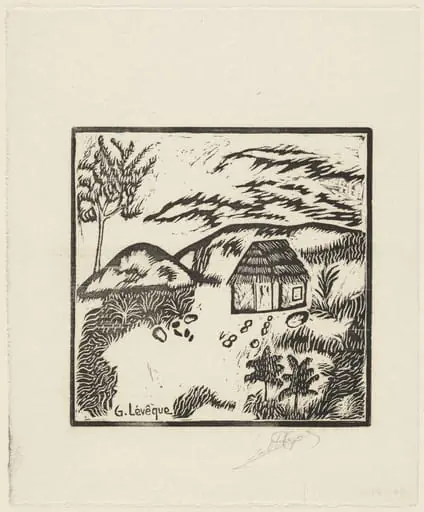
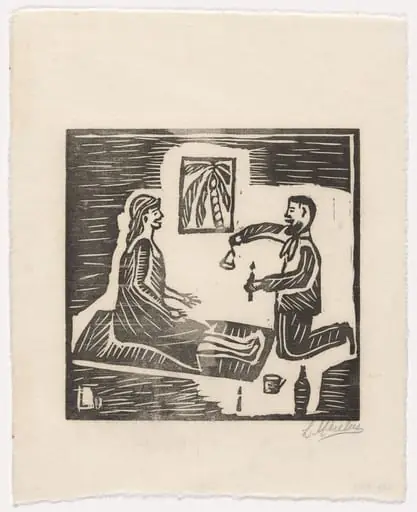
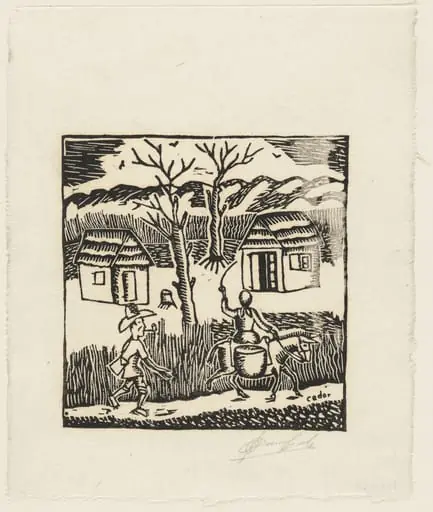
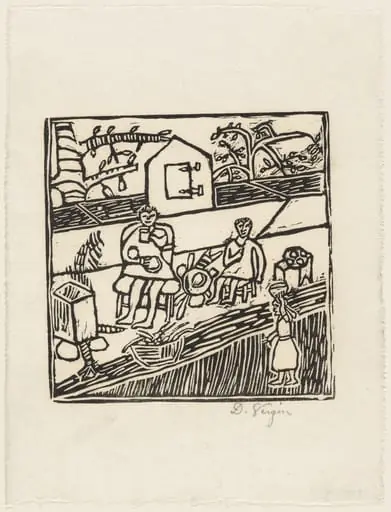
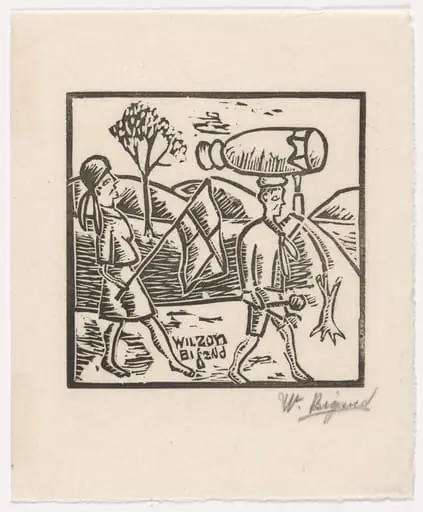
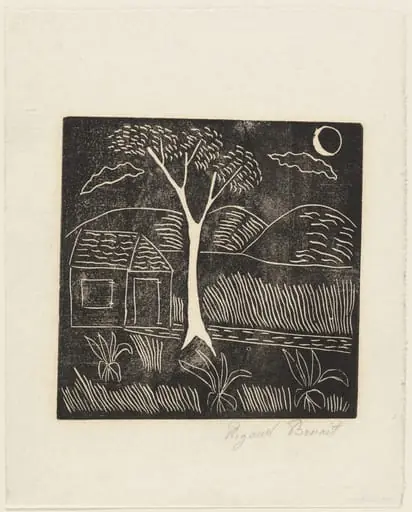
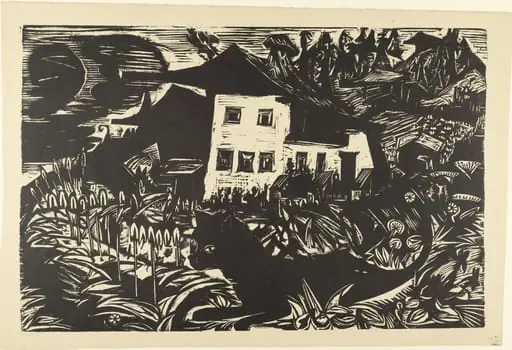
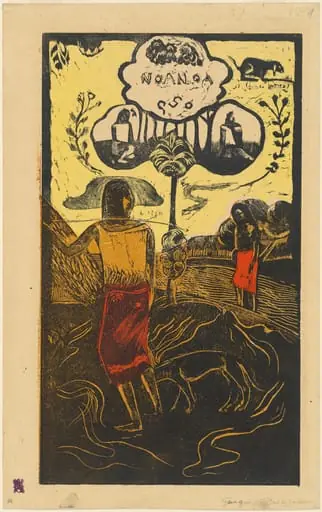
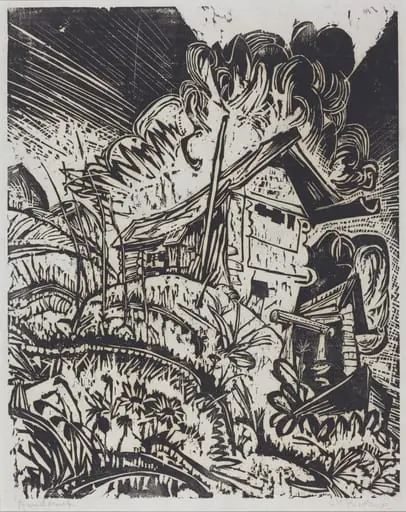
Gabriel Alix created this woodcut in 1947, using traditional carving techniques to produce a monochromatic print. The work is part of The Museum of Modern Art’s collection and exemplifies the artist’s interest in simplified forms and everyday scenes. Only black ink and the natural tone of the paper are employed, emphasizing contrast and clarity over detail.
Subject & Meaning
The scene depicts a modest dwelling with a thatched roof and two doorways, flanked by palm trees and a solitary figure holding a small object. The figure’s identity and intent remain ambiguous, inviting contemplation rather than narrative. The composition suggests rural life, but without overt symbolism, leaving interpretation open to the viewer’s perception of solitude or routine.
Technique & Style
Alix carved the image into a woodblock, removing areas that would remain white, then inked the raised surfaces in black. The bold, unbroken lines define forms with precision, while the absence of gradation enhances the graphic quality. This reduction to two tones highlights the artist’s focus on structure and silhouette, characteristic of mid-century printmaking practices.
History & Provenance
The work entered The Museum of Modern Art’s collection shortly after its creation, reflecting institutional interest in postwar printmaking. No earlier ownership records are publicly documented, suggesting it was likely acquired directly from the artist or through a gallery. Its preservation in a major collection underscores its significance within Alix’s oeuvre.
Context
Created in the aftermath of World War II, the piece aligns with a broader trend among artists returning to handcrafted, accessible mediums. Woodcut’s simplicity resonated with those seeking to reconnect with material honesty and regional themes. Alix’s focus on domestic architecture and quiet figures reflects a broader cultural turn toward introspection and local identity.
Legacy
Though not widely reproduced, this woodcut remains a representative example of mid-century Caribbean printmaking. It contributes to the recognition of artists outside the European canon who used traditional techniques to express personal and regional narratives. Its presence in MoMA’s collection affirms its role in expanding the scope of modern print history.
Artist & collection