Artwork
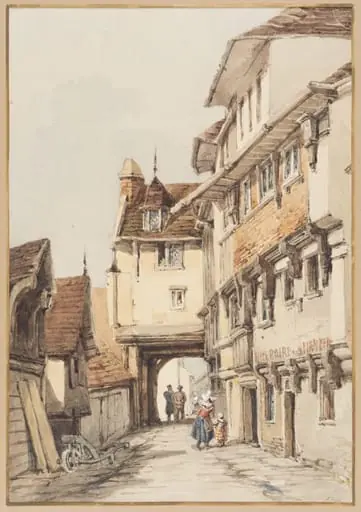
The Flying Horse, Hackney
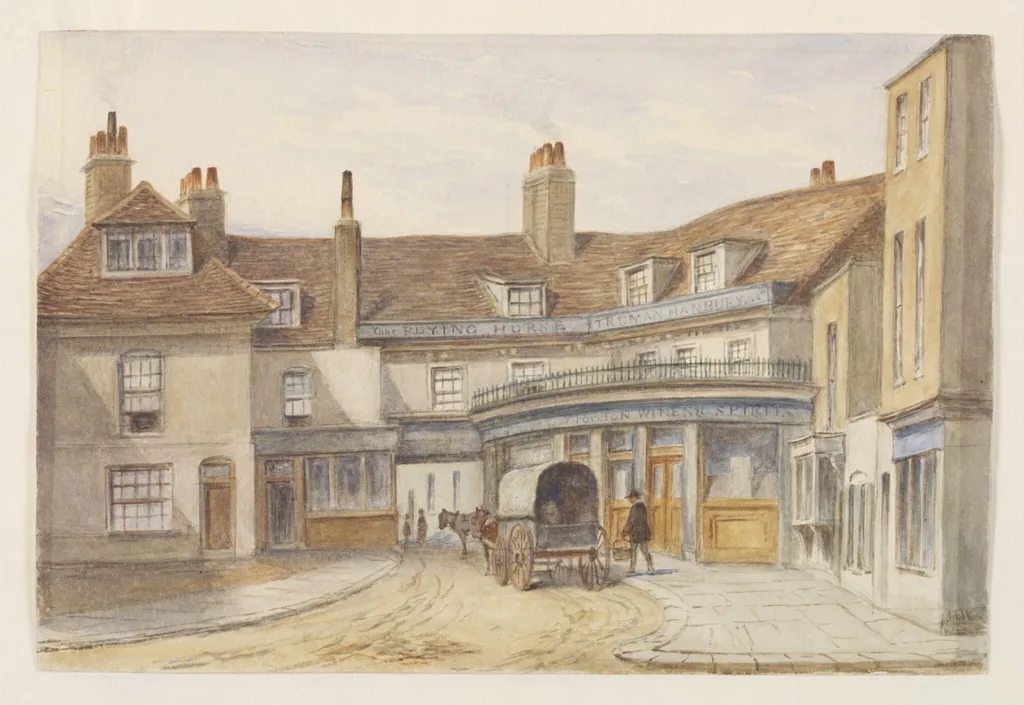
The Flying Horse, Hackney is a watercolor work on paper by the Impressionist artist J. T. Wilson. It dates from 1869 and is held in the collection of the Victoria and Albert Museum. Painted in 1869 by J.
About this work
Overview
Executed in delicate washes, the work records a quiet urban moment with attention to architectural detail and ambient light.
Painted in 1869 by J. T. Wilson, this watercolour captures the exterior of The Flying Horse inn, a modest establishment in Hackney. Executed in delicate washes, the work records a quiet urban moment with attention to architectural detail and ambient light. It was once part of John Edmund Gardner’s collection of London topographical studies, later entering the Bethnal Green Museum through a donation by Arthur Villiers.
Subject & Meaning
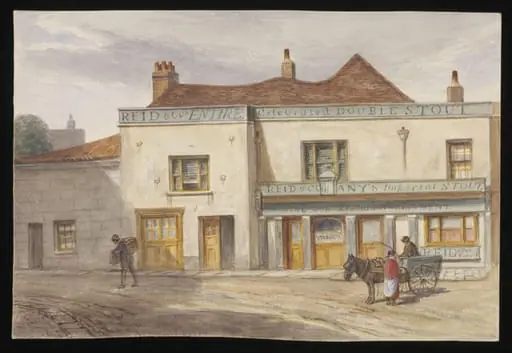
The scene centers on a two-story building bearing the sign of The Flying Horse and Truman Hanbury, a noted brewery. A horse-drawn carriage rests at the curb, while a handful of figures linger near the entrance, suggesting routine daily activity. The presence of a wine and spirits shop underscores the inn’s role as a local hub, reflecting the social and commercial rhythms of late Victorian Hackney.
Technique & Style
Wilson employed transparent watercolour with restrained brushwork, allowing the paper’s texture to contribute to the sense of atmosphere. Soft, muted tones and gentle gradations convey natural daylight without dramatic contrast. Architectural elements—steep roofs, narrow windows, and brick chimneys—are rendered with precision but without embellishment, emphasizing observational accuracy over artistic flourish.
History & Provenance
The painting originated in Gardner’s collection of London views, later dispersed among private hands. The Hackney-specific portion was acquired by Hon. Arthur Villiers, who donated it to the Bethnal Green Museum in the late 19th century. Other fragments of Wilson’s work remain in separate institutional and private collections, reflecting the fragmented history of topographical art preservation.
Context
In the 1860s, Hackney was transitioning from a semi-rural suburb to a more densely populated district of London. Inns like The Flying Horse served as social anchors, often tied to local breweries. Wilson’s depiction aligns with a broader trend among topographical artists who documented everyday urban life before rapid industrialization erased such scenes.
Legacy
The watercolour remains a quiet record of a vanishing urban fabric. Its preservation in the Bethnal Green Museum—now part of the Victoria and Albert Museum’s network—ensures its place in the study of London’s architectural and social history. It exemplifies the value of modest, unembellished observation in documenting the ordinary.
Artist & collection
Artist
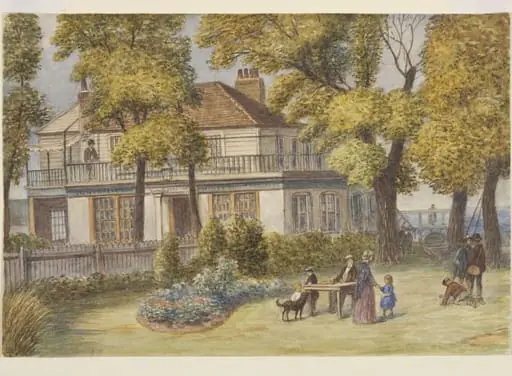
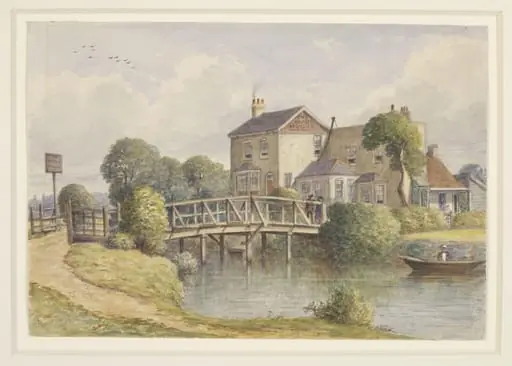
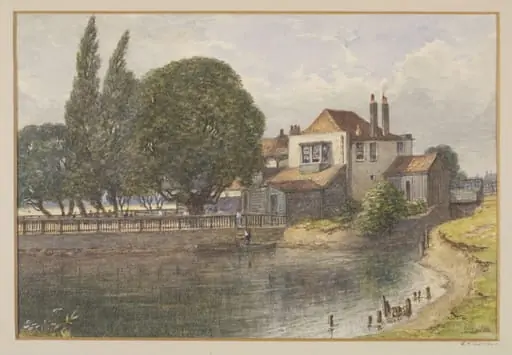
J. T. Wilson painted quiet scenes of 19th-century Hackney in watercolour. In *The White House, Hackney Marsh* (1869) and *The Flying Horse, Hackney* (1869), he captured pubs and riverside life along the Lea, using light…

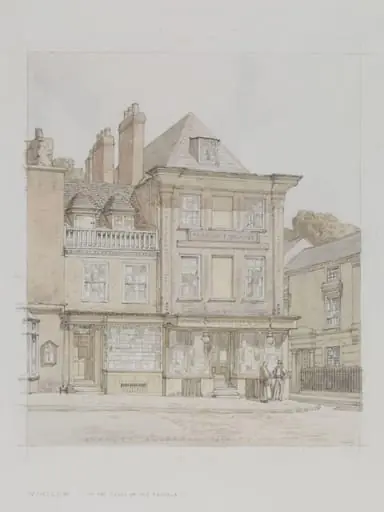 Market House, Winslow
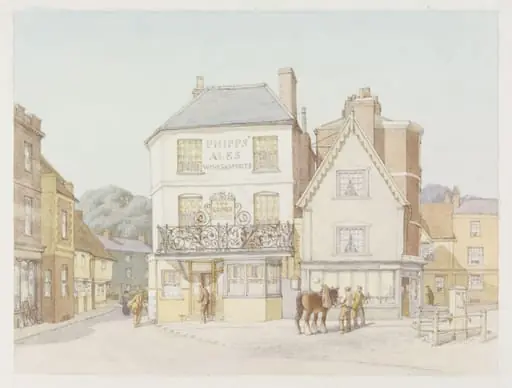 The George, Winslow
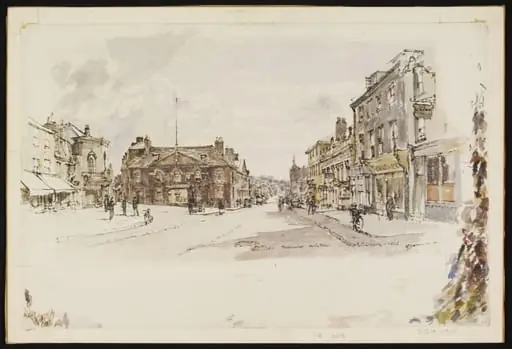 High Street and Rutland Arms, Newmarket
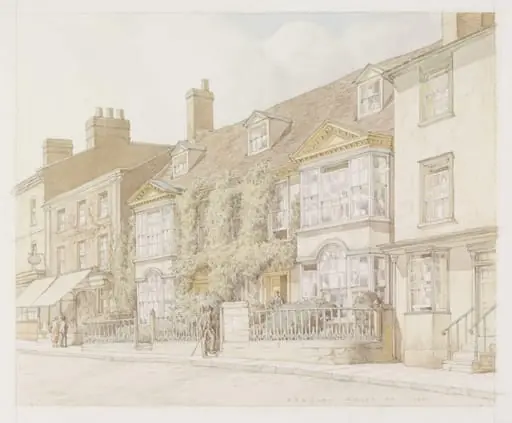 Georgian Houses, Market Hill, Buckingham
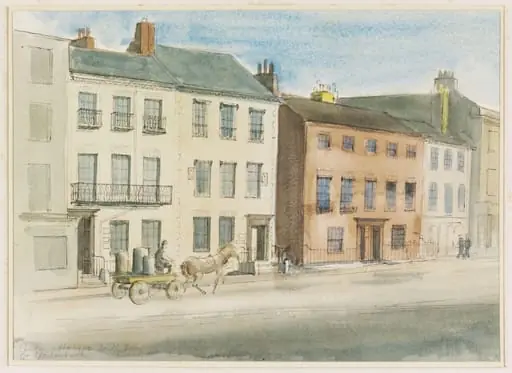 18th Century Houses, South Quay, Great Yarmouth
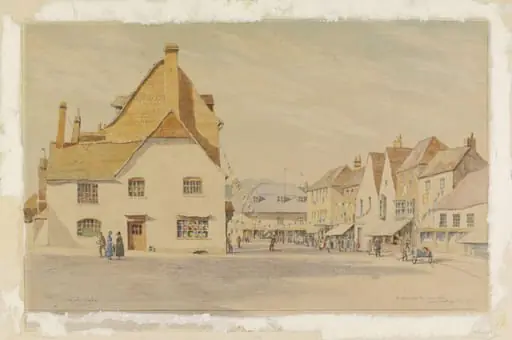 Preparing for the Coronation, West Malling, May, 1937.
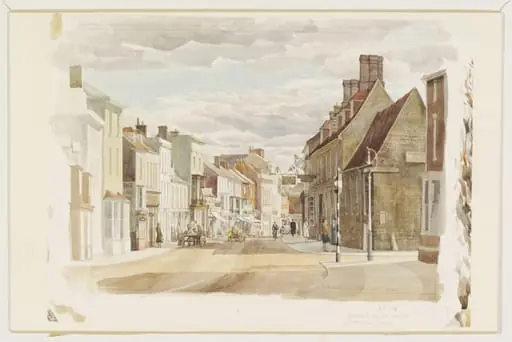 Towcester High Street from the Pomfret Arms Corner, Northamptonshire
 Timber Houses, Normandy