Artwork
Timber Houses, Normandy
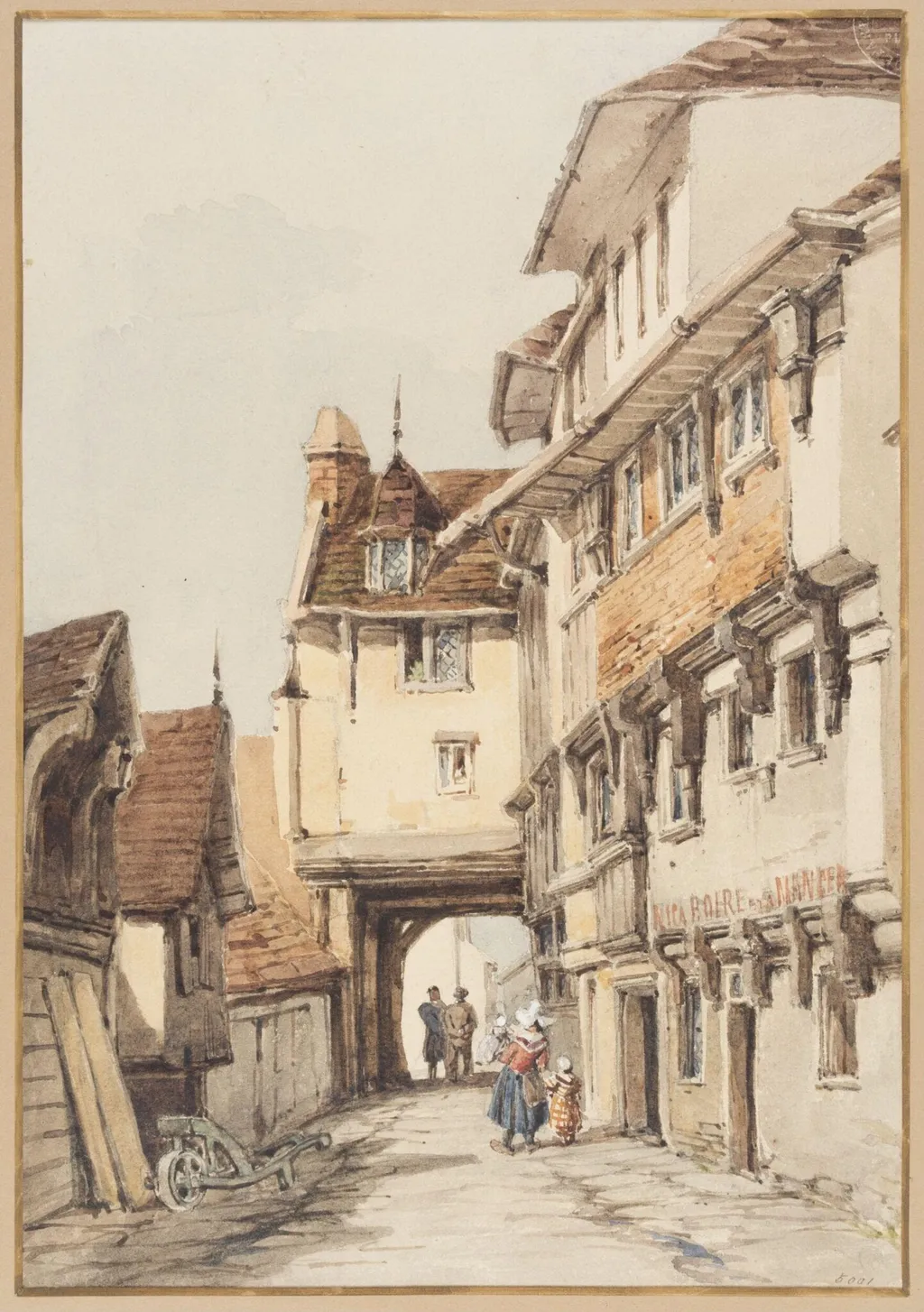
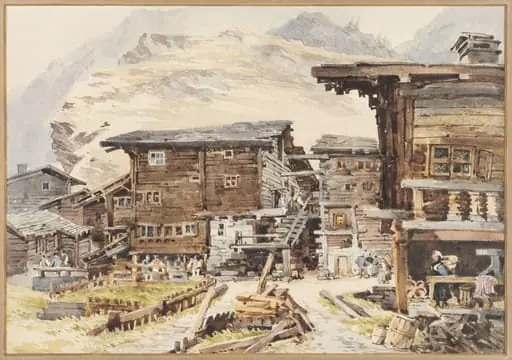
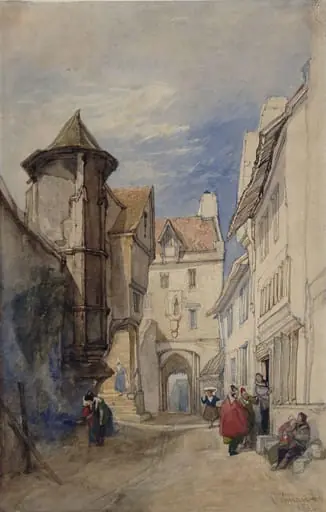
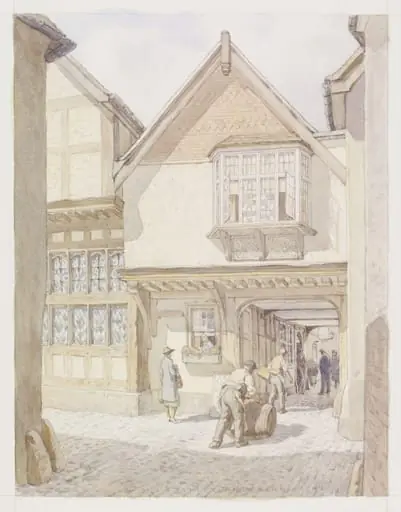
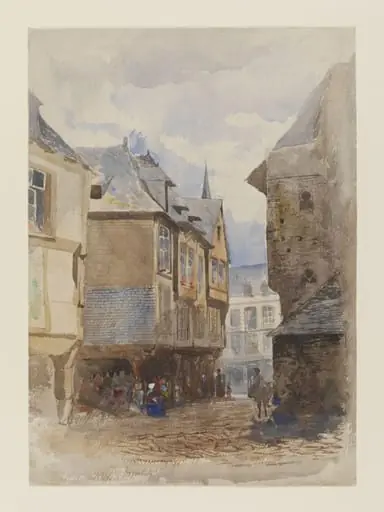
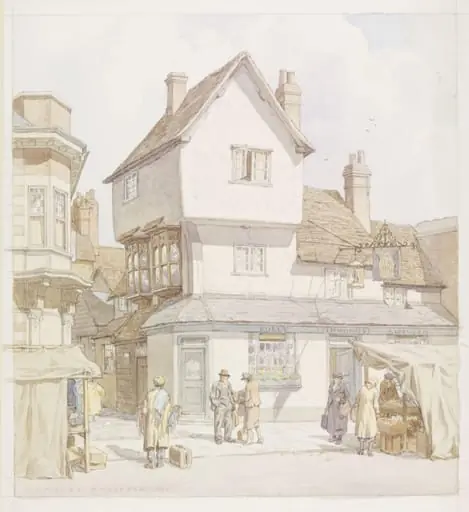
Timber Houses, Normandy is a watercolor work on paper by Charles Claude Pyne. It dates from 1850 and is held in the collection of the Victoria and Albert Museum. This watercolour captures a narrow street in rural Normandy, lined with closely spaced timber-framed houses.
About this work
Overview
The architecture features steeply pitched roofs and upper stories that project over the sidewalk, creating shaded passageways.
This watercolour captures a narrow street in rural Normandy, lined with closely spaced timber-framed houses. The architecture features steeply pitched roofs and upper stories that project over the sidewalk, creating shaded passageways. A small cart rests near the left edge, while a cluster of figures moves along the cobbled road, suggesting everyday activity. The composition emphasizes horizontal lines and muted earth tones, reinforcing a sense of quiet, lived-in order.
Subject & Meaning
The scene portrays ordinary domestic life in a provincial French village, focusing on the interplay between architecture and human presence. The grouped figures—likely residents or travelers—anchor the painting in realism, avoiding idealization. The overhanging eaves and stone pavement reflect practical responses to weather and commerce, hinting at centuries of local building tradition. The work conveys no grand narrative, only the subtle rhythm of daily routine.
Technique & Style
Executed in transparent watercolour, the painting relies on delicate washes to suggest texture and light. The timber frames are rendered with soft brown and tan gradients, while the stone pavement is indicated by irregular, dry-brush strokes. The artist avoids sharp outlines, allowing forms to emerge through tonal variation. A faint watermark in the upper right corner remains visible, a quiet testament to the paper’s origin and the medium’s fragility.
History & Provenance
The work is attributed to Charles Claude Pyne, a 19th-century British artist known for topographical watercolours of French and English rural scenes. Likely painted during one of his travels in Normandy, it was probably created as a personal record rather than a commissioned piece. Its survival in relatively intact condition suggests it remained in private hands, possibly within the artist’s circle or among collectors of regional landscapes.
Context
In the early 1800s, British artists increasingly traveled to northern France, drawn by its unspoiled villages and medieval architecture. Pyne’s work aligns with a broader interest in vernacular building styles, contrasting with the grandeur of urban or classical subjects. This painting reflects a growing appreciation for the quiet dignity of rural life, documented with observational precision rather than romantic embellishment.
Legacy
Though not widely exhibited, Pyne’s watercolours contribute to a modest but enduring record of 19th-century French provincial life. His attention to architectural detail and atmospheric tone influenced later topographical artists. This piece, like others in his oeuvre, remains a quiet document of a vanishing rural landscape, valued for its sincerity and unadorned observation rather than dramatic impact.
Artist & collection