Artwork
Familiar Note
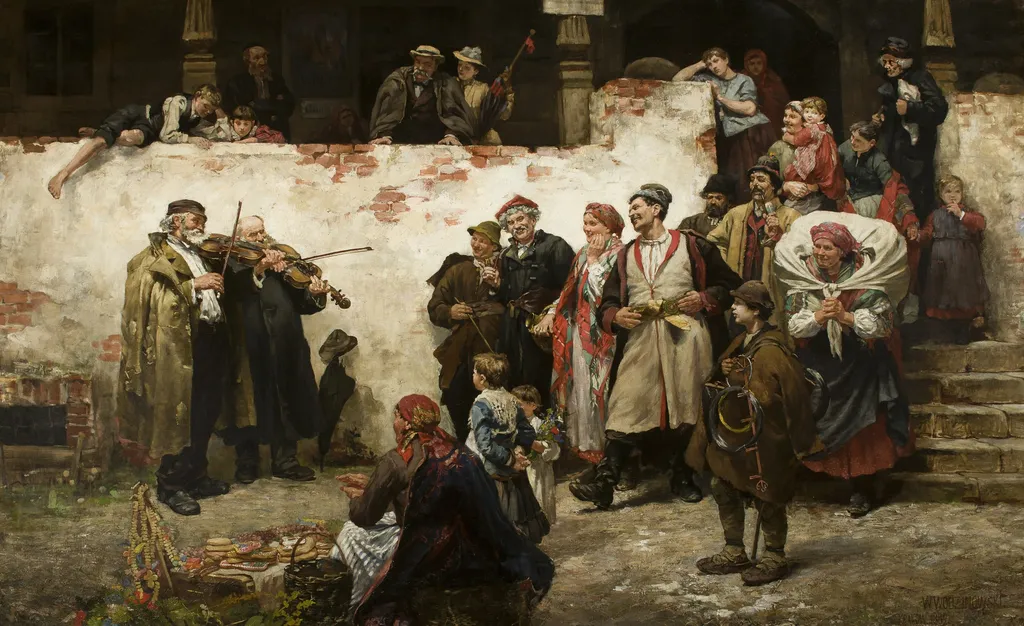
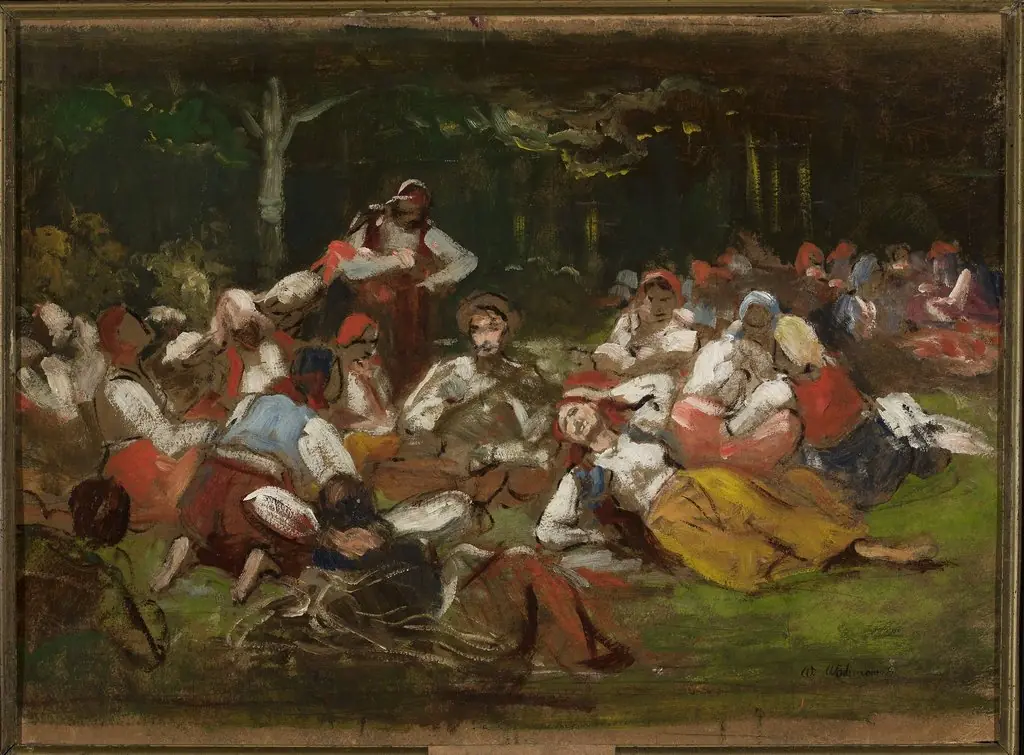
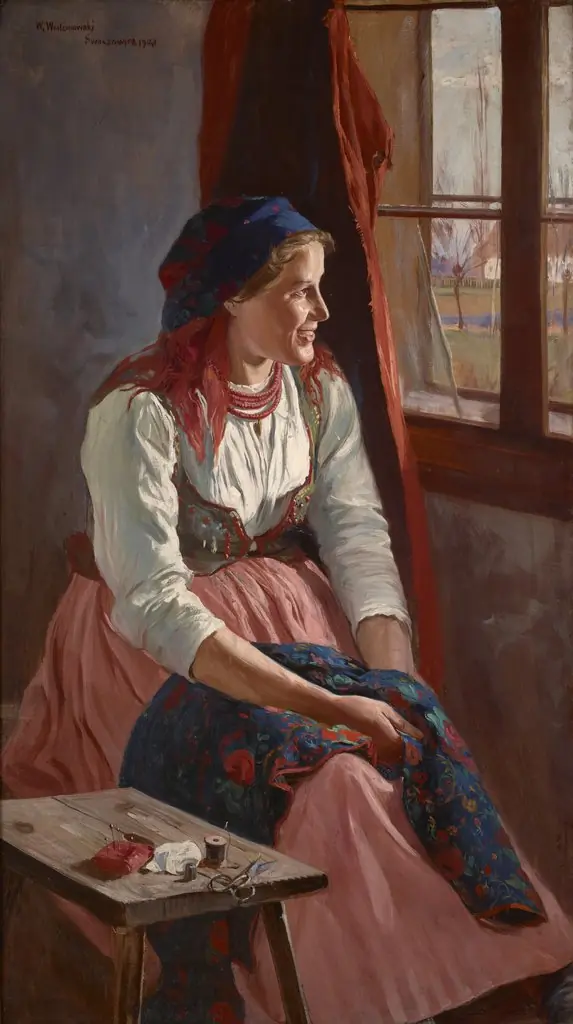
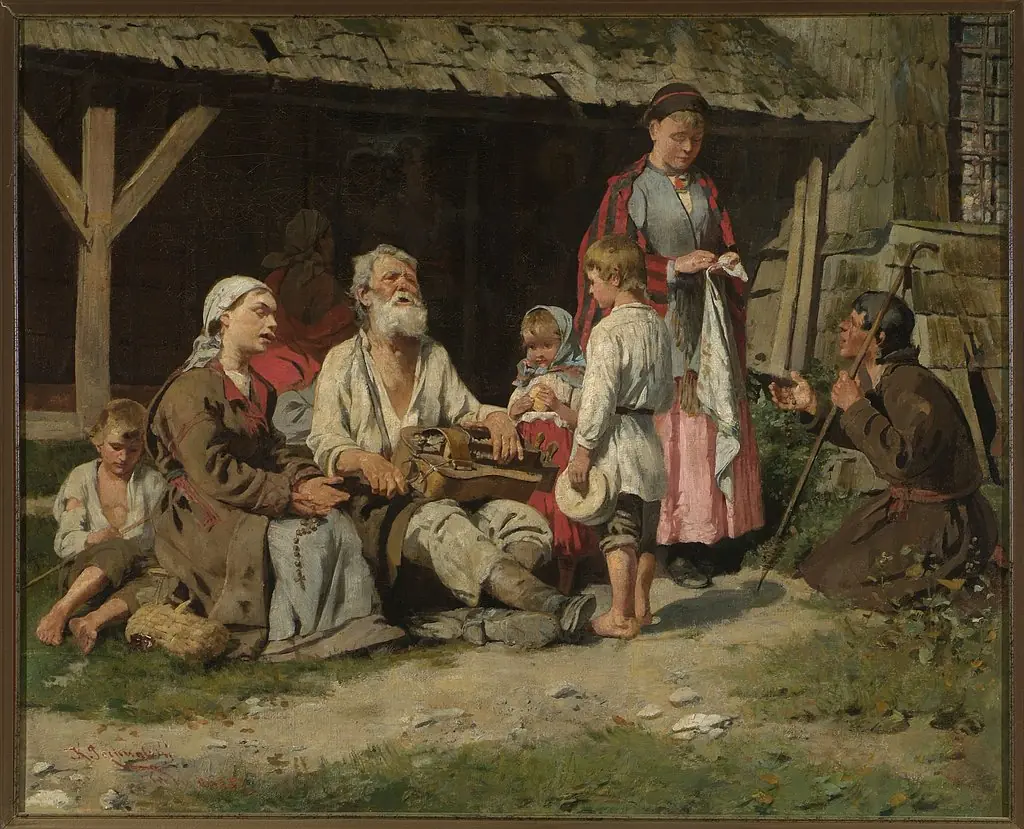
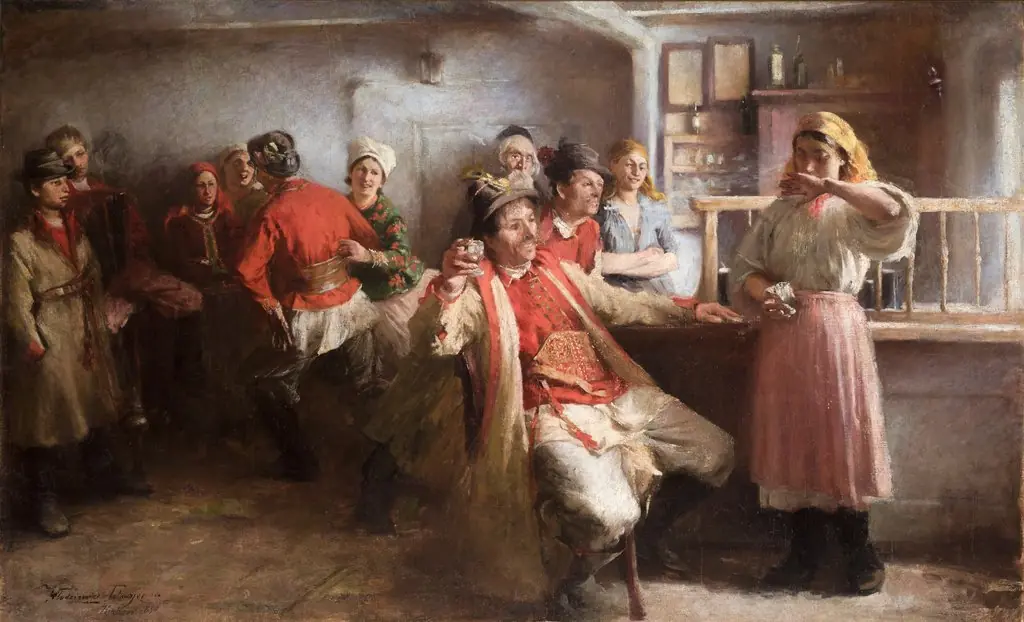
Familiar Note is an oil painting by Wincenty Wodzinowski. It dates from 1900 and is held in the collection of the National Museum in Kraków.
About this work
The scene is set in front of a white wall with red brick accents, and the crowd is dressed in traditional clothing.
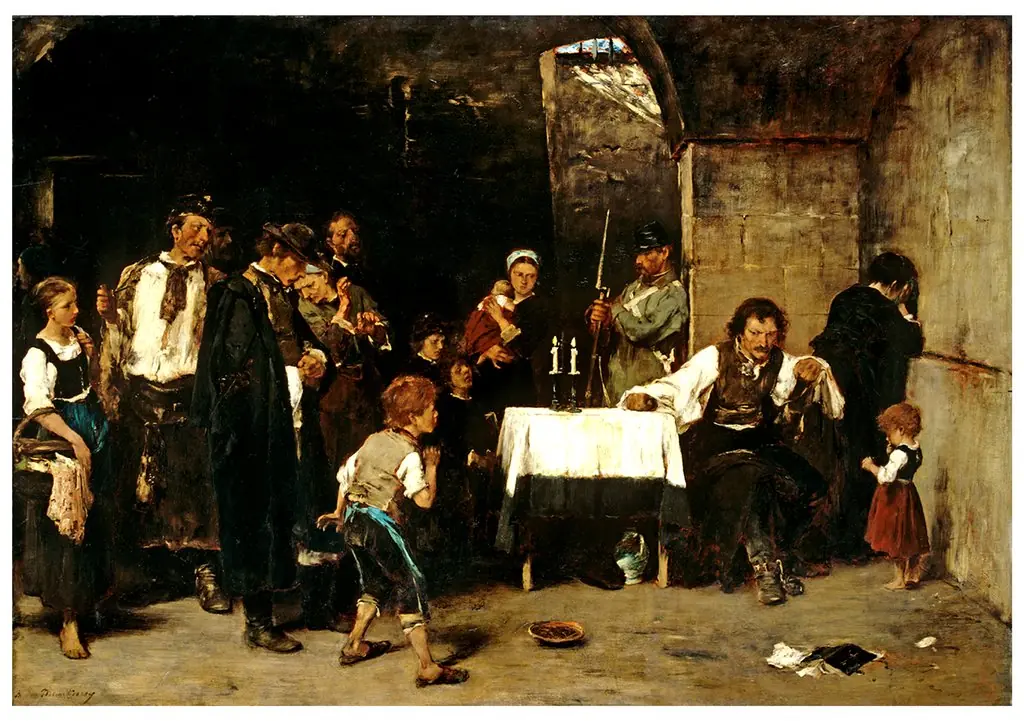
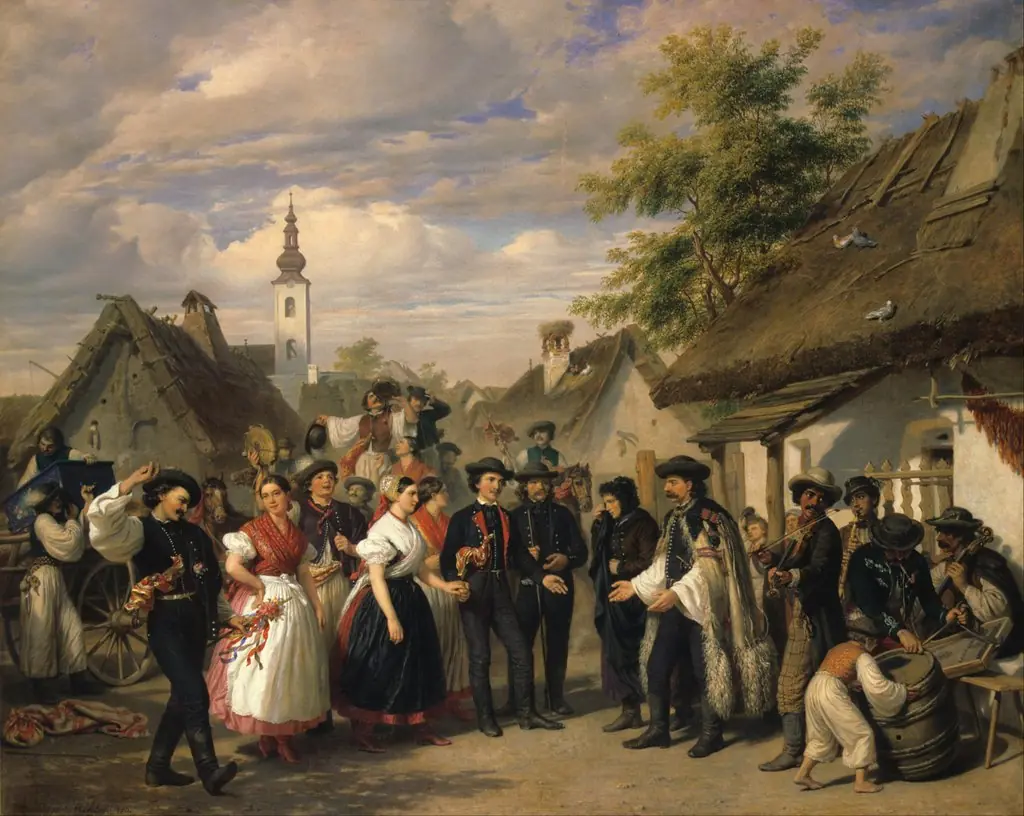
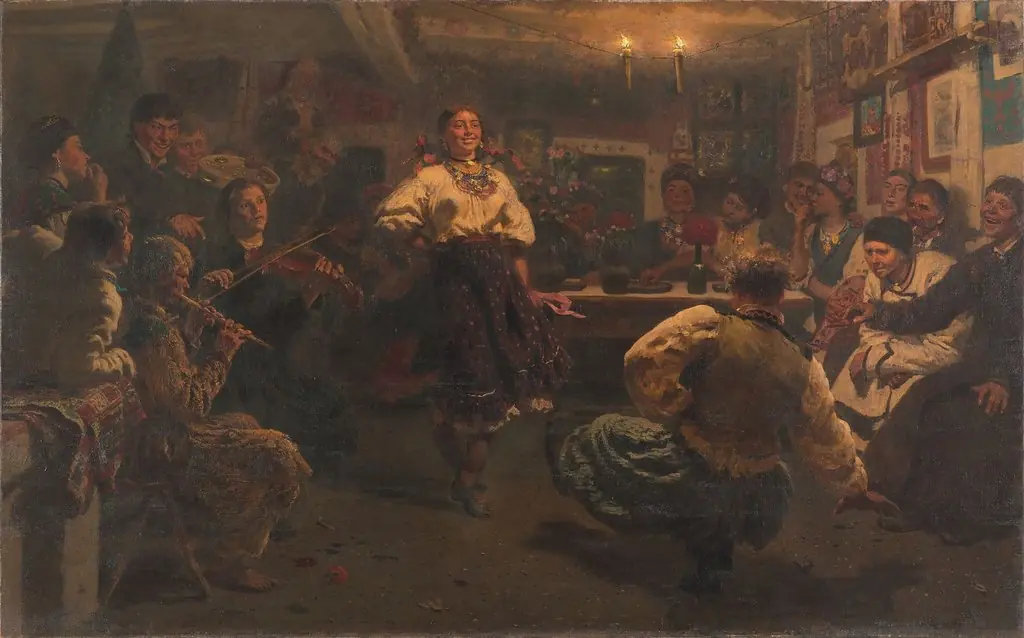
In the painting, a group of people gather around a man playing the violin. The scene is set in front of a white wall with red brick accents, and the crowd is dressed in traditional clothing. The artist's use of warm colors and gentle brushstrokes creates a sense of intimacy and community.
The painting is a genre scene, which was a popular style during the 19th century. It depicts everyday life and ordinary people, often in a romanticized or idealized way.
If you're interested in learning more about the artist's technique, you can explore the use of glazing in his work.
Overview
Familiar Note, painted in 1900 by Wincenty Wodzinowski, is an oil-on-canvas genre scene depicting a quiet moment of communal music-making. Wodzinowski, a Polish artist and educator active in Kraków, was associated with the Young Poland movement, which sought to renew national artistic identity through both traditional motifs and modern techniques. The work is part of the National Museum in Kraków’s collection.
Subject & Meaning
The painting shows a group of individuals gathered around a violinist, their postures suggesting attentive stillness and shared emotion. Dressed in regional attire, the figures represent rural or small-town life in late 19th-century Poland. The scene avoids theatricality, instead emphasizing quiet connection through music, reflecting the Young Poland interest in authentic, everyday experiences as vessels of cultural memory.
Technique & Style
Wodzinowski employed soft, warm tones and delicate brushwork to evoke intimacy. The background, with its white plaster and red brick, grounds the figures in a domestic setting without distraction. Subtle glazing techniques enhance the luminosity of skin and fabric, while the composition’s tight grouping draws the viewer into the circle of sound, reinforcing the painting’s quiet, inward focus.
History & Provenance
Created during Wodzinowski’s mature period in Kraków, the painting was likely made for private or institutional collection within Poland’s growing cultural infrastructure. It entered the National Museum in Kraków’s holdings in the early 20th century, where it has remained. No significant changes in ownership or restoration are documented, preserving its original condition.
Context
Familiar Note aligns with the broader European trend of genre painting, but within Poland’s Young Poland movement, such scenes carried added significance. As national identity was redefined under foreign partitions, depictions of folk customs and domestic rituals became acts of cultural preservation. Music, especially folk instruments like the violin, symbolized continuity and emotional resilience.
Legacy
Though not widely exhibited beyond Poland, the painting remains a representative example of early 20th-century Polish genre art. It illustrates how artists like Wodzinowski balanced realism with emotional resonance, contributing to a national visual language that valued modest, human moments over grand historical narratives. Its presence in a major museum underscores its enduring role in Poland’s art historical record.
Own this work as a print
Artist & collection
Artist
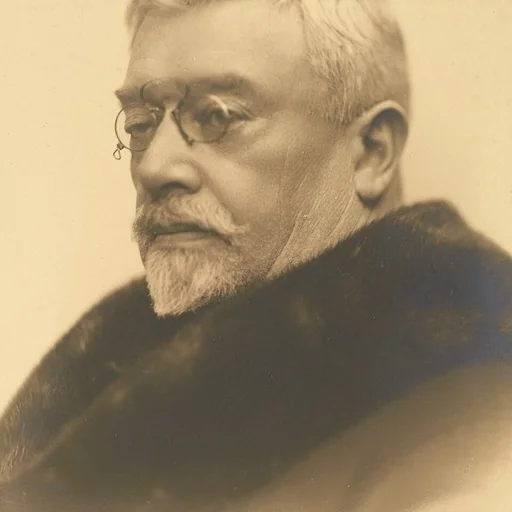
Wincenty Wodzinowski (1866 in Igołomia – 1940 in Kraków) was a Polish painter and art teacher; associated with the Young Poland movement.