Artwork
Ralph Waldo Emerson
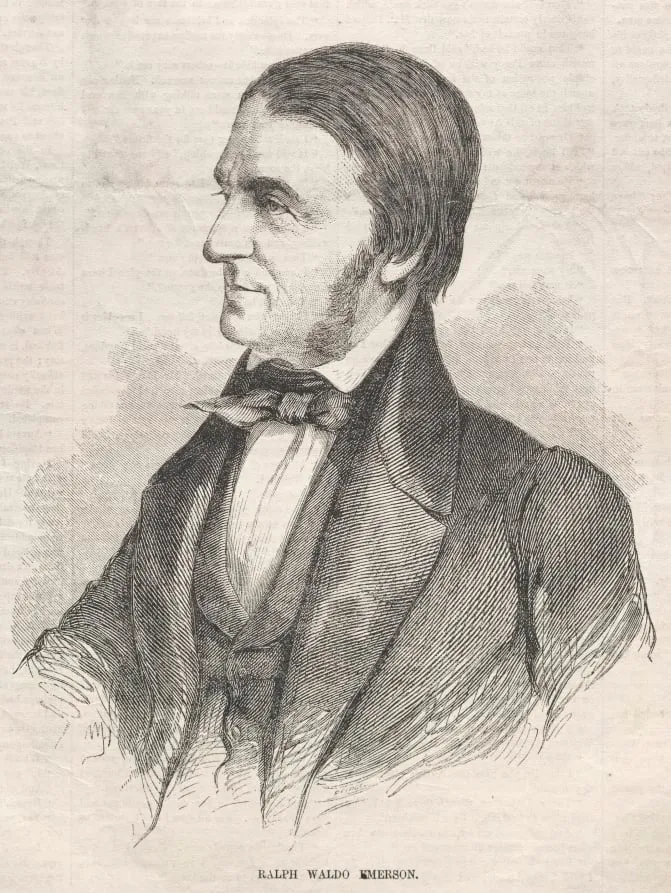
Ralph Waldo Emerson is a print by the Impressionist artist Winslow Homer. It dates from 1859 and is held in the collection of the Cleveland Museum of Art.
About this work
Overview
Created in 1859, this black-and-white sketch by Winslow Homer captures the American philosopher Ralph Waldo Emerson in profile.
Created in 1859, this black-and-white sketch by Winslow Homer captures the American philosopher Ralph Waldo Emerson in profile. Executed during Homer’s early career as a commercial illustrator, the work reflects his emerging skill in tonal rendering. Though later known for marine scenes, Homer here applies his draftsmanship to a portrait, emphasizing quiet introspection through subtle gradations of light and shadow.
Subject & Meaning
Ralph Waldo Emerson, a leading voice in American transcendentalism, is depicted not as a public orator but as a contemplative individual. The profile view and averted gaze suggest inward reflection, aligning with his philosophical emphasis on self-reliance and inner truth. The restrained composition avoids theatricality, reinforcing the dignity of quiet thought over public display.
Technique & Style
Homer employs soft, blended shading to model Emerson’s features, avoiding harsh lines in favor of delicate transitions between light and dark. The technique, reminiscent of sfumato, lends a gentle, atmospheric quality to the face. Fine hatching defines the texture of the coat and bow tie, while the smoothness of the skin contrasts with the crispness of the shirt collar, enhancing the sense of stillness.
History & Provenance
The drawing was made in 1859, during Homer’s formative years as an illustrator for publications like Harper’s Weekly. It likely served as a preparatory study or commissioned portrait for print reproduction. No record of its immediate ownership exists, but it remained within Homer’s personal collection until later acquisition by a public institution.
Context
In the late 1850s, American illustrators often produced portraits of intellectual figures for periodicals, blending journalism with cultural reverence. Emerson, though reclusive, was a widely recognized symbol of New England thought. Homer’s depiction aligns with this trend, offering a dignified, unembellished image suited to the printed page and the era’s literary culture.
Legacy
This sketch stands as an early example of Homer’s ability to convey psychological depth through minimal means. Though not among his most famous works, it reveals his foundational skill in observation and tone, foreshadowing the emotional clarity that would define his later paintings. It remains a quiet testament to the intersection of illustration and intellectual portraiture in mid-19th-century America.
Artist & collection
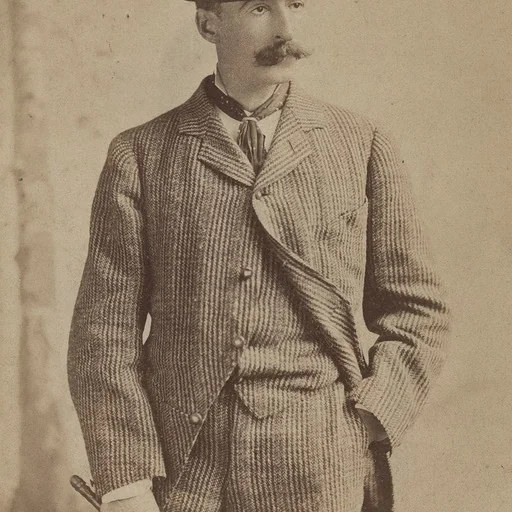
Artist
Winslow Homer (February 24, 1836 – September 29, 1910) was an American landscape painter and illustrator, best known for his marine subjects.