Artwork
Robert C. Sands
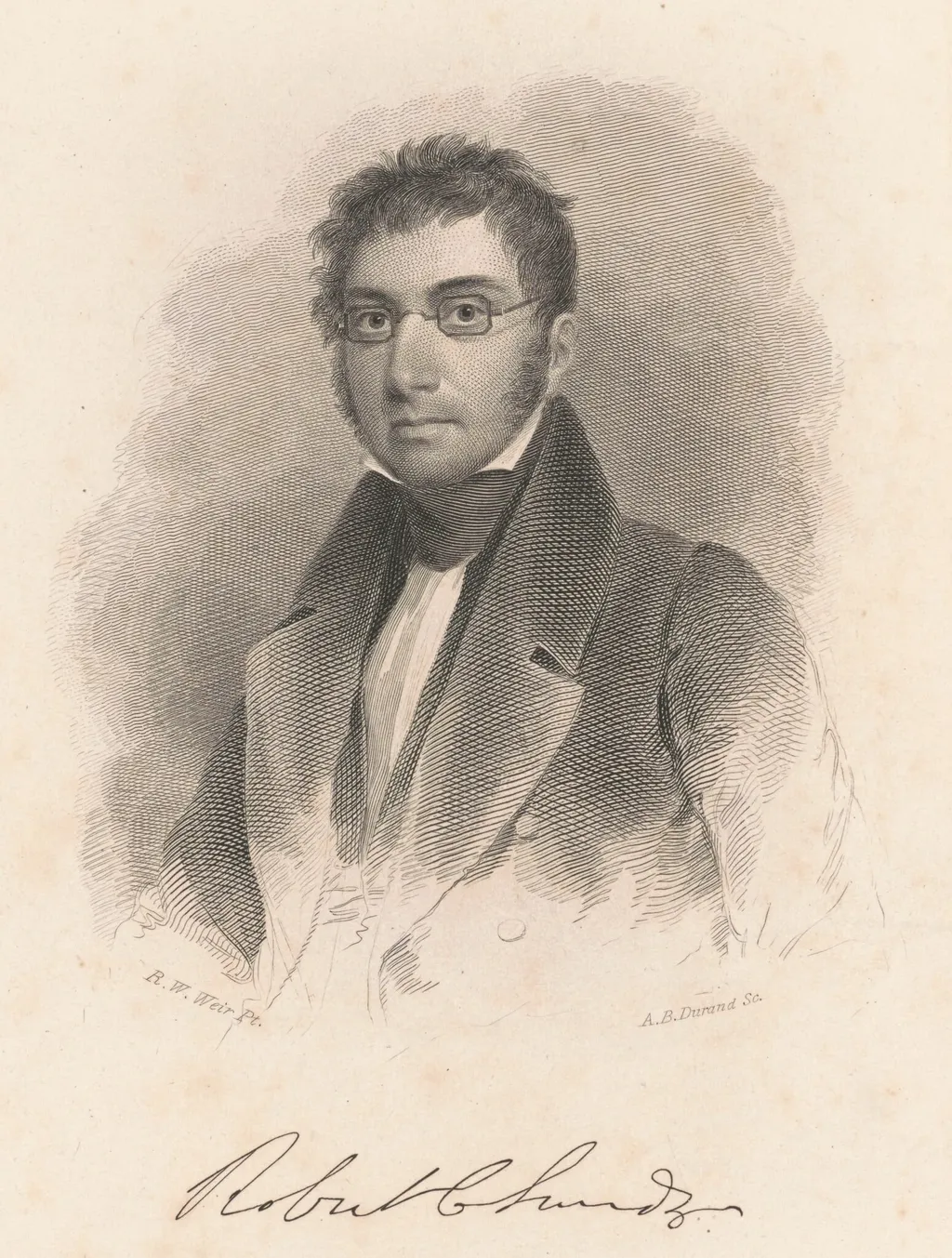
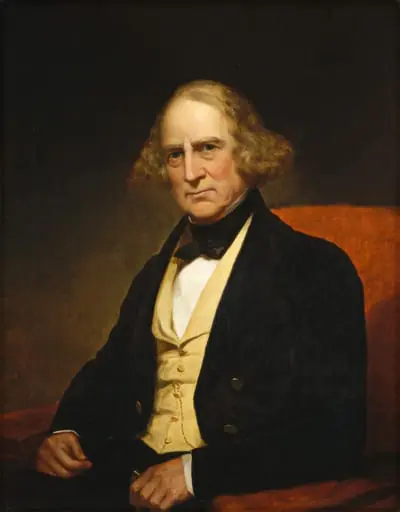
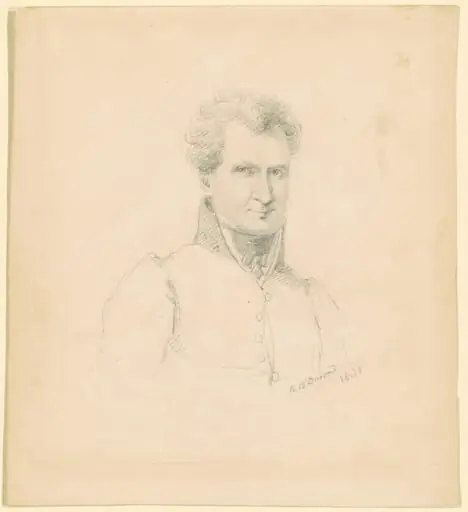
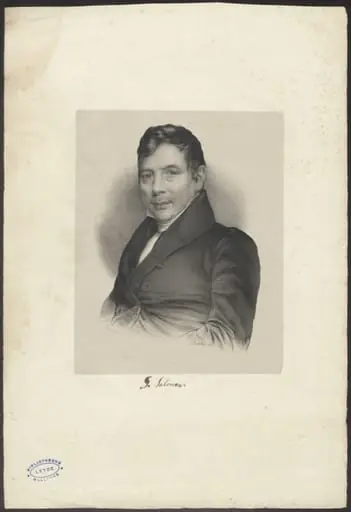
Robert C. Sands is an ink print by the Romanticist artist Asher Brown Durand. It dates from 1829 and is held in the collection of the National Gallery of Art.
About this work
Overview
Executed on wove paper, the work is a printed impression made from a metal plate carved with fine lines.
This black-and-white engraving, created around 1829 by Asher Brown Durand, portrays Robert C. Sands, a New York-based writer and legal professional. Executed on wove paper, the work is a printed impression made from a metal plate carved with fine lines. It belongs to a pre-photographic era when such prints served as primary means of reproducing likenesses, particularly for literary and professional figures of the time.
Subject & Meaning
Robert C. Sands, depicted in profile with wavy hair and a high collar, was a respected literary figure who died in 1833 at age 34. Durand’s portrait captures him in a restrained, contemplative pose, reflecting his intellectual stature. The image was made shortly after his death, functioning not as a commission but as a memorial tribute, preserving his presence through the formal conventions of early 19th-century portraiture.
Technique & Style
Durand employed line engraving, a meticulous process involving incising fine grooves into a copper plate. The resulting print relies on controlled hatching and cross-hatching to model form and texture, mimicking the subtlety of pencil drawing. The background is left unadorned, focusing attention on the subject’s face and attire. The precision of the lines conveys both realism and a quiet solemnity, characteristic of Durand’s early graphic work.
History & Provenance
Created in the years following Sands’s death, the engraving was likely produced for private circulation or publication in literary journals. Durand, then primarily known as a commercial engraver before turning to painting, used this portrait to demonstrate his skill in capturing likeness. No record of a public exhibition exists, but the print survives in institutional collections, testifying to its role in documenting cultural figures of the period.
Context
In the 1820s and 1830s, engraving was the dominant method for disseminating portraits of notable individuals, especially among the educated class. With photography still decades away, engraved portraits like this one served as both personal mementos and public records. Durand’s work reflects the era’s emphasis on intellectual identity, where attire, posture, and expression conveyed social and professional standing.
Legacy
Though Durand later gained recognition as a Hudson River School painter, this engraving remains a significant example of his early graphic artistry. It exemplifies the transition from commercial printmaking to fine art portraiture in antebellum America. The work endures as a quiet, precise record of a lesser-known literary figure, offering insight into the visual culture of remembrance before the age of the photograph.
Artist & collection