Artwork
Thanksgiving Day - Arrival at the Old Home
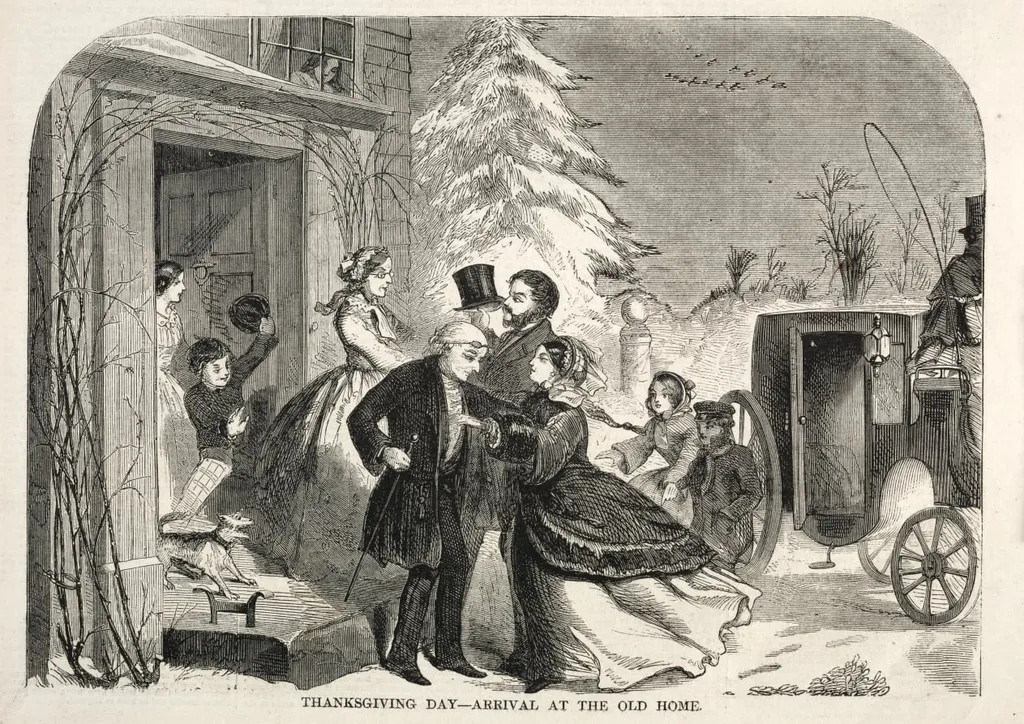
Thanksgiving Day - Arrival at the Old Home is a print by the Impressionist artist Winslow Homer. It dates from 1858 and is held in the collection of the Cleveland Museum of Art.
About this work
Overview
Created in 1858, *Thanksgiving Day - Arrival at the Old Home* is an early work by Winslow Homer, produced during his period as a commercial illustrator.
Created in 1858, *Thanksgiving Day - Arrival at the Old Home* is an early work by Winslow Homer, produced during his period as a commercial illustrator. Executed as a pen-and-ink drawing, it captures a quiet domestic moment rather than a grand narrative. This piece predates Homer’s later fame for marine scenes and reflects his early interest in everyday American life, rendered with simplicity and observational clarity.
Subject & Meaning
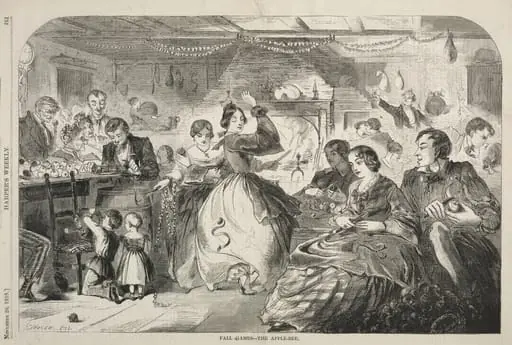
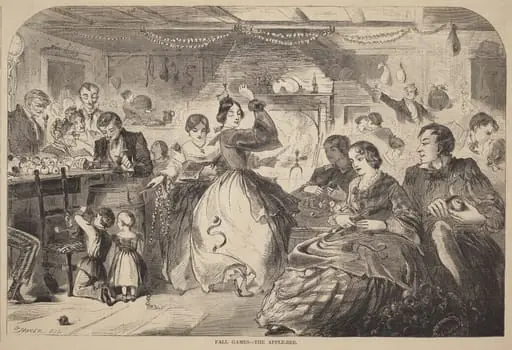
The scene portrays a family gathering at a rural home on Thanksgiving, suggesting themes of return and reunion. A man in formal attire speaks with a woman near the doorway, while children and adults cluster around, some peering from within. A child sits on the steps with a book, and the presence of a wheelbarrow and bare trees grounds the moment in seasonal reality. The indistinct faces emphasize anonymity, inviting viewers to project their own experiences onto the scene.
Technique & Style
Homer employed fine, economical pen lines to suggest movement and emotion without elaborate detail. The composition relies on tonal contrast—light spilling from the interior against the snowy exterior—to convey warmth and enclosure. Figures are rendered with minimal features, focusing on posture and gesture rather than individual identity. This restrained approach aligns with the emerging realist aesthetic, prioritizing authenticity over ornamentation.
History & Provenance
The work was made during Homer’s formative years as an illustrator for publications like Harper’s Weekly. It was likely created as a woodcut engraving for reproduction, common practice for illustrated periodicals of the time. While its early exhibition history is undocumented, it remains part of the broader corpus of Homer’s pre-painting work, preserved in institutional collections as an example of his narrative draftsmanship.
Context
In the late 1850s, American illustrated magazines increasingly featured scenes of domestic life, appealing to a growing middle-class readership. Thanksgiving, though not yet a national holiday, was gaining cultural traction as a symbol of familial unity. Homer’s depiction aligns with this trend, offering a modest, unidealized vision of homecoming that resonated with contemporary values of simplicity and moral warmth.
Legacy
This early drawing foreshadows Homer’s lifelong commitment to portraying ordinary American life with dignity and restraint. Though he later shifted to oil and watercolor, the observational precision and emotional subtlety seen here remained central to his mature work. The piece stands as a quiet precursor to his more celebrated realist paintings, illustrating how his artistic voice took root in the everyday.
Artist & collection
Artist
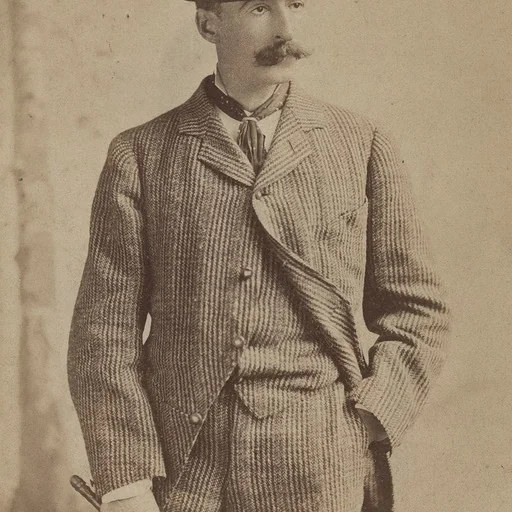
Winslow Homer (February 24, 1836 – September 29, 1910) was an American landscape painter and illustrator, best known for his marine subjects.