Artwork
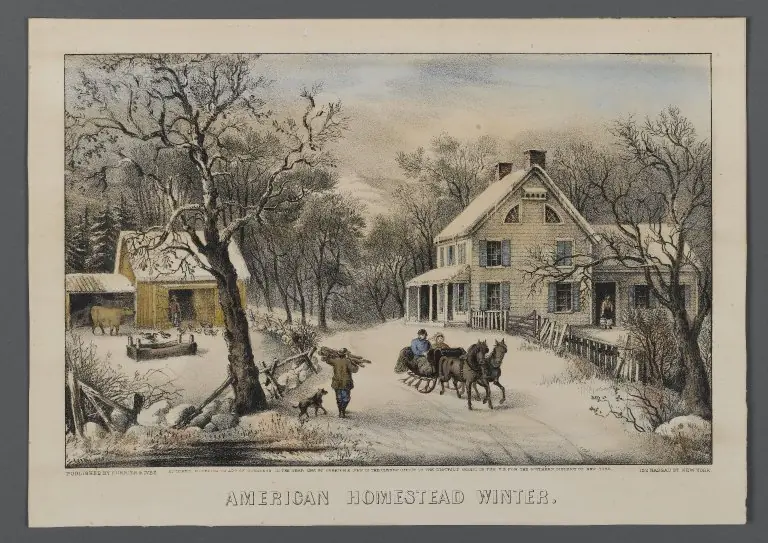
American Homestead, Winter
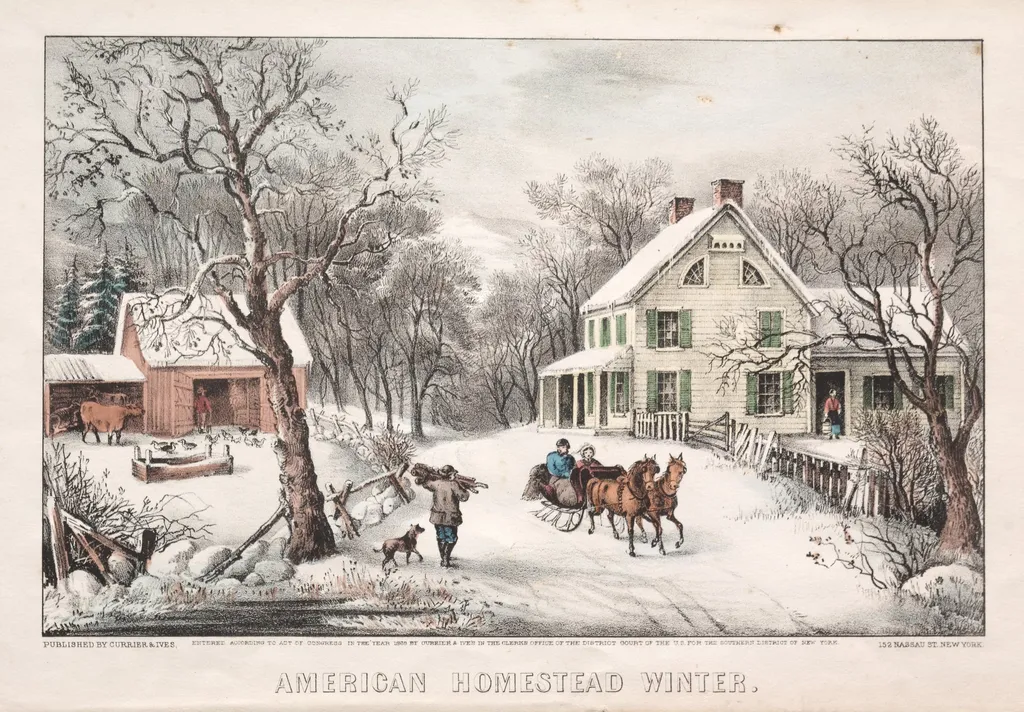
American Homestead, Winter is a print by the Impressionist artist James Merritt Ives. It dates from 1868 and is held in the collection of the Cleveland Museum of Art.
About this work
Overview
The work reflects 19th-century American interest in domestic life and seasonal rhythms, rendered with careful attention to atmospheric detail.
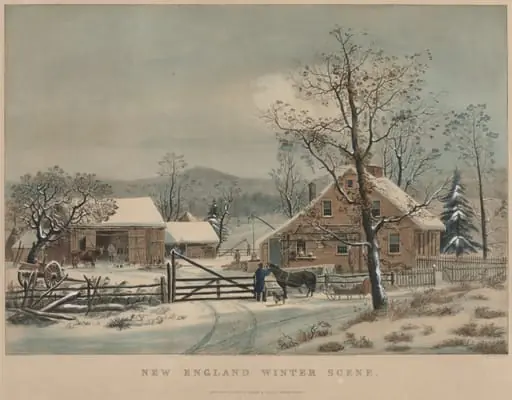
Created in 1868 by James Merritt Ives, American Homestead, Winter is a print depicting a quiet rural winter scene. It is part of the collection at The Cleveland Museum of Art. The composition captures a modest homestead nestled in snow, with figures and animals moving through the landscape under a muted sky. The work reflects 19th-century American interest in domestic life and seasonal rhythms, rendered with careful attention to atmospheric detail.
Subject & Meaning
The scene portrays everyday winter labor and quiet domesticity: a man carries firewood, a dog trails behind, and a horse-drawn sleigh travels along a snowy path. The house and barn, simple and sturdy, suggest self-reliance. No grand narrative is present—instead, the image conveys stillness and resilience. The absence of overt drama invites contemplation of routine life in a harsh season, emphasizing harmony between people and their environment.
Technique & Style
Ives employed fine linear detail and subtle tonal gradations to model snow, architecture, and foliage. Light filters diffusely through the overcast sky, casting soft shadows that define form without harsh contrast. The composition uses receding planes—the foreground figures, midground buildings, and distant trees—to create spatial depth. While not strictly Impressionist, the work shares an interest in natural light and seasonal atmosphere, aligning with broader trends in American printmaking of the era.
History & Provenance
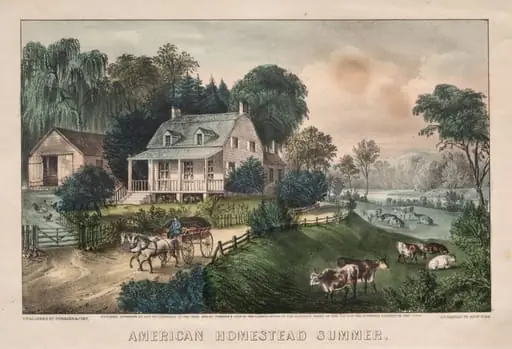
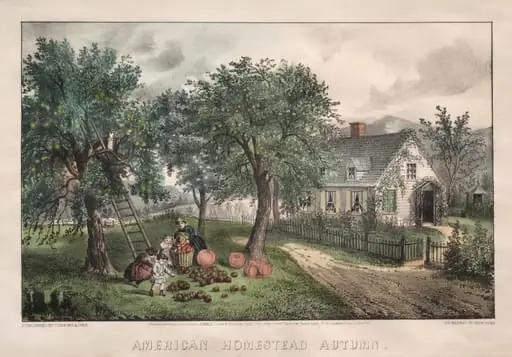
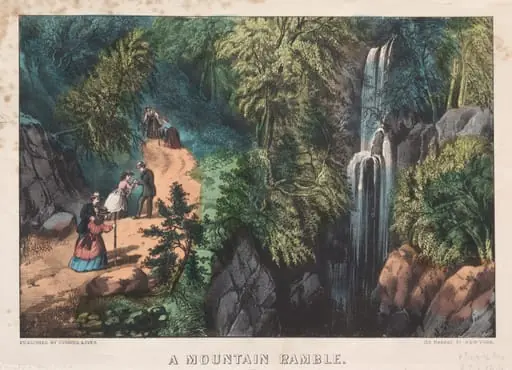
Produced in 1868, the print was likely made for mass distribution, as Ives was known for his work with the firm Currier & Ives, which specialized in affordable lithographs. The piece entered The Cleveland Museum of Art’s collection through documented acquisition, preserving its original state. Its survival in good condition reflects its popularity and the durability of 19th-century lithographic techniques used in its production.
Context
In the post-Civil War era, Americans increasingly idealized rural life as a counterpoint to industrialization. Prints like this one catered to a growing middle-class audience seeking nostalgic, morally grounded imagery. Though not avant-garde, American Homestead, Winter resonated with contemporary values of simplicity, hard work, and familial stability, making it emblematic of popular visual culture in late 19th-century America.
Legacy
The print remains a representative example of commercial art that bridged fine and popular aesthetics in its time. While overshadowed by more experimental movements, it endures as a record of how ordinary life was visually commemorated. Its presence in a major museum underscores its historical value as a cultural artifact, offering insight into the visual tastes and domestic ideals of its era.
Artist & collection