Artwork
Clari
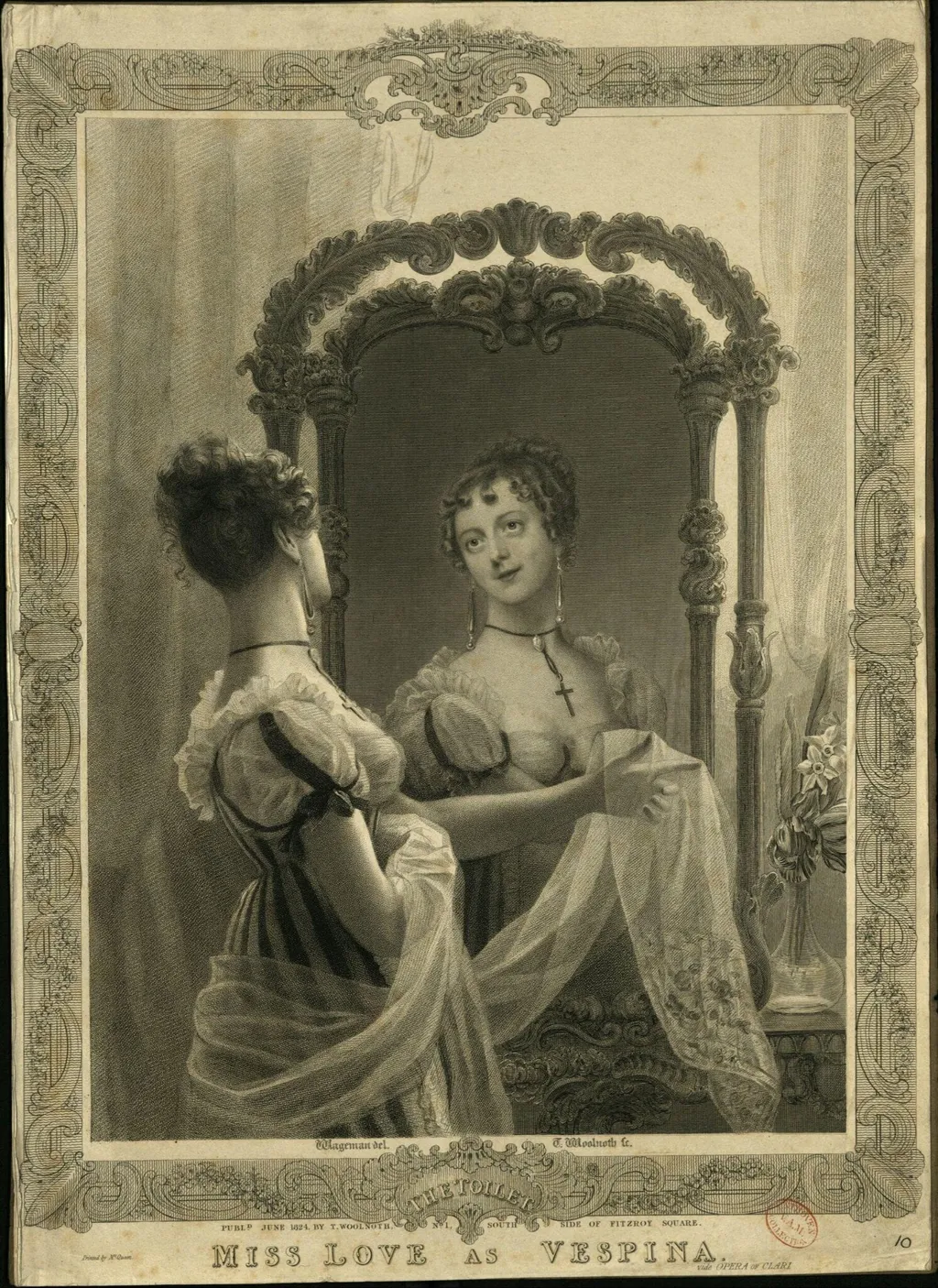
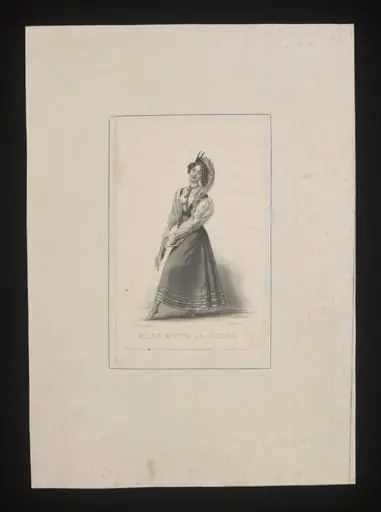
Clari is a print by the Romanticist artist Thomas A. Woolnoth. It dates from 1824 and is held in the collection of the Victoria and Albert Museum. This print by Thomas A.
About this work
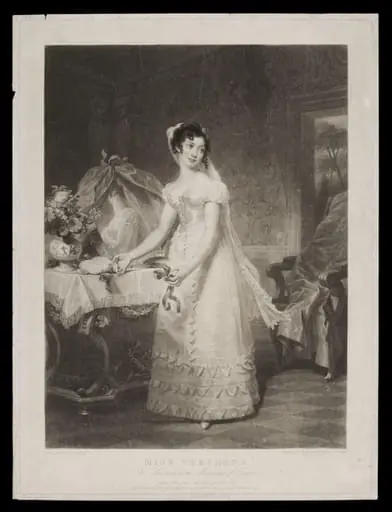
This print shows Miss Emma Sarah Love dressed as Vespina from the 1823 opera *Clari*. Woolnoth’s print captures her in that stage role after she helped make “Little Love is a Mischievous Boy” a hit at Covent Garden.
The song’s composer, Henry Bishop, wrote it for the show, and Love’s lively performance made the tune famous overnight.
Next, look up the artist Woolnoth, Thomas A.
Overview
Created shortly after the opera’s premiere at Covent Garden, the image captures her in costume, reflecting her prominence in the production.
This print by Thomas A. Woolnoth portrays Emma Sarah Love as Vespina, the lead character in the 1823 opera Clari. Created shortly after the opera’s premiere at Covent Garden, the image captures her in costume, reflecting her prominence in the production. Woolnoth, known for theatrical portraiture, rendered her likeness with attention to stage attire and expressive detail, aligning with the era’s demand for visual records of popular performers.
Subject & Meaning
Emma Sarah Love’s portrayal of Vespina centered on a character who sings the popular air 'Little Love is a Mischievous Boy.' Her performance infused the role with charm and vitality, turning the song into a cultural sensation. The print preserves her public persona at the height of its influence, functioning as both a theatrical souvenir and a testament to the growing connection between stage stardom and visual media in early 19th-century Britain.
Technique & Style
Woolnoth employed a detailed line engraving technique, common for theatrical prints of the period. Delicate hatching defines the texture of Vespina’s costume, while the facial features are rendered with soft precision to convey expressiveness. The composition is tightly framed, focusing attention on Love’s figure and gesture, minimizing background elements to emphasize her role as the opera’s central figure.
History & Provenance
The print was produced soon after Clari’s debut at Covent Garden in 1823, capitalizing on the opera’s immediate success. Woolnoth’s image circulated widely as a keepsake for audiences, reinforcing Love’s association with the role. Its survival in institutional and private collections suggests enduring interest in the intersection of music, theater, and print culture during the early Victorian era.
Context
In the 1820s, London’s theater scene thrived as a hub of popular entertainment, with operas like Clari blending romantic plots with catchy melodies. Printed portraits of performers were a growing industry, serving as both advertising and memorabilia. Love’s rise as Vespina exemplifies how singers could become household names through a single role, aided by the expanding reach of print media and public fascination with celebrity.
Legacy
Though Clari faded from the repertoire, Woolnoth’s print endures as a document of early 19th-century theatrical life. It preserves the visual identity of a performer whose interpretation shaped the reception of a now-obscure song. The image remains a reference point for scholars studying the material culture of British opera and the evolving relationship between performance and print in the age of mass reproduction.
Artist & collection
Artist
Thomas Alfred Woolnoth (1785–1857) was an English engraver. He was known for his portraits of theatre people. He also painted, and engraved works of Correggio and Van Dyck. Woolnoth was engraver to Queen Victoria. His…