Artwork
Mother and Child
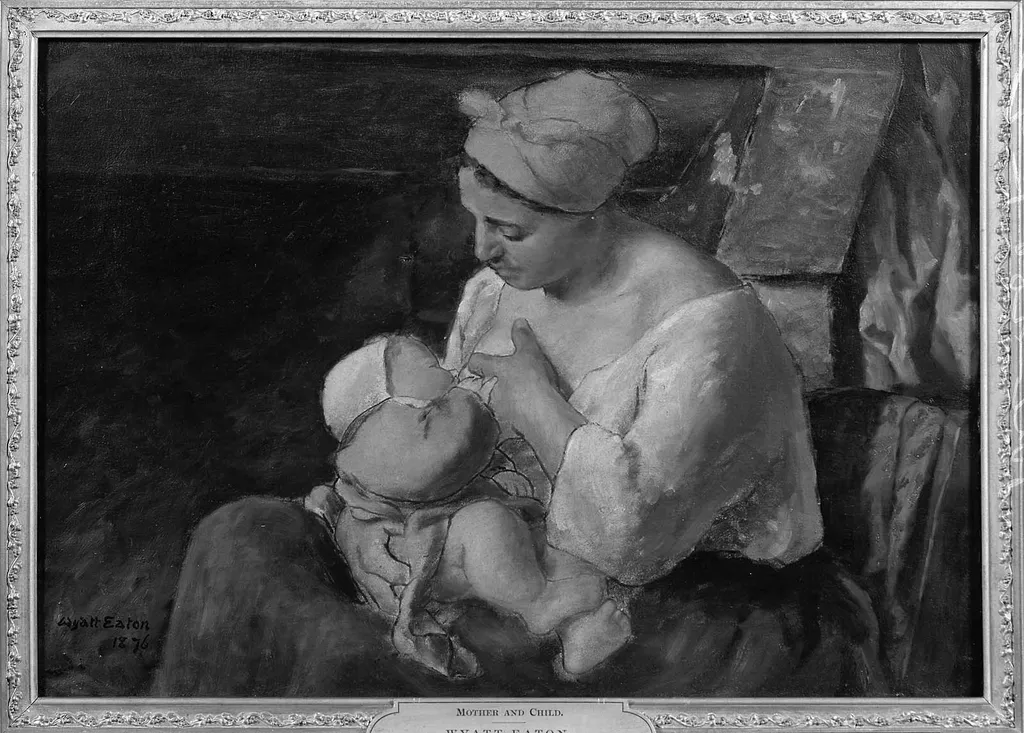
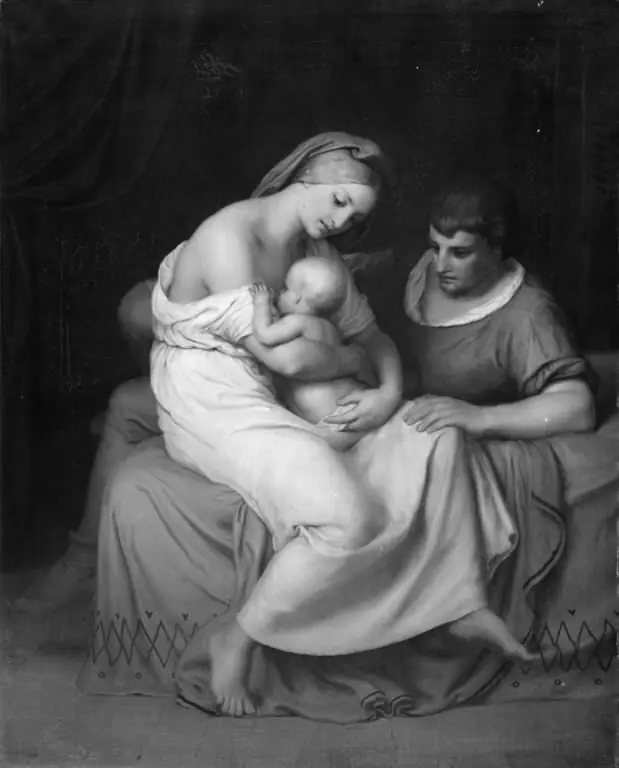
Mother and Child is an oil painting by the American Impressionist artist Wyatt Eaton. It dates from 1888 and is held in the collection of the Museum of Fine Arts Boston.
About this work
Overview
Painted in 1888 by Canadian-American artist Wyatt Eaton, *Mother and Child* is an oil-on-canvas work that captures a quiet domestic moment.
Painted in 1888 by Canadian-American artist Wyatt Eaton, *Mother and Child* is an oil-on-canvas work that captures a quiet domestic moment. Eaton, a founding member of the Society of American Artists, aligned with the aesthetic shifts of late 19th-century American painting. The piece reflects the influence of Impressionist techniques while maintaining a restrained, intimate tone. It is part of the permanent collection at the Museum of Fine Arts, Boston.
Subject & Meaning
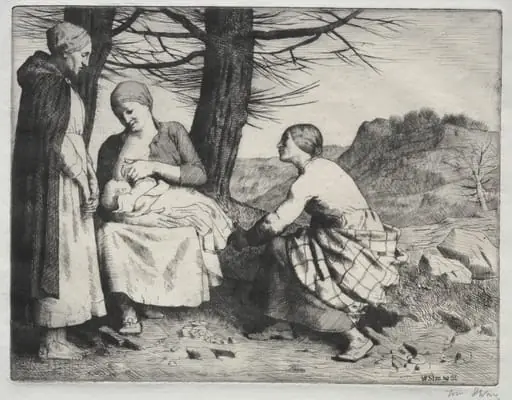
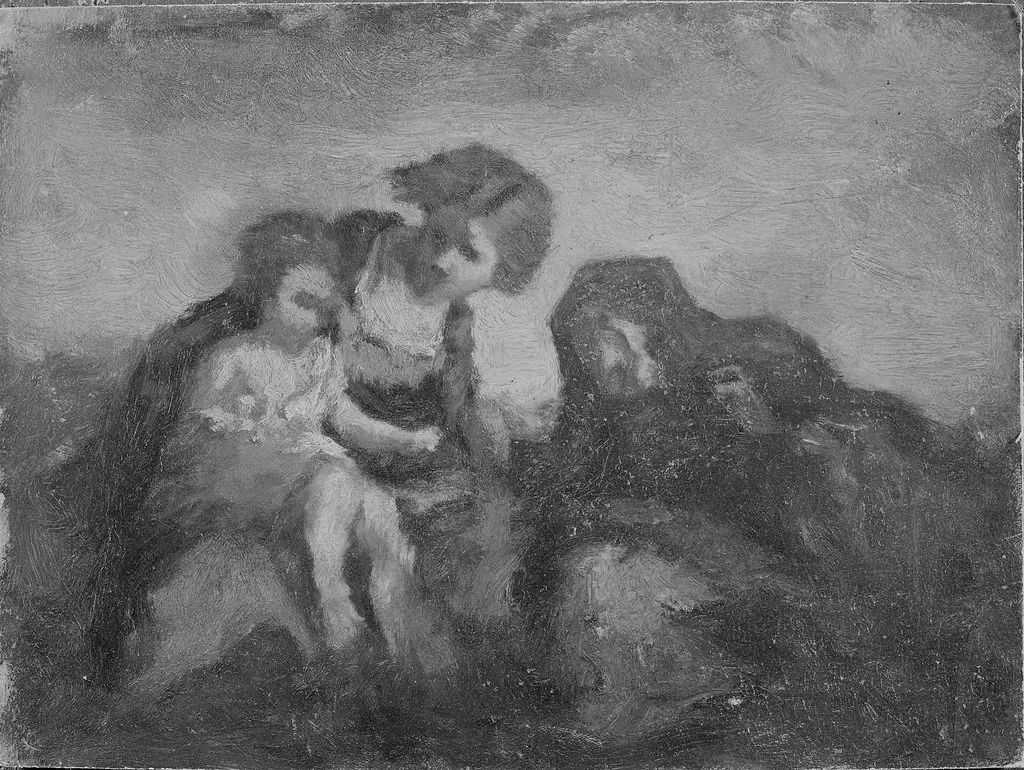
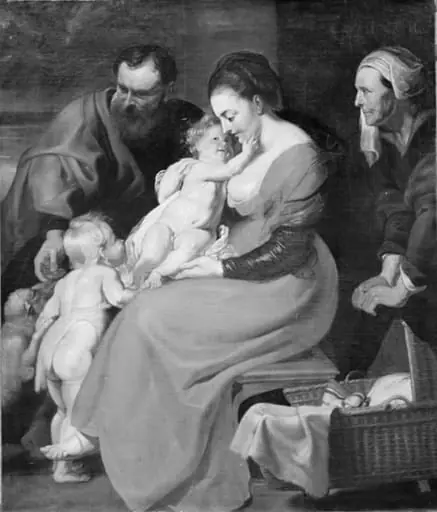
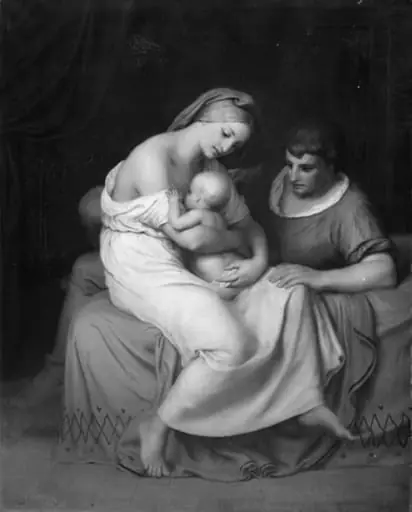
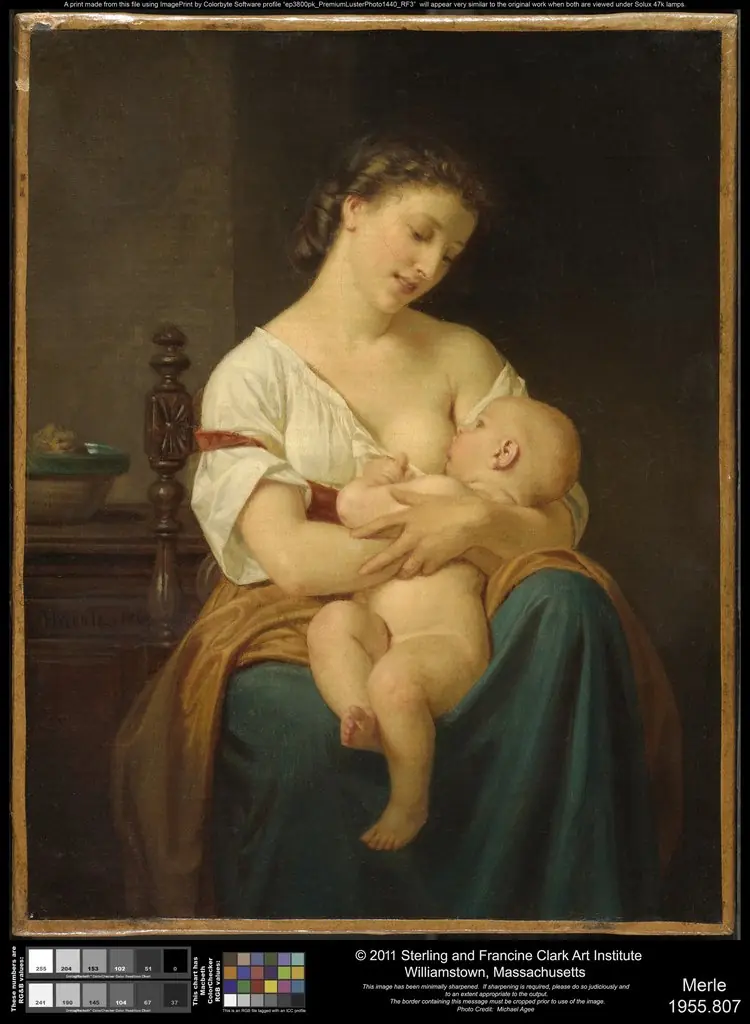
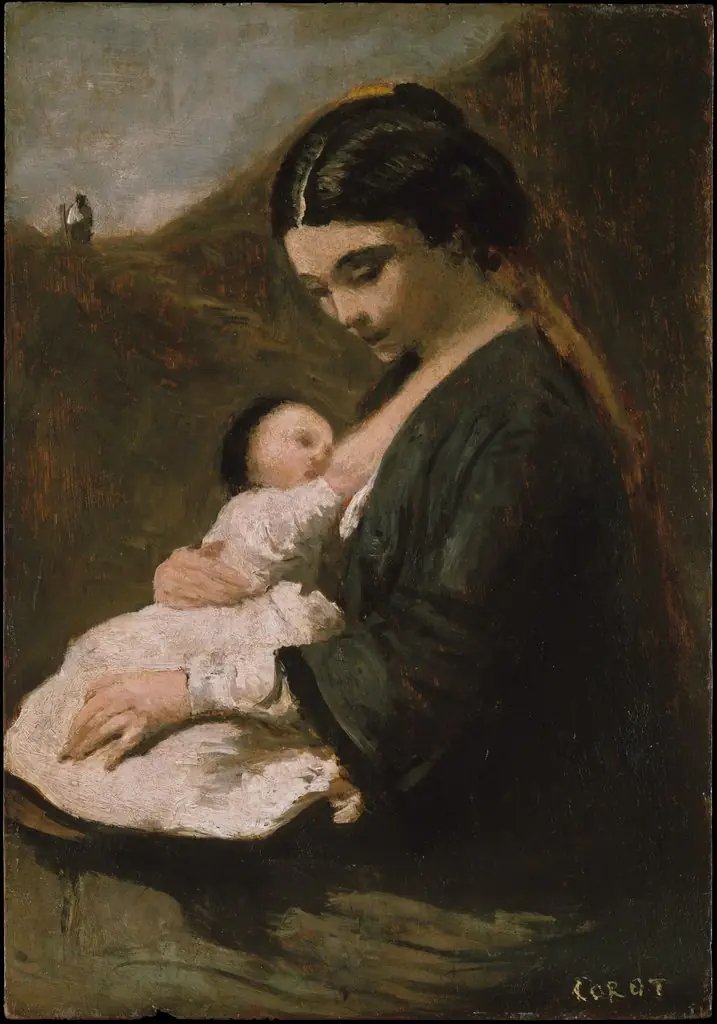
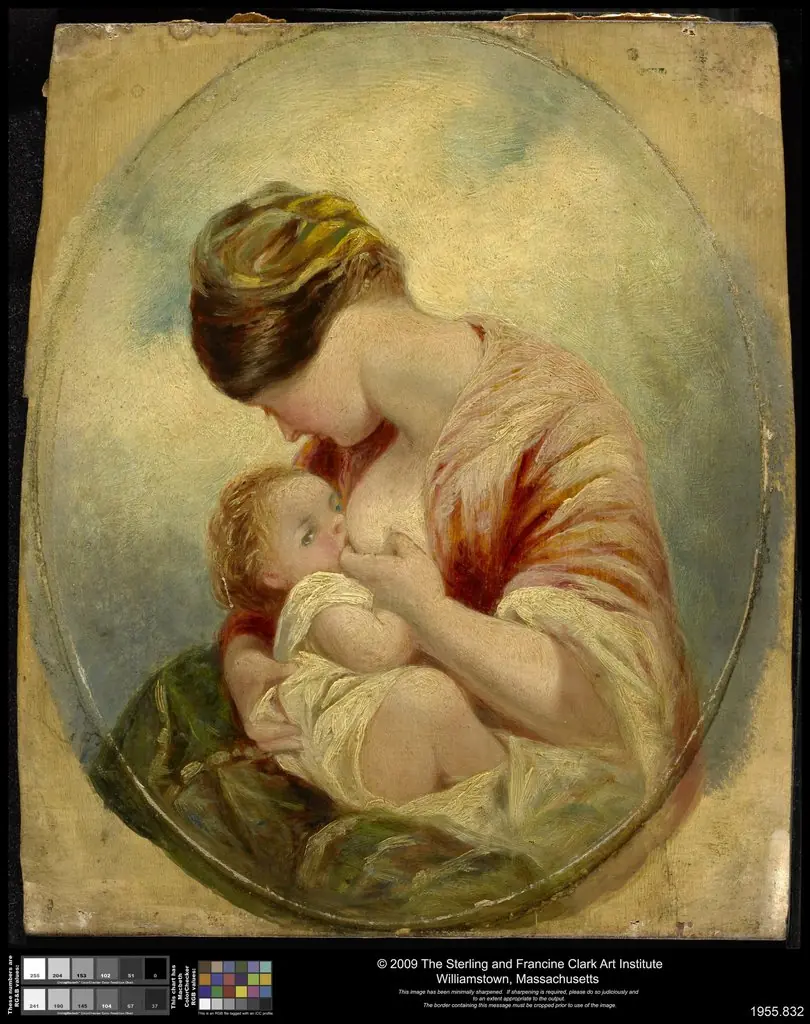
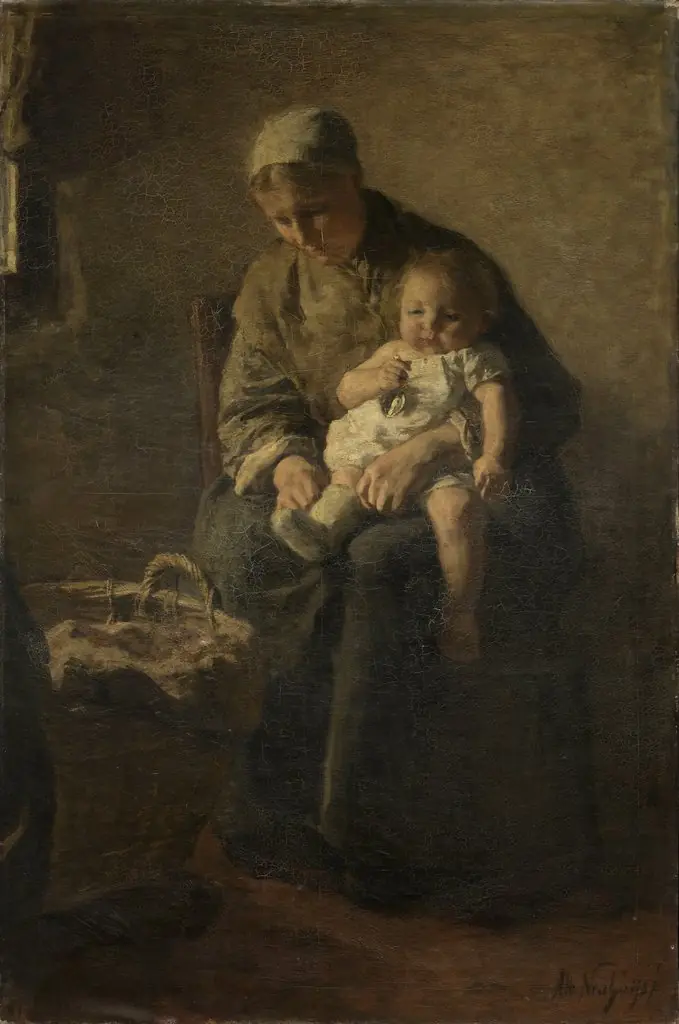
The painting portrays a mother seated in profile, cradling her infant against her chest in a moment of nursing. Both figures are dressed in white, emphasizing purity and tenderness without overt symbolism. The absence of narrative detail or setting focuses attention on the physical and emotional closeness between mother and child. The dark background isolates the figures, heightening the sense of privacy and quiet devotion.
Technique & Style
Eaton employed loose, fluid brushwork and subtle gradations of light to model the forms, aligning with the principles of American Impressionism. The oil medium allows for soft transitions between tones, particularly in the skin and fabric textures. While the lighting lacks dramatic contrast, it creates a gentle luminosity that enhances the intimacy of the scene. The dark background serves to frame the figures without competing for visual attention.
History & Provenance
Created during Eaton’s active years in the American art scene, the painting entered the Museum of Fine Arts, Boston’s collection in the early 20th century. Its acquisition reflects the institution’s interest in domestic genre scenes by artists associated with the Society of American Artists. There is no documented public exhibition history prior to its inclusion in the museum’s holdings, suggesting it may have remained in private hands until then.
Context
In the late 1880s, American artists were increasingly moving away from academic rigidity toward more spontaneous, light-sensitive approaches. Eaton’s work, though less radical than European Impressionists, participated in this shift by prioritizing atmosphere over detail. *Mother and Child* aligns with contemporaneous depictions of domestic life, reflecting broader cultural ideals of motherhood and private virtue during the Gilded Age.
Legacy
While not widely reproduced or critically celebrated in major art historical narratives, the painting remains a representative example of quiet, figure-based Impressionism in American art. It contributes to the understanding of how domestic themes were rendered with technical nuance outside the more prominent circles of the movement. Its continued presence in the MFA Boston underscores its value as a modest yet evocative work of its time.
Artist & collection
Artist
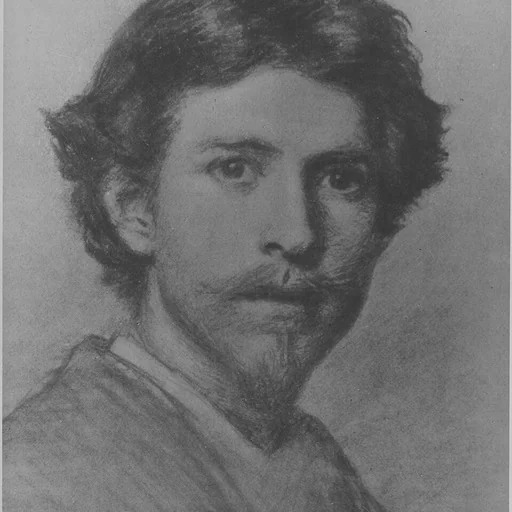
Wyatt Eaton, baptised Charles Wyatt Eaton, (May 6, 1849 – June 7, 1896) was a Canadian-American portrait and figure painter, remembered as one of the founders of the Society of American Artists.