Artwork
Woman and Child
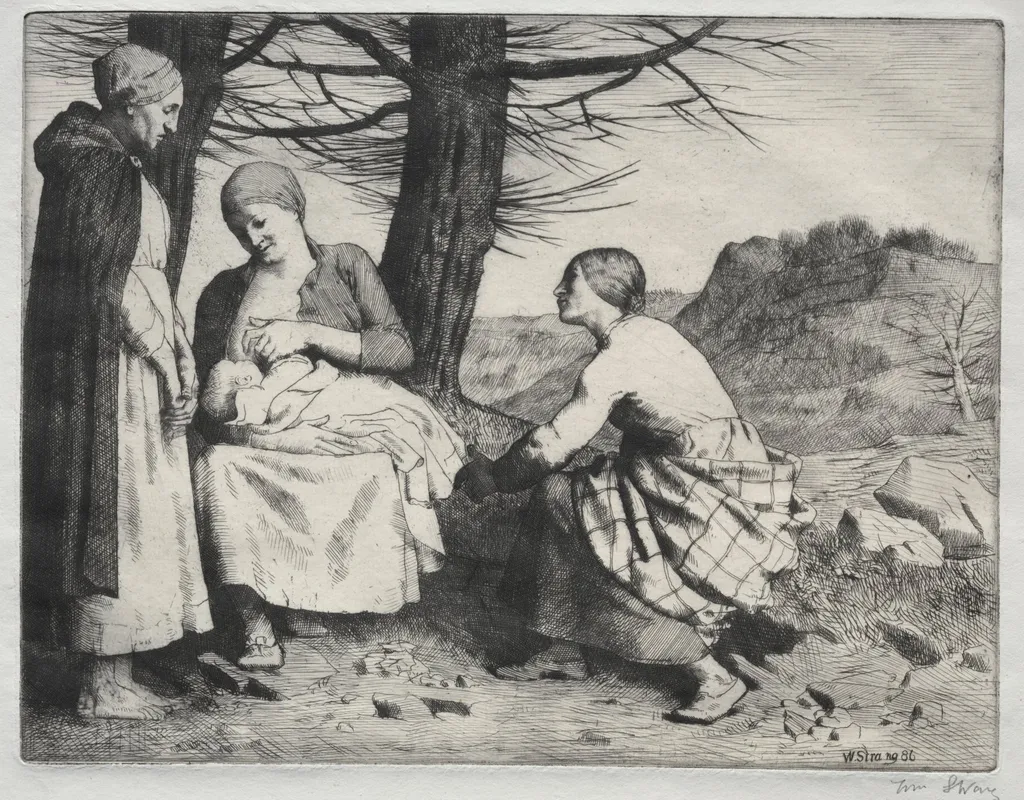
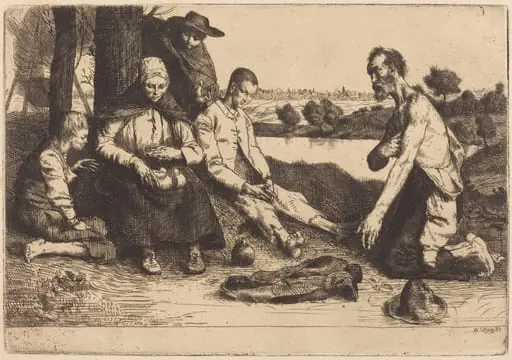
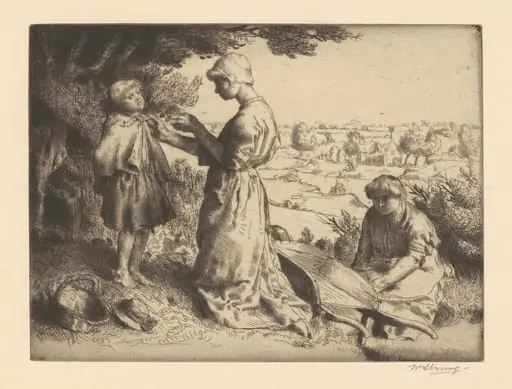
Woman and Child is a print by the Impressionist artist William Strang. It dates from 1886 and is held in the collection of the Cleveland Museum of Art.
About this work
Overview
Woman and Child is an etching by William Strang, dated around 1886. It is part of the collection at The Cleveland Museum of Art. Unlike oil paintings of the period, this work is a printed image, produced through careful incision and ink transfer. The composition centers on a quiet, intimate moment between two figures, rendered with precision and restraint rather than broad brushwork.
Subject & Meaning
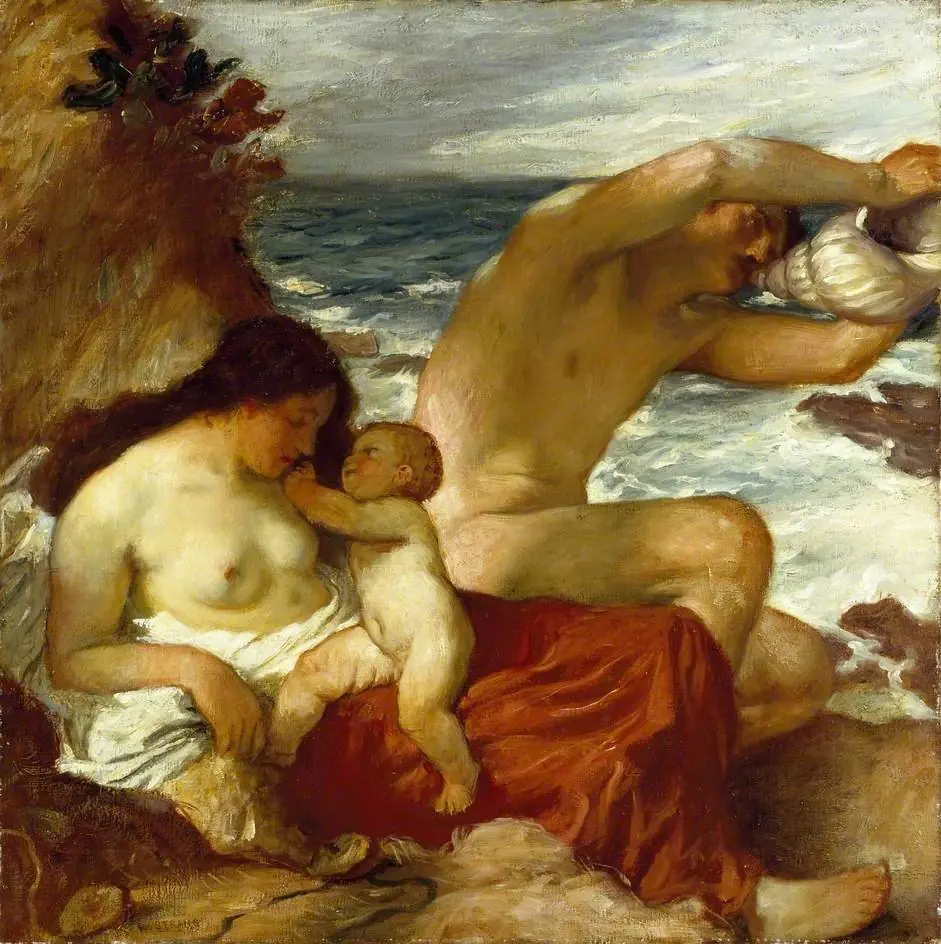
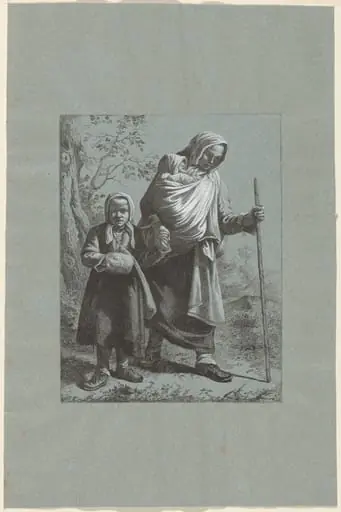
The print portrays a seated woman in a dark dress and white apron, holding a swaddled infant close.
The print portrays a seated woman in a dark dress and white apron, holding a swaddled infant close. The child looks upward, their expression soft and unguarded. The setting is minimal—rock, foliage, and shadow—but conveys stillness and protection. The scene avoids narrative drama, instead emphasizing quiet domestic tenderness, a theme common in late 19th-century printmaking that valued emotional subtlety over spectacle.
Technique & Style
Strang employed etching to achieve fine lines and tonal gradations. The contrast between light and dark areas—chiaroscuro—is carefully controlled, enhancing the sense of volume and warmth without overt realism. Delicate hatching defines fabric folds and foliage, while the background recedes through sparse, suggestive marks. The technique favors clarity and intimacy over atmospheric blur, distinguishing it from Impressionist methods.
History & Provenance
Created during Strang’s early career, the print reflects his engagement with the British etching revival of the 1880s. It entered The Cleveland Museum of Art’s collection through established acquisition channels in the 20th century. No significant alterations or reworkings are documented; the print remains in its original state, preserving the artist’s intended tonal balance and line quality.
Context
Strang worked amid a resurgence of interest in printmaking as a fine art medium, separate from reproductive illustration. While contemporaries like Whistler explored mood through tonal harmony, Strang focused on structured form and emotional restraint. Woman and Child aligns with broader European trends favoring domestic subjects, yet avoids sentimentality through its disciplined technique and muted palette.
Legacy
The work exemplifies Strang’s contribution to the revival of etching as a serious artistic medium. Though not widely reproduced, it remains a reference point for scholars studying late Victorian printmaking. Its quiet dignity and technical precision continue to inform discussions on the role of intimacy and restraint in graphic arts of the period.
Artist & collection

Artist
William Strang (13 February 1859 – 12 April 1921) was a Scottish painter and printmaker, notable for illustrating the works of Bunyan, Cervantes, Coleridge, Kipling, and others.