Artwork
Falling Leaves, Amersfoort
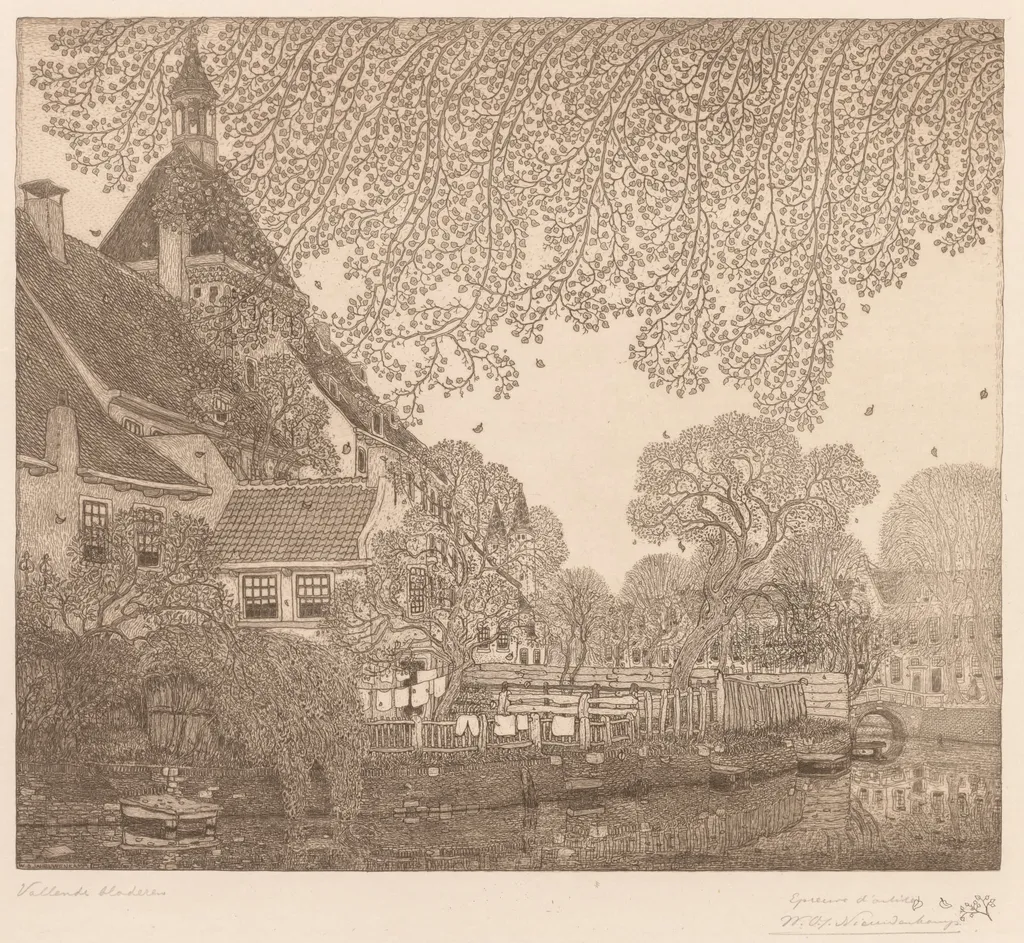
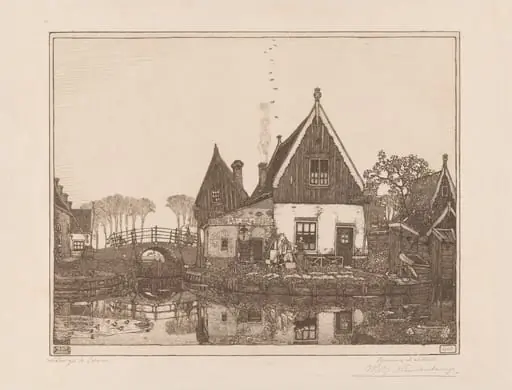
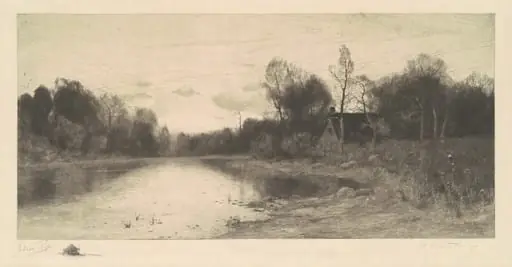
Falling Leaves, Amersfoort is a print by Wynand Otto Jan Nieuwenkamp. It dates from 1908 and is held in the collection of the Cleveland Museum of Art.
About this work
Overview
Nieuwenkamp, trained as a draftsman and printmaker, approached his subjects with meticulous attention to detail.
Created in 1908 by Dutch artist Wynand Otto Jan Nieuwenkamp, *Falling Leaves, Amersfoort* is a print capturing a quiet autumnal landscape in the Dutch town of Amersfoort. Nieuwenkamp, trained as a draftsman and printmaker, approached his subjects with meticulous attention to detail. This work exemplifies his engagement with everyday scenes, rendered through etching or lithography, and reflects his broader interest in observational drawing beyond formal academic training.
Subject & Meaning
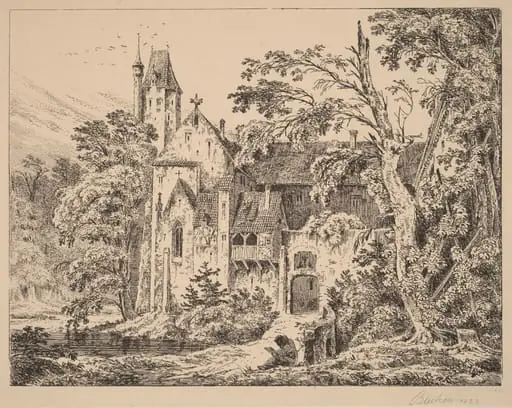
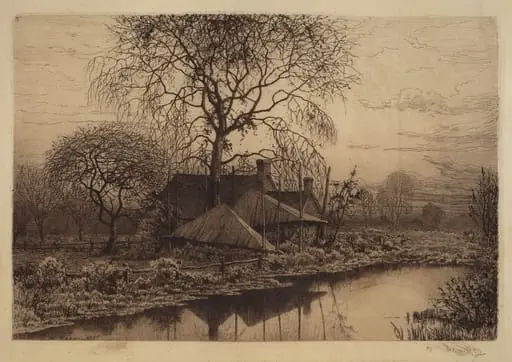
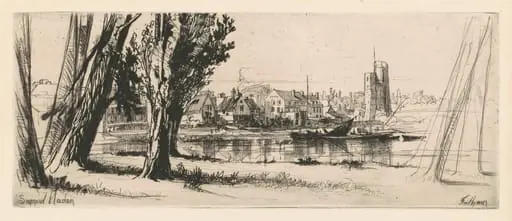
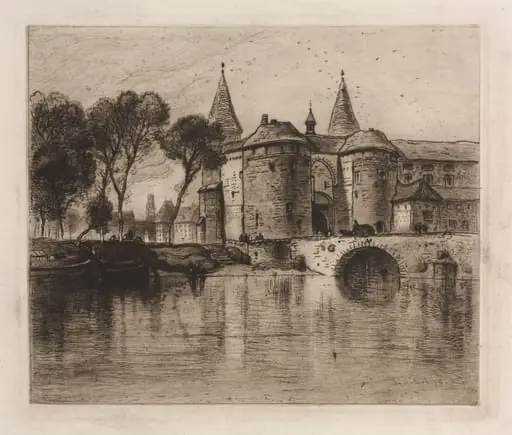
The scene depicts a tranquil village at the height of autumn, with leafless trees framing modest homes and a stone bridge arching over a narrow stream. A handful of figures move along a path, their presence subtle and unobtrusive. The absence of leaves and the muted tones suggest stillness and solitude, evoking a sense of seasonal transition rather than narrative. The church tower rises as a quiet anchor, grounding the composition in place and time without overt symbolism.
Technique & Style
Nieuwenkamp employed fine linear detail to render textures—the roughness of the church’s tiled roof, the ripples on the water, the delicate tangle of bare branches. His technique favors precision over dramatic contrast, using subtle gradations of tone to suggest light filtering through a pale sky. The composition is restrained, with no focal point dominating; instead, the eye is guided gently across the scene, reflecting his background in ethnographic and architectural illustration.
History & Provenance
The print entered the collection of The Cleveland Museum of Art, where it remains part of its holdings of European graphic works from the early 20th century. While specific acquisition details are not widely documented, its inclusion reflects the museum’s interest in lesser-known but technically refined printmakers of the period. Nieuwenkamp’s broader reputation, particularly his later work in Bali, has often overshadowed his earlier Dutch landscapes, making this piece a quiet testament to his formative years.
Context
In 1908, Nieuwenkamp was still several years from his influential travels to Bali, but his focus on everyday Dutch life aligned with broader European trends in naturalistic observation. His work diverged from romanticized rural imagery, favoring understated realism. This print resonates with contemporaneous German and Dutch printmakers who valued quietude and detail over spectacle, situating it within a quiet but persistent current of modernist draftsmanship.
Legacy
Though Nieuwenkamp is better known for his contributions to Balinese art and architecture, *Falling Leaves, Amersfoort* illustrates the foundation of his visual language: careful observation, restraint, and technical discipline. The print stands as a modest but enduring example of early 20th-century Dutch graphic art, preserving a moment of seasonal stillness with quiet authority. It continues to be studied for its nuanced handling of light and space, beyond the more celebrated phases of his career.
Artist & collection
Artist
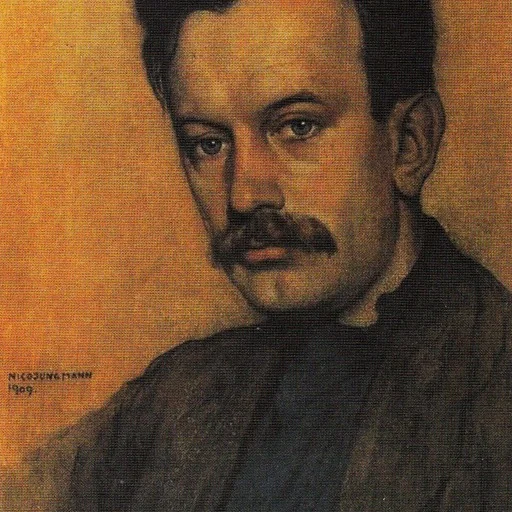
Wijnand Otto Jan Nieuwenkamp (Amsterdam, July 27, 1874 – Fiesole, April 23, 1950), was a Dutch multi-faceted autodidact.