Artwork
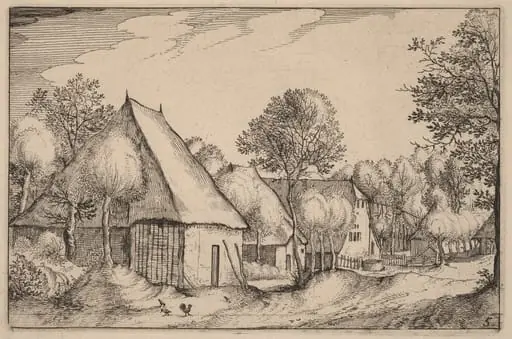
Farms in a Village
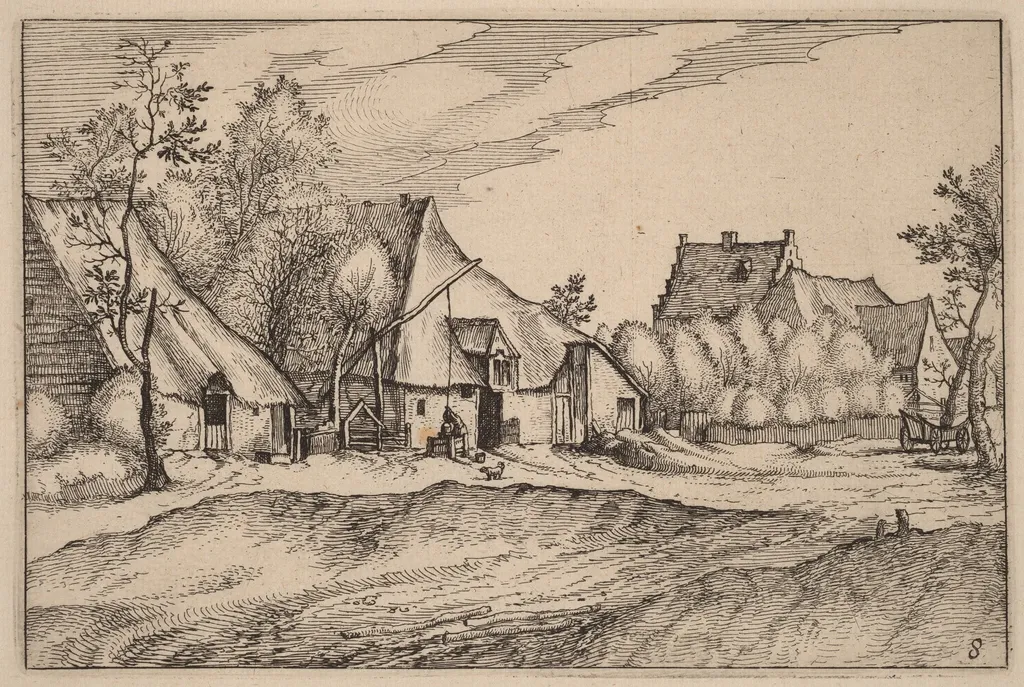
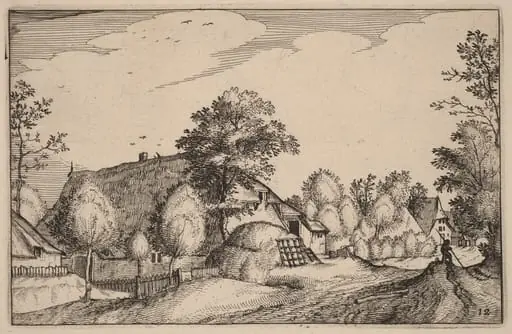
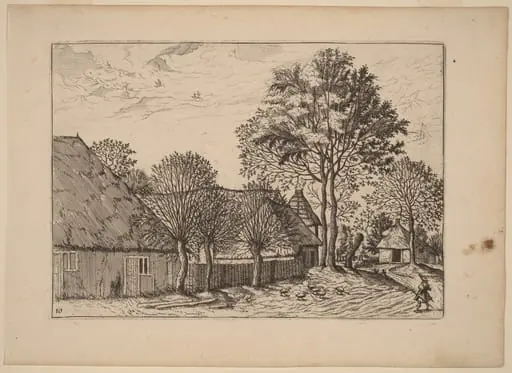
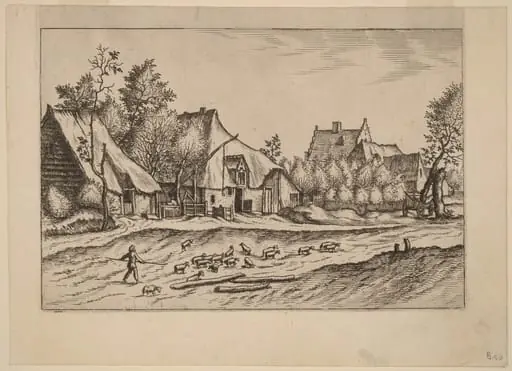
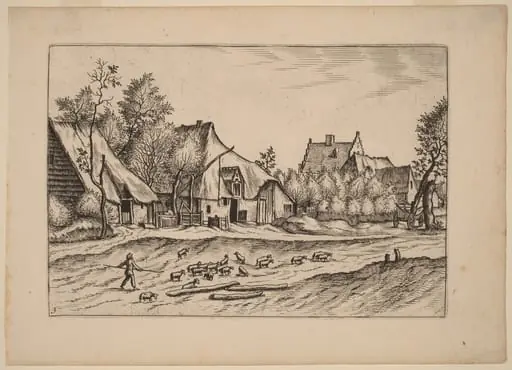
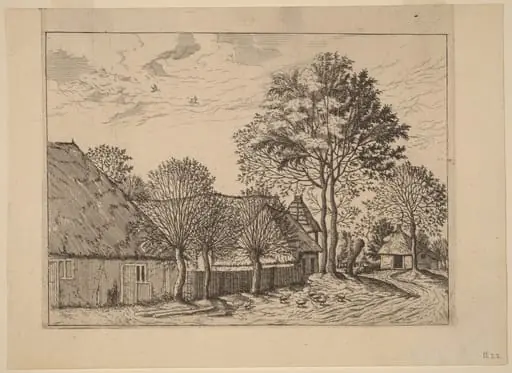
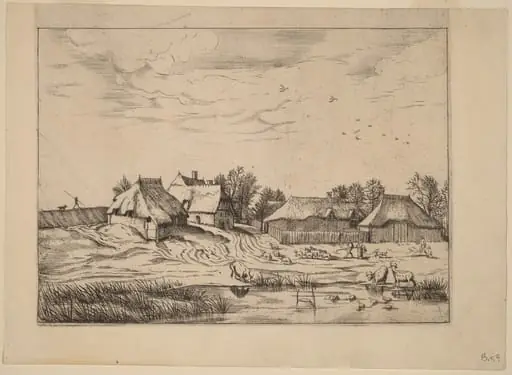
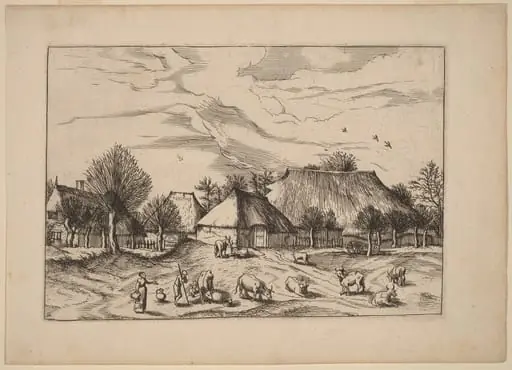
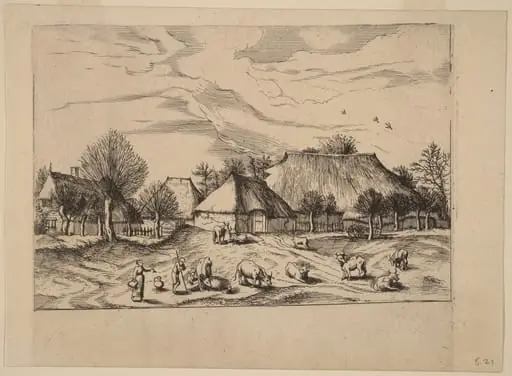
Farms in a Village is an ink print by the Baroque artist Claes Jansz Visscher. It dates from 1612 and is held in the collection of the National Gallery of Art.
About this work
Overview
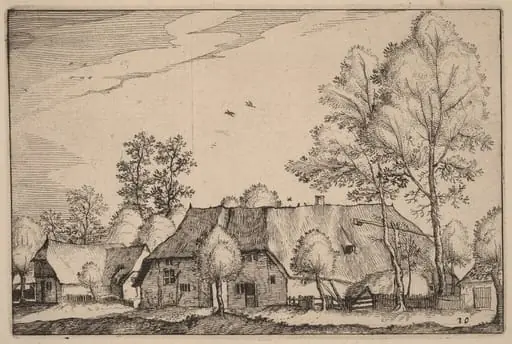
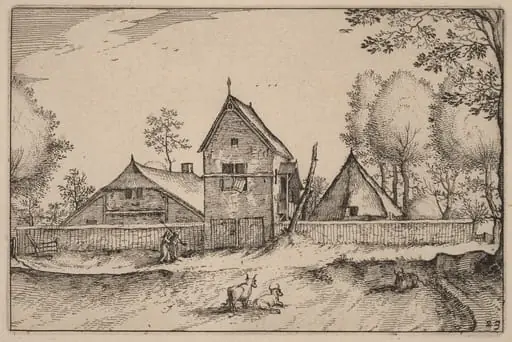
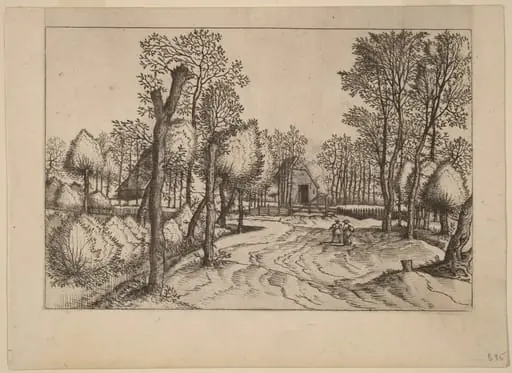
Claes Janszoon Visscher’s 1612 etching *Farms in a Village* offers a compact view of a Dutch rural settlement. The composition arranges modest farmhouses, trees and a winding dirt track beneath a cloud‑filled sky, creating a balanced tableau that emphasizes the quiet coexistence of built structures and the surrounding landscape.
Subject & Meaning
The print presents a small cluster of thatched roofs and timber‑framed houses set among mature trees, suggesting a self‑contained agrarian community. The gentle slope of the roofs and the meandering path convey everyday life’s rhythm, while the open sky and surrounding foliage hint at the harmony between human activity and nature in early‑17th‑century Holland.
Technique & Style
Executed as an etching, Vissburg’s work relies on fine line work and subtle tonal variations to render architectural detail and foliage. The baroque sensibility appears in the dynamic arrangement of forms and the play of light and shadow across the scene, while the overall restraint reflects the precision typical of Dutch printmaking of the period.
History & Provenance
Vissburg, a noted draughtsman, engraver and mapmaker, founded a leading Amsterdam cartographic firm that remained in his family for several generations.
Vissburg, a noted draughtsman, engraver and mapmaker, founded a leading Amsterdam cartographic firm that remained in his family for several generations. *Farms in a Village* was produced early in his career, illustrating his interest in topographical subjects beyond maps. The print has circulated in private collections and museum holdings, tracing a provenance linked to the Vissburg publishing network.
Context
Created during the Dutch Golden Age, the image aligns with contemporary interests in documenting the countryside and its productive spaces. Rural genre scenes were popular among patrons who valued depictions of national prosperity and the orderly, prosperous landscape that underpinned the Republic’s economic success.
Legacy
Vissburg’s etchings contributed to a visual vocabulary that later Dutch artists and engravers drew upon when portraying pastoral life. The work’s clear composition and attention to architectural detail continue to serve as reference points for scholars studying early modern print culture and the representation of agrarian environments.
Artist & collection

Artist
Claes Janszoon Visscher (1587 – 19 June 1652) was a Dutch Golden Age draughtsman, engraver, mapmaker, and publisher.