Artwork
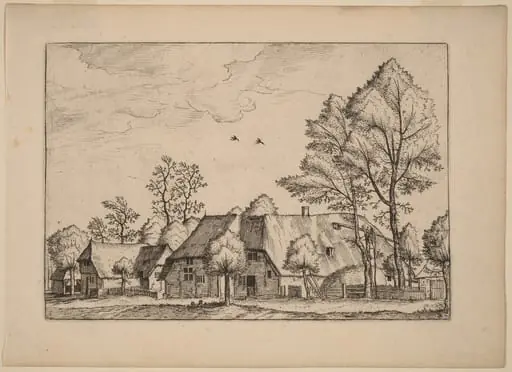
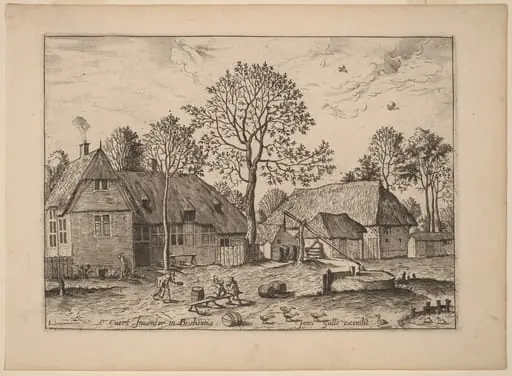
Large Farm with Draw Well
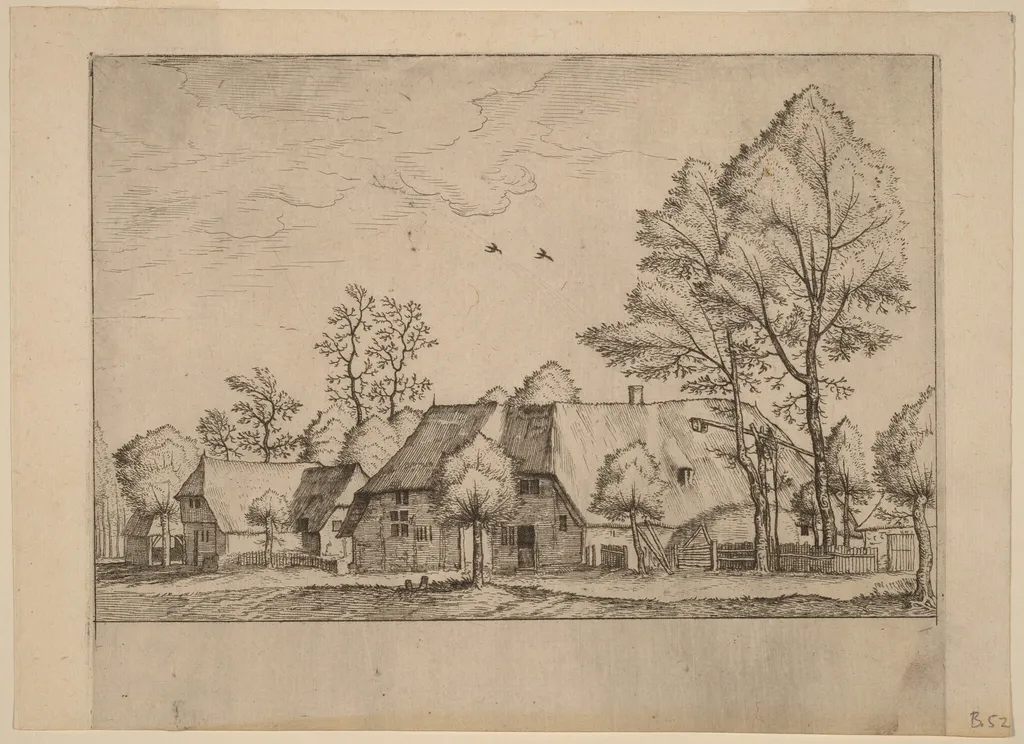
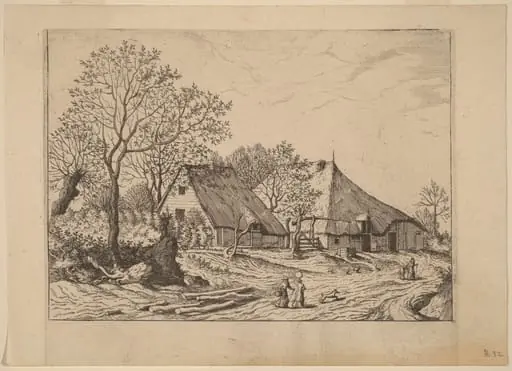
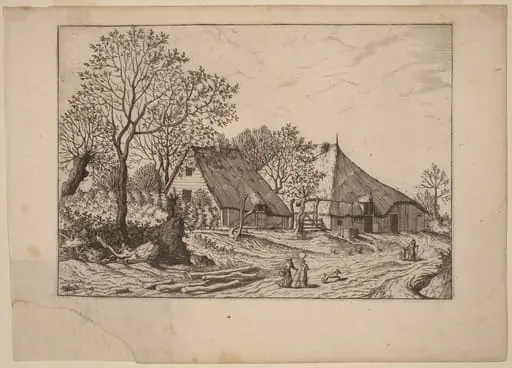
Large Farm with Draw Well is an ink print by the Renaissance artist Johannes van Doetechum the Elder. It dates from 1560 and is held in the collection of the National Gallery of Art.
About this work
Overview
This work exemplifies his precision in rendering everyday rural life through fine linear technique.
Created in 1560 by Johannes van Doetecum the Elder, this print combines etching with selective engraving to depict a rural Dutch farmstead centered on a draw well. Active in the Netherlands during the mid-to-late 16th century, van Doetecum was known for translating genre scenes and topographical views into detailed printed formats. This work exemplifies his precision in rendering everyday rural life through fine linear technique.
Subject & Meaning
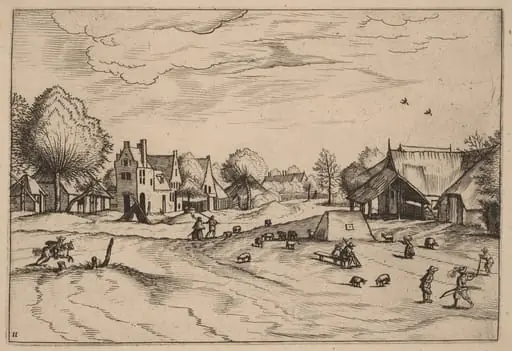
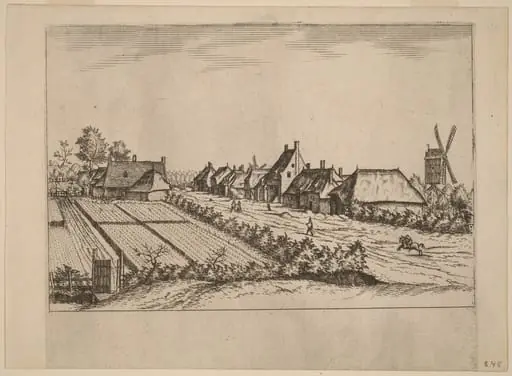
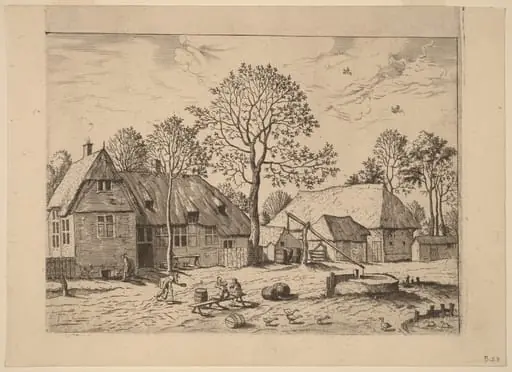
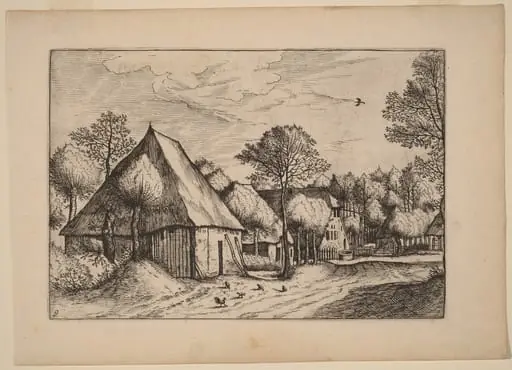
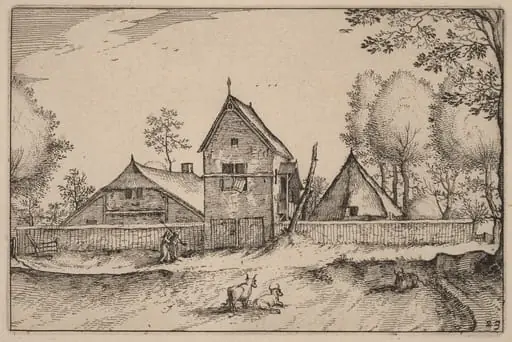
The scene portrays a modest farmstead with three thatched cottages, a prominent draw well, and a narrow stream running through the foreground. Trees, a wooden fence, and two birds in flight suggest a quiet, unidealized countryside. The focus on functional architecture and natural elements reflects a 16th-century Dutch interest in documenting ordinary rural existence, free from mythological or religious symbolism.
Technique & Style
Van Doetecum employed etching to lay down the primary lines, then enhanced key areas—such as tree bark, roof textures, and fence slats—with engraved details for greater definition. The sky is suggested by faint, wavy lines, while the foliage is rendered with delicate, controlled strokes. This methodical layering of techniques allowed for both broad composition and intricate surface detail, characteristic of Northern European printmaking of the period.
History & Provenance
Johannes van Doetecum the Elder worked primarily in Deventer before moving to Haarlem in 1578. He was part of a family of printmakers, frequently collaborating with his brother Lucas and later training his sons in the craft. While the specific early ownership of this print is unrecorded, its survival reflects the broader circulation of Dutch prints among collectors and artisans in the Low Countries during the late Renaissance.
Context
In the 1560s, the Netherlands saw growing interest in secular, observational imagery as regional identity strengthened under Habsburg rule. Prints like this one catered to urban audiences fascinated by rural life, often produced as affordable multiples. Van Doetecum’s work aligned with broader trends in Northern art that valued accuracy in landscape and domestic detail, distinct from Italianate idealization.
Legacy
Van Doetecum’s prints, including this one, contributed to the dissemination of Northern European visual culture through reproductive techniques. His precision in translating painterly scenes into print influenced later generations of engravers. Though less celebrated than contemporaries like Bruegel, his technical rigor helped establish printmaking as a respected medium for documenting everyday life in the 16th century.
Artist & collection

Artist
Johannes van Doetechum the Elder
Joannes van Doetecum the Elder (1530 – 1605) was a Dutch engraver-cartographer known for his etched works after genre scenes by Pieter Bruegel the Elder and maps of various cities in the Netherlands.