Artwork
Bridge on a Reed Pond, from an album of Landscapes and Calligraphy for Liu Songfu
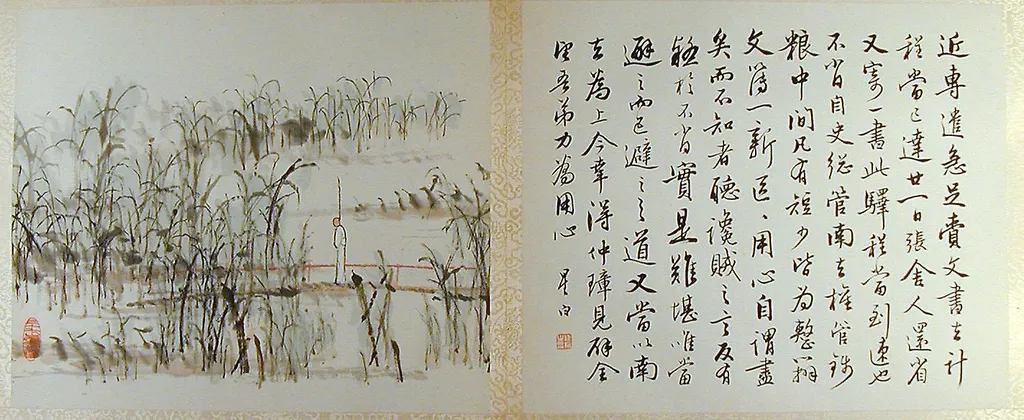
Bridge on a Reed Pond, from an album of Landscapes and Calligraphy for Liu Songfu is an unspecified painting by the Qing dynasty painting artist Xugu. It is held in the collection of the Art Institute of Chicago. Created in 1898, *Bridge on a Reed Pond* is a single sheet from the Qing‑dynasty album *Landscapes and Calligraphy for Liu Songfu*.
About this work
Overview
Created in 1898, *Bridge on a Reed Pond* is a single sheet from the Qing‑dynasty album *Landscapes and Calligraphy for Liu Songfu*. The work presents a quiet waterside scene where a slender bridge arches over a still pond surrounded by tall reeds, the composition rendered with a light, atmospheric touch characteristic of late‑Qing landscape painting.
Subject & Meaning
The image captures a moment of serene solitude, the bridge suggesting a modest passage through nature rather than a grand architectural statement. The surrounding reeds and muted sky evoke a sense of quiet contemplation, a setting often associated with poetic reflection in traditional Chinese art.
Technique & Style
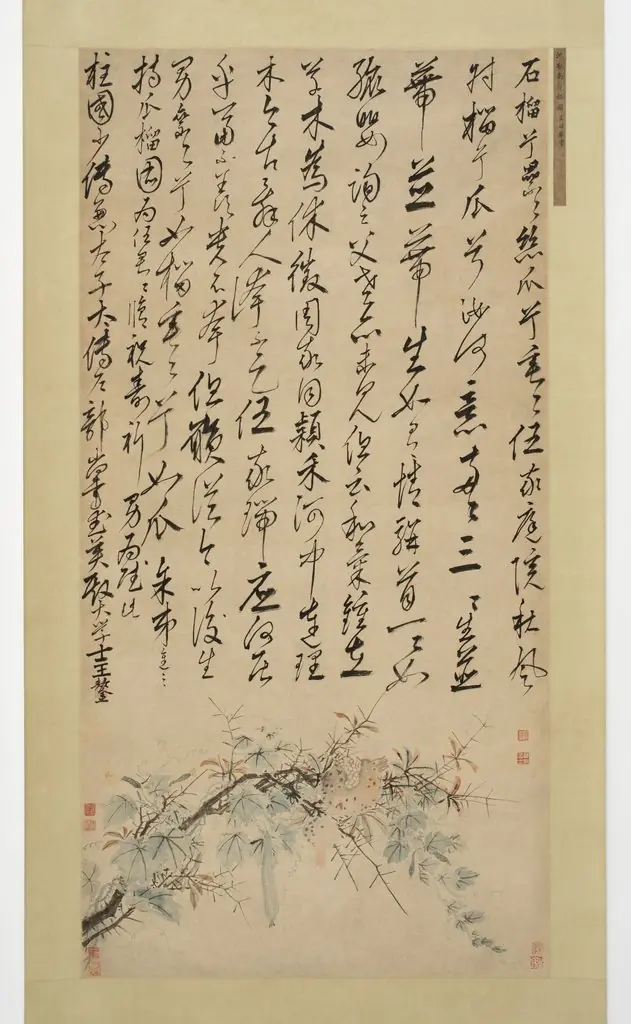
Xu Gu employs loose, sketch‑like brushwork, allowing ink washes to suggest mist and water surface while leaving much of the paper empty. The bridge is indicated by a single, delicate line, and the reeds are rendered with swift, vertical strokes. A vertical column of black ink calligraphy runs along the right edge, integrating text and image in the customary literati manner.
History & Provenance
The painting belongs to the later period of Xu Gu’s career, when he was active as both painter and poet in the mid‑ to late‑19th century. It was compiled for the collector Liu Songfu as part of an album that combined landscape sketches with his own calligraphic verses, reflecting the era’s practice of pairing visual and literary arts.
Context
During the Qing dynasty, landscape painting continued the literati tradition of expressing personal sentiment through natural scenes. Xu Gu’s work aligns with this approach, emphasizing spontaneity and the harmonious balance between brush, ink, and poetry, a hallmark of scholarly art in the period.
Artist & collection


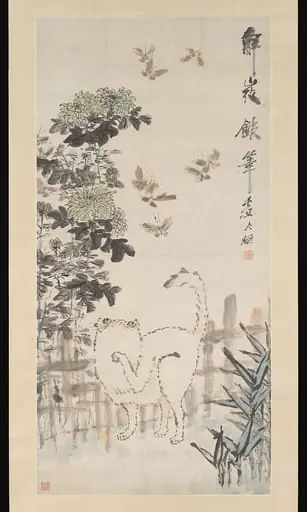 清 虛谷 蝶貓圖 軸|Cat and Butterfly
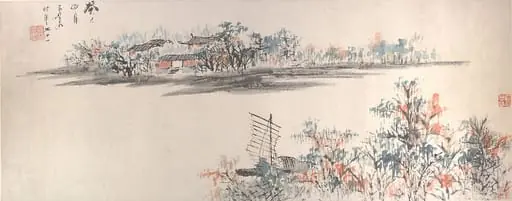 清 虛谷 秋帆圖 冊頁|Sailing in Autumn
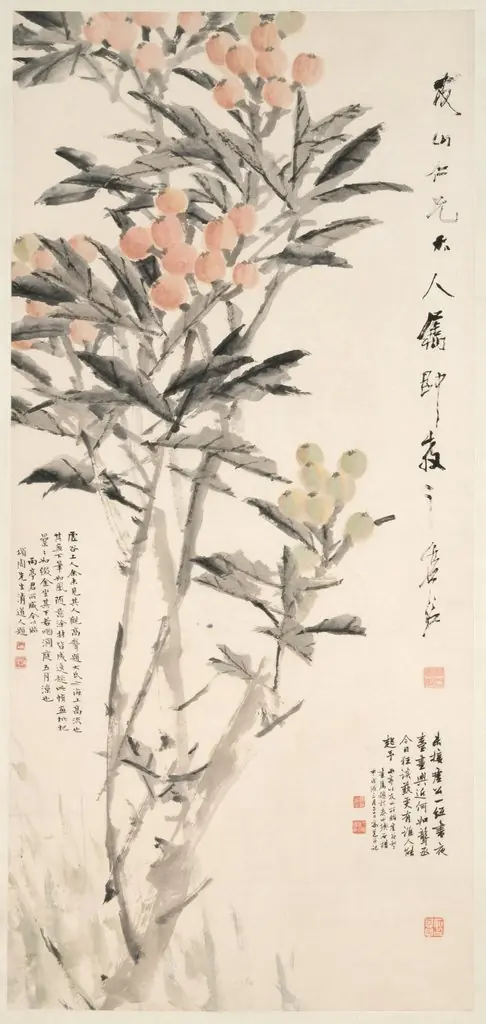 Pipa (Loquats)
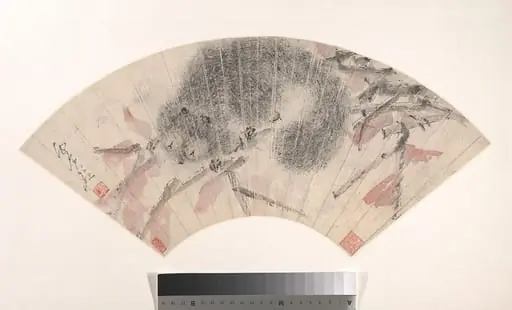 清 虛谷 松鼠 扇面|Squirrel on an Autumn Branch
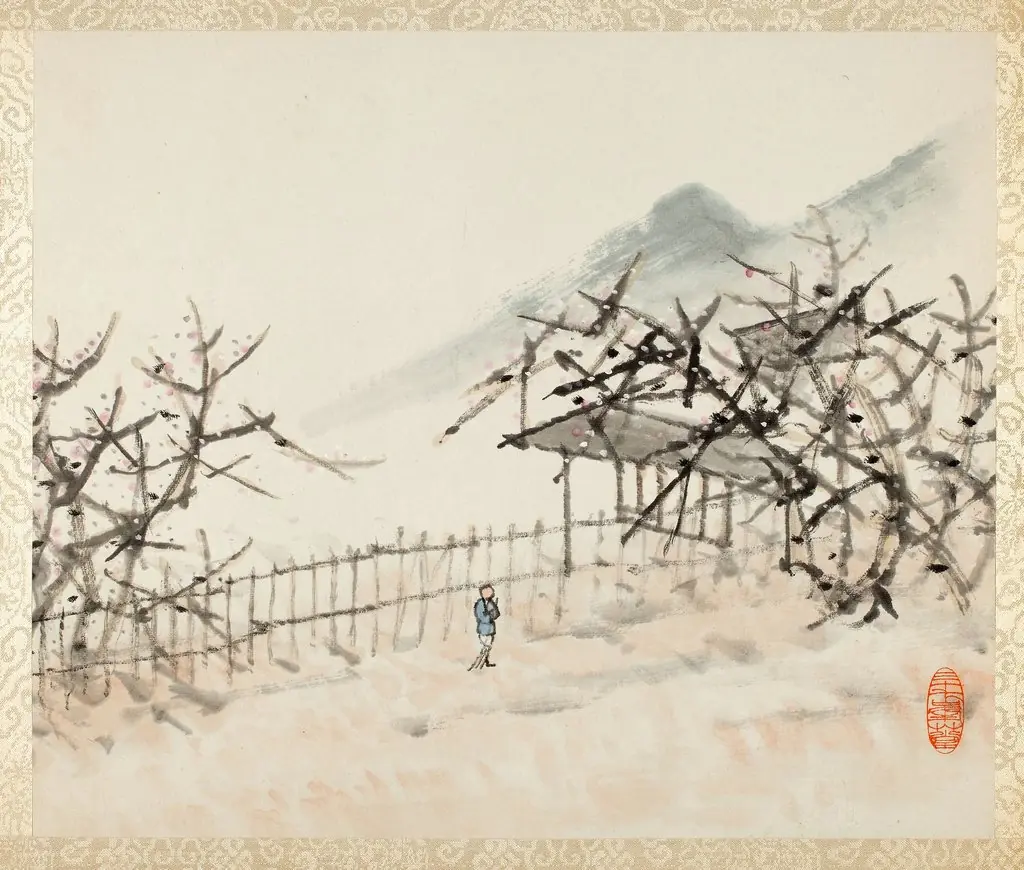 Landscapes for Liu Songfu
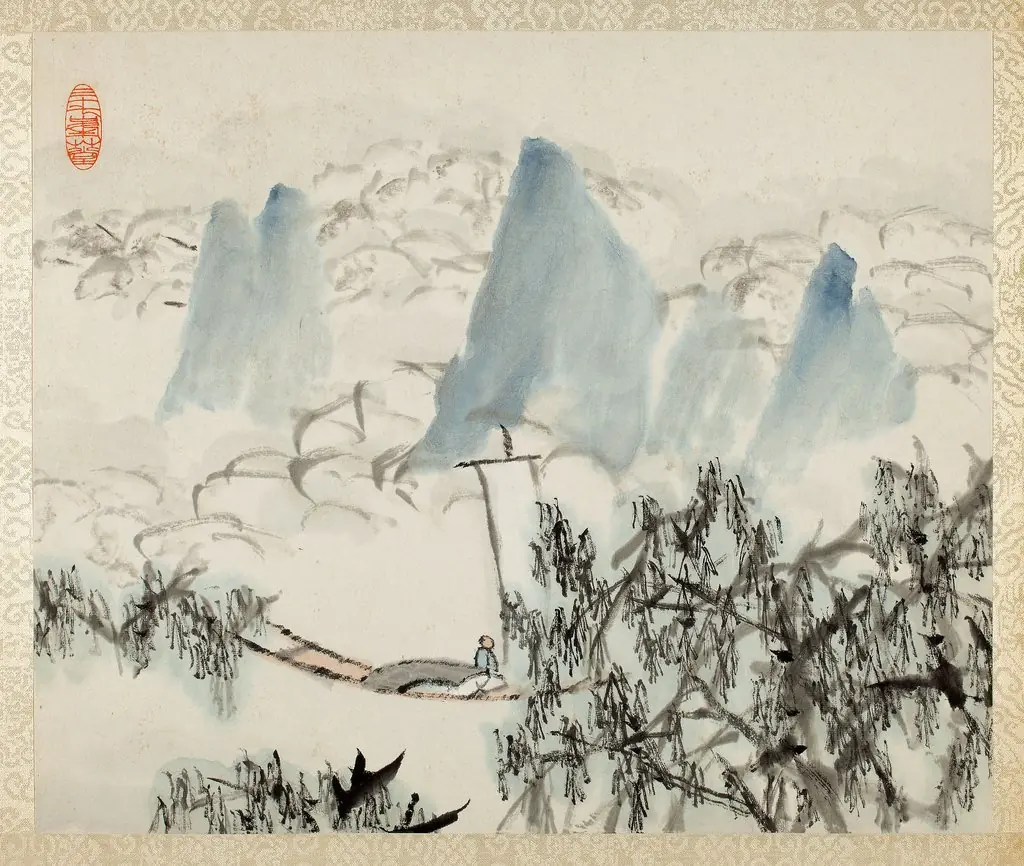 Landscape with Figure, from an album of Landscapes and Calligraphy for Liu Songfu
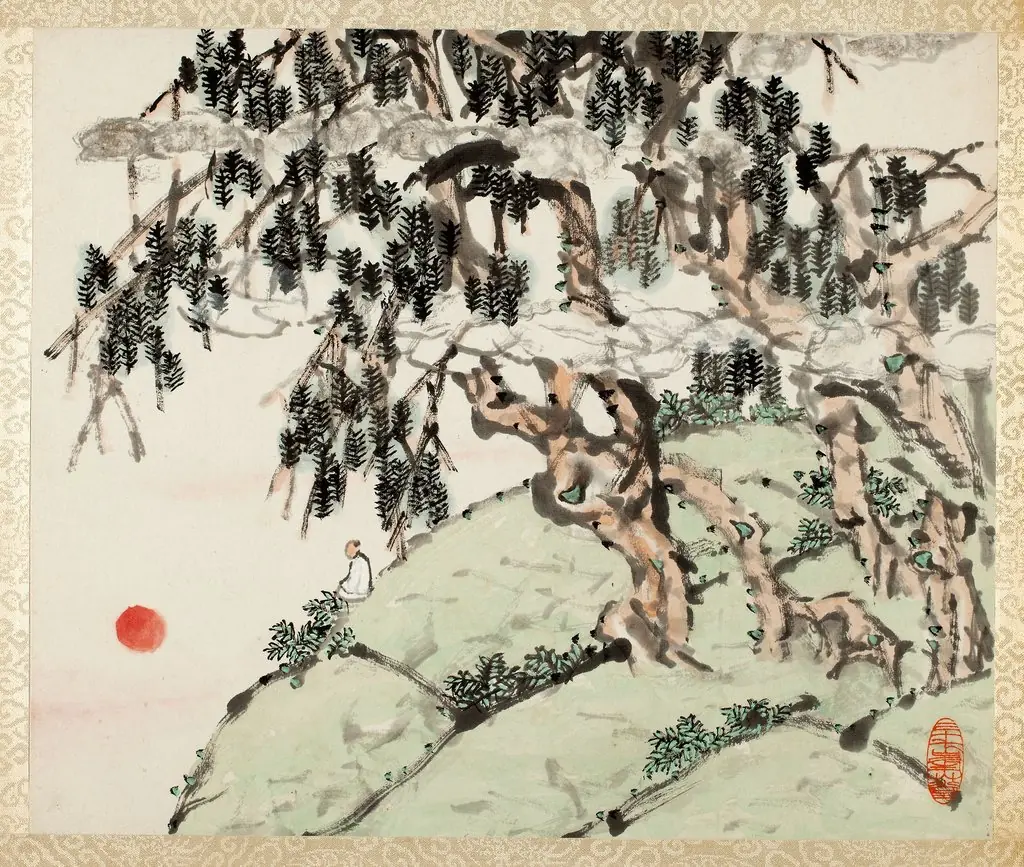 Landscape and Figure, from an album of Landscapes and Calligraphy for Liu Songfu
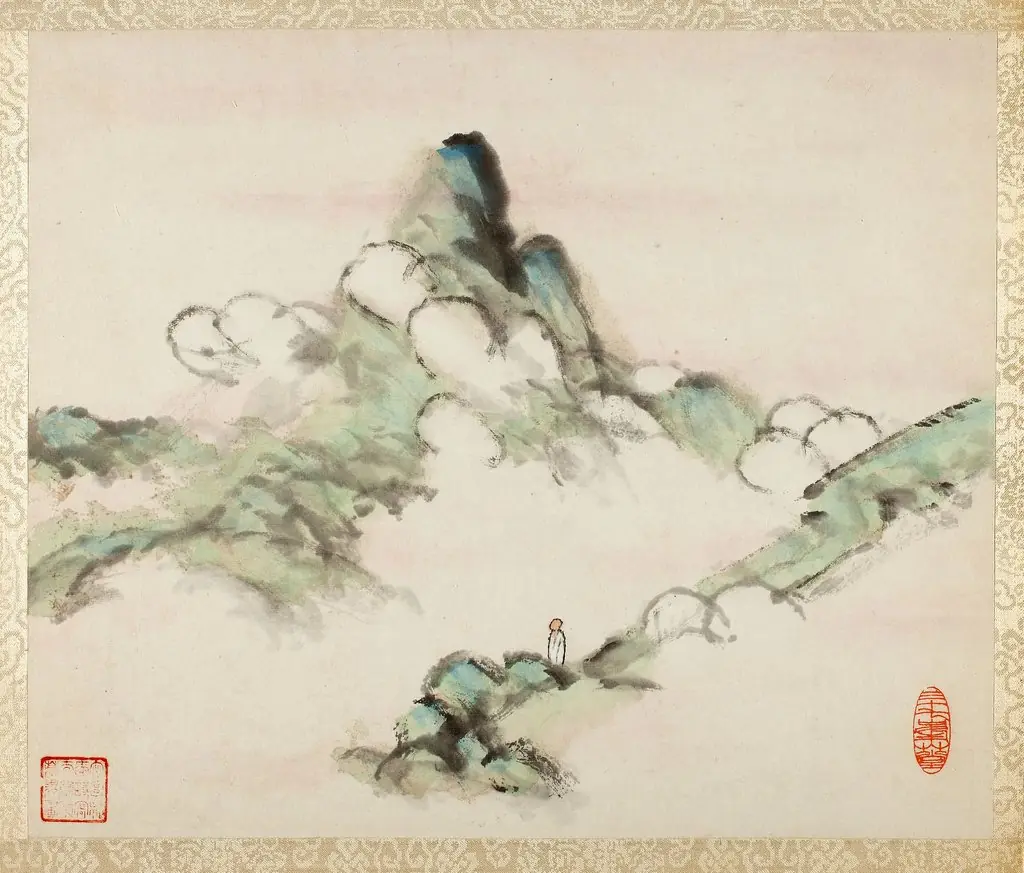 Landscapes for Liu Songfu