Artwork
Album of Calligraphy and Paintings
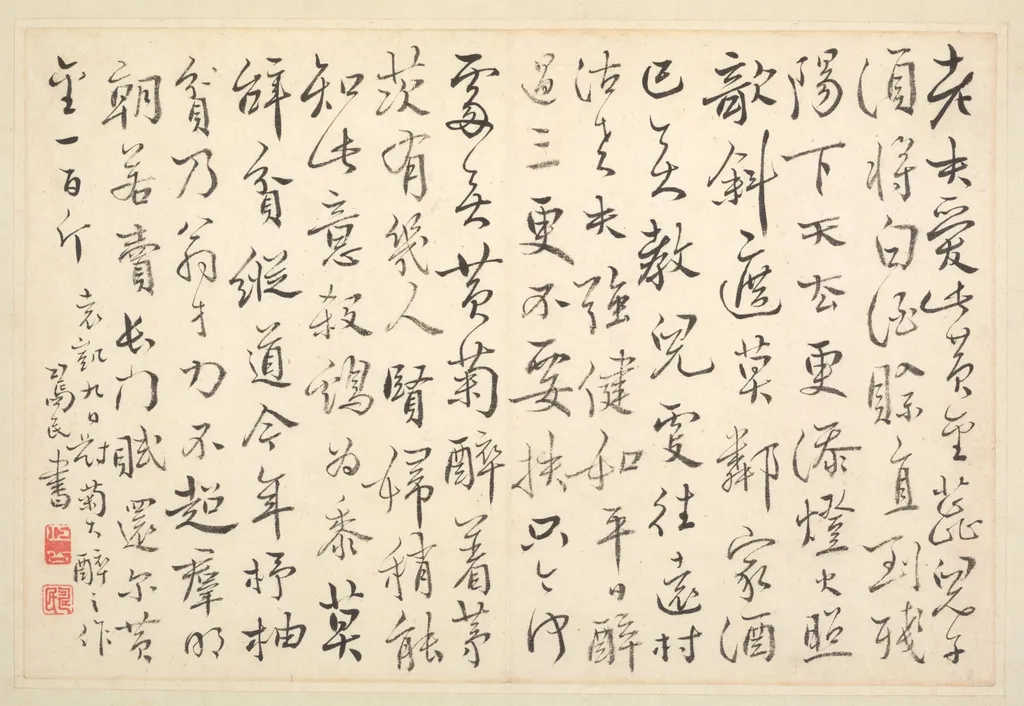
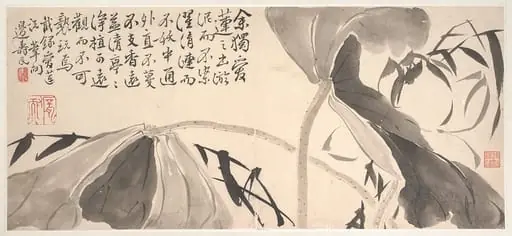
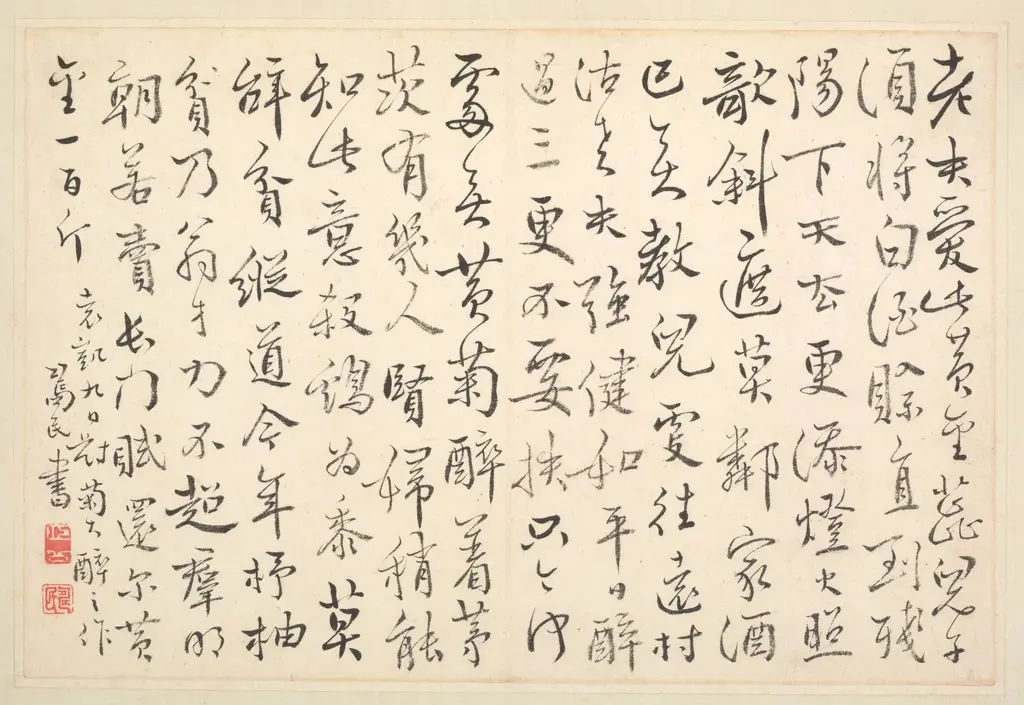
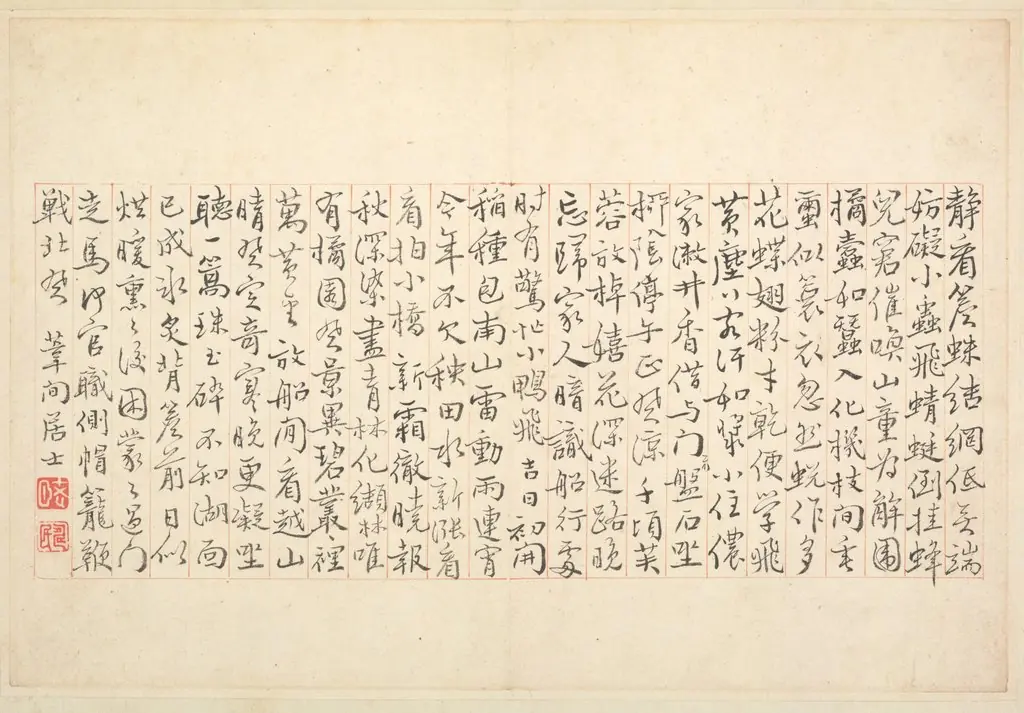
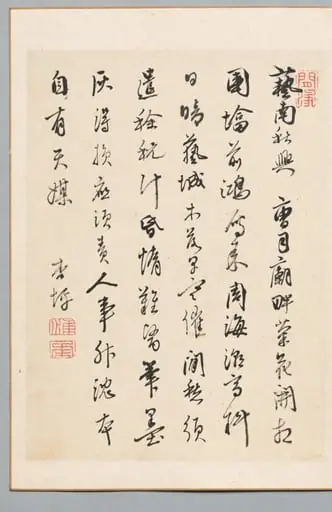
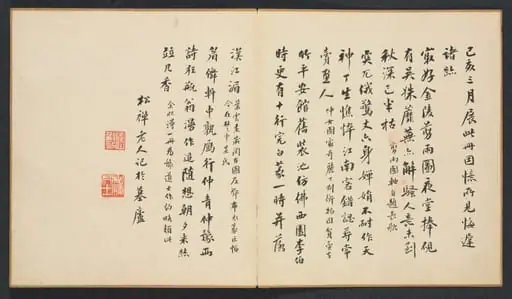
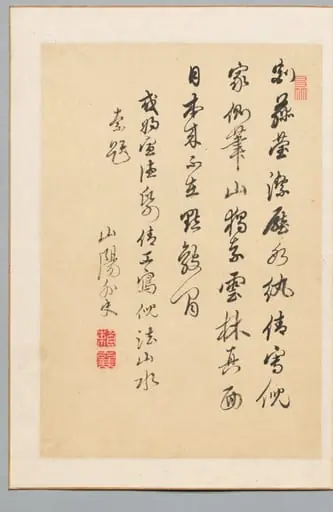
Album of Calligraphy and Paintings is an unspecified painting by the Baroque artist Bian Shoumin. It dates from 1704 and is held in the collection of the Cleveland Museum of Art.
About this work
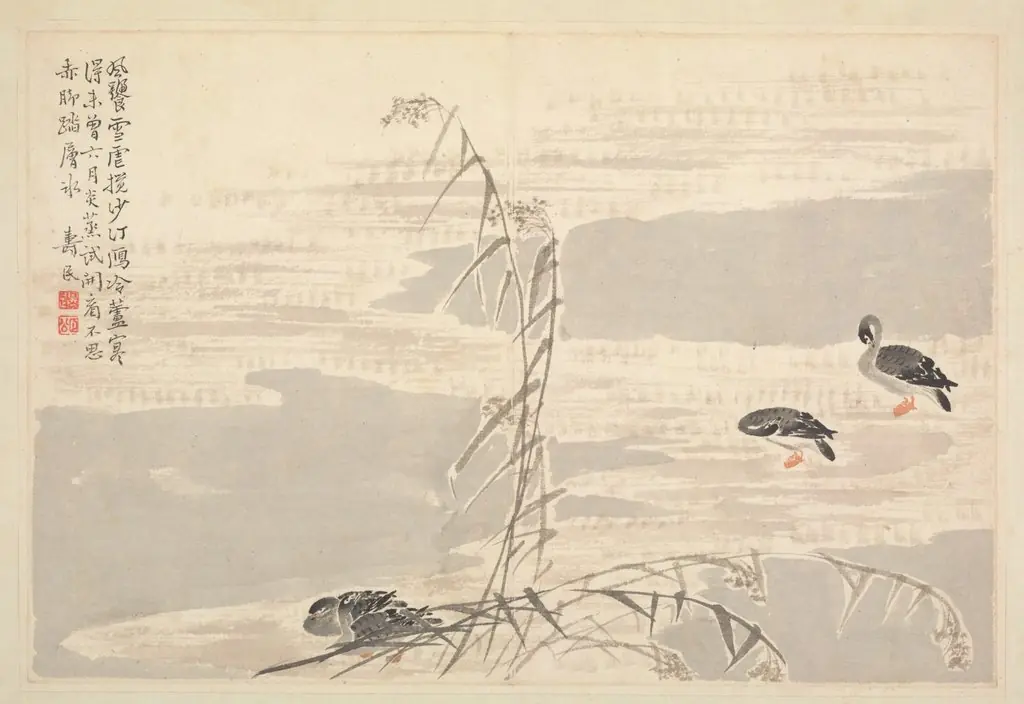
One bird leads, another follows, the third lingers behind—simple shapes, ink on paper.
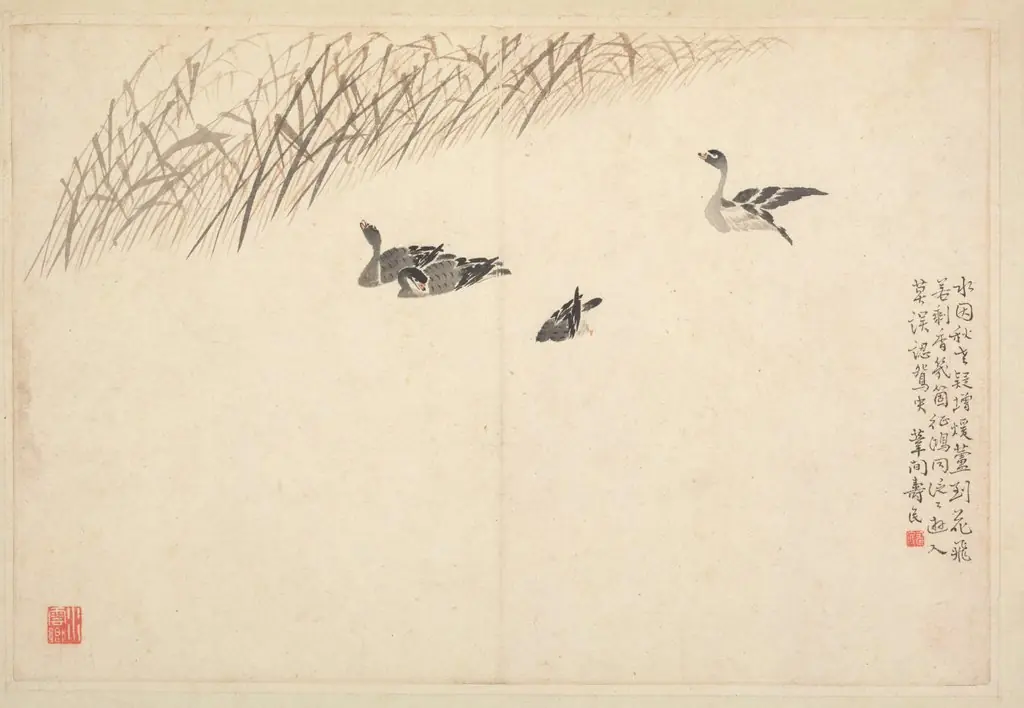
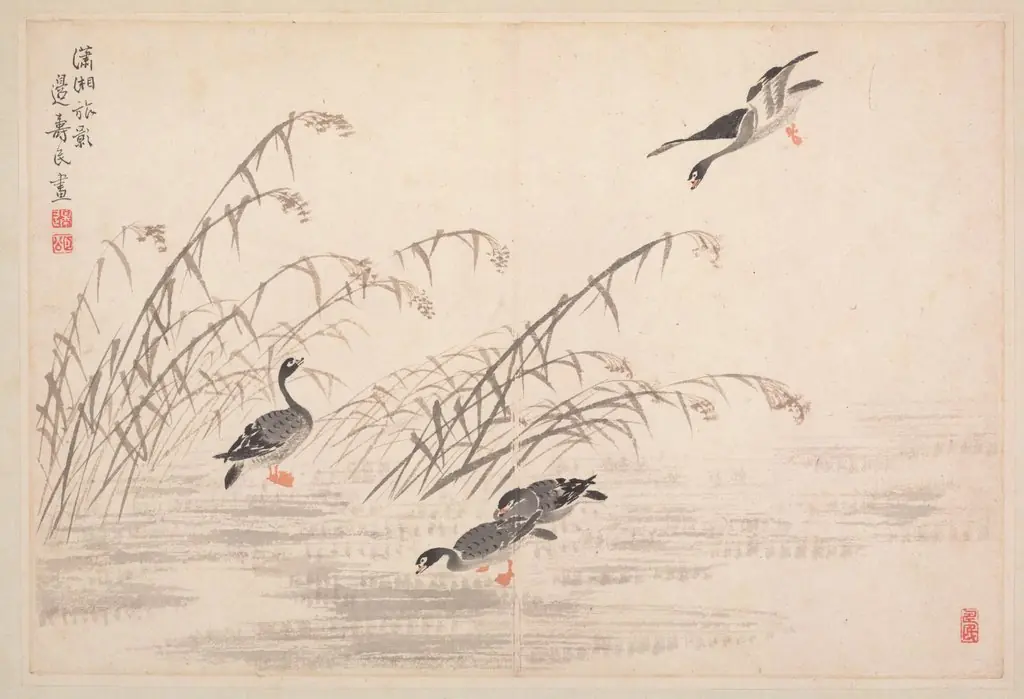
This painting shows three wild geese in flight above dark reeds by water. One bird leads, another follows, the third lingers behind—simple shapes, ink on paper. Bian Shoumin used fine lines to show feathers and ripples, nothing fancy.
His geese stand for parting and sadness in autumn. Scholars read their flight as a quiet goodbye. No bright colors, just calm brushwork and empty space.
Look up Bian Shoumin (Chinese, 1684–1752).
Overview
The work, an ink painting on paper by Bian Shoumin (1684–1752), depicts three wild geese soaring over a dark expanse of reeds and water. Rendered in monochrome, the composition relies on sparse brushstrokes and open space to convey a quiet, wintry scene.
Subject & Meaning
Geese in Chinese visual culture often signify departure and melancholy, especially in the autumn and winter months. The three birds—one leading, one following, one lingering—are read as a subtle allusion to parting and the sorrow associated with seasonal change.
Technique & Style
Bian employs delicate, controlled lines to suggest feather texture and water ripples, avoiding elaborate detailing. The monochrome palette and restrained brushwork create a sense of stillness, while the contrast between the dark reeds and the lighter sky emphasizes the birds’ flight.
Context
Bian Shoumin is renowned for his repeated studies of geese, water, and reeds, subjects that resonated with literati ideals of simplicity and reflection. This painting aligns with the scholarly tradition of using natural motifs to evoke emotional and philosophical states.
Own this work as a print
Artist & collection