Artwork
Untitled
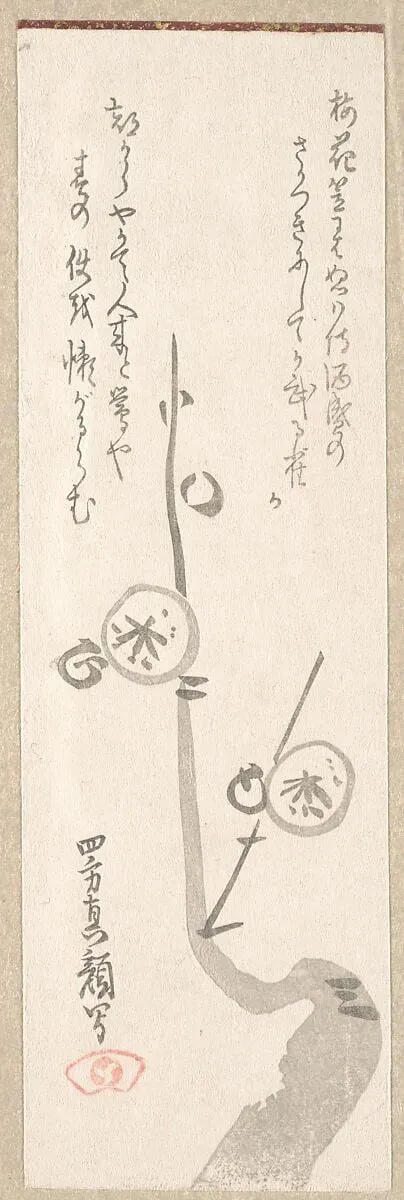
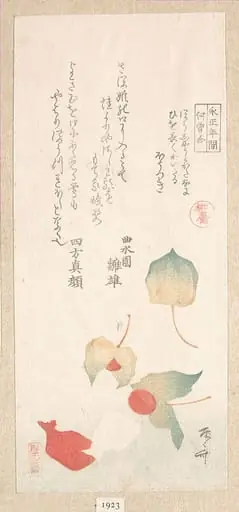
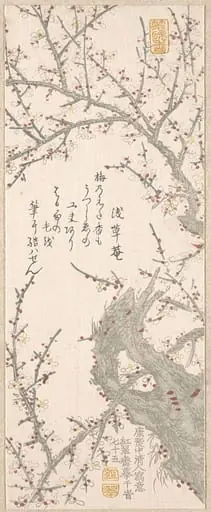
Untitled is an ink print by the Romanticist artist Yomo no Utagaki Magao. It dates from 1791 and is held in the collection of the Metropolitan Museum of Art.
About this work
Overview
This woodblock print, dated 1791, is attributed to Yomo no Utagaki Magao and belongs to the surimono genre—privately commissioned prints often exchanged among literary circles. Executed in ink and subtle color on paper, it presents a minimalist composition centered on a single bamboo stalk. The work’s quiet elegance and restrained palette reflect its intimate, non-commercial origins.
Subject & Meaning
The bamboo, a symbol of resilience and quiet endurance in East Asian culture, is rendered with sparse yet deliberate strokes. Two rounded leaves extend from the stalk, suggesting movement without excess detail. The absence of a background and the inclusion of poetic script imply a contemplative, literary intent—perhaps a seasonal reflection or personal verse tied to the plant’s enduring grace.
Technique & Style
The artist employed fine-line woodblock carving to achieve delicate contours and nuanced tonal gradations using faint gray washes and controlled cross-hatching.
The artist employed fine-line woodblock carving to achieve delicate contours and nuanced tonal gradations using faint gray washes and controlled cross-hatching. Ink density varies to suggest light and shadow, while the white paper remains largely untouched, enhancing the sense of air and space. The style is sketchlike, prioritizing suggestion over detail, characteristic of surimono’s refined aesthetic.
History & Provenance
Created in 1791 during the late Edo period, this print was likely produced for a private patron or literary group, as was typical of surimono. It entered the collection of The Metropolitan Museum of Art through documented acquisition, preserving its original condition and inscriptions. Its survival in such a state is uncommon, given the fragile nature of paper and the limited print runs of such works.
Context
Surimono prints emerged in the late 18th century as luxury items, often commissioned to celebrate events like New Year’s or poetry gatherings. Unlike mass-produced ukiyo-e, they emphasized artistic experimentation and textual integration. This piece exemplifies the genre’s fusion of visual restraint and literary allusion, reflecting the tastes of educated urban elites in Edo-period Japan.
Legacy
Though not widely known outside specialized collections, this print contributes to the understanding of Edo-period print culture beyond commercial imagery. Its emphasis on subtlety and poetic resonance influenced later artists exploring minimalism in Japanese printmaking. Today, it stands as a quiet testament to the interplay of text, nature, and craftsmanship in private artistic circles.
Artist & collection

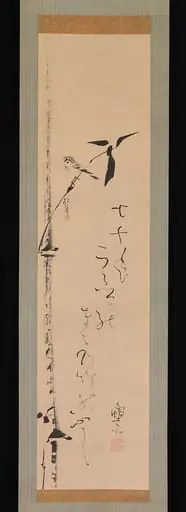 酒井抱一筆亀田鵬斎賛 竹雀図|Sparrow and Bamboo
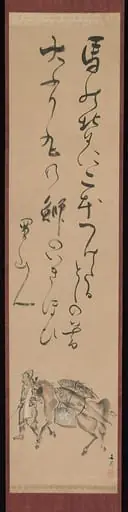 Untitled
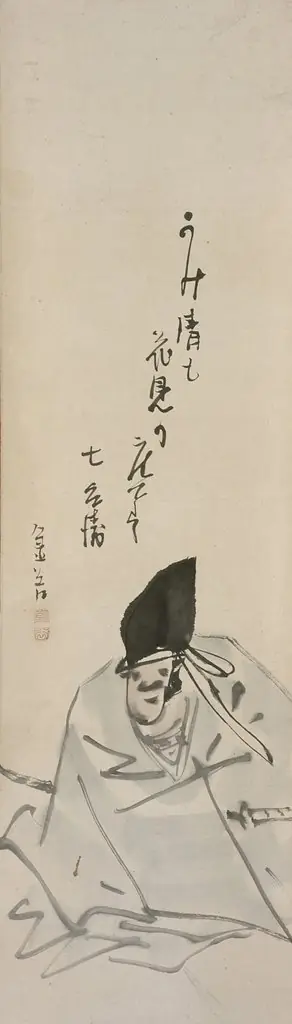 Warrior Kagekiyo
 Untitled
 Rock, Bamboo, and Orchids
 Untitled
 烏丸光広筆 十牛図歌賛図巻|Ten Oxherding Songs
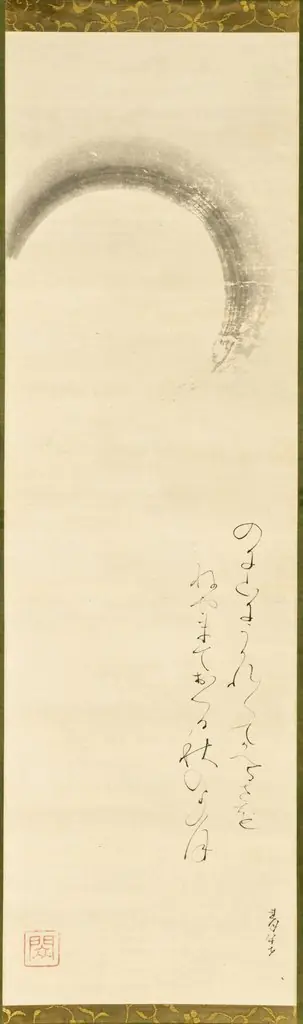 Autumn Moon
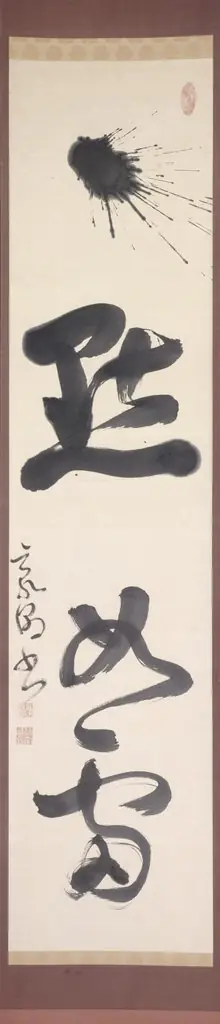 One Silence Like a Clap of Thunder
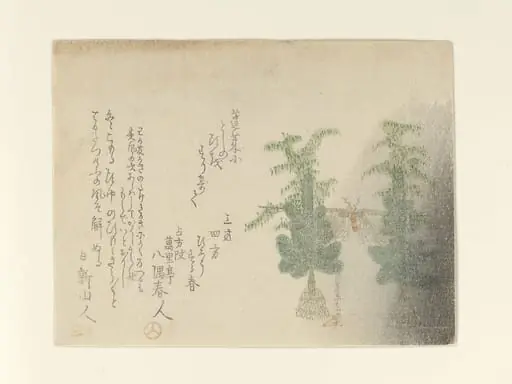 Untitled
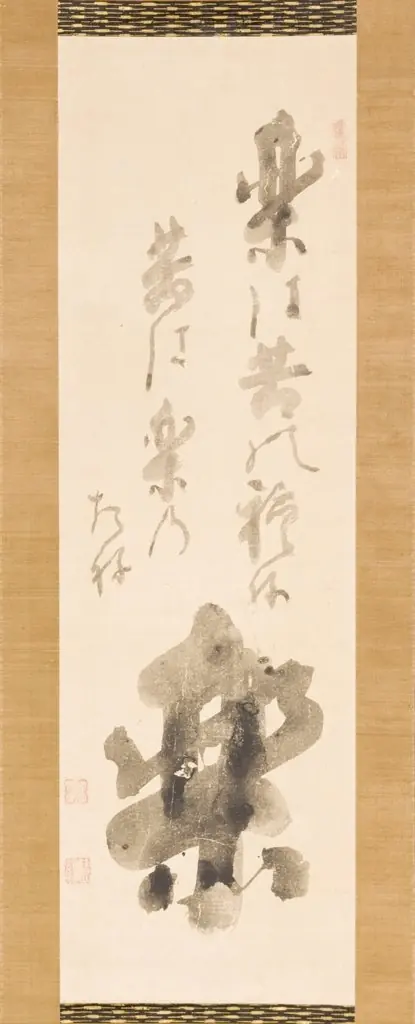 'JOY: In joy lie the seeds of sufferings; in sufferings lie the seeds of joy (RAKU: Raku wa kū no tane; Kū wa raku no tane)'
 Untitled