Artwork
Untitled
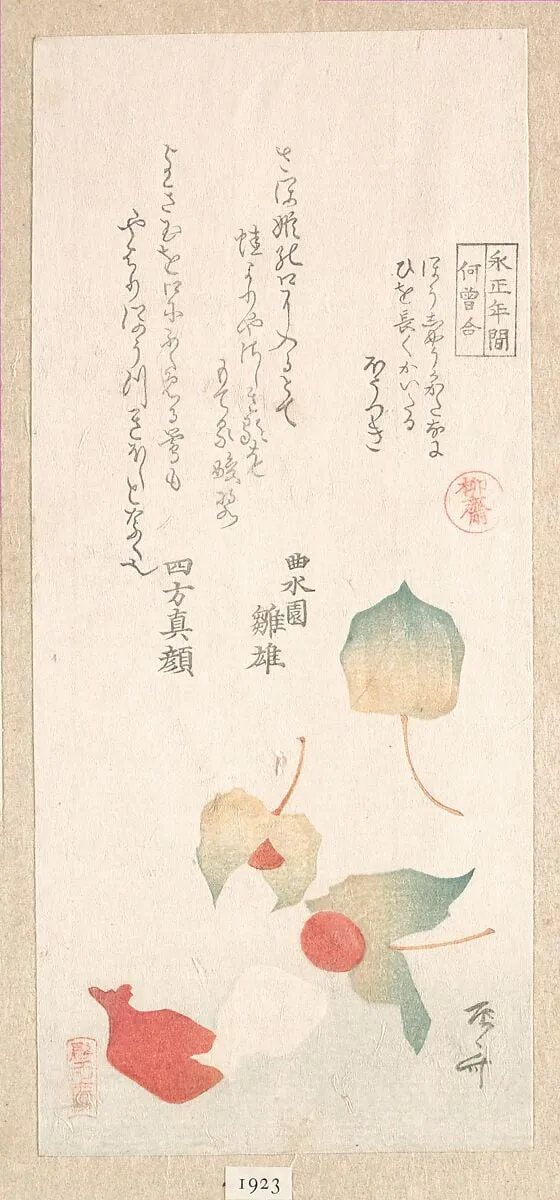
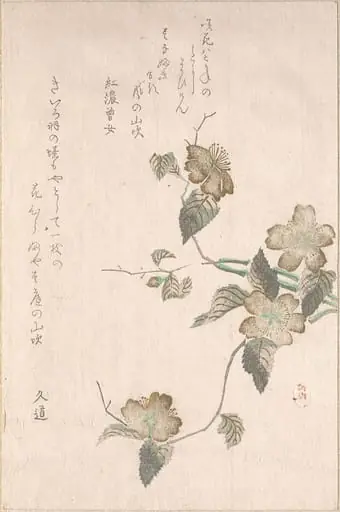
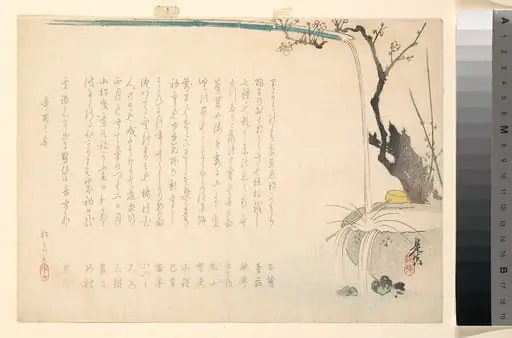
Untitled is an ink print by the Romanticist artist Ryūryūkyo Shinsai. It dates from 1811 and is held in the collection of the Metropolitan Museum of Art.
About this work
Overview
Executed in ink and color on paper, it features minimal imagery and restrained composition, reflecting the intimate, literary character of the genre.
This woodblock print, dated 1811, is the work of Ryūryūkyo Shinsai and belongs to the surimono tradition—privately commissioned prints often exchanged among poets and artists. Executed in ink and color on paper, it features minimal imagery and restrained composition, reflecting the intimate, literary character of the genre. It is part of The Metropolitan Museum of Art’s collection of Japanese prints.
Subject & Meaning
The image presents a sparse arrangement of natural elements: a single green leaf, a red cherry, and two white blossoms with red centers. These motifs suggest seasonal change and transience, common themes in Japanese poetry. The accompanying calligraphic verse, positioned to the left, complements the visual simplicity, inviting contemplation rather than narrative interpretation.
Technique & Style
The print employs flat, unmodulated colors and strong black outlines, creating a graphic clarity reminiscent of children’s drawings but with deliberate precision. No shading or cross-hatching is used; depth is implied through placement and contrast. The red seal in the upper right and the calligraphy are printed alongside the image, integrating text and picture as a unified artistic statement.
History & Provenance
Produced in 1811, this surimono was likely made for a private gathering of poets or literati, not for public sale. Such prints were often commissioned to commemorate events or seasons and circulated among elite circles. The Metropolitan Museum of Art acquired it as part of its broader collection of Edo-period prints, preserving its cultural context.
Context
Surimono emerged in the late 18th century as luxury prints, distinct from mass-produced ukiyo-e. They combined poetry, fine printing, and refined imagery, often using metallic inks and elaborate techniques. This piece reflects the aesthetic values of its time—subtlety, brevity, and harmony between visual and literary form—within a small, cultivated audience.
Legacy
Though not widely known outside specialist circles, this print exemplifies the quiet sophistication of surimono. Its influence lies in its demonstration of how minimal visual language, when paired with poetry, can evoke deep emotional resonance. It remains a reference point for understanding the intersection of printmaking and literary culture in early 19th-century Japan.
Artist & collection

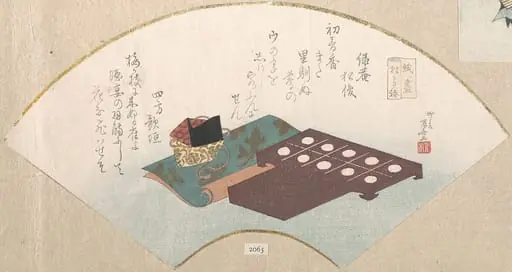 Untitled
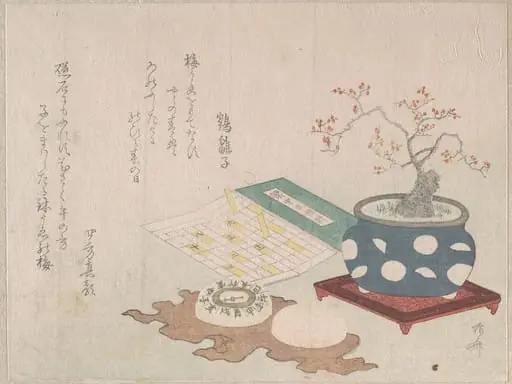 鉢梅、懐中日時計、羅針盤|Bonsai Plum, Compass, and Pocket Sundial with Design of Calendar, from Spring Rain Surimono Album (Harusame surimono-jō, vol. 3)
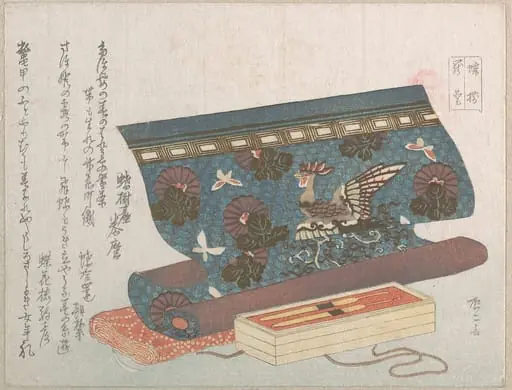 『蝶揃・寵愛』帯と簪|Roll of Cloth for an Obi and Tortoise-shell Hair Ornaments (“Presents for One’s Beloved”), from the Butterfly Series, from Spring Rain Surimono Album (Harusame surimono-jō, vol. 3)
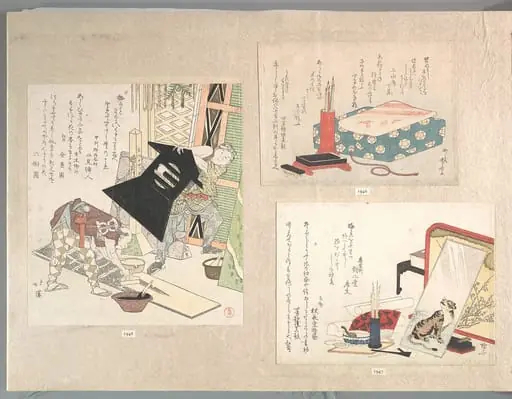 衝立、虎図、文具一式|Desk Screen, Writing Set, Painting of Tiger, and Mounting Paraphernalia, from Spring Rain Surimono Album (Harusame surimono-jō, vol. 1)
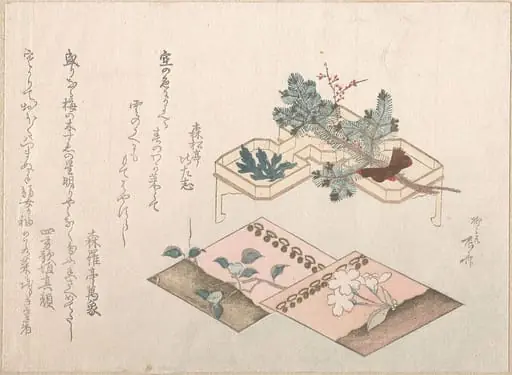 『春雨集』 摺物帖柳々居辰斎画 若松|Spring Rain Collection (Harusame shū), vol. 2: Pine Shoots and Accoutrements for New Year’s Celebrations
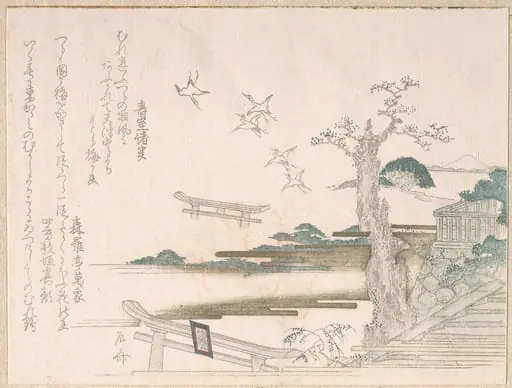 『春雨集』 摺物帖柳々居辰斎画 鎌倉の鶴岡八幡宮に鶴|Spring Rain Collection (Harusame shū), vol. 2: Cranes at Tsurugaoka Hachimangō Shrine in Kamakura
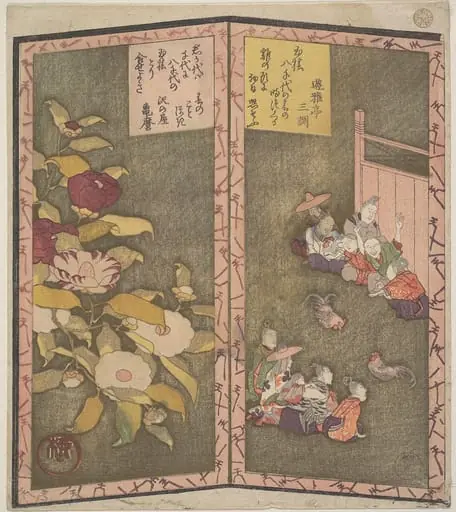 Untitled
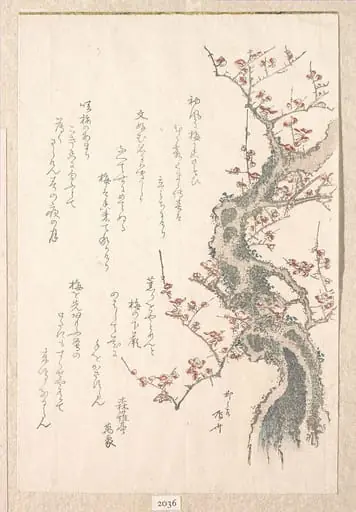 『春雨集』 摺物帖柳々居辰斎画 紅梅|Spring Rain Collection (Harusame shū), vol. 1: Plum Tree in Bloom
 Untitled
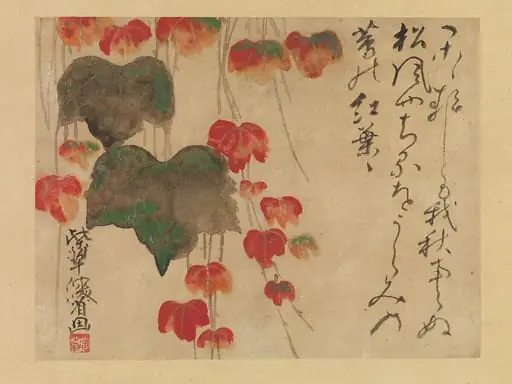 蔦紅葉図|Autumn Ivy
 Untitled
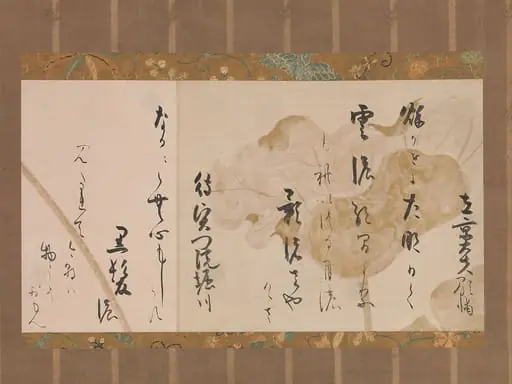 本阿弥光悦書・俵屋宗達下絵 小倉百人一首和歌巻断簡|Two Poems from One Hundred Poems by One Hundred Poets
 Untitled
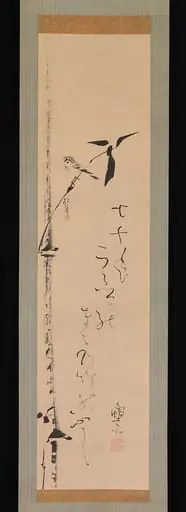 酒井抱一筆亀田鵬斎賛 竹雀図|Sparrow and Bamboo
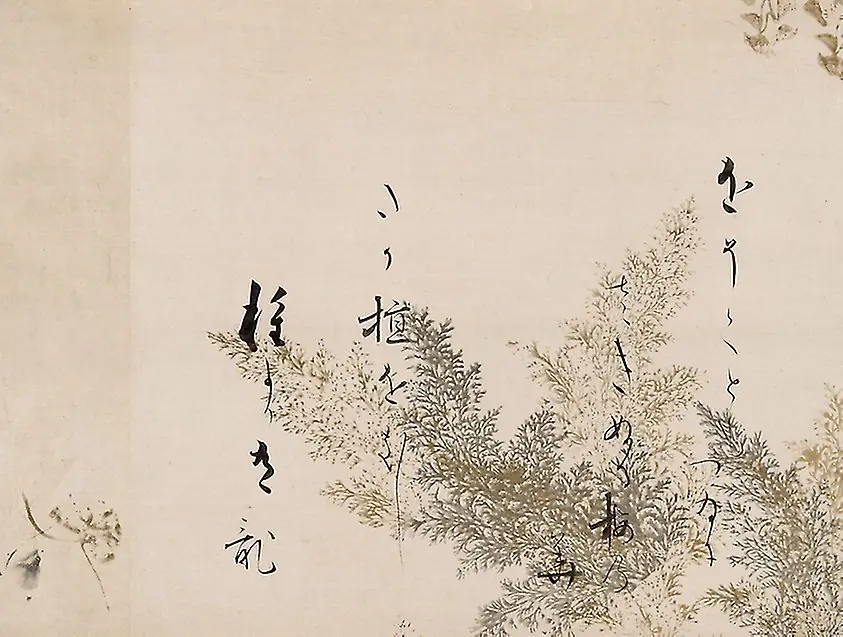 A Poem from the Shin Kokinshu with Design of Shinobugusa Grasses
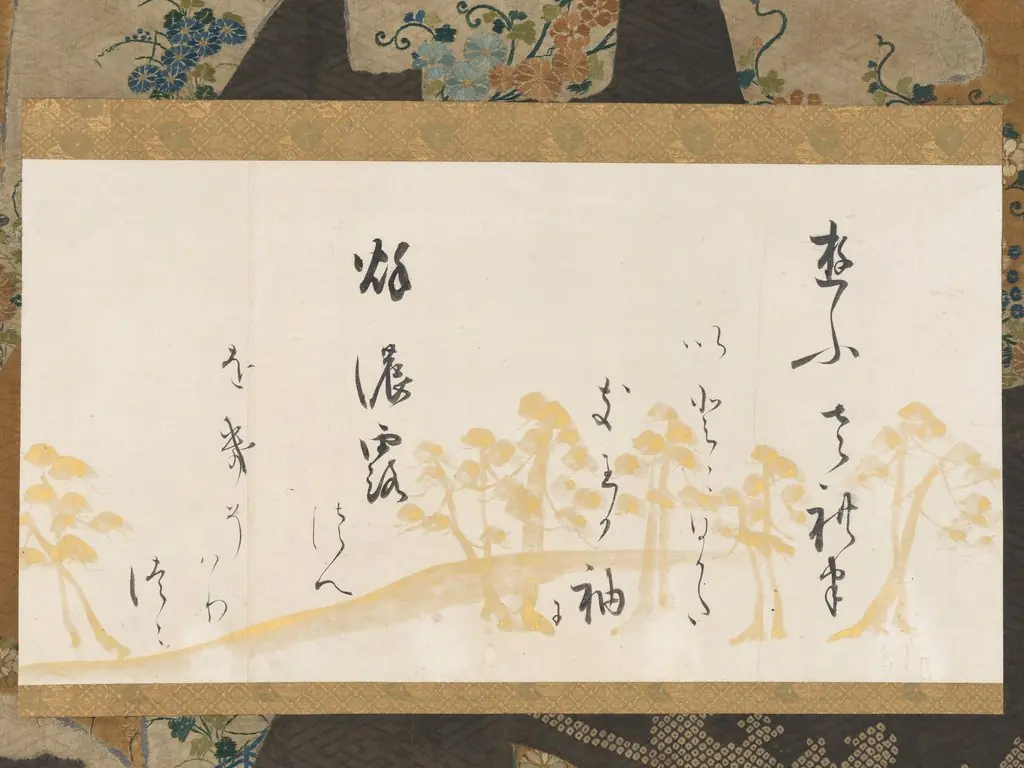 Section of a Handscroll with Waka and Underpainting of Pines
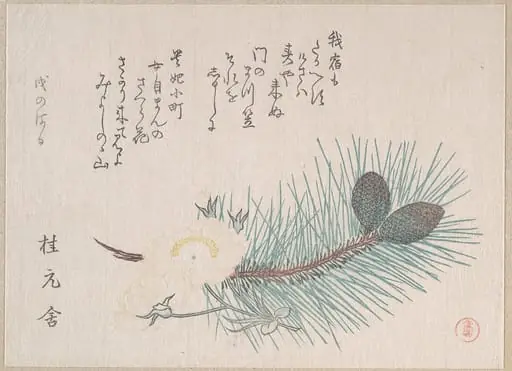 Untitled
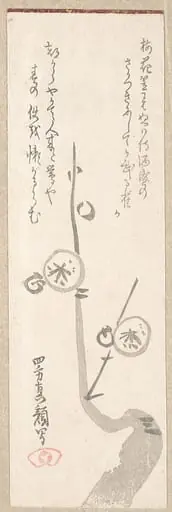 Untitled
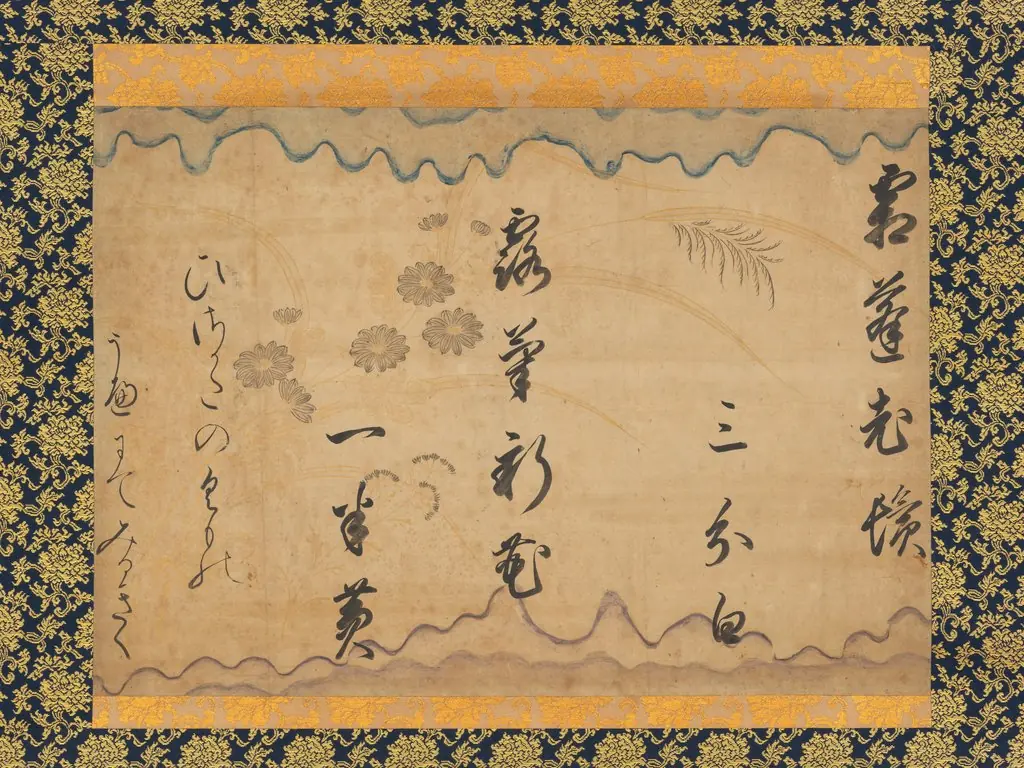 Chinese Couplet by Bai Juyi and Waka by Fujiwara no Toshiyuki (partial) from “Japanese and Chinese Poems to Sing” (Wakan rōeishū)